






The internet is seeking out old tech – like falling back in love over again…
Thinner phones, cleaner apps, sharper cameras, and other quirky devices – they are what tech culture has spent years chasing because they could do almost everything! Well, it’s funny how a lot of people are now reaching back toward gadgets with buttons, cords, replaceable batteries, and limits you can actually understand.
For the 1990s and early 2000s, it’s driven by nostalgia, especially for anyone who remembers burning CDs, customizing MySpace pages, or waiting for a Game Boy battery light to betray them on a road trip. While some probably grew tired with feeds, notifications, and devices that make every quiet minute feel available to the internet.
From flip phones to CRT screens, we bring you the first part of these essential signs showing old tech is trying to fit in and have its moment of truth again:
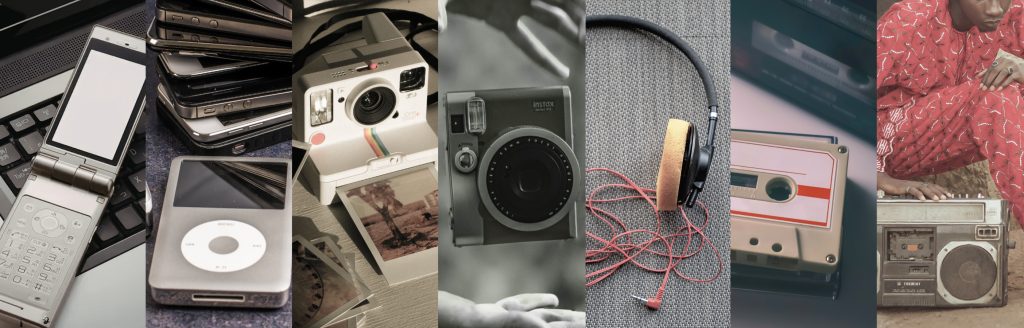
Flip Phones. Flip phones have become a small escape hatch for people who want calls and texts without carrying every app they’ve ever regretted downloading. The Motorola Razr still has that snap-shut satisfaction, and newer basic phones give people a way to be reachable without being fully swallowed by a screen.
iPods. Used iPods are getting attention again because they do one job and one job only. Loading a Nano, Classic, or Touch with your own music library feels more personal than letting an app decide what you should listen to.
Instant Cameras. Polaroid and Fujifilm Instax cameras keep showing up at parties, weddings, dorm rooms, and weekend trips because the photo provides a tangible memory. The colors can be strange, the flash can be harsh, and someone will probably blink, but it’s still more fun than uploading memories to Google Photos.
Point-and-Shoots. Canon PowerShots, Sony Cyber-shots, Nikon Coolpix cameras, and other small digital cameras from the 2000s are back in purses and jacket pockets. They make photos look less polished than iPhone shots, with red-eye, blur, and flash glare that somehow feel closer to how the night actually felt.
Wired Headphones. Apple EarPods and other wired headphones have gone from boring backup gear to an actual style choice. They don’t need charging, they don’t vanish into couch cushions as easily, and they’re much more budget-friendly.
Cassette Players. Cassette players and tape decks are getting attention from people who like music that takes a little effort. Rewinding, flipping sides, and dealing with a worn-out case can be annoying, sure, but the whole process feels more involved than tapping shuffle for the 400th time.
Boomboxes. The modern boombox comeback is more of a compromise than anything else, since plenty of new models look old while offering Bluetooth connection. That mix gives people the chunky 1980s and 1990s look without asking them to fully return to D batteries, warped tapes, and radio static.
Reference: 20 signs the internet is falling back in love with old tech
Leo Capinpin, IBM Philippines country general manager and technology leader, said: “Philippine CEOs surveyed are among the most decisive in embracing AI and yet, only a fraction say they have a clear vision for how it will deliver competitive advantage.”
Capinpin said that gap shows the need for organizations to rethink how they operate. He further declared: “The companies that will come out ahead are those that move beyond treating AI as a project and start running their business with AI at the core.”
The study found that new challenges are redefining leadership demands, with 97% of Philippine CEOs surveyed saying all functional leaders must become technology experts within their domains. While Philippine CEOs are turning to AI for decision-making, 90% believe that the technology’s success hinges more on employee adoption than on the technology itself.
As such, upskilling and reskilling employees are becoming more important. The study showed that Philippine respondents expect 31% of employees to require reskilling for a different role. Meanwhile, 55% will need upskilling to be more effective in their current role.
For over a century, IBM has been at the forefront of technological innovation. Beginning in the earliest days of computing, IBM has blended intelligence, innovation and science to improve business, society and the human experience.
IBM brings together software, consulting and infrastructure to help clients solve the business challenges that matter most. Their platforms embed AI into core systems and workflows, improve the economics of real work and scale securely across hybrid cloud environments. The tech giant deploys solutions inside IBM workplace before they bring those to clients, so what they deliver is not just designed, but proven.