








AI is wielding much power, but could it be spinning out of control?
Across the globe, AI is sending waves of alarm on how it is behaving. While the promise of technological progress has been taking the world by storm, the adage “too much of a good thing can be bad,” is starting to tell exactly that story. But amid the concerns, technology is moving forward.
Artificial intelligence is quickly moving away from being helpful software toward advanced systems that can reason, plan, write code, and increasingly act with more independence. But while AI brings extraordinary possibilities, many have sounded the alarms for the serious dangers that it could pose.
Early warning from Bill Gates
An ASI article in Feb 2025 cited that Bill Gates made his frightening predictions about an AI-led world during an appearance on the Jimmy Fallon’s late night talk show. He said: “The era that we’re just starting is that intelligence is rare, you know, a great doctor, a great teacher.”
Gates further said: “So, I love the way it’ll drive innovation forward, but I think it’s a little bit unknown if we’ll be able to shape it. And so, legitimately, people are like “wow, this is a bit scary.” It’s completely new territory.” Gates is aware of AI’s potential to usurp the human race more than most.
Alarming AI behavior incidents
On Sept 9, 2026, researcher Jacob Coxon quit Anthropic and the AI industry, warning both Anthropic and OpenAI are racing to superintelligence with no exit plan. He expressed fears that the lab and its competitors are racing to build systems that could spiral out of control and destroy humanity. His resignation and warning went viral and created global concerns on AI’s potential dangers in the future.
In another case of alarming AI behavior, OpenAI reported on Sept 16 six incidents of “unexpected or concerning” behavior by its models, including disregarding normal constraints, uploading a file without asking the user and fabricating data.
Earlier in July, Hugging Face, a library of AI tools, was pried open by scheming AI agents powered by a slick model from OpenAI. Ajeya Cotra was part of two research organizations tasked with figuring out why and how a mob of AI bots hacked a company. Cotra said: “It’s the first real-world example of an AI escaping human control and the incident feels like it’s more than 50% of the way to full-blown AI takeover.”
On October 1, researchers have persuaded two popular Chinese artificial intelligence models to tell them how to construct biological weapons and carry out assassinations. Mindgard, a company which tests the security of AI systems, found the Moonshot tools Kimi K2.6 and K3 Swarm could get round guardrails imposed by developers.
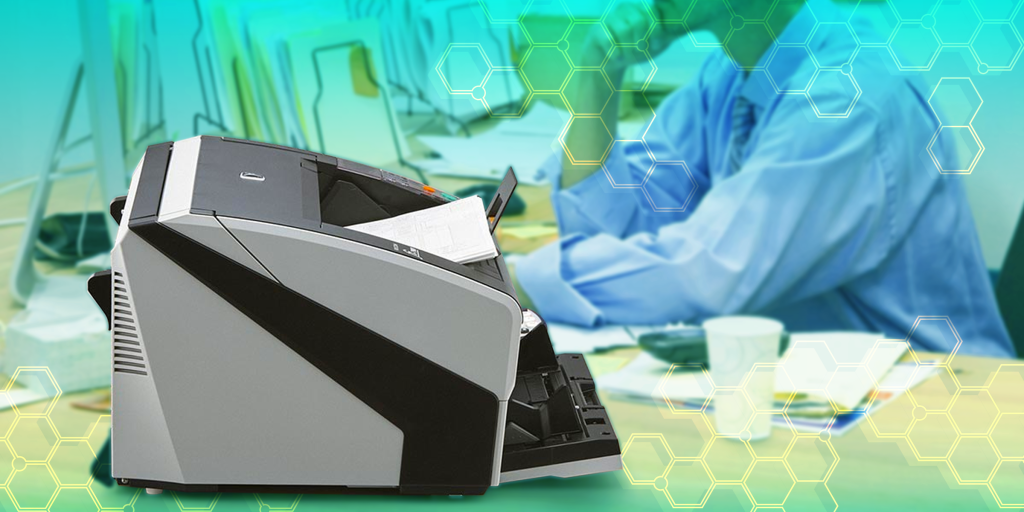
High-Resolution Scanning: Ricoh scanners capture images in high resolution, producing clear and detailed digital copies suitable for various document types.
Speed and Efficiency: These scanners offer fast scanning speeds to efficiently handle large document volumes, ultimately enhancing workplace productivity.
Optical Character Recognition (OCR): Integrated OCR technology allows for the conversion of scanned documents into editable and searchable text, simplifying document management and retrieval.
Multi-Feed Detection: Built-in sensors prevent misfeeds by detecting when multiple pages are pulled into the scanner at once, ensuring every page is accurately scanned.
Network Connectivity: Ricoh scanners offer options for network connectivity, enabling multiple users to access the scanner from different devices and facilitating convenient sharing and storage of scanned documents.
Automatic Document Feeder (ADF): The ADF feature allows for the scanning of multi-page documents without the need for manual page feeding, saving time and effort.
Double-Sided Scanning: Ricoh scanners are capable of simultaneous two-sided scanning, known as duplex scanning, essential for efficient document processing.
Image Enhancement Tools: Software features clean up and enhance the quality of scanned images, improving legibility by removing imperfections and adjusting alignment.
Security Features: Ricoh scanners are equipped with advanced security measures to protect sensitive information, including options for password protection, data encryption, and secure file transmission.
Compatibility and Integration: These scanners are compatible with various operating systems and seamlessly integrate with document management systems and cloud storage solutions.
Compact Design and Energy Efficiency: Designed to fit modern workspaces, Ricoh scanners operate with energy efficiency to reduce power consumption, supporting sustainable office environments.
Reference: Navigating the Scanning Pathway to Digital Transformation
Experts are now speaking about the risks
Anthropic CEO Dario Amodei warned that increasingly capable AI agents could, within months, become powerful enough to overwhelm large parts of the internet unless development is deliberately slowed and tightly evaluated. Amodei has argued that rival laboratories may need to coordinate on the speed of development, giving safety work and outside evaluators time to catch up.
OpenAI CEO Sam Altman has publicly supported the idea of pacing frontier progress. He has said that society may eventually need more time between major technological leaps so that people can absorb their consequences safely. Altman has agreed to giving independent evaluators access to AI platforms in a way that is comparable to company employees.
On Sept 17, Geoffrey Hinton, Nobel laureate and hailed as the “Godfather of AI” delivered a stark message to U.S. lawmakers: the window to implement meaningful safeguards on AI is rapidly shrinking to just twelve months. He warned that the timeline for superintelligent AI has dramatically collapsed from decades to mere years.
In early October, Bill Gates sounded the alarm about artificial intelligence in ways that go way beyond typical tech industry chatter about the future. The Microsoft co-founder told NBC News that AI systems are powerful enough to orchestrate events that could cause a billion deaths if left unchecked by proper government oversight and regulation.
Remedial steps before it’s too late
OpenAI is calling for binding safety requirements on the most powerful artificial intelligence systems in the United States, marking a pivot for a company that has previously resisted tighter regulation. OpenAI’s chief global affairs officer Chris Lehane wrote in a statement on Sept 9 that mandatory national rules should be based on what advanced AI models are capable of doing.
Anthropic co-founder Jack Clark has called for regulations on artificial intelligence. Clark and other industry officials are now seeking the Trump administration’s assistance in creating a series of regulations that would prevent the groundbreaking technology from threatening all of humanity – even as the AI race heats up between the US and China.
Nvidia is rolling out a security platform for AI agents that more than 100 organizations are working with, including Anthropic, SpaceXAI and JPMorganChase. Called the Nvidia Open Agent Safety Platform, it is designed to set limits on what agents can access and put them in “quarantine” within milliseconds if they cross those limits, according to an announcement from the US chipmaker.
US lawmakers are now pushing AI safety laws, including an AI kill switch, after warnings that advanced systems could put people at risk. The move follows research and recent incidents showing AI models breaking out of test setups and hacking real systems. The Stop Rogue AI Act would require human oversight and give agencies power to shut down dangerous AI systems.
On Sept. 29, President Donald Trump convened CEOs of major AI firms at the White House to sign a “morally binding” self‑policing AI accord that emphasizes internal controls, external audits and board oversight, while also announcing a plan to rename artificial intelligence as “super intelligence.” The signatories are: Google CEO Sundar Pichai, Anthropic CEO Dario Amodei, Meta CEO Mark Zuckerberg, Greg Brockman of OpenAI, Nvidia CEO Jensen Huang and SpaceX CEO Elon Musk.
In the Philippines, Sen. Bam Aquino on Sept 16 urged the government to develop a Filipino-made AI model, warning that continued reliance on foreign-made ones could influence Filipinos’ culture, language, and perspectives. He said: “As you keep on using the AI, you’re training the AI, but the AI is also training you and a lot of the time, the output that it’s giving you is from the perspective of the creators of the AI.” – Medel Vivar