


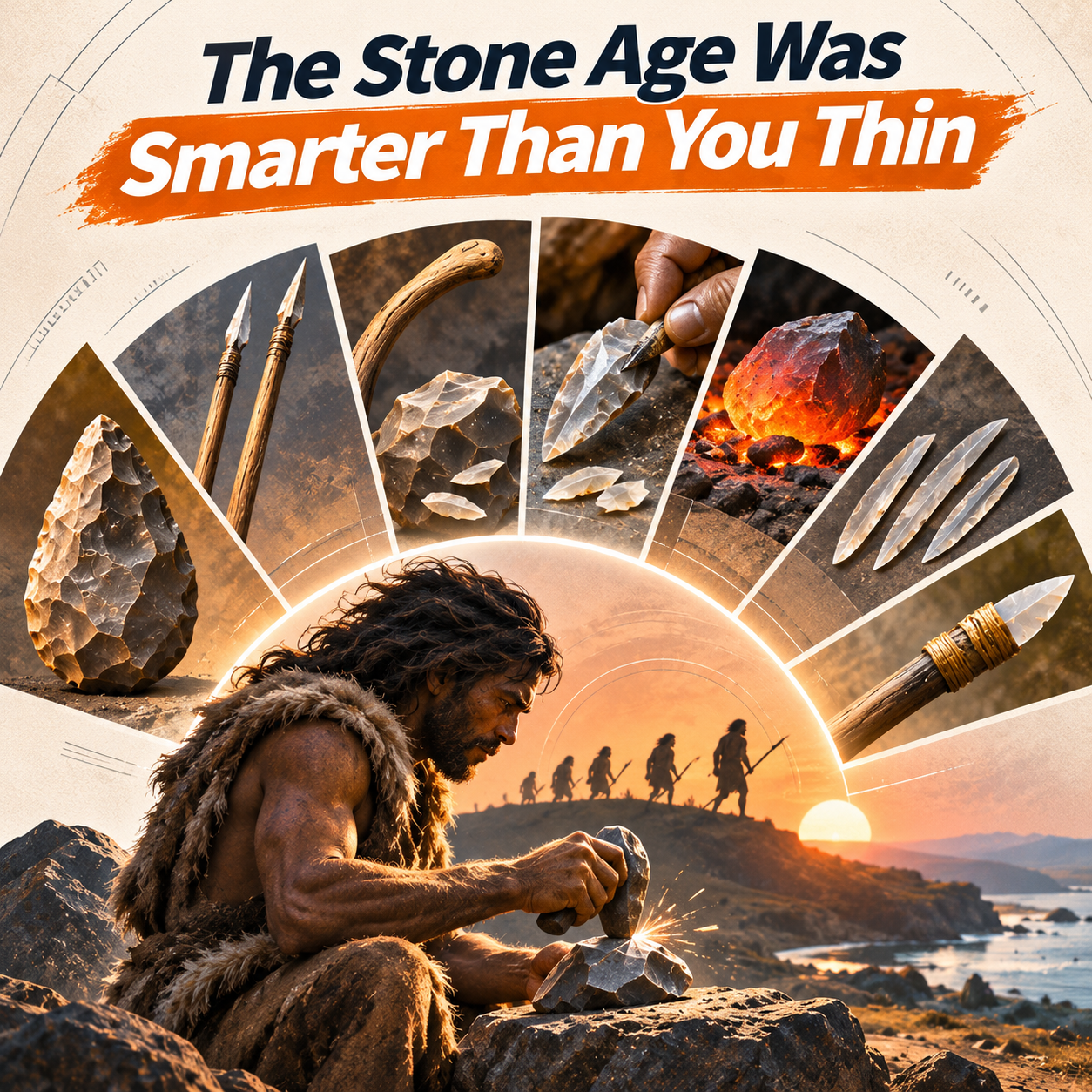




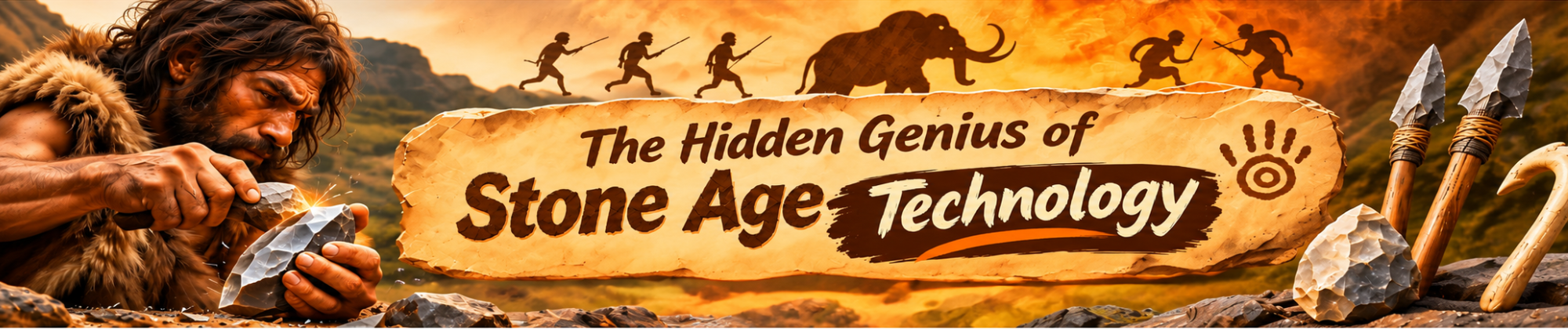
Technologies by hand in the stone age were smarter than they appear to be!
Technology is as old as antiquity. Whenever we hear or see the word “technology,” we picture chips, metals, electricity, machineries, computers. But have we thought that technology is already “alive” as far back as the Stone Age? Well, only because we don’t talk about the Stone Age enough.
Way back that primitive era, technology referred to things like axes, spears, and fish hooks owned by people paying close attention to materials, weather, animals, water, and the sheer difficulty of staying alive. The real story takes place along South Africa’s southern coast to the Sea of Galilee, from northern Germany to Siberia’s Altai Mountains. Let’s travel back in time…
Acheulean Hand Axes
Acheulean hand axes turned up across huge stretches of Africa, then later in parts of Europe and western Asia, and they stayed in use for more than a million years. They were carefully shaped, often symmetrical tools that people trusted enough to keep refining over an astonishing stretch of time.
The Schöningen Spears
Archaeologists working in northern Germany found wooden spears dating to roughly 300,000 to 400,000 years ago near an ancient lakeshore. This discovery proved to modern scholars that early humans did, in fact, create complex tools for hunting.
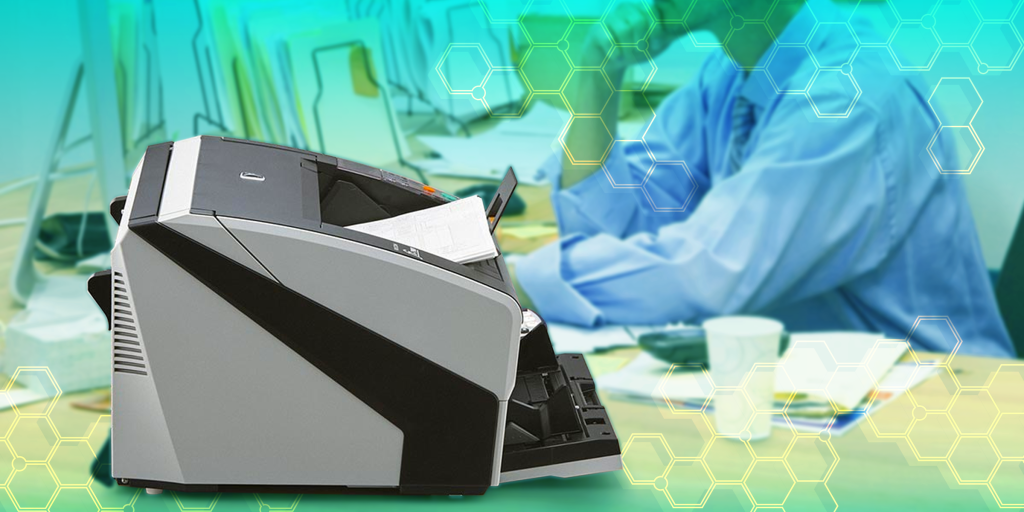
High-Resolution Scanning: Ricoh scanners capture images in high resolution, producing clear and detailed digital copies suitable for various document types.
Speed and Efficiency: These scanners offer fast scanning speeds to efficiently handle large document volumes, ultimately enhancing workplace productivity.
Optical Character Recognition (OCR): Integrated OCR technology allows for the conversion of scanned documents into editable and searchable text, simplifying document management and retrieval.
Multi-Feed Detection: Built-in sensors prevent misfeeds by detecting when multiple pages are pulled into the scanner at once, ensuring every page is accurately scanned.
Network Connectivity: Ricoh scanners offer options for network connectivity, enabling multiple users to access the scanner from different devices and facilitating convenient sharing and storage of scanned documents.
Automatic Document Feeder (ADF): The ADF feature allows for the scanning of multi-page documents without the need for manual page feeding, saving time and effort.
Double-Sided Scanning: Ricoh scanners are capable of simultaneous two-sided scanning, known as duplex scanning, essential for efficient document processing.
Image Enhancement Tools: Software features clean up and enhance the quality of scanned images, improving legibility by removing imperfections and adjusting alignment.
Security Features: Ricoh scanners are equipped with advanced security measures to protect sensitive information, including options for password protection, data encryption, and secure file transmission.
Compatibility and Integration: These scanners are compatible with various operating systems and seamlessly integrate with document management systems and cloud storage solutions.
Compact Design and Energy Efficiency: Designed to fit modern workspaces, Ricoh scanners operate with energy efficiency to reduce power consumption, supporting sustainable office environments.
Reference: Navigating the Scanning Pathway to Digital Transformation
Throwing Sticks from the same German site
Schöningen discoveries also produced a throwing stick, also around 300,000 years old, which tells us those hunters were carrying more than one kind of weapon. That matters more than it might seem at first. It points to planning, versatility, and the kind of practical judgment that comes from not only knowing prey, but understanding it as well.
Levallois Cores
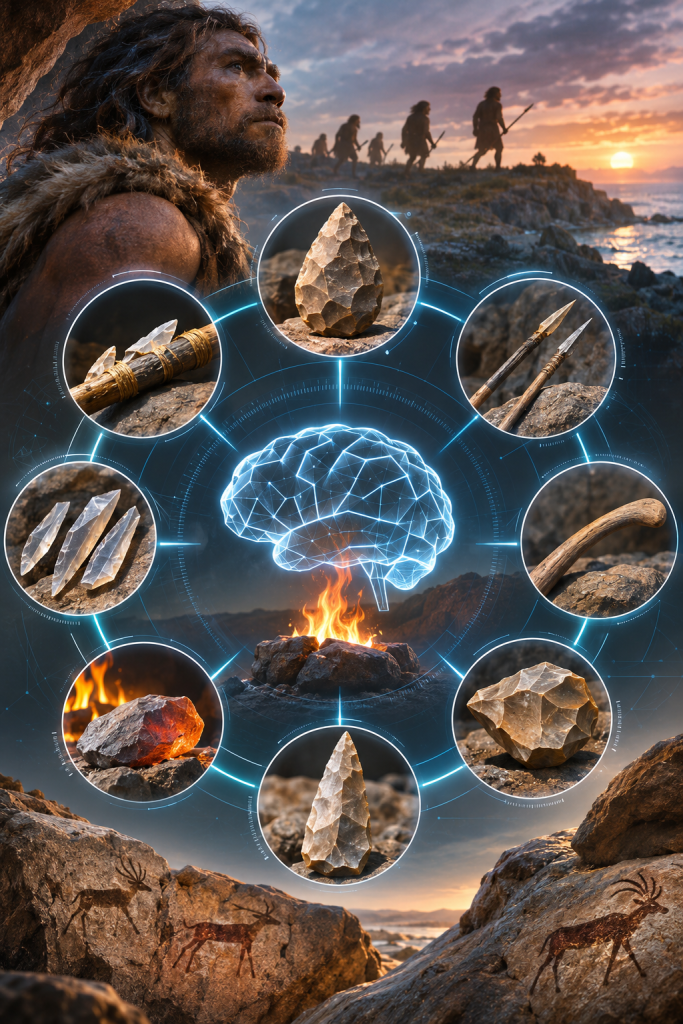
Levallois technology shows up across Africa, Europe, and western Asia, including famous examples from North Africa and the Levant. The method involved shaping a stone core, so one strike could sharpen other wood or stone tools.
Pressure flaking at Blombos Cave
At Blombos Cave on South Africa’s southern coast, people used pressure flaking around 75,000 years ago to finish Still Bay points with much tighter control. Instead of just striking the stone harder and hoping the edge improved, they were adjusting it in smaller, more careful steps.
Heat-treated stone at Pinnacle Point
Pinnacle Point, near Mossel Bay on South Africa’s southern coast, gave us early evidence that people were heating silcrete before working it. Once heated, the stone fractured more predictably and became easier to shape. Fire was already doing much more than keeping people warm. It became part of manufacturing.
Bladelets from Pinnacle Point
That same coastal region also produced bladelet technology dating to about 71,000 years ago. One prepared core could yield a series of small, useful blades, which made the most of valuable raw material.
Microlith composite tools
Microliths were tiny stone pieces, fitted into wood or bone handles with resin or bindings. These tools showed up in places like South Africa and later in Australia, Europe, and Asia, and they helped create tools with replaceable cutting parts.
Reference: 20 Stone Age technologies that were smarter than they look