








samsung said expanding DRAM production to PH on outsourcing plan
After over five decades, Samsung is still innovating, creating technology that breaks down old and new barriers, and helping people to do what they can’t. Samsung continues to be driven by its purpose, so they put people and what they care about at the center of everything they create. The company devotes its talent and technology to creating superior products and services for a better global society.
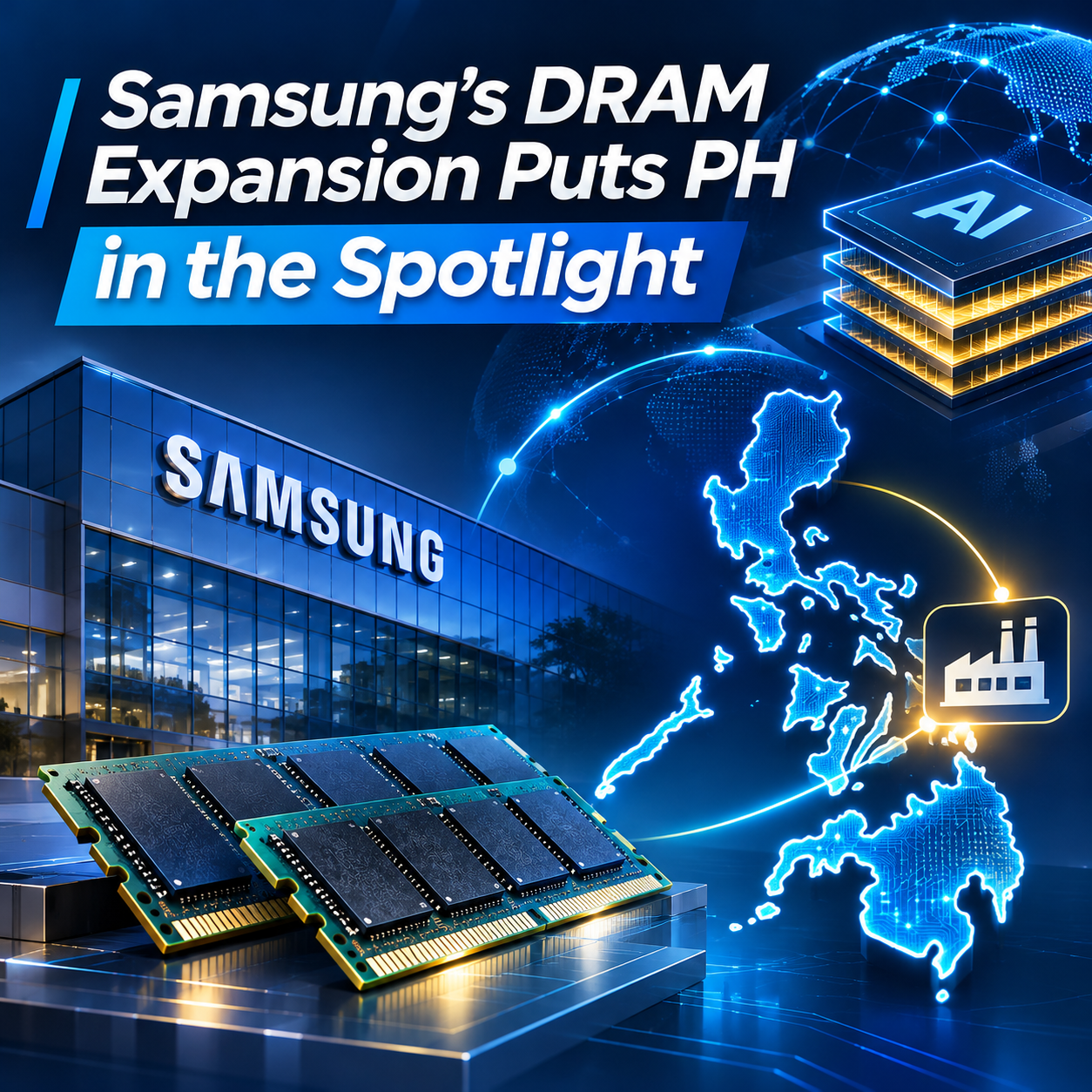
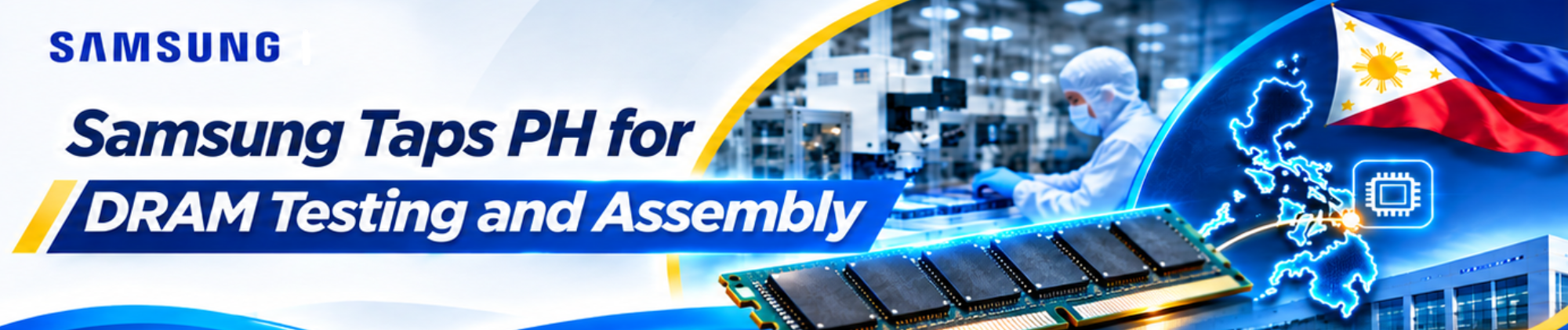
Samsung is reportedly expanding DRAM production to the Philippines, working with local partners to handle testing and assembly. This is part of a wider outsourcing plan as Samsung moves its own factories to focus on high-bandwidth memory.
Reports say Samsung will outsource all DDR5 and SSD production. The company is building a KRW 6 trillion HBM plant in Onyang, South Korea, and a USD 1.5 billion facility in Vietnam for older memory products like DDR4, LPDDR4, NAND, and UFS. This frees up space in its Korean packaging plants for advanced AI-focused memory.
In the Philippines, SFA Semicon is set to take on DDR5 testing and assembly. This puts the country in a stronger position in Samsung’s global supply chain. Other partners include Dreamtech in India, which can produce 50 million units a year, and Hanyang Digitech in Vietnam.
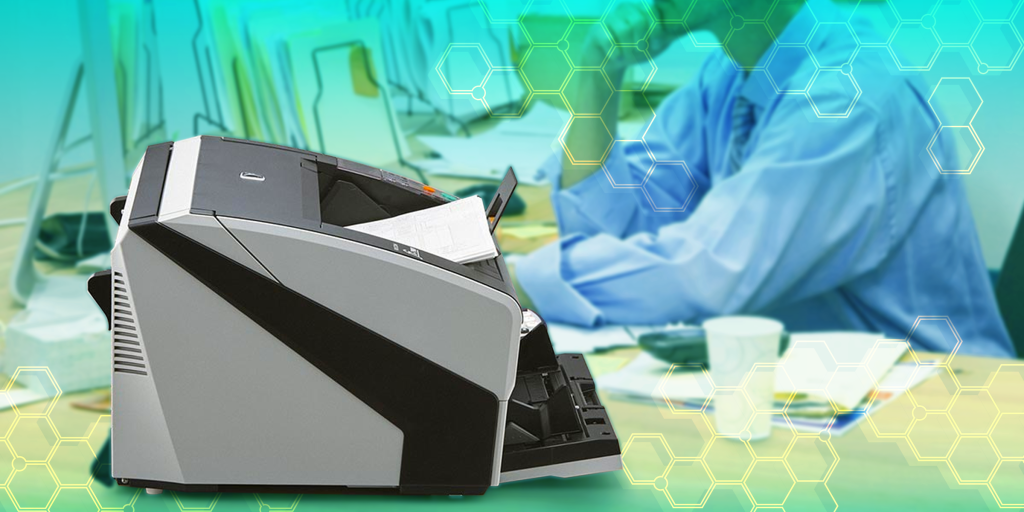
High-Resolution Scanning: Ricoh scanners capture images in high resolution, producing clear and detailed digital copies suitable for various document types.
Speed and Efficiency: These scanners offer fast scanning speeds to efficiently handle large document volumes, ultimately enhancing workplace productivity.
Optical Character Recognition (OCR): Integrated OCR technology allows for the conversion of scanned documents into editable and searchable text, simplifying document management and retrieval.
Multi-Feed Detection: Built-in sensors prevent misfeeds by detecting when multiple pages are pulled into the scanner at once, ensuring every page is accurately scanned.
Network Connectivity: Ricoh scanners offer options for network connectivity, enabling multiple users to access the scanner from different devices and facilitating convenient sharing and storage of scanned documents.
Automatic Document Feeder (ADF): The ADF feature allows for the scanning of multi-page documents without the need for manual page feeding, saving time and effort.
Double-Sided Scanning: Ricoh scanners are capable of simultaneous two-sided scanning, known as duplex scanning, essential for efficient document processing.
Image Enhancement Tools: Software features clean up and enhance the quality of scanned images, improving legibility by removing imperfections and adjusting alignment.
Security Features: Ricoh scanners are equipped with advanced security measures to protect sensitive information, including options for password protection, data encryption, and secure file transmission.
Compatibility and Integration: These scanners are compatible with various operating systems and seamlessly integrate with document management systems and cloud storage solutions.
Compact Design and Energy Efficiency: Designed to fit modern workspaces, Ricoh scanners operate with energy efficiency to reduce power consumption, supporting sustainable office environments.
Reference: Navigating the Scanning Pathway to Digital Transformation
Samsung plans to keep DRAM supply steady by outsourcing, while its own factories focus on high-value HBM. This shift shows how demand for AI-ready chips and advanced packaging is rapidly growing. Local production will support rising demand for DRAM in phones, PCs, and servers, giving the region a bigger role in memory manufacturing.
Samsung’s outsourcing plan is already underway. For you, this means DRAM supply will stay stable, even as Samsung moves its focus to advanced memory for AI.
Meanwhile, Apple has agreed to Samsung’s memory price hike starting in Q1 2027, raising the cost floor for smartphones. DRAM and NAND prices will jump 30 to 40% compared to late 2026.
The deal sets Apple’s cost at $2.00 per gigabit for LPDDR5X RAM and $0.33 per gigabit for NAND storage. These are big increases from $1.50 and $0.26 just months earlier. With higher production costs locked in, iPhone prices are expected to climb again next year.

Consumers already saw higher prices this year. The iPhone 18 Pro and Pro Max launched with a $100 increase over last year’s models. Even older iPhone 17 and 16 series were priced higher. In the Philippines, the iPhone 17 base 256GB model now sells for ₱69,990 (up from ₱57,990), showing how global supply chain costs are affecting local markets.
This memory price hike signals yet another round of smartphone price increases in 2027. For us, it means preparing for higher costs on flagship devices. For other brands, it could mean finding new suppliers or facing tighter margins.
References: Samsung reportedly expands DRAM production to PH
Samsung memory price hike will push iPhone and smartphone prices higher next year – Technobaboy