
March 8, 2024 Get ahead of the game, know the tech trends in 2024! Explore the tech landscape, where innovation is radically changing how we live and work. Today, we see cloud reliability engineers, ethical hackers, and visionary minds traverse the ever-evolving frontier of technology. We are amazed with the wonders of robotic process automation (RPA) and the revolutionary impact of quantum computing. Figure out the complexities of VR, AR, blockchain, IoT, 5G, and cybersecurity, understanding their crucial roles in shaping the digital future. Welcome to the future of technology! Generative AI — is like a creative robot brain. It makes things—art, music, text—seemingly on its own. It’s the magic behind AI-generated content, shaping how we create and connect in the digital world. Computing power — is like the engine for all things tech. It’s the energy and brainpower behind computers, making them faster and smarter. As it evolves to 6G, it shapes how we handle data and technology in every job. Smart devices — are tech helpers like smartphones and smartwatches. They’re not just gadgets; they’re career catalysts, and overall simplify life. Datafication — is turning everything into data-driven tech. It transforms daily activities into data, creating demand for skills in big data, robotics, and IT architecture. Mastering datafication opens doors to various tech careers. AI (artificial intelligence) — is like teaching machines to think. It powers smart tech, from virtual assistants to advanced algorithms. AI is a tech force that’s not just a trend; it’s a job market powerhouse. Machine learning — is AI’s smart sibling. It’s about machines learning from data to make decisions. This tech is everywhere, automating processes and contributing to data-driven choices in various industries. Virtual reality (VR) — immerses users in a simulated environment. It utilizes computer-generated visuals and sometimes incorporates other sensory feedback to create realistic experiences. VR finds applications in gaming, education, healthcare, and more. Augmented reality (AR) — overlays digital information onto the real world, enhancing the user’s perception. It blends virtual elements with the physical environment, offering practical applications in industries such as manufacturing, healthcare, and navigation. Extended reality (XR) — goes beyond normal reality. It includes augmented reality (AR) and virtual reality (VR), and reshapes experiences. And it’s not just for gaming; XR is a tech playground for creative minds and enthusiasts in diverse fields. Digital trust — ensures secure digital transactions and data integrity. It’s the bedrock of cybersecurity, fostering trust in a digital landscape by implementing encryption, authentication, and secure protocols. 3D printing — constructs physical objects layer by layer from digital models. It’s a transformative manufacturing process, merging AI, machine learning, and modeling to create intricate designs with diverse applications. Genomics — analyzes and decodes an organism’s complete set of DNA. It unveils genetic information, guiding advancements in personalized medicine, disease prevention, and understanding the fundamental building blocks of life. New energy solutions — harness renewable resources for sustainable power. They include solar, wind, and bioenergy technologies, playing a vital role in mitigating climate change and shaping a greener, cleaner future. Robotic process automation (RPA) — employs software robots to automate repetitive tasks and streamline processes. It enhances efficiency, reduces errors, and allows human workers to focus on higher-value activities, transforming various industries. Edge computing — processes data near the source of generation rather than relying solely on centralized cloud servers. It ensures faster response times, reduced latency, and efficient handling of real-time data, complementing cloud computing. Text-to-Image — uses algorithms to generate visual content from textual descriptions. It aids in content creation, design, and accessibility, providing a bridge between textual information and visual representation. Speech-to-Text — converts spoken language into written text. It facilitates transcription services, voice commands, and accessibility features, allowing for the efficient processing and utilization of spoken information. Emotion recognition technology — interprets facial expressions and gestures to identify human emotions. It finds applications in human-computer interaction, personalized user experiences, and mental health monitoring. Virtual Try-On — allows users to virtually experience products before purchasing. It utilizes AR to overlay digital representations of items onto the user’s real-world environment, enhancing the online shopping experience. Predictive analytics — uses data, statistical algorithms, and machine learning techniques to identify the likelihood of future outcomes. It aids in forecasting trends, making informed decisions, and optimizing processes across diverse industries. Quantum computing — leverages quantum bits or qubits to perform complex computations. It holds the potential to revolutionize fields like cryptography, optimization, and drug discovery by solving problems at unprecedented speeds. Blockchain — is a decentralized, secure ledger that records and verifies transactions across a network of computers. It ensures transparency, immutability, and trust in various applications, including finance, supply chain, and voting systems. Internet of Things (IoT) — connects everyday devices to the internet, enabling them to send and receive data. It creates a network of interconnected devices, fostering automation, data exchange, and enhanced efficiency in various domains. 5G technology — is the fifth generation of wireless technology, delivering faster speeds and lower latency. It enables seamless connectivity, supports emerging technologies like AR and VR, and transforms communication and data transfer. Cybersecurity — safeguards digital systems, networks, and data from unauthorized access, attacks, and damage. It involves measures such as firewalls, encryption, and threat detection to ensure the confidentiality and integrity of information. Tokenization — converts sensitive data into tokens, enhancing security in transactions. It replaces actual data with unique identifiers, reducing the risk of data breaches and unauthorized access to financial and digital systems. Crypto staking — involves participating in blockchain networks by locking and holding cryptocurrencies. Stakers earn rewards for validating transactions, contributing to network security and stability. Text-to-Video — converts written content into video format using automated processes. It enhances content creation and marketing strategies, transforming textual information into engaging visual presentations. Reference: Tech trends you’ll need to know in 2024 (starsinsider.com)

Lenovo: AI at the Edge, Next Generation Intelligence to Data
March 6, 2024 Lenovo: AI at the Edge, Next Generation Intelligence to Data AI is transforming how people live and work. Market leaders leverage this new wave of AI innovation to gain a competitive advantage. And Lenovo bringing AI to your data where and when you need it the most – from pocket to the cloud. In September 2023, Lenovo announced new, first-to-market edge AI services and solutions designed to enable mass deployment of remote computing capabilities that will significantly accelerate AI readiness and empower new AI applications for any business. New Lenovo TruScale for Edge and AI brings the proven cost benefits of Lenovo TruScale’s Infrastructure as-a-Service model to the broadest and most comprehensive edge portfolio on the market, enabling customers to leverage a pay-as-you-go model to quickly deploy powerful edge computing and gain AI-powered insights directly at the source of data creation. Lenovo is also expanding its broad portfolio with the new Lenovo ThinkEdge SE455 V3, bringing the most powerful edge server to the market and delivering breakthrough efficiency to support the most intensive remote AI workloads. Coupled with Lenovo’s AI Innovators program, end-to-end solutions and AI-ready technology, the breakthrough edge offerings simplify the creation and deployment of next generation AI applications to help businesses of any size pioneer transformation with AI-powered insights that can be immediately used to improve outcomes. “Lenovo is committed to being the most trusted partner and empowering our customers’ intelligent transformation by simplifying AI deployment,” said Kirk Skaugen, President of Lenovo Infrastructure Solutions Group. He added: “With today’s news, Lenovo continues to push the boundaries of what is possible at the edge, making it easier than ever before to deploy critical edge computing that efficiently delivers transformative AI-powered insights for any business, anywhere.” As the amount of worldwide data grows exponentially, efficient edge computing infrastructure is essential to overcoming AI deployment complexities and helping businesses quickly translate data into actionable insights that streamline operations and improve business outcomes. Across every industry, next-generation infrastructure technologies that deliver data center-like computing to the edge are empowering AI for improved emergency response, public safety, accessibility, tourism and retail experiences. Lenovo TruScale for Edge and AI helps businesses overcome limited resources and funding, offering immediate access to edge AI deployment and a one-stop connection to Lenovo’s 150+ turnkey AI solutions, using a scalable, infrastructure-as-a-service model to accelerate their intelligent transformation. It delivers end-to-end services from deployment to management and refresh, while customers get a predictable monthly payment model designed to scale dynamically with them. Leveraging single-source services and tools, TruScale makes it easier than ever to afford, deploy, and manage edge infrastructure. References: Lenovo Delivers AI at the Edge, Bringing Next Generation Intelligence to Data – Lenovo StoryHub

Intel 5th Gen Xeon Processor
March 4, 2024 The New 5th Gen Intel® Xeon® processors now built with AI As Intel transforms beyond a PC-centric company to address the needs of the new data-centric world, the tech giant has expanded its product offerings to provide end-to-end solutions, scaling from edge computing to 5G network, cloud, and the emerging fields of AI and autonomous driving. In December 2023 at the “AI Everywhere” event, Intel launched its 5th Gen Intel® Xeon® processors (code-named Emerald Rapids) that deliver increased performance per watt and lower total cost of ownership (TCO) across critical workloads for artificial intelligence (AI), high performance computing (HPC), networking, storage, database and security. https://youtu.be/mN3rJNQKHWw This launch marks the second Xeon family upgrade in less than a year, offering customers more compute and faster memory at the same power envelope as the previous generation. The processors are software- and platform-compatible with 4th Gen Intel® Xeon® processors, allowing customers to upgrade and maximize the longevity of infrastructure investments while reducing costs and carbon emissions. “As a result of our long-standing work with customers, partners and the developer ecosystem, we’re launching 5th Gen Intel Xeon on a proven foundation that will enable rapid adoption and scale at lower TCO. Designed for AI, our 5th Gen Intel Xeon processors provide greater performance to customers deploying AI capabilities across cloud, network and edge use cases,” said Sandra Rivera, Intel executive vice president and general manager of Data Center and AI Group, during the event. With AI acceleration in every core, 5th Gen Xeon processors address demanding end-to-end AI workloads before customers need to add discrete accelerators — including up to 42% higher inference performance and less than 100 millisecond latency on large language models (LLMs) under 20 billion parameters. Compared with the previous generation of Xeon, these processors deliver 21% average performance gain for general compute performance and enable 36% higher average performance per watt across a range of customer workloads. Customers following a typical five-year refresh cycle and upgrading from even older generations can reduce their TCO by up to 77%. Building on previous generations, 5th Gen Xeon processors bring new innovations to deliver performance and efficiency benefits to customers. 5th Gen Xeon processors support up to 64 cores per CPU and nearly 3x the maximum last-level cache from the previous generation. They offer eight channels of DDR5 per CPU, support DDR5 at up to 5,600 megatransfers per second (MT/s), and increase inter-socket bandwidth with Intel UPI 2.0, offering up to 20 gigatransfers per second (GT/s). Select 5th Gen Xeon processor-based instances will support CXL Type 3 workflows through leading cloud service providers (CSPs). The 5th Gen Xeon processors are pin-compatible with the previous generation, and top original equipment manufacturers (OEMs), including Cisco, Dell, HPE, IEIT Systems, Lenovo, Super Micro Computer and others, will offer a broad selection of single- and dual-socket systems beginning in the first quarter of 2024. Major CSPs will announce availability of 5th Gen Xeon processor-based instances throughout the year. References: New 5th Gen Intel Xeon Processors are Built with AI Acceleration

Microsoft AI Anthology: the future of human flourishing
March 1, 2024 Microsoft AI Anthology: the future of human flourishing In his Dec 2023 blog post about AI, Microsoft cofounder Bill Gates said: “We are just at the beginning of this transition right now. This is an exciting and confusing time, and if you haven’t figured out how to make the best use of AI yet, you are not alone.” “Think back to the beginning of the internet. At first, you probably didn’t know many people who were using it, but it became more common over time. Most people had email addresses, bought things online, and used search engines to answer their questions,” he added. In a recent article about AI, Microsoft Chief Scientific Officer Eric Horvitz presented the “AI Anthology” project. Horvitz said that recent advances in artificial intelligence have sparked both wonder and anxiety as we contemplate its transformative potential. AI holds enormous promise to enrich our lives. “To nurture a future where AI is leveraged to the benefit of people and society, it is crucial to bring together a wide array of voices and perspectives. With this goal in mind, I am delighted to present the AI Anthology, a compilation of inspiring essays authored by distinguished scholars and professionals from various disciplines,” he said. Before the AI project came about, Horvitz had an encounter with GPT-4, a remarkable large-scale language model, in the fall of 2022 while serving as the chair of Microsoft’s Aether Committee. GPT-4 left him awestruck and observed unexpected glimmers of intelligence beyond those seen in prior AI systems. But the remarkable capabilities of GPT-4 raised questions about potential disruptions and adverse consequences, as well as opportunities to benefit people and society. The Microsoft team had concerns about safety and fairness, and even more challenges within medicine, education, and the sciences. Furthermore, questions came to mind surrounding artistic creation and attribution, malicious actors, jobs and the economy, and unknown futures that we cannot yet envision. How might people react to no longer being the unparalleled fount of intellectual and artistic thought and creation, as generative AI tools become commonplace? How would these advancements affect our self-identity and individual aspirations? Eager to investigate these opportunities in collaboration with others across a wide array of disciplines, the team initiated the AI Anthology project, with Open AI’s support. They invited twenty experts to explore GPT-4’s capabilities and contemplate the potential influences of future versions on humanity. Horvitz said: “The anthology explores the diverse ways in which AI can be channeled to benefit humanity while shedding light on potential challenges. By bringing together these different viewpoints, our aim is to stimulate thought-provoking conversations and encourage collaborative efforts that will guide AI toward a future that harnesses its potential for human flourishing.” FOR ORGANIZATIONS Reinvent your business with AI Inspire productive, meaningful work Speed up communication, streamline employee tasks, and accelerate service delivery. Increase efficiency and cost savings Anticipate needs and avoid downtime with predictive capabilities and accelerate operations with automation. Generate new business value Generate new products and services, personalize customer experiences, and improve decision-making. This anthology is a testament to the promise of envisioning and collaboration and to the importance of diverse perspectives in shaping the future of AI. It spans the fields of business, economics, education, engineering, healthcare, history, law, mathematics, medicine, mental health, psychology, and the sciences. Welcome to AI Anthology! References: Reflections on AI and the future of human flourishing – Microsoft Unlocked; AI Anthology

The Sound of Sunrise: Microsoft AI-powered musical collaboration
February 28, 2024 The Sound of Sunrise: Microsoft AI-powered musical Venture An enchanting form of artistic expression, music has always conveyed unspeakable wonders to human experience. Whether as an upbeat sound that makes us dance or a sad ballad that sends us into tears, it never fails to touch our core being. We experience music every day. We use it to relax, express ourselves, and deal with our emotions. Music, after all, is the language of the soul. Songs and melodies have the power to inspire people, guide their actions, and aid in the formation of identities. Music can unite people – even if absorbed in solitude, capture your imagination and boost creativity. It has the power to connect with and influence people because it can bridge a divide in communication. And music has not limited the expression of human creativity even in the age of digital technology. 88rising, an Asian media collective and music company based in the US, embarked on a music experiment with an equipment installation that “captures the sound of sunrise.” Well, sure it sounds weird but it came out with the fascination of the skyline above the San Gabriel Valley. The San Gabriel Valley, located just east of Los Angeles, is home to the largest concentration of Asian American communities in the country and remains a historically important enclave for recent Asian immigrants. 88rising has high hopes for Asian American artists to thrive and be appreciated by the American music industry. Above the San Gabriel Valley, the sky is an ever-changing canvas of sights—a warm sunrise over a town, a dramatic pattern of clouds, a flock of birds doing a choreographed dance across a skyline. The 88rising venture is a collaboration with its resident artist Warren Hue. Using a video feed streaming from an overlook above the Valley, the installation took 88rising artist Warren Hue’s track “Too Many Tears” and remixed it using AI as it reacted to events in the landscape and skyline in real-time. It’s a whole new way to experience Hue’s song—not only sonically, but also visually. For example, as dawn rises above the Valley, the track has an ethereal, optimistic feel. Drum patterns are sparse, and audio effects like reverb float over the ambient but harmonious track. Sean Miyashiro, founder and CEO of 88rising, wanted to offer both meditative and inspiring moments for listeners. It was also important to the creative team that the project showcase a place that’s significant to Asian American communities, reflecting on a broader shared experience around the constant nature of change. This was especially true for Warren Hue, who wrote “Too Many Tears” in response to his experiences as an Asian artist: “’[It’s] a hip-hop and R&B song that I wrote with a unique beat and structure—reflecting on myself and my dreams and the reality of how people treat me.” The project is part of an evolution of Microsoft AI-powered musical collaborations, from Julianna Barwick to and Björk and now Warren Hue. But “Too Many Tears” is very much situated in a specific place, a digital manifestation of 88rising’s mission to amplify the voices of Asian and Asian American artists. Power your AI transformation with Microsoft Gain a competitive edge with powerful, trustworthy AI solutions. Amplify human ingenuinty with copilot experiences Accelerate productivity and innovation by embracing built-in AI in the tools you’re already using. Build your own intelligent apps Create your own AI apps and copilot solutions using the same stack and AI services that power Microsoft Copilot. Safeguard your business and data Build safety and responsibility into your AI journey from the very beginning on a trusted and secure cloud. References: Creating a soundtrack for life in real-time (microsoft.com)

Lenovo Unveils ‘AI Vision for All’ at Global Tech World Event
February 26, 2024 Lenovo Unveils ‘AI Vision for All’ at Global Tech World Event Lenovo unveiled in October 2023 its most comprehensive AI capabilities to date, as well as its vision of ‘AI for All’ at the company’s annual global innovation event Tech World held in Austin, Texas. This year’s event, the 9th the company has hosted, focused on how Lenovo is unleashing the power of AI to drive intelligent transformation in every aspect of our lives and in every industry. Lenovo demonstrated the future of AI-ready devices and AI-powered features, including a vision of the future AI PC that will boost productivity, streamline workflow, and safeguard data, and a demo of Personal AI Twin. This is accomplished with AI interactions on the keyboard and natural language from the end-user as well as a new concept feature called AI NOW, which is a personal AI twin (AI assistant) solution for AI PCs. Alongside the AI device demonstrations Lenovo also unveiled a smartphone adaptative display concept that can be bent and shaped into different forms depending on users’ needs and was built upon the display and mechanical innovations from Lenovo foldable devices and rollable concepts, as well as updates to the company’s total solution for AI-powered motion capture, Project Chronos. As part of its focus on smart solutions, Lenovo announced its vision of Enterprise AI Twin – AI applications that have in-depth knowledge about an enterprise and keep that knowledge private and secure. X1 Series The AI Twin can be used for a wide variety of scenarios – from helping employees book travel plans that comply with company policies and fit individual preferences, to supply chain teams mitigating risks based on public AI information such as weather patterns. It finds and extracts relevant information within your enterprise, from devices, edge and private cloud, synthesizes them into assessments and conclusions, and proposes solutions. Alongside CEO Yuanqing Yang, Lenovo CTO and business group leaders shared their view of AI for All: Dr Yong Rui, Senior Vice President and Chief Technology Officer, commented; “In summary, we believe the future AI will involve a hybrid of public, private, and personal foundation models (FM) working together. Our hybrid AI service will leverage the three types of FM, empower AI applications across cloud, edge, and devices with personal twin and enterprise twin. Lenovo would like to build this Hybrid AI ecosystem along with partners, to unleash the potential of foundation models and benefit both our industry and daily life.” Kirk Skaugen, Executive Vice President and President of Lenovo’s Infrastructure Solutions Group, shared Lenovo’s vision for the next generation of AI solutions. He said: “Regardless of where you do your AI, regardless of whether you want general purpose or highly customized compute Lenovo is offering turnkey solutions – enabling AI everywhere for all.” “Through our own cutting-edge AI technology innovation and together with a vast network of best-in-class partners, new Lenovo Hybrid AI solutions are creating a faster and more flexible path to generative AI by bringing data-center level AI to the source of business data anywhere,” he added. References: Lenovo Unveils Comprehensive Vision – ‘AI for All’ – at 9th Global Tech World Event – Lenovo StoryHub

Dell’s GDPI reinforces data protection in today’s digital world
February 21, 2024 Dell’s GDPI reinforces data protection in today’s digital world According to Dell’s data protection report, cyber threats continue to grow and remain at the top of the list for causes of organizational disruption, with 52% of respondents reporting a cyberattack that prevented access to data within the past 12 months. This is the highest percentage in more than five years. The monetary impact on organizations is considerable with costs more than doubling over their last report. This trend is concerning, as 75% of organizations surveyed are worried their existing data protection measures are unable to cope with ransomware threats and 69% reporting they are not very confident they could reliably recover in the event of a destructive cyberattack. Yet despite these perspectives, most organizations (59%) invest more in cyber prevention than cyber recovery. The latest Dell Global Data Protection Index (GDPI) reinforces the importance of staying the course when it comes to protecting data in today’s digitally transformed world. Navigating the complex terrain of data protection remains a formidable challenge and demands a steadfast commitment to understanding all the risks that can threaten an organization’s data. The latest GDPI brings into focus new insights into the heightened threat of cyberattacks, the rise of generative AI (GenAI) and the ongoing expansion into multicloud environments. The GDPI also uncovered new insights regarding the use and effectiveness of insurance policies to help mitigate an organization’s financial exposure. While 93% of organizations cited the use of ransomware insurance policies, they noted several conditions could limit coverage. For example, 57% responded their insurance providers required proof of best practices for cyber threat prevention, 40% indicated some scenarios would void the policy and 40% pointed to the fact that payments to some entities may be restricted by law. For the first time, the GDPI probed the impact of GenAI on both the cyber threat landscape and future data protection requirements. According to the report, 52% believe GenAI will provide an advantage to their organization’s cyber security posture and 27% feel GenAI will initially provide an advantage to cyber criminals. While multicloud is still the preferred strategy for organizations seeking to deploy or update applications, data protection continues to be a major concern. Of IT decision makers surveyed, 79% are not very confident their organization can protect all the data across their public clouds, and 40% of organizations cite challenges over data security in public, multicloud environments. The Dell Global Data Protection Index, commissioned through Vanson Bourne, surveyed 1,500 IT and IT security decision makers from a wide range of public and private industries in September and October 2023 across the globe References: Charting a Path to Cyber Resilient Data Protection | Dell Philippines

Perks of Extreme’s Cloud-based network management platform
February 19, 2024 Perks of Extreme’s Cloud-based network management platform ExtremeCloud IQ is an industry-leading approach to cloud-driven networking, designed to take full advantage of Extreme’s end-to- end networking solutions. It delivers unified, full-stack management of access points, switches, and SD-WAN. ExtremeCloud IQ uses innovative ML technologies to analyze and interpret millions of network and user data points, from the edge to the data center, to power actionable business and IT insights. This innovative platform streamlines operations by delivering new levels of network automation and intelligence. Deployment choices They offer three cloud deployment options – Public, Private or ExtremeCloud Edge. Their goal is to provide maximum flexibility, continuous innovation, and a consistent user experience. Moreover, our 100% software-centric architecture is cloud-hosting agnostic, supporting Amazon Web Services (AWS), Google Cloud Platform (GCP), and Microsoft Azure. · Public Cloud: Extreme provides access to a hosted service which removes infrastructure management and costs, provides data privacy and protection, unmatched reliability, and continuous delivery of innovations. · Private Cloud: For organizations that want or need to isolate management services in their own controlled environment, Extreme packages ExtremeCloud IQ into a private cloud offering which enables the same services as the public cloud (e.g. ML, AI, data stores etc.) all hosted within a private cloud instance. · ExtremeCloud Edge: An elastic platform for edge deployment that has been designed to host Extreme’s application portfolio as scalable microservices. It can seamlessly run Extreme’s entire application set across the cloud continuum. ExtremeCloud IQ offers a range of deployment options. As your requirements change, so too can your deployment. The ExtremeCloud IQ CoPilot license tier is an add-on to the Pilot license tier. It includes all the capabilities of the ExtremeCloud Pilot and Navigator license tiers. CoPilot serves as more than a centralized point of management. It is a trusted digital advisor for your Extreme cloud-managed Wi-Fi networks that proactively reduces risk and provides the fastest time to the best experience. This includes advanced anomaly detection and capabilities to ensure the user experience of wireless and wired devices. The ExtremeCloud IQ Pilot license tier streamlines every aspect of network management from deployment and maintenance to problem resolution. It includes all the capabilities of the ExtremeCloud Navigator tier and ExtremeCloud IQ Essentials. The Essentials component provides key capabilities for guest management, WIPS, and location services with associated services: ExtremeGuest, ExtremeAirDefense, and ExtremeLocation. References: ExtremeCloud IQ | Extreme Networks

Extreme Fabric Network
February 16, 2024 Say goodbye to Past complex networks with Extreme Fabric Extreme Fabric securely interconnects network locations and devices via secure virtual services (or segments) that can extend across SD-WAN, remote branch sites, campus, and the data center. This is done by delivering a fabric solution that incorporates the following design principles: • Unified – providing a comprehensive solution that can connect any location, device, and/or service in the network • Automated – with auto-forming, auto-sensing, and auto-connection capabilities that streamline network operations and deployment • Secure – in a framework that securely separates network services and that inherently protects against network breaches Data centers are no longer the isolated and centralized information hubs of the organization. Today’s data centers are often distributed and flexible, enabling applications, systems, and users to access critical information in real time to quickly respond to the demands of today’s digital markets. And increasingly, hybrid data centers span physical, virtual, and cloud environments. Adaptability, reliability, and scalability are paramount in this rapidly evolving environment. Traditional cybersecurity solutions struggle to keep pace with the exponential growth of data and applications and AI’s game-changing impact on the threat landscape. Fabric Connect is the core component of the Extreme Fabric solution based on Shortest Path Bridging (IEEE 802.1Q) and IS-IS routing protocols. It provides virtualized network services that connect users and devices across the network infrastructure. Fabric Attach is a software-based feature that delivers automation and time-to-service enhancements to Extreme and 3rd-party devices. It effectively automates device connection to the Fabric Connect environment, enabling endpoints, such as Extreme wireless access points, to be quickly mapped to the appropriate virtualized fabric service. Fabric Extend allows you to connect islands of fabrics into a single fabric over a public or private WAN infrastructure and can also run in conjunction with the Extreme SD-WAN solution. A Complete Fabric Extreme’s industry-leading fabric is a self-forming and self-provisioning solution that has been installed in thousands of customer networks. Fabric Connect is automatically included with all of Extreme’s Universal and VSP Switches. This means that when you buy one of these switches, you immediately get all the benefits of Extreme Fabric Connect. These include the following: • Zero-touch onboarding and auto-sensing to simplify switch and fabric deployment. The switches identify what they are connected to, and they snap to attention. • The full suite of Fabric services, including the ability to forward Layer 2, Layer 3 (routed), and even advanced multicast services over the fabric. • The ability to support and deploy 10s of thousands of switches across a single fabric infrastructure. The built-in security of Fabric using hyper-segmentation also limits the risks related to the edge and/or IoT devices compromising the network. Dynamic role-based policies protect and assign appropriate network access at the wired/wireless edge. MACsec-based encryption is also available across the portfolio. References: Networking Solutions: Discover Cloud Services | Extreme Networks

Fortinet’s next-gen firewall redefines Data Center Security
February 8, 2024 Fortinet’s next-gen firewall redefines Data Center Security Fortinet has long been at the forefront of data center security, and on January 2, the company announced the latest addition to its arsenal: the FortiGate 6001F. This innovative next-gen firewall is designed to meet the changing infrastructure dynamic facing the modern data center, providing greater performance, protection, inspection, and concurrent sessions and connections across the board—at less than half the industry’s average price point. Tailored for data center core and edge deployments, this innovative solution also introduces a revolutionary pay-as-you-grow model that aligns seamlessly with the demands of contemporary cybersecurity, allowing you to pay for the performance you need now and quickly scale as your data center demands evolve. The FortiGate 6001F, however, is just one piece of our comprehensive data center firewall portfolio, which includes the FG-1000F Series, FG-1800F Series, FG-2600 Series, FG-3200F Series, FG-3500F Series, FG-3700F Series, FG-4000F Series, FG-6300F Series, FG-6500F Series, and FG-7000F Series. Each of these models is engineered to provide top-tier threat protection and a multitude of ports to meet the unique demands of your data center. Data centers are no longer the isolated and centralized information hubs of the organization. Today’s data centers are often distributed and flexible, enabling applications, systems, and users to access critical information in real time to quickly respond to the demands of today’s digital markets. And increasingly, hybrid data centers span physical, virtual, and cloud environments. Adaptability, reliability, and scalability are paramount in this rapidly evolving environment. Traditional cybersecurity solutions struggle to keep pace with the exponential growth of data and applications and AI’s game-changing impact on the threat landscape. Fortinet understands the challenges enterprises and security architects face in securing their dynamic data centers, with modern hybrid mesh firewalls playing a critical role in ensuring consistent, end-to-end security across even the most dynamic data center deployments. With our broad portfolio of firewall solutions designed for today’s data centers, we are redefining the industry’s standards to ensure that your data center security operates at the speed of your business. One of the biggest hurdles for many organizations is the cost of entry for an enterprise-class data center firewall. The FortiGate 6001F provides an innovative PAYG model that enables businesses to secure their data centers with an affordable base configuration while providing the flexibility to scale firewall performance effortlessly as data traffic grows. The other challenge is the need for robust security that can keep up with the volume and performance demands of today’s data centers. The FortiGate 6001F is designed to seamlessly adapt to varying edge deployment requirements, offering unprecedented deployment flexibility. This adaptability underscores our commitment to providing a solution that aligns with the dynamic nature of modern data centers and its need to interoperate with cloud-based applications and deployments. References: Pioneering Data Center Security with Fortinet’s Broad Portfolio

Fortinet Security Fabric
February 5, 2024 Fortinet Security Fabric: broad, integrated, and Automated Fortinet is a driving force in the evolution of cybersecurity and the convergence of networking and security. Their mission is to secure people, devices, and data everywhere, and today they deliver cybersecurity everywhere you need it with the largest integrated portfolio of over 50 enterprise-grade products. In today’s world of ever-changing network architectures, the best solution is simplicity. Adopting security solutions that integrate and collaborate, sharing threat intelligence and adapting accordingly, is the key to the success of your evolving network. The Fortinet Security Fabric is the answer you’ve been looking for. The Fortinet Security Fabric connects Fortinet solutions to achieve true end-to-end security – working together to create a broad, integrated and automated security solution. Weaving through the entire network―from the Internet of Things (IoT) to the cloud―the Fortinet Security Fabric provides superior protection against today’s sophisticated threats. Within Fortinet’s unified platform, three solutions redefine cybersecurity, helping you to respond to an ever-evolving cybersecurity landscape to meet constantly accelerating business needs. The solution to simplifying complex networks, distributed users, and hybrid applications is the convergence and consolidation of security, all with flexible consumption models to make buying easy. The Fortinet Security Fabric enables automated protection, detection, and response along with consolidated visibility across both Fortinet solutions and a broad ecosystem of over 500 third-party solutions. Fortinet holds 949 U.S. patents—nearly three times more than comparable network security vendors. FortiOS, Fortinet’s flagship operating system, is organically built on a common management and security framework and uniquely enables the convergence of networking and security. FortiOS also serves as the foundation of the Fortinet Security Fabric, the industry’s highest performing and most expansive cybersecurity platform. As a cybersecurity leader, Fortinet believes that it is their duty to help make the world a safer and more sustainable place. That is why, beyond their commitment to cybersecurity and networking technology innovation, they strive to achieve the following: 1. Reduce the environmental footprint of our technology with a commitment to ensure each generation of our products consumes less energy, while promoting responsible business across our value chain; 2. Eliminate the global cybersecurity skills shortage by maintaining one of the largest and broadest training programs in the industry with a focus on diversifying talent; 3. Foster cooperation against cybercrime through partnerships that help shape the future of cyber-threat mitigation and by sharing actionable threat intelligence between public and private organizations. References: Learn more about Fortinet and the Security Fabric

Social media security: the crucial role of email and phone number
January 31, 2024 Social media security: the crucial role of email & phone number In a tech update seminar conducted by Advance Solutions Inc (ASI) on Sept. 13, 2023, Art Samaniego who is Technology Editor of Manila Bulletin, said: “We need to just follow best practices: Strong password, authentication, not sharing of personally identifiable information. We don’t need to be the most high-tech person to protect ourselves.” Mr. Samaniego was guest panelist in the seminar about Cybersecurity and he emphasized the need to educate all employees of any company or organization about cybersecurity because he believes it’s the only way to put a stop to incidences of cyber crimes in the workplace. In a recent article for Manila Bulletin, he said that our social media accounts, which contain precious memories, connections, and sensitive information, are susceptible to attacks by cybercriminals. Fortunately, social media platforms like Facebook offer layers of security to keep these virtual doors locked tight. But among these security measures, two stand out as essential partners in crime prevention: a working email address and a phone number. Cybercriminals know the importance of these digital locks. After compromising an account, their first move is to change the associated email and phone number. This disarms you, the rightful owner, by severing the communication channels needed for recovery. Without these, regaining access becomes an uphill battle. But this is where a verified email shines. When a hacker tries to change your password or other critical account details, Facebook automatically sends an alert to your registered email address. This immediate notification acts as a red flag, allowing you to react swiftly and reverse the changes before the hacker locks you. It’s like a security camera catching the intruder in the act! Phone verification further strengthens your defense. If you miss the email notification or lose access to your inbox, the linked phone number becomes your lifeline. Through it, you can receive recovery codes or initiate account restoration processes directly from your mobile device. It’s like having a spare key hidden under a rock, accessible only to you! Remember, email and phone number verification complement, not replace, 2FA. Think of 2FA as the complex key mechanism unlocking your door. Having the key (code) alone isn’t enough; you must know where it’s hidden (email/phone). Therefore, using all three security measures together creates an impregnable fortress for your online accounts. In today’s connected world, everyone benefits from advanced cyber defense programs. A cyber security attack can result in everything from identity theft, to extortion attempts, to the loss of important data like family photos. Everyone relies on critical infrastructure like power plants, hospitals, and financial service companies. Securing these and other organizations is essential to keeping our society functioning. References: The crucial role of email and phone number in social media security
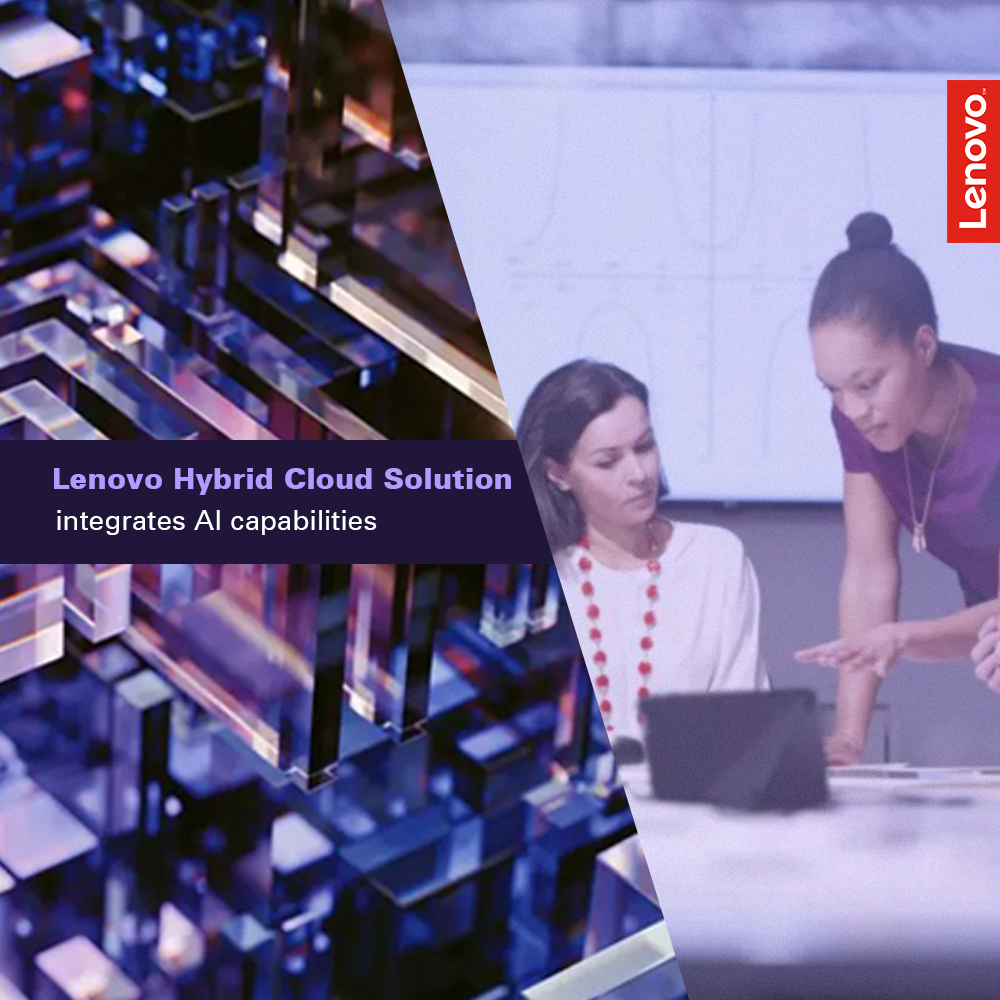
Lenovo hybrid cloud solution integrates AI capabilities
January 29, 2024 Lenovo hybrid cloud solution integrates AI capabilities Lenovo has been pioneering IT innovation since 1984—and today, the tech giant has 18 research and development sites and holds 33,000 patents and patent applications. So, when the cloud revolution took off, Lenovo was quick to leverage cutting-edge private cloud technologies to support its global operations. Lenovo follows a cloud-first implementation strategy, carefully reviewing workloads to determine whether private, public, or hybrid cloud deployment is the best fit. They operate 23 private cloud data centers and edge data centers in 17 cities across the globe, while also taking advantage of 16 public cloud regions. Wenjie Zhang, Cloud Native Products R&D Director at Lenovo, says: “Managing our data and services effectively has always been a top priority. Governance is crucial: we aim to maintain tight control over everything.” Leveraging their technology expertise and leadership in cloud, Lenovo developed a solution to empower internal users to rapidly build, migrate, utilize, and manage private and public cloud environments. The Lenovo hybrid cloud solution incorporates a range of innovative capabilities that streamline and accelerate key cloud management tasks. For example, the solution substitutes intelligent digital workflows for manual container management via scripts and command-line interfaces. “The solution offers powerful self-service tools that help users do their work more quickly and efficiently,” explains Wenjie Zhang. “For example, it enables users to self-order computing, storage, container, and database services on a unified portal, and automatically delivers the required resource environment to users within minutes or even seconds.” By aggregating data from multiple sources into a single point of control, the Lenovo hybrid cloud solution offers users a 360-degree view of the health of their cloud environments. In addition, the solution incorporates AI capabilities that enable teams to rapidly drill down into the root causes of potential issues. “Through AI-powered automation, the Lenovo hybrid cloud solution enables users to analyze data and achieve the optimal balance of compute, storage, and networking resources for cloud workloads,” says Wenjie Zhang. “AI-assisted analytics can quickly pinpoint issues with APIs, servers, or networks, even if they are buried deep in the stack.” The solution enables teams to manage all resources—including Lenovo private cloud resources and hyperscaler platforms from other companies. Wenjie Zhang adds: “We analyze public cloud usage and spend, creating valuable opportunities to reallocate workloads to the most cost-efficient platforms.” References: Lenovo transforms hybrid cloud management with AI-powered automation – Lenovo StoryHub

Harnessing the Power of the Edge with Aruba ESP
January 26, 2024 Harnessing the Power of the Edge with Aruba ESP Over the past few decades, the technology market has undergone major shifts. Those shifts have been driven by mobility and the cloud. Now we’re entering the next big shift: the era of data—but we’re not talking about data that’s generated in a cloud or a data center. We’re talking about data that is available where business is done—where users, devices, and things all come together. We call that the Edge. But where exactly is the Edge? It could be a workplace, a hospital, a large sports stadium, a school, or a remote worker’s home. In these environments, massive amounts of data is generated by users, devices, and things. Organizations that successfully harness that data—harness it by analyzing and acting on it in real time—can reveal valuable insights and deliver new services. More than that, they can delight their customers or produce better outcomes. They can win. And those that can’t, will lose. So, the stakes are high. And the question becomes—do you have the right foundation in place to successfully win at the Edge? The network is critical in making use of all this data and will be what separates business leaders from the laggards. New and advanced security threats are emerging every day. In 2019, security breaches increased over 11% from 2018 resulting in 33B records being stolen, which is expected to cost businesses $6T annually by 2021.1 IoT devices aren’t equipped with stringent security measures and are easy for hackers to exploit. Meanwhile, workforce mobility and work from home scenarios continue to expand the IT perimeter, as employees often access corporate resources on personal devices and from public Wi-Fi networks that aren’t secure. Lastly, with more applications moving to the cloud – whether sanctioned by IT or not – protecting an organization’s data has become even more challenging. Given the importance of capitalizing on the opportunities at the Edge, it’s critical for businesses to ensure that they have the right network foundation. They need to prepare their IT infrastructure for the next big technology transition while ensuring they can quickly respond to the need for business continuity and resiliency in the face of unplanned events. That’s where Aruba ESP (Edge Services Platform) comes in. It’s the industry’s first AI-powered platform designed to unify, automate, and secure the Edge. Aruba ESP combines AIOps, Zero Trust Security, and a Unified Infrastructure, with financial and consumption flexibility to help IT: Identify and resolve issues quickly, preempting problems before they impact the business; Protect against advanced threats from a vanishing security perimeter; Monitor and manage thousands of wired, wireless and WAN devices across campus, branch, data center, or remote worker locations; Quickly deploy network services at scale to support changing business needs; and Allow continued infrastructure investment in the face of uncertain financial challenges. Aruba ESP offers services at the Edge that include onboarding, provisioning, orchestration, analytics, location, and management, which can all be accessed using Aruba Central—the cloud-native single-pane-of-glass for Aruba ESP. Central’s SaaS consumption model enables rapid deployment and provides unified management, AIOps, and security for wired, wireless, and SD-WAN operations across campus, branch, data center, and remote locations. Through Central, network admins can use AI Insights to help quickly troubleshoot, identify, and resolve issues before users complain or the business suffers. References: Aruba ESP (Edge Services Platform) | HPE Aruba Networking (arubanetworks.com)
Lenovo ThinkShield delivers Smarter Security
January 24, 2024 Lenovo ThinkShield delivers Smarter Security In today’s connected world, everyone benefits from advanced cyber defense programs. At an individual level, a cybersecurity attack can result in everything from identity theft, to extortion attempts, to the loss of important data like family photos. Everyone relies on critical infrastructure like power plants, hospitals, and financial service companies. Securing these and other organizations is essential to keeping our society functioning. Furthermore, today’s remote workforce is making IT asset accountability difficult and costly. Critical asset data resides in multiple systems and formats, like static spreadsheets and incomplete databases, making the capture and synchronization of meaningful asset information difficult and costly. The risk is high, enterprises cannot defend or manage what they do not know they have. Enterprise customers need an IT asset management tool to effectively track and manage technology assets, improve compliance, optimize IT infrastructure, and reduce costs. Lenovo heard the call from customers and has responded. ThinkShield Asset Intelligence gives the enterprise visibility to its assets, even if they are purchased from multiple manufacturers and places. The solution powered by Ivanti and included in Lenovo’s ThinkShield portfolio of cybersecurity solutions, allows IT managers to access their company-wide databases, including purchasing, shipping, warranty, and hardware components, so they can know what devices are where and with whom. In addition, because all upgrades and any changes to hardware are registered, Lenovo is among the first hardware manufacturers to provide this OEM solution to fully automate the flow of factory procurement data with an organization’s discovery data to enable accurate and feature-rich asset management capabilities. Different from traditional security approaches, ThinkShield Asset Intelligence provides the full picture of knowing both what has been purchased and merging that information with existing endpoint management sources. ThinkShield Asset Intelligence helps mitigate attack risks by tracking and monitoring devices throughout the life of the asset. By providing a clear set of processes and procedures to verify complete and accurate asset disposal, the solution anticipates and deflects threats before a breach occurs. With ThinkShield Asset Intelligence, enterprise customers can lower security risks by tracking assets, more quickly identify assets that are lost or stolen, and identify devices not being managed. ThinkShield Asset Intelligence also enables IT managers to assign devices to user and locations, track software usage to avoid the phenomenon of “shelfware,” and gain insights about when to purchase or update assets. Nima Baiati, Executive Director & GM, Commercial Cybersecurity Solutions at Lenovo said: “As the saying goes that you can’t secure what you can’t see.” He also said that ThinkShield Asset Intelligence enables IT and Security teams to not only gain visibility to their assets but enables them to gain deeper insights into those assets allowing them to more effectively manage and secure those assets. References: Smarter Security with Lenovo ThinkShield Asset Intelligence – Lenovo StoryHub

Intel® Hardware Shield offers incredible hardware-based security capabilities
January 22, 2024 Intel® Hardware Shield offers incredible hardware-based security In today’s connected world, everyone benefits from advanced cyber defense programs. At an individual level, a cybersecurity attack can result in everything from identity theft, to extortion attempts, to the loss of important data like family photos. Everyone relies on critical infrastructure like power plants, hospitals, and financial service companies. Securing these and other organizations is essential to keeping our society functioning. As the frequency, complexity, and severity of cyberattacks and network security attacks continue to rise, trust Intel® Hardware Shield to better protect your users and data. Included with Windows PCs built on Intel vPro®, this collection of security technologies helps defend against modern threats at each layer: hardware, BIOS/firmware, hypervisor, VMs, OS, and applications. Below-the-OS security Improve network and cyber security with active measures and unique out-of-the-box features exclusive to Intel® Hardware Shield, which includes advanced threat protections, application and data protections, and below-the-OS security. Aimed at minimizing the risk of malware injection by using Intel® Hardware Shield to lock down memory in the BIOS when software is running and help prevent planted malware from compromising the OS. Help ensure your OS boots securely with Intel® Hardware Shield that offers many hardware-based security capabilities that support a secure boot, allowing your PCs to launch into a trusted state. Application & data protections Boost IT security for virtualized environments with Intel vPro® Enterprise for Windows OS, which extends hardware-rooted features to help protect user access credentials, workspaces, applications, and data in hardened enclaves. Run virtual machines for security-based isolation with application compatibility across different operating systems running on the same PC with the many capabilities featured in Intel® Hardware Shield. Accelerate virtualized security software like Windows Defender Credential Guard and Application Guard with Intel virtualization capabilities to help protect against OS kernel-level malware and browser-based attacks. Complement virtualization with hardware-based encryption to help protect data at every layer. Advance threat protections Mitigate extreme network security attacks like control-flow hijacking, ransomware, and crypto mining. Software vendors like Chrome browser and Adobe use Intel® Control-Flow Enforcement Technology (Intel® CET) to help defend against attacks on system memory. Help defend against ransomware and living-off-the-land-attacks with Intel® Threat Detection Technology (Intel® TDT). Unique to Intel, Intel® TDT augments existing software-only security solutions to help detect the latest threats with additional minimal impacts on user experience. References: Intel® Hardware Shield – Intel vPro® Platform

AI to radically transform jobs, healthcare, and education – Bill Gates
January 19, 2024 AI to radically transform jobs, healthcare, education – Bill Gates “AI” or artificial intelligence has become a catchall term to describe any advancements in computing, systems and technology in which computer programs can perform tasks or solve problems that require the kind of reason we associate with human intelligence, even learning from past processes. But what is AI? A straightforward definition from Britannica states that artificial intelligence is “the ability of a digital computer or computer-controlled robot to perform tasks commonly associated with intelligent beings.” In reality, AI is already at work all around us, impacting everything from our search results, to our online dating prospects, to the way we shop. Data shows that the use of AI in many sectors of business has grown by 270% over the last four years. Bill Gates thinks AI is “revolutionary” Microsoft cofounder Bill Gates recently published a six-page blog post outlining his predictions for the future impact of the technology on healthcare, education, and the workforce. Gates said in his blog post that 2023 marked the first time he’d used AI at work or for “serious reasons.” Compared to previous years, the world has a better sense of what jobs AI will be able to do itself and “which ones it will serve as a copilot for,” Gates said. Numerous studies conducted this year have tried to pinpoint which skills and sectors would be the most impacted by advanced AI. There’s already evidence that using the tech as a copilot at work can help employees get ahead. Several companies have developed internal AI tools to boost employees while others encourage workers to use publically available technology. Gates also laid out several medical questions that scientists around the world were trying to use AI to answer. He said the work was ambitious and in an early stage of development. Gates believed that most of it wouldn’t emerge in the next year and some may not leave the lab at all. He said the work was setting the stage “for a massive technology boom later this decade.” A few of the projects Gates namechecked were attempting to use AI to combat antibiotic resistance, treat high-risk pregnancies, and help people assess their risk for HIV. Gates’s nonprofit, the Bill & Melinda Gates Foundation, which he runs with his ex-wife, has donated billions of dollars to medical research worldwide. The foundation’s work has particularly focused on researching, developing, and delivering vaccines to the world’s poorest countries. Gates previously predicted that AI could transform education in the next five to 10 years by delivering content tailored to a student’s learning style. He suggested AI could engage students by learning what motivates them and what causes them to lose interest in subjects. While he said teachers likely wouldn’t become redundant, they may need to adapt to the new technology. In his most recent post, Gates called the AI education tools being piloted today “mind-blowing.” References: Bill Gates’s Predictions: AI Will Radically Transform Jobs, Health, Education; How AI Will Impact The Future Of Work And Life; The road ahead reaches a turning point in 2024

AMD Ryzen™ brings you innovation and endless possibilities
January 17, 2024 AMD Ryzen™ brings you innovation and endless possibilities The search is over for a laptop that delivers the performance and battery life you’ve been looking for, all in one sleek, ultra-thin design. For when it comes to choosing the right HP PC, you deserve the best. AMD brings you innovation and endless possibilities. To win, you need a laptop that responds the moment you need it to. The advanced technology of AMD Ryzen™ Mobile Processors enable high refresh and frame rates. The result is stutter-free performance with instant responsiveness even in your most demanding games, so you stay in the moment, every moment. Run your most robust apps at lightning-fast speeds. Dive into immersive multimedia and gaming experiences. And go ahead, do it all at once with up to 8 powerful cores. Intelligent, power-efficient AMD tech enables long-lasting battery. Whether you’re editing 4K footage or crafting a complex design, save time with incredibly fast performance, letting you get back to what you do best — creating. Built-in AMD Radeon™ Graphics make you feel like you’re really there, whether you’re video chatting with friends or watching your favorite movies and shows. With crystal-clear picture quality and stunning color contrast, you’ll always stay fully immersed in the moment. AMD Ryzen™ Mobile Processors are so powerful and efficient that they enable masterful laptop designs inside and out. Now you don’t have to sacrifice performance for beauty to enjoy a lighter, sleeker and elegantly crafted laptop. With 27,000 plus employees around the world, AMD continues to push the limits of innovation to solve the world’s most important challenges by developing high-performance and adaptive computing technologies. AMD is also at the forefront of transforming the world through non-stop innovation for creators, researchers, innovators and explorers. The AMD Ryzen Pro 7040 Series Processors are powering the best business PCs in the world: The Zen 4 is the world’s fastest and most advanced business processor; The 4nm is the ultra power-efficient business laptop processor; The AMD RDNA 3 is the world’s most powerful integrated graphics; The AMD Ryzen AI is the world’s first integrated AI engine in an X86 Processor. These processors are designed for uncompromising innovation, speed and power. Windows 11 PCs powered by RyzenTM PRO 7040 series processors come with integrated Microsoft Pluton security delivering chip-to-cloud protection. AMD Memory Guard helps protect company’s sensitive business data when an employee’s PC is lost or stolen. AMD offers outstanding silicon assisted security to enable critical security solutions from OS providers and OEMs. Reference: HP and AMD | HP® Philippines

The indelible imprint Technology has placed on our world
January 15, 2024 The indelible imprint Technology has placed on our world Technology has been clearly enriching our lives with uninterrupted information sharing and resource access, but its excessive use has apparently raised concerns on mental health, privacy and increased social divisions. The quick growth of AI tools like ChatGPT has further intensified technology’s role in various industrial settings. The year 2023 saw technology dominate nearly every aspect of our daily life. From the transport system, access to food, and health care to socialization, productivity, and the ease of learning, technology has left an indelible imprint on our world. It has not only made knowledge more accessible but has also led to the formation of global communities in the digital world. Let’s explore the eight key ways in which technology has shaped our lives in recent years. 1. Enhanced Communication Technology has converted traditional voice calls into text-based messaging and social media as the primary means of connection. Moreover, video calling, though not a recent invention, has thrived with the proliferation of high-speed, affordable broadband. The COVID-19 pandemic has solidified video calling as a ubiquitous way to stay connected with loved ones, with Zoom emerging as a popular choice for video conferencing. 2. Work In 2023 with AI The AI revolution is underway, with businesses contemplating the use of AI to replace hiring new staff. Launched in November 2022, AI tool ChatGPT has already revolutionized the way students and professionals access information. It has simplified various tasks, from creating resumes to composing essays, summarizing historical events, crafting emails, among others. Its impact is evident as it garners around 1.8 billion monthly visits to the ChatGPT website. 3. Privacy at Risk In 2022, the average global internet user spent seven hours online each day. But our online actions are also suspiciously tracked making us susceptible and at risk to hackers and scammers. Technology, however, provides solutions for safeguarding our digital lives. Password managers shield existing passwords, generate secure ones, and monitor potential data breaches. Anti-virus software acts as a shield against malware and ransomware, while tools for removing personal information from search engines enhance privacy. 4. Convenient Way to Shop Technology has introduced the convenience of contactless payments through cards and mobile devices, simplifying transactions. For businesses, Point of Sale (POS) systems provide electronic payment solutions while enabling inventory management, receipt creation, and loyalty program management. Moreover, the majority of us now possess tablets, laptops, or smartphones, affording easy access to online stores. 5. Information Access In the old days, a visit to the library was necessary to acquire in-depth knowledge. Today, online resources offer a wealth of information on practically any topic imaginable. Google Maps guide us to destinations, combining directions and satellite imaging for ease of navigation. Various apps have reshaped how we interact with the world, spanning categories like learning, dating, dining, and more. The smartphone has shifted from a mere communication device to an essential portal to the online world. 6. Social Lives Online Social media platforms like Twitter, Snapchat, TikTok, and Instagram offer real-time glimpses into the lives of friends, family, and celebrities. Additionally, companies aim to extend our online presence into the “Metaverse,” where users interact within a computer-generated environment. This paradigm shift in communication has given rise to social commentary and movements, while also presenting challenges such as issues related to mental health, privacy, and the vulnerability of younger users. 7. Flexible Work Setup The pandemic forced a transition from office settings to home-based work in 2020. The trend has persisted, as big and small corporations practice indefinite work-from-home options. Technological progress is instrumental in making this shift sustainable, with remote work software facilitating organization, time management, and goal alignment for employees dispersed across various locations. 8. Advanced Health Tracking Today’s fitness devices offer a scientific approach to health monitoring, delivering instant feedback and personalized recommendations. The Apple Watch can now monitor heart rate, blood pressure, exercise routines, and sleep patterns. These innovations enable us to embark on fitness journeys with precision, offering a level of engagement never before possible.

Dell Connected PCs: Secure, Seamless And Reliable Connectivity
January 12, 2024 Dell Connected PCs: Secure, Seamless and Reliable Connectivity Disasters or internet disruptions can result in significant productivity losses, and Connected PCs can help minimize these interruptions, enabling employees to continue working with a cellular connection. According to Gartner’s “Top Growth Trends in WAN Branch Office Connectivity for 2023” report, published in February 2023, “By 2025, 10% of enterprise sites will use 5G as a primary or backup fixed wireless connectivity option in their WANs, up from less than 1% in 2021.” Dell’s Connected PCs, including the Rugged series, play a vital role in healthcare and emergency services. They empower first responders and healthcare providers to communicate critical information during emergencies, natural disasters, and other critical situations. These devices support real-time coordination, and the sharing of sensitive medical data, and they aid in search and rescue operations, weather tracking and remote missions. Connected PCs are also an excellent choice for field services such as oil and gas, construction and agriculture, providing real-time data access and communication in remote areas. For instance, field workers and service representatives can access customer data and provide real-time support or process orders even in areas without Wi-Fi access. According to Forrester Research Inc.’s report “Get Connected With Private 5G In Rural America,” dated December 2022, “Albemarle Corporation, a specialty chemicals company with leading positions in lithium, bromine, and refining catalysts, implemented a private 5G network at its lithium mine in Kings Mountain, North Carolina. The initial 5G trial included enhancing the company’s hybrid work environment and reducing global travel through remote operations support while workers conducted surveys, technical assistance, and maintenance activities.” Connected PCs have a significant impact on e-learning and remote education. They empower higher education researchers with access to global digital libraries and academic databases, making virtual classes more accessible for educators and students at various educational levels, regardless of their location. Another critical application is in professions such as environmental scientists, geologists, wildlife conservationists and researchers who rely on maps, research databases, sensor data and wildlife tracking in remote areas to make quicker analyses and improve decision-making for global environmental and wildlife protection. Dell Connected PCs have a profound impact across multiple industries, ensuring secure, seamless and reliable connectivity. What’s more, their cellular connectivity adds an extra layer of security, making them ideal for professionals who require a secure connection for their work, especially in industries where data privacy and security are of paramount importance. From healthcare and field services to business operations and education, these PCs play a pivotal role in enhancing productivity, securing data access, and facilitating communication in both urban and remote settings. Reference: Dell Connected PCs: Empowering Future Work and Learning | Dell Philippines