





Microsoft Azure simplifies the process of building modern applications
Today, refreshing on-prem infrastructure is becoming increasingly challenging. Hardware prices are rising, delivery timelines are unpredictable, and planning capacity 3–5 years ahead is riskier than ever. Many organizations end up either over-investing in unused capacity or under-provisioning and facing performance constraints.
Microsoft Azure offers a more flexible alternative. Instead of waiting months for hardware, you can provision resources in minutes, scale based on actual demand, and shift from large upfront CapEx to a more manageable OpEx model.
Azure is a cloud platform designed to simplify the process of building modern applications. Whether you choose to host your applications entirely in Azure or extend your on-premises applications with Azure services, Azure helps you create applications that are scalable, reliable, and maintainable.
Azure supports the most popular programming languages in use today, including .NET, C++, Go, Java, JavaScript, Python, and Rust. With a comprehensive SDK and extensive support in tools you already use like VS Code, Visual Studio, IntelliJ, and Eclipse, Azure builds on the skills you already have and helps you be productive right away.
Azure provides a suite of developer tools that streamline how you build, deploy, and manage cloud applications. You also gain built-in resilience, security, and cost visibility—without the burden of maintaining physical infrastructure.
Common software development and deployment scenarios on Azure include the following options:
Application hosting on Azure – Host your entire application stack: web applications, APIs, databases, and storage services. Azure supports various hosting models from fully managed services to containers to virtual machines. When you use fully managed Azure services, your applications take advantage of the scalability, high availability, and security built into Azure.
Consuming cloud services from existing on-premises applications – Extend existing on-premises apps with Azure services. For example, an application can use Azure Blob Storage to store files, Azure Key Vault to securely store application secrets, or Azure AI Search to add full-text search capability. These fully managed services integrate with your apps without changing your application architecture or deployment model.
Container based architectures – Use container-based services to modernize your apps. Whether you need a private registry for container images, you’re containerizing an existing app for easier deployment, deploying microservices-based applications, or managing containers at scale, Azure has solutions that support your needs.
AI driven applications – Build AI-powered applications on your terms, in your preferred programming language, in the cloud, on-premises, or at the edge. Azure provides access to powerful foundation models through Azure OpenAI, prebuilt AI services for speech, vision, and language, and tools for building intelligent agents using the Model Context Protocol (MCP).
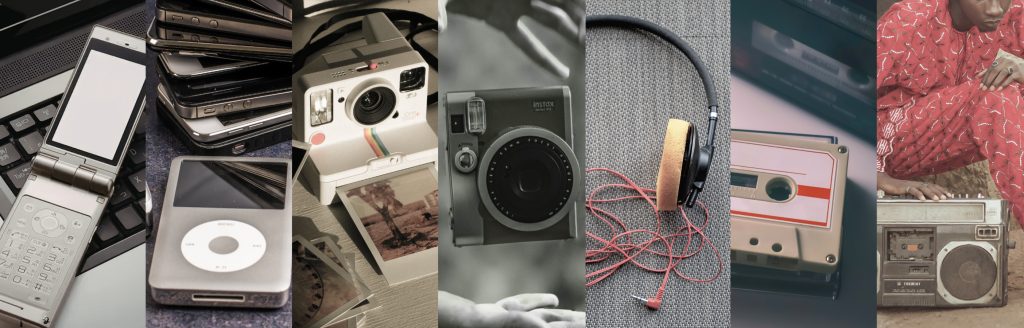
Flip Phones. Flip phones have become a small escape hatch for people who want calls and texts without carrying every app they’ve ever regretted downloading. The Motorola Razr still has that snap-shut satisfaction, and newer basic phones give people a way to be reachable without being fully swallowed by a screen.
iPods. Used iPods are getting attention again because they do one job and one job only. Loading a Nano, Classic, or Touch with your own music library feels more personal than letting an app decide what you should listen to.
Instant Cameras. Polaroid and Fujifilm Instax cameras keep showing up at parties, weddings, dorm rooms, and weekend trips because the photo provides a tangible memory. The colors can be strange, the flash can be harsh, and someone will probably blink, but it’s still more fun than uploading memories to Google Photos.
Point-and-Shoots. Canon PowerShots, Sony Cyber-shots, Nikon Coolpix cameras, and other small digital cameras from the 2000s are back in purses and jacket pockets. They make photos look less polished than iPhone shots, with red-eye, blur, and flash glare that somehow feel closer to how the night actually felt.
Wired Headphones. Apple EarPods and other wired headphones have gone from boring backup gear to an actual style choice. They don’t need charging, they don’t vanish into couch cushions as easily, and they’re much more budget-friendly.
Cassette Players. Cassette players and tape decks are getting attention from people who like music that takes a little effort. Rewinding, flipping sides, and dealing with a worn-out case can be annoying, sure, but the whole process feels more involved than tapping shuffle for the 400th time.
Boomboxes. The modern boombox comeback is more of a compromise than anything else, since plenty of new models look old while offering Bluetooth connection. That mix gives people the chunky 1980s and 1990s look without asking them to fully return to D batteries, warped tapes, and radio static.
Reference: 20 signs the internet is falling back in love with old tech

Million-dollar sale of his company
According to a document from the United States Securities and Exchange Commission (SEC) reported by People magazine, Lame sold Step Distinctive, the company that manages his global brand and business activities, for the not inconsiderable sum of $975 million.
The buyer: a Hong Kong-based holding company
According to that same information, the acquisition of the company would have been carried out by Rich Sparkle, a holding company based in Hong Kong and currently listed on the stock exchange, so the purchase would have been carried out through the issuance of 75 million shares of this business group.
Billion-dollar agreement
Behind this agreement lies everything Khaby Lame represents commercially as a global internet star, a premise from which Rich Sparkle expects to reap significant profits. In fact, according to a press release, they estimate he could generate more than $4 billion in annual sales.
One of the key and most important points of the agreement signed between both parties is the authorization of the Senegalese influencer residing in Italy to have digital clones of himself made; that is, they will be able to use his facial, voice, and behavioral recognition models to develop these duplicates through Artificial Intelligence (AI).
However, the agreement doesn’t mean Lame is leaving the company; quite the opposite, in fact. According to People, the content creator, who previously owned 49% of its shares, will continue to lead the company with a majority stake. He will also retain control over his brand’s creative processes and have a say in its management.
Rich Sparkle’s goal with this innovative strategy is to create commercial content through social media and other e-commerce channels without Lame’s involvement, and to do so live, in multiple languages, and across different parts of the world.
Reference: The TikTok star who will allow his digital cloning in exchange for almost $1 billion