


August 19, 2024 Digital pitfalls loom as world is too dependent on technology The worldwide technology meltdown in July 2024 which was caused by a flawed update installed on computers running on Microsoft’s dominant Windows software by cybersecurity specialist CrowdStrike was so serious that some affected businesses such as Delta Air Lines were still recovering from it days later. It’s a tell-tale moment — one that illustrates the digital pitfalls looming in a culture that takes the magic of technology for granted until it implodes into a horror show that exposes our ignorance and vulnerability. Thousands of flights were canceled and tens of thousands were delayed, leading to long lines at airports in the U.S., Europe, Asia and Latin America. Airlines lost access to check-in and booking services in the heart of the summer travel season. By late afternoon Eastern time, the worst appeared to be over, though there were still lingering cancellations and delays due to the cascading effect of the disruption. In the Philippines, airports experienced congestion and flight disruptions due to the global cyber outage which resulted in some procedures needing to be done manually. “We are utterly dependent on systems that we don’t even know exist until they break,” said Paul Saffo, a Silicon Valley forecaster and historian. “We have become a little bit like Blanche DuBois in that scene from ‘A Streetcar Named Desire,’ where she says, ‘I have always depended on the kindness of strangers.’” Twenty years ago, Facebook founder Mark Zuckerberg popularized a high-tech mantra: “Move fast and break things,” which was supposed to be a rallying cry for game-changing innovation. It now seems more like an elegy for a society perched on a digital foundation too fragile to withstand a defective software program that was supposed to help protect computers — not crash them. The dependence — and extreme vulnerability — starts with the interconnections that bind our computers, phones and other devices. That usually makes life easier and more convenient, but it also means outages can have more far-reaching ripple effects, whether they are caused by a mistake like the one made by CrowdStrike or through the malicious intent of a hacker. The risks are being amplified by the tightening control of a corporate coterie popularly known as “Big Tech”: Microsoft, whose software runs most of the world’s computers; Apple and Google, whose software powers virtually all of the world’s smartphones. If our digital evolution seems to be headed in the wrong direction, should we change course? But it’s becoming increasingly untenable to toggle back to the analog and early digital era of 30 or 40 years ago when more tasks were done manually and more records were handled on pen and paper. If anything, technology appears destined to become even more pervasive now that artificial intelligence seems poised to automate more tasks, including potentially writing the code for software updates that will be checked by a computer — that will be overseen by another computer to make sure it’s not malfunctioning. Reference: Technology’s grip on modern life is pushing us down a dimly lit path of digital land mines (msn.com)

Spend less time on social media but more time on things that matter
August 14, 2024 Spend less time on social media, more time on things that matter The internet is a noisy and often exhausting place. And not surprisingly, many people are beginning to miss the analog days of the past, when internet usage was just a small sliver of our day – or even week! There’s a growing body of people who are thinking along these lines. People who are embracing a slow approach to life, practicing digital decluttering, and deleting their Facebook accounts. It’s encouraging and eye opening to hear from people like this, who remind us we don’t need to be glued to our phones. But for most of us, the days before social media and smartphones are a distant memory. Today, it’s hard to imagine what life would be like without these constant interruptions and compulsions. Many large-scale surveys have concluded that the average person spends between three and six hours a day looking at their phones. Social media has many benefits and downsides as well. Research suggests that excessive time spent on social media has a direct impact on our mental and physical health. The information is out there and we all know it, but how do we break a pervasive habit? Social media is specifically designed to trigger the reward mechanism in our brain, making it very easy to form some degree of dependence. That’s why we sometimes feel a strong urge to pick up the phone and check our socials, the same way a smoker craves tobacco. Spend some time identifying what triggers the urge to reach for your phone. That will help you figure out how to satisfy the underlying need without resorting to scrolling. Many of us automatically pick up our phones as a distraction from feelings we don’t want to feel. But instead of giving in to that urge, take a moment to check in with your mind and body. Instead of giving in to that urge, take a moment to check in with your mind and body. Take a few deep breaths and notice if you’re feeling stressed or upset. What usually makes you feel better when these feelings come up? This is the perfect moment to use a self-soothing technique. Try making plans to see or call someone you miss. We spend many hours a day looking at our phones, but it sometimes seems like such a huge effort to arrange to meet someone for coffee. If you want to take a more therapeutic approach, write a letter to someone who’s a little farther away, like an elderly relative or a friend who’s relocated. Letter writing has so many benefits for our brains and mental health, and can bring so much joy to the recipient. If you’re always watching musicians and dancers on TikTok, then maybe you should consider going to a live show or taking a dance/music class yourself. If you’re obsessed with games, try to take it offline by planning a board game night with friends, or even going to an actual arcade. Naturally, you can also just look to your other interests and goals. If you’ve been meaning to read more, practice drawing, or start gardening, try one of those in your downtime instead of turning to your phone. Rewarding yourself for carrying out the replacement activity instead of using social media is essential. For example, you might reward yourself with a 10-minute break to do whatever you want after getting through an hour of work without checking your phone. But the best reward will be the feeling of freedom when you aren’t so anxiously attached to social media and can gain back all those misspent hours in your daily life. Reference: How to spend less time on social media and more time enjoying life (msn.com)

Epson’s WorkForce Enterprise Series powered by heat-free technology
August 12, 2024 heat-free technology in Epson’s WorkForce Enterprise Series Looking to balance business productivity and sustainability objectives? Look no further! Epson Heat-Free business inkjet printers now offer you the best of both worlds. Reduce your energy consumption, cut your bills, and boost operational efficiency with fast print speeds and minimal downtime. Get the best of everything, stay cool, and switch to a Heat-Free inkjet printer that’s better for business, better for the environment, and better for you. Epson Heat-Free Technology does not require heat in the ink ejection process. Instead, pressure is applied to the Piezo element, which flexes backwards and forwards firing the ink from the printhead. This means printer parts last longer, reducing energy consumption, saving energy, time and money in the process. Since no heat is required to warm up, it allows the printer to print immediately within seconds of first print-out time. The consistent high-speed printing further helps ensure increased productivity in workplaces. With no fuser unit required to heat and fuse the inks, our printers help reduce energy consumption compared to laser printers, resulting in more savings on electricity bills. Uses fewer replacement parts than laser printers. As our printhead is not a consumable, it greatly reduces impact on the environment. Powered by Heat-Free Technology, the business inkjet printers are engineered to print at consistently high speeds. Enhance your office productivity with less downtime for maintenance due to the simple structure and fewer replacement parts with our eco-friendly printers. With a simple design and smart construction, our inkjet printers require 59% fewer replacement parts over time. This keeps periodic parts replacements down, and results in reduced waste and time spent carrying out replacements and maintenance. Achieve laser-quality prints with Epson’s DURABrite pigment inks that are resistant to water, fading, and smudges. Their high ink yield capacity helps to lower the cost per print for your business. Epson’s Business Inkjet Printers use water-based pigment inks that are designed to offer high image quality, ease of storage and clear color printing. The pigment inks are highly water resistant and do not dissolve in water, making them much less susceptible to bleeding, in addition to being fade and smudge resistant. https://www.youtube.com/watch?v=vRolpyuzpSE As a global technology leader, Epson creates and delivers technology solutions for businesses and consumers, from inkjet printers and digital printing systems to 3LCD projectors, smart glasses, sensing systems and industrial robots. The company is focused on driving innovations and exceeding customer expectations in inkjet, visual communications, wearables and robotics. In the Philippines, Epson began operating in 1996 as a representative office in Metro Manila, and was renamed to Epson Philippines Corporation in 1998. Today, Epson continues to exceed customer expectations with its wide range of high-precision, energy-efficient products in the region. Reference: Be Cool BIJ | Epson Philippines

Samsung Galaxy Book 4 Edge laptop delivers top-notch performance
August 9, 2024 Samsung Galaxy Book 4 Edge delivers top-notch performance The Galaxy Book 4 Edge is Samsung’s first take on Microsoft’s new Arm-powered Copilot+ PCs. As one of the new breed of Copilot+ PCs the Samsung laptop is equipped with the Qualcomm Snapdragon Elite X Arm chip, which is also available in Microsoft’s latest Surface Pro. However, the top Galaxy Book model has a slightly faster version of the chip, which gives it about an 8% power boost on the processor and about 21% improvement in graphics. The outside of the laptop looks like Samsung’s numerous other Galaxy Books. The design may not be so inspiring but the smooth aluminum frame, tapered lip and one-handed opening all feel premium. The touchscreen is the main attraction. A bright, crisp and smooth OLED display that helps everything look its best. It is a fingerprint magnet and isn’t as bright as some rivals, but the screen has an anti-glare coating that makes a real difference when working under overhead lights. Brace yourself for the ultimate screen experience Get productive or kick back with your favorite entertainment on a spacious 14″ or 16″ 3K Dynamic AMOLED 2X display with touchscreen. The keyboard is fairly typical for a laptop, with a reasonable but not quite first-rate typing experience. But the trackpad is comically large and feels a bit like a waste of space. It is smooth and precise, but is the older mechanical-type that only clicks towards the bottom. The speakers are decent, but they fire out from the bottom of the machine and so are easily blocked if using on your lap or a sofa. The webcam supports various fancy AI effects, but does not have face recognition relying on fingerprint scanner in the power button to unlock the machine instead. Performance may be top notch, but the Galaxy Book’s battery life does not live up to the hype. It lasted about eight hours of work using a mix of browsing, writing, chat and note taking apps. That’s enough for a work day and matches what you can expect from an Intel-powered machine. The laptop has solid integration with other Samsung kit you might have, though, such as Galaxy phones or earbuds. You can remotely mirror your phone on the PC, use a tablet as a second screen, cut and paste between devices and automatically connected your earbuds. The Samsung Galaxy Book 4 Edge proves that Arm-powered PCs can deliver the performance to take on the best. It is snappy, quiet and maintains its top performance even when unplugged – something Intel or AMD-powered laptops cannot manage. But where it fails to deliver is on the promise of long battery life. With eight hours of working battery, it only matches the supposedly more power-hungry Intel machines. https://www.youtube.com/watch?v=q66erRNIM8w Specifications: Screen: 14in or 16in 3K AMOLED 2880 x 1800 (120Hz); Processor: Qualcomm Snapdragon X Elite RAM: 16GB; Storage: 512GB or 1TB; Operating system: Windows 11 Home; Camera: 2-megapixel (1080p); Connectivity: wifi 7, Bluetooth 5.3, 2x USB4, headphones, HDMI2.1 (USB-A and microSD 16in only); 14in dimensions: 312.3 x 223.8 x 10.9mm; 14in weight: 1.2kg; 16in dimensions: 355.4 x 250.4 x 12.3mm; 16in weight: 1.6kg Reference: Galaxy Book 4 Edge review: Samsung laptop delivers power but not battery life (msn.com)

Global tech outage underscores fragility of a digitized world
August 6, 2024 Global tech outage underscores fragility of a digitized world A faulty software update by cybersecurity firm CrowdStrike caused technological chaos worldwide on July 19. The incident has grounded flights, knocked down some financial companies and news outlets, and disrupted hospitals, small businesses and government offices. The scope of the outages highlighted the fragility of a digitized world dependent on just a few providers for key computing services. The unfortunate update affected CrowdStrike’s customers running Microsoft Windows, the world’s most popular operating system for personal computers. It was not the result of hacking or a cyberattack, according to CrowdStrike, which apologized and assured a fix on the same day. Businesses and governments worldwide experienced hourslong disruptions — their computer monitors glowing blue with error messages — and they scrambled to deal with the fallout. CrowdStrike’s CEO George Kurtz said some of their systems will require time-consuming manual fixes. Thousands of flights were canceled and tens of thousands were delayed, leading to long lines at airports in the U.S., Europe, Asia and Latin America. Airlines lost access to check-in and booking services in the heart of the summer travel season. By late afternoon Eastern time, the worst appeared to be over, though there were still lingering cancellations and delays due to the cascading effect of the disruption. In the Philippines, airports experienced congestion and flight disruptions due to the global cyber outage which resulted in some procedures needing to be done manually. According to Katrina Son’s report on “Saksi,” families continued to wait for their delayed flights on Friday night at the Ninoy Aquino International Airport Terminal 3. Some airlines have begun manual processes in their check-in counters. “Hindi nila alam which gate we are [supposed to go to]. Everything is manual, naka-handwrite ‘yung gates na naka-open,” said passenger Jazz, who’s supposed to be bound for Bali, Indonesia. (They don’t know which gate we are supposed to go to. Everything is manual, the open gates are hand-written). NAIA has deployed additional security personnel to control the growing crowd after local airlines Cebu Pacific and AirAsia were hit by the outage. In Davao City, Cebu Pacific has also begun manual check-in following two cancellations and several delayed flights. US-based CrowdStrike said in a recording on its customer service line that the problem was related to “the Falcon sensor,” referring to one of its products used to block online attacks. The company says it has 29,000 customers. In an interview on NBC’s “Today Show,” CrowdStrike CEO George Kurtz apologized, saying the company was “deeply sorry for the impact that we’ve caused to customers, to travelers, to anyone affected by this, including our companies.” Several local TV stations in the U.S. were prevented from airing the news early Friday, and some state and local governments reported problems at courts, motor vehicles departments, unemployment agencies, emergency call centers and other offices, but as the day progressed many of the systems were getting back to normal. Affected hospitals had problems with appointment systems, forcing them to suspend patient visits and cancel some surgeries. References: A faulty software update causes havoc worldwide for airlines, hospitals and governments (yahoo.com) PH airports disrupted as procedures go manual due to global cyber outage (msn.com) Global IT outage: Airlines, businesses affected by CrowdStrike, Microsoft issues | AP News

AI-generated images of daily human life are quite unsettling
August 2, 2024 AI-generated images of daily human life are quite unsettling Sometimes that future seems closer than ever, but other times AI can make itself look pretty dumb. What with the buzz around artificial intelligence that never seems to end. It has becoming widely predicted that one day, AI machines will be able to do everything the human mind can do, and do it better. StarsInsider has asked an AI image generator to create depictions of everyday life, from the simplest objects to the biggest philosophical ideas. Hopefully, no one is really relying on AI for ideas about the world, because the results that came from this AI are more than just a little off base… Politics. This AI generator’s idea of politics is probably pretty accurate for most of us. Confusing and unintelligible, but with a very clear suggestion of always needing to win! AI photo generator. Now we know how it all works. Somewhere deep in the depths of the internet, there’s a steam-powered contraption churning out AI-generated images like there’s no tomorrow, for all of our enjoyment and confusion. The meaning of life. It’s good to know, however, that this steampunk AI machine has an optimistic outlook on the meaning of life. We hope it’s right about this one, and that life in its truest form is all giant flowers to rest under and colorful orbs to play with. Smart watch. Here’s another invaluable look into the world of technology. It turns out the little machines inside our smart watches really do still have hands, even if they’re not the type of clock hands we’re used to! The universe. Maybe it’s just us, but it seems like our AI friend just confirmed the existence of the Illuminati… Keep your eyes peeled for lizard people! Family. The generator was so close to getting this picture of a family right. Unfortunately, for some reason, it decided to add some bigfoot flair right at the end. At least they all look happy. Career. Once again, the infinite wisdom of AI reflects how we really feel. It’s hard to imagine another image that expresses the feeling of going to work so perfectly. The internet. No one really knows how the internet works, so this image is as good a guess as any. We should all give thanks to the internet god in the bowler hat for all of our favorite cat videos and feelings of existential dread. Springtime. Ah, yes, beautiful springtime. The snow melts away, the birds return to their nests, and all of the poodles start to grow back their mossy coats… Man’s best friend. It’s a persistent misconception that dogs are man’s best friend. Sure, dogs are great, but they just don’t seem to want to build an emotional connection with us humans. That’s why, as we all know and as this image confirms, the chicken is and always has been man’s true best friend. Van Gogh. Everyone knows that the life of legendary painter Vincent van Gogh wasn’t exactly a happy one, and his art usually expressed that. But it’s nice to see this AI generator, always the optimist, imagine what it would be like if van Gogh painted cute puppy friends. Reference: Unsettling images that reveal how AI interprets human life (msn.com)

ASI Tech Seminar tackles the concept of artificial intelligence
August 2, 2024 ASI Tech Seminar tackles the concept of artificial intelligence The digital landscape is continuing to evolve at a radical phase. In recent years, artificial intelligence (AI) has emerged as a dynamic technology trend that is poised to revolutionize the future of humanity. We are witnessing a seamless integration of concepts that were once confined to science fiction into our everyday reality. AI exemplifies this shift, as it moves from the realm of imagination into practical implementation. AI has now seamlessly blended itself into our daily lives, fundamentally altering the way we work, communicate, and interact with the world around us. Advance Solutions Inc (ASI) conducted a tech update seminar on the concept of artificial intelligence on June 25, 2024 at Lanson Place Mall of Asia in Manila. The seminar, entitled “Empowering AI Innovation” was held in cooperation with Microsoft, Intel Philippines and Dell Technologies. For the past 28 years, ASI has been providing high quality but cost-effective IT products to its valued clients. Part of ASI’s commitment is to update and educate its clients about the emerging trends in technology. During the first part of the program, the following brand partners of ASI presented a thorough discussion on the subject matter of artificial intelligence or AI: Ms. Vivian A. Pasia, Partner Sales Manager of Intel Philippines started off with a call that for 2024, it’s time to refresh your PC fleet and be AI ready. She then proceeded to introduce the Intel® Core Ultra Processors for business users which are up to 47% better office app productivity vs 3-year-old PC and up to 36% processor power reduction gen-over-gen for video conferencing. She stated that Intel and partner Microsoft codefined AI PC definition and went on to explain what is an Intel® powered AI PC. It’s a PC with Intel® Core Ultra that brings new AI experiences in productivity, creativity, and security through a combination of the CPU, GPU, and the new NPU. She added the Microsoft’s requirements for an AI PC: comes with Copilot; has the Copilot key; comes with new NPU, CPU, and GPU powered silicon. For her part, Ms Wendy B. Gurra, Industry Technical Specialist of Intel Philippines, discussed the 5th Gen Intel® Xeon® processors which are specifically designed for AI. She said that they are architected for general AI and Large Language Models (LLMs). The 5th Gen Intel® Xeon® CPUs deliver significant AI performance across range of workloads. The 5th Gen Xeon also beats market requirements on LLM latencies. Ms Gurra then talked about the Intel® Gaudi® 3 AI accelerator which is bringing choice to Gen AI with performance, scalability and efficiency. She stated how Intel® Gaudi® addresses enterprise challenges: Need more choice other than single-source GPUs; Locked-in with proprietary software and networking; Ability to scale while containing costs of infrastructure; Maximize efficiency yet still solve business challenges. The next speaker was Jep Antiporda – Solutions Engineer from Microsoft and he brought up the idea of upgrading to the new Windows 11 Pro devices which are designed to provide the latest AI-enhanced features to help improve insights and efficiency in order to stay competitive. Older devices can increase vulnerability and waiting for tomorrow to modernize could cost your business dearly today. Also, control costs are crucial because older devices take more time to maintain, could expose you to costly security risks, and can dampen employee productivity and satisfaction. Mr Antiporda went on to discuss the rising importance of AI in the workplace since the pace of modern work demands a new approach. People spend more than half their day (57%) communicating in meetings, email and chat, and just 43% creating. Since 2020, the amount of time people spend in meetings has tripled. Employees welcome ways to simplify their workday and make a bigger impact. Then he talked about Copilot in Windows — your AI assistant at work does the heavy-lifting so you can do the extraordinary. This AI tool helps users stay organized and in the flow with one place to get relevant answers to complex questions, tailor settings for your workstyle, set up focus sessions refine and clarify their content. After the two presentations which focused on software, the next two speakers dwelt on hardware this time. The first one was Sol Gaerlan, Solutions Architect – Team Lead at Dell Technologies and he started off with what can AI do for business: Increase efficiency and productivity; enable data driven decisions; and value for your ROI. But since the foundation of AI is data, managing data is pertinent to success. This is where Dell technology comes into the picture. Dell PowerScale and ECS handle massive amounts of unstructured data by design with security in mind. PowerScale delivers exceptional scale and performance via single namespace, NVMe all-flash and GPUDirect. Mr Gaerlan proceeded to discuss about the Dell AI Factory, a new type of data center which aims to help customers make the most of their data, the raw material that powers the AI factory, to achieve their desired outcomes. Dell brings to the table the industry’s only end-to-end AI-optimized infrastructure portfolio, an open ecosystem of deep partnerships with other leading AI companies, and insight and know-how of comprehensive suite of AI services – from strategy and planning to implementation and scaling. The Dell AI Factory offers: Comprehensive AI services and validated, optimized solutions make AI easier, augmenting skills gaps and addressing data readiness; Trusted infrastructure, full-stack solutions and services ensure valuable data is protected, managed and accessible; Industry’s broadest AI solutions portfolio addresses “no one-size-fits all” approach. Further, the Dell AI Factory design helps organizations bring AI as close as possible to where their data lives to minimize latency, lower costs, and maintain data security by keeping sensitive information within a controlled environment. The last one to present, Michelle Juliano who is Product Marketing Manager also from Dell Technologies, talked about harnessing the power of AI with Dell client solutions. For her introduction, she said that Generative AI is the catalyst for multi-decade productivity and
Wearable gadgets trace link between fashion and technology
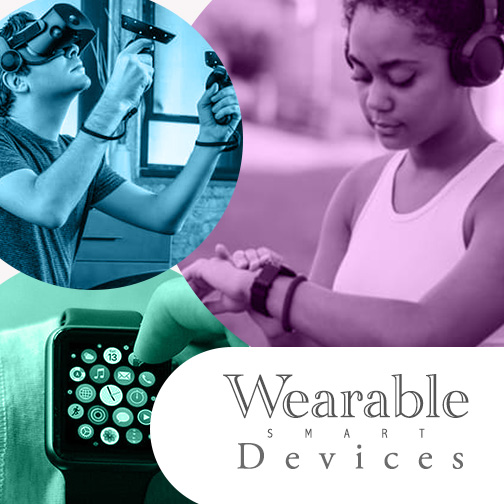
July 29, 2024 Wearable gadgets trace link between fashion and technology Fashion merging with technology used to be something out of this world. But over the last few decades, as technology evolves, fashion seemingly doesn’t want to be left behind. The link between fashion and the technology sector has a long history, culminating in wearable technology products that have changed the daily life of anyone who wears them. Wearable technology refers to all those electronic devices that can be worn as accessories on the body by the user while providing some benefit to the wearer, very often making use of AI tools. Eyeglasses were probably the first technological accessory that human beings ever wore, which were invented during the Middle Ages, but which we hardly consider a technology today, perhaps because they are no longer an innovative product. Wearable technology started to evolve especially towards the second half of the 20th century: some tangible examples are the calculator watches invented in the 1970s or even the Walkman in the 1980s. Technology has quickly evolved since the start of the internet: consequently, wearable technology, year after year, has also been at the center of a relentless evolution. At the beginning of the new millennium, Bluetooth headphones, iPods, Fitbit, wearable webcams began to spread, which totally changed the way we understand fashion, no longer considered a mere aesthetic trend, but with a specific technological function capable of accompanying us everywhere. From 2010 onwards, there was a real boom: objects and accessories of this kind began to develop really faster, finding their way into wardrobes and drawers of millions of people, as with the launch of the first Apple Watch in September 2014. Today, the Apple Watch is among the best-selling wearable technologies. These are some of its many functions, included or not depending on the model: watch, alarm clock, ability to receive messages and make phone calls, monitor physical activity and make payments. The Taiwan Textile Research Institute has designed a T-shirt equipped with a device that monitors the wearer’s activity and can alert runners when they are pushing too hard. In recent years, AI has contributed greatly to making wearable technology even more innovative and interactive. An example of this are augmented reality viewers, initially used in the world of video games. Apple’s Vision Pro represents perhaps the latest frontier in this type of wearable technology. The smart visors launched by Apple are considered to be the first model of ‘spatial computing’, as it is literally having a computer at hand at all times, but without a screen, and working in the space surrounding the user. It is a totally new way of interacting with technology, once again launched by one of the most disruptive brands in recent years. Its highlights are a large, portable, private 4K display, FaceTime goes spatial, an immersive experience and features Apple’s first three-dimensional camera. Another novelty in recent years, combining jewelry and technology, are smart rings which can monitor the health of the person wearing them, collecting data such as steps, kilometers traveled, heart rate, speed, oxygen levels, just like a smartwatch. Among the smart rings, one of the most innovative models of this type of wearable technology was launched at the Mobile World Congress in February 2024: the Samsung Galaxy Ring. Much lighter than other models, it is equipped with a suite of advanced sensors capable of providing an overview of all health-related data including fertility monitoring. Reference: Wearable technology: the wearable smart devices that are changing our daily lives (msn.com)

Getting into the trend of Healthy Habits With Wellness Apps
August 1, 2024 Getting into the trend of Healthy Habits With Wellness Apps Modern living has taken a toll on the health and well-being of everyone especially the working class or those wage earners or family breadwinners. The highly competitive work environment has turned out to be highly stressful and has become unhealthy for workers. Therefore, taking care of your overall well-being is now a priority. Good thing there are apps that make doing so easier. The following are a few wellness apps that can help you thrive and achieve your best selves and goals: Now Serving. Got an emergency and need a doctor ASAP? You can connect with Filipino doctors with just a few taps through Now Serving by SeriousMD. The app can make booking online or in-clinic appointments much easier. You can also chat with your doctor’s staff anytime, anywhere for inquiries, order medicines, and get them delivered. Online video consultations are also available. MindNation. A mental health and well-being application to address such concern if you feel that seeking help from mental health professionals is daunting and intimidating. Some don’t even know where or how to start. Available on the App Store and Play Store for free, MindNation has mood trackers, exercises, and resources as well as 24/7/365 online teletherapy, coaching sessions, and chats for your perusal. Headspace. An app that allows you to breathe in an otherwise fast-paced and stressful environment. It’s your “mind’s best friend” who helps you relax, focus, de-stress, and overall be mindful through guided meditation, mindfulness exercises, and courses, among other features. They have exercises to start and end the day in a healthier and happier state. Flo. For all things female health and well-being, this is an app to have on your phone. It’s useful for all the girlies who want to track their cycles as well as know more about their body. They have period, ovulation, and pregnancy trackers. The app gives insightful information about what goes on during your red days like PMS symptoms. There’s a whole community as well as informative discussions on the app. My Fitness Pal. Say hello to healthy eating habits with this all-in-one food and exercise tracker. You can track not just calories but also macros, vitamins, and other micronutrients. Heck, it can also keep track of your daily water intake. You can even find recipes and meal plans—depending on what you need: low carb, vegan, high protein—you can use at home. My Fitness Pal helps you understand and know more about what you put in your body. Nike Training Club. It’s never too late to start your fitness journey, and who else better to accompany you than Nike and its Nike Training Club application? From home workouts to mindfulness exercises, your overall well-being is going to be taken care of. You’ll get comprehensive home workout exercises, training, and fitness programs as well as holistic guidance for you to achieve your fitness goals. . Unprude. A new sexual wellness app that will serve as a safe space for your sexual wellness. It is equipped with modules, exercises, and articles, as well as conversation cards, meditative audio guides, podcasts, and videos regarding one’s sexual self. It has a comprehensive Sex Ed module that is free for all. Explore more about your sexual well-being with this app. **All Apps are available on App Store and Google Play. Reference: Say Hello to Healthy Habits With These Wellness Apps (msn.com)

Magazines not thriving in digital age, but not expiring either
July 29, 2024 Magazines not thriving in digital age, but not expiring either The arrival of online publication has fearsomely threatened the existence of print magazines. Since the production of the online versions, audiences have come to expect new content daily or even hourly. Casual readers are less willing to wait for a weekly or monthly print magazine to arrive in the post or on a newsstand. The ready availability of free, or significantly cheaper, digital content may deter them from purchasing print subscriptions or individual issues. Print magazine culture has certainly seen a decline since its heyday in the 20th century. Once-popular print magazines have moved entirely online or are largely sustained by growing digital subscriptions. Elsewhere, internet media sites, of the type pioneered by Buzzfeed and its imitators, increasingly fulfil the need for diverse and distracting short-form writing. The explosion of social media has also cut into the advertising market on which print magazines have traditionally depended. And yet print magazines refuse to go extinct. Established periodicals, such as the New Yorker and Vogue, stubbornly cling to a global readership in both print and digital formats. Likewise here in the local scene with Tatler Philippines, Cosmopolitan, Preview, Vogue Philippines, Metro among others which are still very much in circulation but of course alongside their online version. Some commentators have attributed the enduring appeal of print magazines to the physical experience of reading. We absorb information differently from the page than from the screen, perhaps in a less frantic and distractable way. “Digital fatigue” from the years of the pandemic has arguably resulted in a small pivot back to print media. The revived interest in print magazines has also been attributed to the “analog” preferences of Gen Z readers. In a previous ASI article, it was reported that there is a growing movement towards embracing the concept of slow living. Trends such as brewed, drip filter coffee and playing vinyl records align with this way of life. Once written off as the victims of the digital age, analog devices have been experiencing a comeback. And it’s not older people feeling nostalgic who are driving this trend. Younger people who never experienced the joy of analog technology the first time around are discovering these devices for themselves. Writer Hope Corrigan has noted, there is also something appealing about the aesthetics of print magazines. The care taken with layout, images and copy can’t always be replicated on as screen. Indeed, magazines with a significant focus on photography and visual design – such as fashion and travel magazines – are enduring in print. The new wave of print magazines tends to have a higher cover price and standard of production. They are also published less frequently, with quarterly or biannual schedules becoming the norm. Print magazines may also be seeing a revived interest from advertisers. Recent research indicates a strong preference for print advertising among consumers. Readers are far more likely to pay attention to a print advertisement and trust its content. Circulation and influence of print magazines may have reduced, but they are not necessarily lifeless or even dying. They can be seen as moving into a smaller, but sustainable, place in the media landscape. Reference: Magazines were supposed to die in the digital age. Why haven’t they? (msn.com)

Protecting your social media privacy is crucially essential
July 26, 2024 Protecting your social media privacy is crucially essential It’s funny how social media platforms have showcased or documented the lives of everyone or just about anybody in the world and yet privacy has become an utmost concern amid the seemingly liberated exposure. Facebook alone has more than two billion daily active users, making it a huge part of many people’s lives. Imagine the extent of damage and exposure to several online risks by even just a third of these users. This article will discuss all the available methods, from the basics to the advanced. They cannot guarantee 100% protection, but they can greatly enhance your security. Here are 9 ways to maintain social media privacy: 1.) Keep your profile private. A public profile is the top enemy of social media privacy. It lets everyone see your posts and profile information, which malicious individuals could use to make fake profiles. A determined stranger could study your daily routine from your social media posts. For example, they can learn your writing style and hobbies. 2.) Avoid sharing too much info. Many people treat their social media accounts like diaries, sharing their inner thoughts daily. However, that can be dangerous, especially if strangers can read them. If you are about to post something intimate or potentially damaging to your life, don’t. Also, you should not share ID information on the Internet like your new credit card. 3.) Think before responding. Internet culture encourages people to become overreactive to online content. Content creators use clickbait titles and images to elicit extreme reactions from audiences to gain views. Letting your emotions run rampant is a social media privacy threat. Many people have shared harmful content or sensitive information in fits of rage, endangering their online reputation. 4.) Improve your security settings. The most repeated social media privacy tip is probably using a strong password because it makes it harder for hackers to break into your account. Many hackers use the brute force method — a computer program testing every possible alphanumeric combination to find one that opens your account. It uses a lot of computing power, but it is viable for accounts with short and simple passwords. On the other hand, a hacker must exert more effort if you use a strong password. 5.) Select online friends wisely. During the early days of the Internet, people saw it as a way to connect with people worldwide. Nowadays, that dream continues as many form friends and even find their significant others on the Web. However, some folks take advantage of that feature by tricking people into being their friends. Then, they could convince a person to share sensitive information or meet them for more nefarious schemes. 6.) Avoid linking with public computers and Wi-Fi. Only access your accounts on your devices. You should also watch out for public Wi-Fi hotspots in malls and airports. Some savvy individuals install fake hotspots to fool people into providing access to their devices. If it’s an emergency, choose a hotspot with a password, such as those in cafes and restaurants. Confirm with staff that you’re linking to the right one. Delete your browsing history if you use a computer at an internet cafe or another public area. 7.) Delete unused social media accounts. You probably made a social media account during your school days. If you let it sit, someone may try to hack that and impersonate you. It would be a perfect account because it will show that it’s been active for years. Consequently, you should delete unused profiles for social media privacy. Search yourself on your favorite social media platforms if you don’t remember your previous accounts. Then, see if you can access and delete them. 8.) Update your phone and apps. Tech companies know that hackers always find new ways to break online security. Consequently, they often launch updates to protect users. That is why mobile devices usually remind people to install the latest ones. In response, you should download these upgrades. If you haven’t received notifications, do it manually via the Settings app. Also, head to the Google Play Store or Apple App Store to update your social media apps. 9.) Try a VPN. YouTubers and other content creators promote VPNs as their sponsors. These are virtual private networks, systems that reroute your online traffic to hide your IP address. This enables you to use features that apps limit based on your location. It’s a powerful social media privacy tool that can make you invisible to hackers. But you should choose reputable VPNs. Some sell user information to data brokers who might use that data for malicious purposes. Reference: How to protect your social media privacy (msn.com)

We are in the middle of analog technology resurgence
July 23, 2024 We are in the middle of analog technology resurgence As our tech advancements become faster, there is a growing movement towards embracing the concept of slow living. Trends such as brewed, drip filter coffee and playing vinyl records align with this way of life. Once written off as the victims of the digital age, analog devices have been experiencing a comeback. And it’s not older people feeling nostalgic who are driving this trend. Younger people who never experienced the joy of analog technology the first time around are discovering these devices for themselves. In 2023, vinyl record sales were the highest they had been this century, a trend which has seen them rising for the 16th consecutive year. Vinyl LPs have a rich, warm sound that can’t be replicated, and encourage a kind of deep listening as opposed to the skip-and-shuffle stream beat. The presence of a turntable and the ritual involved to play music demands a certain kind of respect that differs wildly from streamed music. The growing demand has also created a resurgence in the number of independent record shops. In the UK, there are a third more stores than a decade ago. Maybe our digital world has become so frenetic that ‘slow’ hobbies are now more appealing than ever, offering a break from the digital world. Many people seem to believe there’s more than enough room for both. Have we reached peak digital? It appears a natural balance is being sought out by younger generations, who are reaching out for something they can touch. Some 15 years ago, it seemed like everything analog was on its way out. Fast-forward to the 2020s and here we are in the middle of an analog tech resurgence. As adults today, we’ve never lived without the internet. But the bulk of our childhood was internet free. We used clunky computers to play Carmen Sandiego, practice typing, and make WordArt. Nowadays, using a computer or device is pretty much synonymous to using the internet…and people are connected almost 24/7. The internet is a noisy and often exhausting place. And not surprisingly, many people are beginning to miss the analog days of the past, when internet usage was just a small sliver of our day–or even week! There’s a growing body of people who are thinking along these lines. People who are embracing a slow approach to life, practicing digital decluttering, and deleting their Facebook accounts. It’s encouraging and eye opening to hear from people like this, who remind us we don’t need to be glued to our phones. We don’t need to have Yelp and Instagram and weather apps on tap. If you feel like you spend too much of your time online, or relying on digital, here’s how you can throwback to old-fashioned, analog practices: Read physical books; Wear a wristwatch; Be social without social media; Play board games; Use real film in taking photos; Write things down on paper; Get information from people and books. Reference: Why is analog technology still so appealing? (msn.com)

AMD Ryzen™ AI 300 Series Provide Ultimate Performance
July 16, 2024 AMD Ryzen™ AI 300 Series Provide Ultimate Performance During the Computex 2024 held in June, AMD announced a groundbreaking series of next-generation architecture and products aimed at ushering in a new era of AI experiences. AMD is introducing new AMD Ryzen™ AI 300 Series processors with the world’s most powerful Neural Processing Unit (NPU)1 for next-gen AI PCs that pave the way for a future full of AI-infused computing directly on your laptop. AMD Ryzen AI 300 Series features up to 12 high-performance “Zen 5” cores and 24 threads, providing lightning-fast performance in elite ultrathin laptops. With a dedicated AI engine built on new AMD XDNA 2 architecture, the Ryzen AI series enhances productivity and creativity by efficiently handling local AI workloads, generating content, and automating workflows, all while maintaining exceptional power efficiency. Featuring new AMD RDNA™ 3.5 graphics architecture, these processors are equipped with the latest AMD Radeon™ 800M Series graphics designed to provide fluid framerates and AAA gaming experiences. The AMD Ryzen™ AI 300 Series processors redefine laptop computing with the following key features: 1.) Unrivaled Performance: AMD Ryzen AI 300 Series processors deliver lightning-fast performance for intensive multitasking, immersive gaming, and serious content creation, empowering users to tackle demanding tasks with ease. 2.) Privacy-Focused and Responsive AI: Experience the power of personal AI with AMD Ryzen AI, designed for efficient processing of local AI workloads. From boosting productivity to automating workflows, Ryzen AI enhances responsiveness and creativity, enabling users to generate content and accelerate tasks seamlessly. 3.) Exceptional Battery Life: Enjoy elite gaming and productivity on the go without compromise, thanks to the efficiency of AMD Ryzen AI 300 Series processors. 4.) Console-Class Gaming on the Go: Built-in AMD Radeon 800M graphics are the world’s best graphics for gaming8, ensuring top-tier gaming experiences with high frame rates and ultra-low latency. Working closely with industry partners, AMD is accelerating the next generation of AI compute to unlock a future of AI-enabled experiences from productivity and content creation to gaming and entertainment. OEM partners including Acer, ASUS, HP, Lenovo and MSI are announcing more AI PCs enabled by AMD Ryzen AI 300 Series processors, and ecosystem partners like Microsoft and Zoom are working closely with AMD to expand the possibilities of AI PCs. Satya Nadella, Chairman and CEO of Microsoft said: “We are in the midst of a massive AI platform shift, with the promise to transform how we live and work. That’s why our deep partnership with AMD, which has spanned multiple computing platforms, from the PC to custom silicon for Xbox, and now to AI, is so important to us.” “We are excited to partner with AMD to deliver these new Ryzen AI powered Copilot+ PCs. We are very committed to our collaboration with AMD and we’ll continue to push AI progress forward together across the cloud and edge to bring new value to our joint customers,” he added. Reference: AMD Unveils Next-Gen “Zen 5” Ryzen Processors to Power Advanced AI Experiences https://www.amd.com/en/products/processors/laptop/ryzen.html

AI can help parents raise digitally responsible kids
July 11, 2024 AI can help parents raise digitally responsible kids Growing up, previous generations never had access to information as compared to kids today. Parents now face a daunting challenge of helping them learn how to be responsible digital citizens. Good thing access to AI-powered apps that can help them protect their kids’ online is possible. PLDT Home — who is committed to keeping children safe online while giving them access to information — shares ways tech and AI can help parents raise digitally responsible kids and make parenting a little easier. Maximize generative AI to make learning about internet safety more interesting. Besides capturing their attention, it’s also equally important to make sure that kids are interested in what parents trying to engage them in. For parents seeking inventive ways to educate kids about internet safety, Bard — Google’s conversational generative AI chatbot—can be of help. From suggesting books and stories to interactive online games, conversation starters, and additional tips, Bard is a wellspring of ideas to make learning about internet safety an enjoyable endeavor. Monitoring and limiting kids’ online interactions. Tech can help protect kids from potential risks through content filtering based on their age. Tools by Google, for instance, make it possible for parents to monitor their children’s screen time, set limits and shut off their devices at bedtime. Making it easier to raise critical thinkers. AI can analyze web content and online interactions to detect and block inappropriate or harmful websites and social media platforms. It can also identify signs of cyberbullying and harassment and analyze patterns and potential risks by monitoring various data sources. At a young age, children can be trained to think critically about the accuracy of the information they read or watch. Is the story or post backed by credible evidence? AI can help filter information and trace the source of a story and its authenticity. Being so used to technology in a way their parents aren’t, kids can learn for themselves how to evaluate deepfake technology when it’s being used to sway or harm their young minds. Keeping parents well-informed about their children’s location. AI-powered GPS and geolocation technologies can help parents keep abreast of their children’s whereabouts. Wearable devices like watches or smartphone apps use AI algorithms to provide real-time location updates and geofencing capabilities. They can also alert parents if their child goes beyond predetermined safe zones. Assessing children’s development. Apps and online tools use AI algorithms to analyze videos or recordings of a child’s behavior and provide insights on their cognitive, motor, and social development. Parents can also use AI-powered scheduling apps to manage their kids’ school routines and homework to simplify the family’s daily schedule. Reference: How tech can help raise digitally-responsible kids (msn.com)

AMD Ryzen 9000 Series: world’s most advanced for desktop PCs
July 08, 2024 AMD Ryzen 9000 Series: world’s most advanced for desktop PCs Your PC platform can be an investment, or a liability. AMD is the only processor manufacturer that has committed to years of future support for the cutting-edge Socket AM5 platform, so you will be able to upgrade to new processors they haven’t even announced yet. The newest AMD desktop platform is packed with state-of-the-art technologies including high-speed DDR5 memory, PCIe® 5.0 support, and AMD EXPO one-touch memory overclocking. If your PC needs the latest and greatest capabilities now and in the future, insist on AMD Ryzen processors. The world’s most powerful desktop processor Relish in the speed that the world’s most advanced desktop processor can provide. It doesn’t matter if you’re working hard or gaming hard, the AMD Ryzen™ 9950X processor is an absolute powerhouse. High-performance “Zen 5” core technology from AMD is your key to game-changing performance you can trust. The fastest gaming processors in the world Only AMD Ryzen™ processors feature models with exclusive AMD 3D V-Cache™ technology for a massive gaming performance boost. AMD combines its top-end Ryzen 7000X3D series processors, with up to a colossal 144MB of on-chip memory, paired with the most advanced processor cores you can get in a gaming PC so enthusiasts can harness the power of the ultimate gaming and creator performance in one chip. No workload is off limits with AMD Ryzen processors. Play games without a graphics card The latest AMD Ryzen G-Series processors feature best-in-class graphics built-in, so you can play virtually any PC game out there in high definition without the added expense of a graphics card. And if you want to take your gaming to the next level later, you can add a high-performance graphics card whenever you want. Professional-grade productivity Whether you are working in Microsoft Office, exporting video files, or visualizing an architectural dream in 3D, AMD Ryzen processors are built to beat the clock. With premium options that include time-saving connectivity like PCIe® 5.0 storage support, ultra-fast Wi-Fi® 6E7, AMD EXPO™ technology, up to 32 processing threads, and dedicated video accelerators, elevate your experience with AMD Ryzen processors. AMD Ryzen AI delivers the power of personal AI processing For decades AMD has pioneered technology to push the limits of what AI can accomplish, so now you can experience the power of your very own, incredibly advanced Artificial Intelligence technology. Be ready to usher in the future with new capabilities that only AMD Ryzen AI can provide. It’s your key to unlock magical AI experiences on your PC. References: https://www.amd.com/en/corporate/events/computex.html Reference: AMD Ryzen™ Processors for Desktops
COMPUTEX 2024 shapes global tech landscape at annual event
July 03, 2024 COMPUTEX 2024 shapes global tech landscape at annual event COMPUTEX 2024, one of the world’s most prominent technology exhibitions, held from June 4 to 7 in Taipei, once again showcased the latest technological advancements. The annual event organized by the Taipei Computer Association has a rich history that dates back to 1981. Originally known as the Taipei Computer Show, it began as a platform for small and medium-sized businesses in Taiwan’s budding computer industry to showcase their products. Over the years, it has transformed into a global stage for cutting-edge innovations, industry trends, and strategic partnerships. The scale of this year’s exhibition has grown significantly. During the four-day event, it attracted a total of 85,179 ICT buyers and professionals. The top ten visitor countries/regions were Japan, the United States, China, South Korea, Hong Kong, Singapore, India, Vietnam, Thailand, and the Philippines. As an international B2B professional exhibition, COMPUTEX 2024, under the theme of “Connecting AI,” successfully drew world-class buyers to this annual technology industry event, making Taiwan a focal point of global attention. Taiwan has a comprehensive global ICT industry chain. Gaining a foothold in Taiwan, COMPUTEX is jointly held by the Taiwan External Trade Development Council and Taipei Computer Association, aiming to build a global tech ecosystem. COMPUTEX continues to thrive in 2024. Here are the key highlights of this year’s event: Connecting AI: COMPUTEX positions itself as a platform that bridges the gap between artificial intelligence (AI) technologies and real-world applications. From AI computing to machine learning, attendees have explored the latest advancements shaping our digital future. Advanced Connectivity: COMPUTEX showcased cutting-edge connectivity solutions as the world becomes more interconnected. From 5G networks to IoT devices, exhibitors demonstrated how seamless communication drives progress. Future Mobility: Electric vehicles, autonomous driving, and smart transportation take center stage. Attendees have witnessed the convergence of mobility and technology, envisioning a greener and more efficient future. Immersive Reality: Virtual reality (VR) and augmented reality (AR) experiences are expected to captivate visitors. Whether it’s gaming, training simulations, or architectural visualization, immersive technologies redefine our interactions with digital content. Sustainability: COMPUTEX emphasizes sustainable practices and eco-friendly innovations. The event encouraged responsible tech development, from energy-efficient hardware to circular economy models. Innovations: Startups, established brands, and research institutions showcased groundbreaking products and solutions. Attendees saw what’s next in consumer electronics, enterprise solutions, and beyond References: COMPUTEX 2024 Concluded Successfully (yahoo.com)https://www.digitimes.com/news/a20240610VL200/computex-2024-ict-manufacturing-ai-startup-innovations.html COMPUTEX 2024: bridging innovation and tradition in global technology (mb.com.ph)

The battle against cancer discovers a new weapon in AI
July 01, 2024 The battle against cancer discovers a new weapon in AI Nobody wants a grim scenario but according to the World Health Organization (WHO), cancer is one of the world’s leading causes of death. With some 20 million cases and 9.7 million deaths in 2022, the situation looks set to worsen over the coming years and decades. The global health authority estimates that more than 35 million new cases could be seen in 2050, an increase of 77% compared to the estimated number of cases in 2022. While prevention remains the key to limiting risk factors — notably smoking, alcohol consumption, sedentary lifestyles, diet and pollution — scientists are also doing their utmost to advance research in terms of treatment and early diagnosis. And artificial intelligence (AI) could help improve the latter. AI could change the game, according to a study conducted by UK-based researchers. Indeed, through training, the technology could be able to detect the disease at an early stage. This is the conclusion of a paper published by Oxford University Press in the journal Biology Methods & Protocols, highlighting recent work by researchers at Cambridge University and Imperial College London. They trained artificial intelligence to examine DNA methylation patterns and identify 13 types of cancer — including breast, liver, lung and prostate cancer — from non-cancerous tissue. This was achieved with an accuracy of 98.2%. Being able to identify unusual DNA methylation patterns — which, as the researchers themselves put it, “is like searching for a needle in a haystack” — would enable these forms of cancer to be detected at an early stage, thereby increasing the chances of recovery. This is not the first time that researchers have considered artificial intelligence as a source of hope in treating cancer and improving patient survival. In 2021, researchers at France’s Institut Curie developed a deep learning artificial intelligence tool that could “sequence all genes expressed in a tumor.” Tested on 48 tumors, the algorithm was able to detect 79% of them, the aim in this case being to diagnose cancers of unknown origin, ie, cancers that are discovered only once they have metastasized, and which are therefore already relatively advanced. In the same year, the EU’s PANCAIM project led to the development of an artificial intelligence algorithm capable of earlier detection of cases of pancreatic cancer that had previously eluded imaging techniques. More recently, in August 2023, Swedish researchers shared the findings of a study published in The Lancet Oncology, demonstrating that artificial intelligence was capable of helping radiologists detect breast cancer. Lead researcher Shamith Samarajiwa quoted in a news release: “Computational methods such as this model, through better training on more varied data and rigorous testing in the clinic, will eventually provide AI models that can help doctors with early detection and screening of cancers. This will provide better patient outcomes.” The scientists point out, however, that, at this stage, the model is based on tissue samples, and that further research — and AI training and testing — is needed on a more diverse collection of biopsy samples before clinical use would be feasible. While it remains true that prevention is better than cure, all these advances testify to researchers’ interest in using artificial intelligence to fight cancer, by improving early diagnosis and treatment, and by extension, patient survival. However, AI is not intended to replace healthcare professionals. Instead, it should support them, enabling patients to get the most appropriate treatment as quickly as possible. Reference: AI is a new source of hope in the fight against cancer (msn.com)

The psychology behind the mindful use of technology
June 27, 2024 The psychology behind the mindful use of technology Technology plays a huge part in our everyday lives. Most of us would suddenly switch to panic mode if we accidentally leave our phone at home. Modern technology comes with incredible benefits and improves our quality of life, but it can also leave a negative impact on our mental health and our relationships if we’re not on guard. On any given day as we travel to work or to anywhere, we can observe people riding the bus or train with their heads down staring at their screens instead of looking out the window. We tend to turn to our devices to fill any small gap in our day. This reduces the amount of time we spend noticing our surroundings and appreciating its beauty instead. Technology is essential for most people, but we can become more mindful and more present in our daily lives if we set some limits for ourselves. A study showed that the average person touches their phone 2,617 times per day. That includes all of our taps, swipes, and clicks. These touches amount to an average of 2.42 hours every day. A heavy user is more likely to spend 3.75 hours. That’s a scary amount of time to spend staring at a screen! A team of neurologists and physicians have come up with a four-step system called T.I.M.E. to help technology addicts (i.e. everyone) become more mindful! Our access to technology is usually instant and unlimited, so it can be easy to lose track of yourself! Consider how much time you’re willing to dedicate to whatever you’re doing. For example, 20 minutes checking your emails, or 10 minutes of guilt-free scrolling through Instagram. You can even set a timer on your phone to alert you when your time is up. It’s easy to go down the rabbit hole and lose track. There are also apps that can reveal how much time you actually spend on your phone or a specific social media platform each day. You could try this for a week to see if it’s more or less than you expected. Consider the purpose of your digital activity. What is the goal you’re trying to achieve? You may turn to your phone to see if your friend has replied to confirm your dinner plans, or read an important news article. If you’re simply scrolling through social media, ask yourself why and consider if you gain anything by doing this. Are you mindful while you’re online? Do you stay on task or do you get distracted by ads or messages that pop up? After scrolling social media or using other apps, ask yourself if it was a positive experience. Did you feel enriched after you put your phone down? We often use technology for fulfilling and worthwhile experiences, like connecting with people and educating ourselves. It can help to view each time you use your phone as an experience rather than a mindless activity. Here are a few more practical steps you can take to limit your access to technology and be more present: 1.) If you’re not living in a studio apartment, try to keep at least one room technology-free. This room can then be dedicated to more mindful activities like reading, meditating, yoga, or creative pursuits. 2.) Try to limit yourself to using one device at a time. This can be tricky! 3.) We often scroll on our phone while watching TV. This adds to the noisiness and over-stimulation we experience in our everyday lives. It’s impossible to be fully present when you’re distracted by two different forms of technology! If you catch yourself doing this, try to evaluate which is necessary and more meaningful to you and choose one. 4.) Try not to take your phone out in social settings. It’s important to be present with the people you’re actually with. Even if you think you’re a top multi-tasker, your ability to listen is seriously impeded. It’s also quite rude and likely to make the people you’re around think you’re not interested. 5.) Challenge yourself to leave your phone in your bag or pocket when you’re having dinner with your family or meeting your friends for drinks. Soon you won’t even miss it! Reference: How to use technology mindfully (msn.com)

Chatbots — how do they work?
June 26, 2024 Chatbots — how do they work? The arrival of artificial intelligence (AI) has brought us programs that respond to questions in a way that makes them seem like real people – and they are called “Chatbots!” Remember chatting with SmarterChild back on AOL Instant Messenger back in the day? The way these bots function sounds pretty sophisticated, right? But how do these so-called chatbots work—and what’s the best way to use them to our advantage? Now when it comes down to it, they’re doing one thing really well: predicting one word after another. But it’s important to remember that while they might appear pretty human-like, they are most definitely not—they’re only imitating us. They don’t have common sense, and they aren’t taught the rules of grammar like you or I were in school. They are also only as good as what they were schooled on—and they can also produce a lot of nonsense. Chatbots might appear to be complex conversationalists that respond like real people. But if you take a closer look, they are essentially an advanced version of a program that finishes your sentences by predicting which words will come next. Bard, ChatGPT, and other AI technologies are large language models—a kind of algorithm trained on exercises similar to the Mad Libs-style questions found on elementary school quizzes. More simply put, they are human-written instructions that tell computers how to solve a problem or make a calculation. In this case, the algorithm uses your prompt and any sentences it comes across to auto-complete the answer. Systems like ChatGPT can use only what they’ve gleaned from the web. “All it’s doing is taking the internet it has access to and then filling in what would come next,” says Rayid Ghani, a professor in the machine learning department at Carnegie Mellon University. The way these programs process information and arrive at a decision sort of resembles how the human brain behaves. “As simple as this task [predicting the most likely response] is, it actually requires an incredibly sophisticated knowledge of both how language works and how the world works,” says Yoon Kim, a researcher at MIT’s Computer Science and Artificial Intelligence Laboratory. “You can think of [chatbots] as algorithms with little knobs on them. These knobs basically learn on data that you see out in the wild,” allowing the software to create “probabilities over the entire English vocab.” The beauty of language models is that researchers don’t have to rigidly define any rules or grammar for them to follow. An AI chatbot implicitly learns how to form sentences that make sense by consuming tokens, which are common sequences of characters grouped together taken from the raw text of books, articles, and websites. All it needs are the patterns and associations it finds among certain words or phrases. But these tools often spit out answers that are imprecise or incorrect—and that’s partly because of how they were schooled. “Language models are trained on both fiction and nonfiction. They’re trained on every text that’s out on the internet,” says Kim. If MoonPie tweets that its cookies really come from the moon, ChatGPT might incorporate that in a write-up on the product. And if Bard concludes that a cat sat on the democracy after scanning this article, well, you might have to get more used to the idea. https://www.msn.com/en-ph/news/technology/how-do-chatbots-work/ar-AA1jIHye?ocid=msedgntp&pc=U531&cvid=59a980c35a0c40e881b9dc092bbda4cc&ei=217Reference: How do AI chatbots work? | Popular Science (popsci.com)

2024 Work Trend Index: Filipino Workers Lead in Using AI
June 19, 2024 2024 Work Trend Index: Filipino Workers Lead in Using AI With the rapid advancement in technology, the AI phenomenon is something to be expected. But, the constant evolution in the digital world is — still taking everyone by surprise! While AI is remarkably transforming how people live and work, market leaders leverage this new wave of innovation to gain a competitive advantage. The 2024 Work Trend Index released by Microsoft Corp. and LinkedIn in early May 2024 shows that Filipino employees are not just leading Asia in terms of AI usage for productivity but also around the world. This particular report/survey aims to find out the global and regional insights into the current job market and how employees of the future can use AI to advance their careers. The survey would gather responses from 31,000 people across 31 countries, examining labor trends, Microsoft 365 productivity signals, and data from Fortune 500 customers. This index’s findings suggest that 86% of Filipino knowledge workers use AI at work, compared to the global and regional averages of 75% and 83%, respectively. AI was found to have saved employees about 30 minutes of daily work, as well. Microsoft Philippines CEO Peter Maquera said: “[Last year] will be remembered as the year of AI, but this year we will start to see real impact as we move from potential applications to living innovations. The current state of AI adoption in the Philippines is very promising.” “We’re seeing innovation at scale across industries through our customers, who are unlocking efficiency, personalization, security, and sustainability by applying AI solutions to their challenges and priorities,” he added. Highlighted, too, is the anxiety among half of Filipino leaders that their organizations lack a standard plan for AI implementation in the workplace. The research emphasizes that 70 percent of leaders will only hire professionals with AI capabilities. Experts advise that workplaces can take advantage by investing more in AI and equipping their employees with such tools. In fact, executives here in the Philippines would rather hire less experienced workers with AI knowledge compared to experienced candidates. Filipino workers are becoming more interested in learning about new tech, as well. The research also found out that Filipino AI users are 30% more likely to get training on prompts and for their roles. These numbers are the latest in what seems to be an AI-savvy workforce emerging in the country. Though it may seem unfamiliar to us now, AI is uniquely capable of serving human ends — from optimizing technological efficiency to aiding in the creation of artwork that can be appreciated by audiences around the world. The human response to AI’s output is what will determine its utility, including as an instrument of meaning-making. There is no denying that AI will play an expanding role in our increasingly digitalized world. What we need is a strategy of coexistence that respects, elevates and optimizes both human and machine. Reference: This Study Shows Filipino Workers Lead the World in Using AI (msn.com)