






Can AI reach the capacity for perception and become self–aware?
The world is now in the era of a dynamic digital transformation with the coming of artificial intelligence. AI has been reshaping the way we connect, collaborate, and create value. But with this latest tech innovation, the landscape is ever evolving as well. Hence, thought leaders, innovators, and industry experts believe in unlocking the power of AI to unify platforms, portfolios, and possibilities.
AI companies are investing vast sums of money into pursuing “artificial general intelligence” – the point at which AI can outperform humans in any area. But as they work towards this goal, some also claim that increasingly sophisticated AI may develop consciousness. This means AI could develop the capacity for perception and become self–aware.
Dry Tom McClelland, a philosopher from the University of Cambridge has warned that current evidence is “far too limited” to rule this dystopian possibility out. The main problem, he claims, is that we don’t have a “deep explanation” of what makes something conscious in the first place, so can’t test for it in AI.
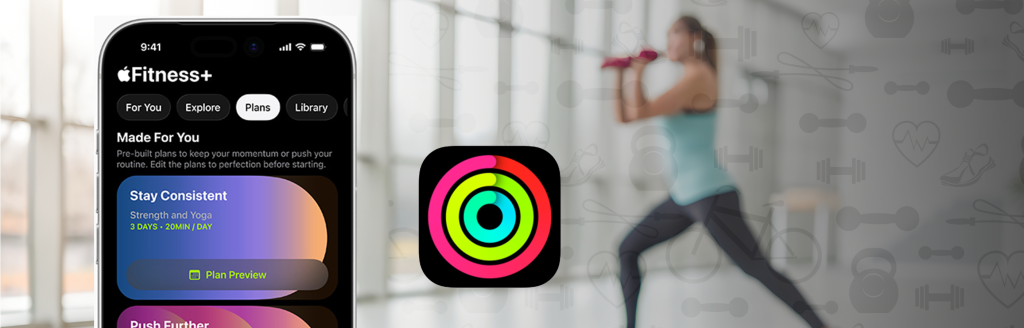
To access the service, go to the Fitness app on your Apple device and tap on Fitness+ in the bottom menu. If you have an Apple Watch or Air Pods Pro 3, you’ll also see real-time metrics like heart rate, calories burned, and progress on your Activity rings right on the screen. The Custom Plans feature can make a personalized schedule automatically based on users’ workout and meditation preferences.
Apple is adding dubbed workouts in Spanish and German, with Japanese coming in 2026. These use generated voices based on the trainers’ original recordings. A new K-Pop music category is also joining the lineup, alongside the Artist Spotlight series featuring Taylor Swift, BTS, Beyoncé, and more.
You can also expect genres like Upbeat Anthems, Latest Hits, Hip-Hop and R&B, Latin Grooves, and more to accompany different workout types.
Fitness+ also comes with the award-winning Time to Walk feature, where users can “walk” with celebrities and influencers such as Cynthia Erivan, Daddy Yankee, Naomi Campbell, Camila Cabello, Simi Liu, Shawn Mendes, Jane Fonda, and F1 driver Yuki Tsoumada, as they share stories, photos, and songs with users.
Aside from the Philippines, the service is now available in Argentina, Belgium, Bolivia, Chile, Costa Rica, the Dominican Republic, Ecuador, El Salvador, Finland, Guatemala, Honduras, Hong Kong, Iceland, India, the Netherlands, Nicaragua, Norway, Panama, Paraguay, Peru, the Poland, Singapore, Sweden, Taiwan, Venezuela, Vietnam, and about 20 other countries.
Fitness+ is a subscription service. Currently, users who try the platform for the first time get a one-month free trial. After that, the subscription fee is P149 per month. Users can also opt for an annual subscription for P1,190 per year. Have a merry feast, but get fit and fab too, this holiday season!
Reference: What to know about Apple Fitness+, which is now available in the PH • Phil STAR Life
Some theories say consciousness is a matter of processing information in the right way, and that AI could be conscious if only it could run the “software” of a conscious mind. Others argue it is inherently biological, meaning AI can only imitate consciousness at best.
Dry McClelland explained: “If you have an emotional connection with something premised on it being conscious and it’s not, that has the potential to be existentially toxic.” For example, humans are expected to behave morally towards other people and animals, because consciousness gives them “moral status.”
In the case of non-living objects like toasters or computers, the same “moral status” cannot be expected as we don’t attribute these same values towards inanimate things unlike in humans.
Dry McClelland said: “It makes no sense to be concerned for a toaster’s well–being because the toaster doesn’t experience anything.” He added: “So when I yell at my computer, I really don’t need to feel guilty about it. But if we end up with AI that’s conscious, then that could all change.”
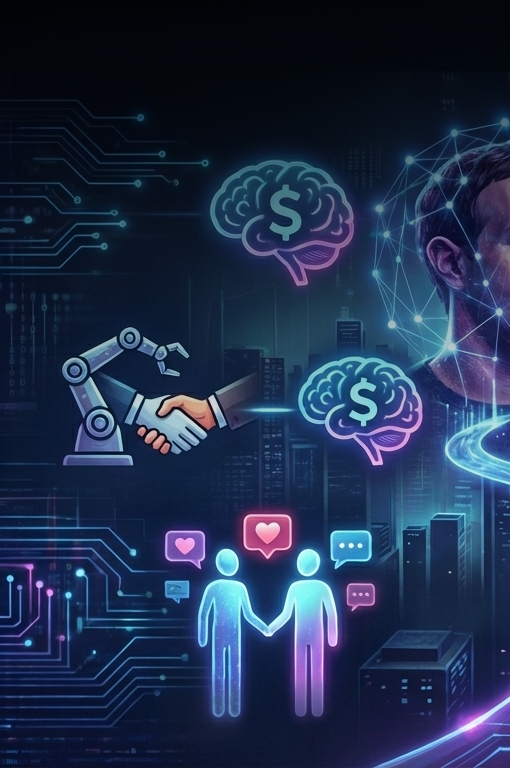
Robots as friends, lovers, therapists?
Meta CEO Mark Zuckerberg has predicted a future where humans will use robots as friends, lovers, and therapists. Instead of lobbying for people to escape their digital bubbles, Zuckerberg claimed that AI can actually do a better job of knowing the likes and preferences of lonely humans than a real fresh-and-blood companion.
He said: “I think people are going to want a system that knows them well and that kind of understands them in the way that their feed algorithms do. For people who don’t have a person who’s a therapist, I think everyone will have an AI.”
However, Meghan Dhār, a former Instagram executive, quickly came out against Zuckerberg’s lonely vision of the future, claiming that AI has actually been part of the reason feelings of loneliness have reached epidemic levels. “The very platforms that have led to our social isolation and being chronically online are now posing a solution to the loneliness epidemic,” Dhār told The Wall Street Journal.
Reference: Is AI already conscious? Evidence is ‘far too limited’ to definitively say, expert warns