








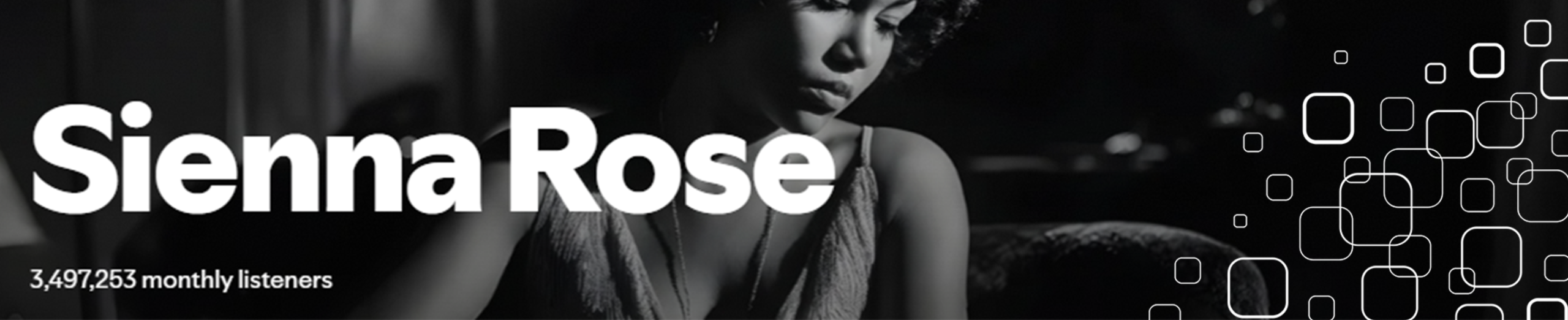
‘Sienna Rose’ climbs to Spotify’s Viral Top 50…but who is she, really?
Innovations in the world of technology are constantly emerging and one can get caught unaware because they happen fast. The AI phenomenon has been creating a buzz in the digital space for two years now and it’s not surprising at all about because of its bizarre and dynamic nature that redefines the new wave of technology that only gets fascinating for the human intellect these days.
In the field of visual arts, AI images or illustrations have been flooding social media platforms for some time. Those seemingly perfect portraits of humans or other creatures are thinly bordering the bizarre in the way they are drawn or created. Looking at them, they can inhabit the subconscious in a rather creepy manner.
Now comes ChatGPT. Lately, social media users are transforming themselves into quirky and exaggerated versions of themselves while being surrounded by things that represent their personality, hobbies, and even their job. All this is made easy through the use of the generative AI chatbot ChatGPT. This new AI caricature craze on the internet turns anyone into funny but cute cartoons!
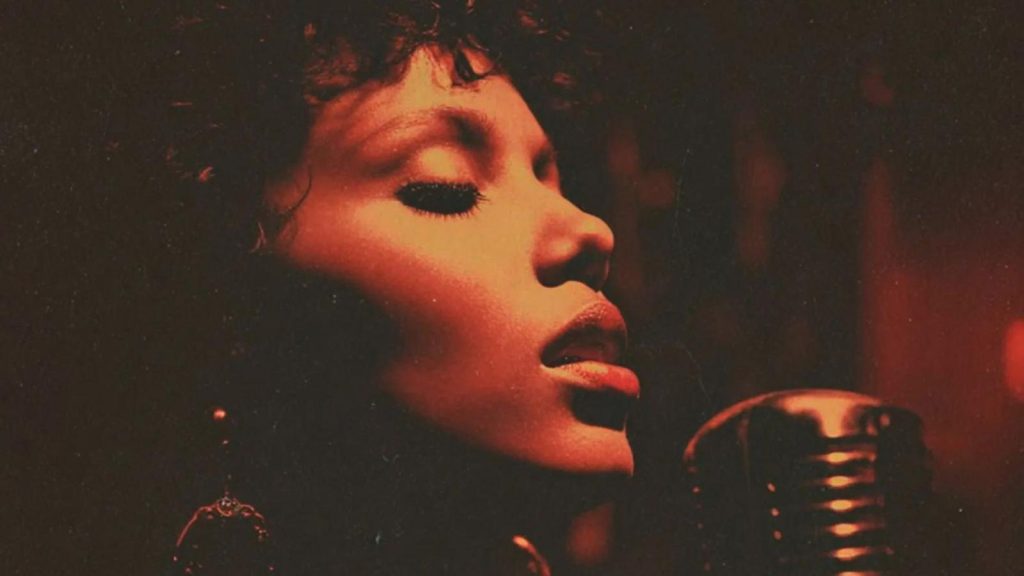
In the music scene, AI has also been wielding its influence
Sienna Rose appeared on streaming platforms in the fall of 2025 with a handful of intimate jazz-soul tracks, including “Into the Blue,” “Safe With You,” and “Where Your Warmth Begins.” Within weeks, three tracks entered Spotify’s Viral 50, and her lead single surpassed 5 million streams while she reached or exceeded 3 million monthly listeners.
On paper, it all looks like the trajectory of a new sensation: a polished Spotify biography, a neo-soul aesthetic, comparisons to established singers like British singer Olivia Dean. Except that no concerts, no music videos, no interviews, and no promotional tours confirm the existence of a person behind this name.
An artist without a face or network
The first doubts arose among fans and music lovers who noticed an unusual detail: it was impossible to find Sienna Rose on social media or through a simple Google search outside of streaming platforms. For a “new star” who was so successful, this complete absence of an online presence was more than surprising.
Since then, an Instagram account has appeared, accompanied by videos supposedly showing the artist. However, this is not enough to dispel the suspicions of some: at a time when artificial intelligence is capable of producing ultra-realistic videos of “human” characters, doubts still linger.
Tracks detected as AI-generated according to Deezer
The turning point came when Deezer publicly stated that the majority of Sienna Rose’s albums and tracks on its platform were detected and labeled as being generated by artificial intelligence. The service explained that it uses an internal tool to detect music AI and specified that it removes these tracks from algorithmic recommendations and editorial playlists for greater transparency with listeners.
Reference: 3 million listeners for a singer who doesn’t exist: who is Sienna Rose really?
How it works
ChatGPT, or Chat Generative Pre-Trained Transformer, can expertly generate realistic, human-like text about almost anything. English essays, news articles, computer code, and songs are all examples of what this bot can produce, and all from a simple prompt.
The bot uses a dialogue format in which users can provide both simple and complex instructions, to which ChatGPT will provide a detailed response. It can also answer follow-up questions, admit when it made a mistake, challenge incorrect premises, and reject inappropriate requests—all of which makes it perfect for customer service.
The artificial intelligence research non-profit company behind ChatGPT, OpenAI, was founded in 2015 by Elon Musk, Sam Altman (right), and other Silicon Valley investors. Due to a conflict of interest between OpenAI and the autonomous driving research done with Tesla, Musk stepped down from the board in 2018, but remains an investor, and one who was excited for the launch.

Made available to the public on November 30, 2022, on OpenAI’s website, anyone can sign up for and use ChatGPT for free. The software hit one million users less than a week after its launch. No software has ever been able to so convincingly provide human-like, detailed answers to inquiries as ChatGPT.
A threat to programmers
Because ChatGPT has been able to generate intricate Python code, and programmers have used it to solve coding challenges in obscure programming languages in a matter of seconds, as News18 reports, concerns are arising that such technology can replace human workers.
ChatGPT can create written content very convincingly, concerning everyone from journalists to playwrights. Many fear that the bot will take away jobs from writers and creatives. Fortunately, as per a report by The Guardian, the chatbot currently still lacks the nuance, critical-thinking skills, and ethical decision-making ability required for journalism.
Plus, its current knowledge base stops at 2021, meaning it has a limited knowledge of world events after that. With the power to simply put in a prompt and get ChatGPT to write convincing college-level essays, many schools are concerned about an uptick in plagiarism. Some schools are already blocking the site from their networks and servers.
A tool to detect ChatGPT
Somewhat surprisingly, it was a 22-year-old computer science student at Princeton University, Edward Tian, who developed an app called GPTZero which can detect when an essay was written by AI. It works by looking at two variables, perplexity and “burstiness,” and assigns each of those variables a score.
GPTZero measures firstly how familiar it is with the text presented—according to the sources it was trained upon—and the less familiar it is, the higher the perplexity, meaning it’s more likely human-written. Burstiness is then measured by seeing how variable the text is—checking for varied sentence length.
Reference:
Reference: What exactly is ChatGPT, and what are the concerns?