









HP executive for Asia bullish on AI adoption potential in the Philippines
HP continues to leverage its global influence to create both human and economic value. With a strong focus on digital equity, strategic industry partnerships, and public policy advocacy, we are advancing the Future of Work. As socioeconomic divides widen around the world and society becomes increasingly reliant on digital skills and access, HP is committed to bridging these gaps.
While research and consulting firm Gartner predicts slower AI PC adoption through 2027 due to rising SSD and DRAM costs, HP is continuing its push toward AI-capable computers. About 35% of the PCs it ships globally are already AI PCs, with that share increasing roughly 5 percentage points each quarter. HP believes AI can help workers spend less time on routine tasks and more time on creative and productive work.
In the Philippines, organizations are showing strong adoption of artificial intelligence (AI) and for this reason, HP Inc. sees the country as a fast-adoption market in the region. The company also sees potential growth in several industry verticals.
Michael Boyle, senior vice president and managing director for HP Greater Asia, said: “Today, people spend a lot of time managing tasks. With AI, we have an opportunity to remove that friction so people can focus more on creating and achieving the outcomes they want.”
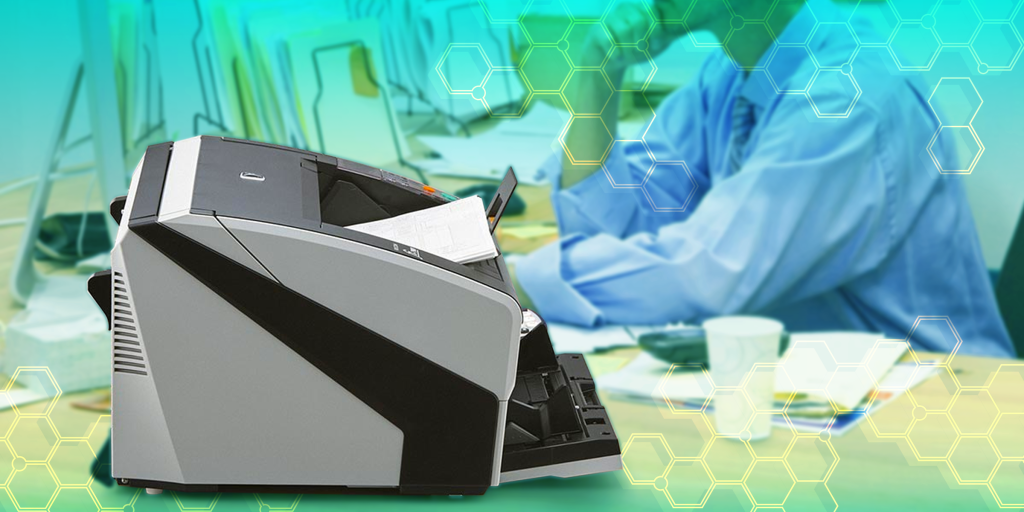
High-Resolution Scanning: Ricoh scanners capture images in high resolution, producing clear and detailed digital copies suitable for various document types.
Speed and Efficiency: These scanners offer fast scanning speeds to efficiently handle large document volumes, ultimately enhancing workplace productivity.
Optical Character Recognition (OCR): Integrated OCR technology allows for the conversion of scanned documents into editable and searchable text, simplifying document management and retrieval.
Multi-Feed Detection: Built-in sensors prevent misfeeds by detecting when multiple pages are pulled into the scanner at once, ensuring every page is accurately scanned.
Network Connectivity: Ricoh scanners offer options for network connectivity, enabling multiple users to access the scanner from different devices and facilitating convenient sharing and storage of scanned documents.
Automatic Document Feeder (ADF): The ADF feature allows for the scanning of multi-page documents without the need for manual page feeding, saving time and effort.
Double-Sided Scanning: Ricoh scanners are capable of simultaneous two-sided scanning, known as duplex scanning, essential for efficient document processing.
Image Enhancement Tools: Software features clean up and enhance the quality of scanned images, improving legibility by removing imperfections and adjusting alignment.
Security Features: Ricoh scanners are equipped with advanced security measures to protect sensitive information, including options for password protection, data encryption, and secure file transmission.
Compatibility and Integration: These scanners are compatible with various operating systems and seamlessly integrate with document management systems and cloud storage solutions.
Compact Design and Energy Efficiency: Designed to fit modern workspaces, Ricoh scanners operate with energy efficiency to reduce power consumption, supporting sustainable office environments.
Reference: Navigating the Scanning Pathway to Digital Transformation
“We are seeing quite strong adoption in the Philippines, which is consistent with other countries in Southeast Asia,” Boyle said. He also noted that the Philippine market is largely transactional, with most purchases made one device at a time based on price or immediate need.
Boyle added that Filipino organizations and teams have a real appetite “to articulate and implement AI and bring it to life.” He also banks on HP’s resiliency with many of its manufacturing facilities spread over the region.
Beyond AI devices, HP is strengthening its security offerings. Boyle explained the company’s three-layer security strategy: device-level protections built into hardware, HP Wolf Security software on laptops and PCs, and enterprise device management for organizations.
PCs are not the only vulnerable devices. Printers and conference room systems can also be entry points for attackers. HP adds hardware protections, including self-healing BIOS, which allows a device to detect malware and automatically restore itself, even shutting down to prevent further damage.
Wolf Security helps detect malware, isolate suspicious files, and protect against phishing, while the HP Workforce Experience Platform allows IT teams to monitor devices, manage security across PCs, printers, and meeting systems, and detect organizational vulnerabilities.

While acknowledging AI’s potential, some experts are worried about the implications of its rapid growth. The International Monetary Fund has warned AI could affect nearly 40% of jobs, and worsen global financial inequality. Critics also highlight the tech’s potential to reproduce biased information, or discriminate against some social groups.
Reference: HP sees strong AI adoption potential in the Philippines