






The many ways the Internet of Things connects our world, Part 2
The Internet of Things, or IoT, refers to physical gadgets that quietly talk to each other via the internet. Coined by computer scientist Kevin Ashton in 1999, the term has aged surprisingly well. It’s about anything with a sensor and a unique ID. From your fridge to your fitness tracker, these smart devices talk to each other (and to us) in real time, making life more connected than ever.
Smart devices, which are all part of the Internet of Things (IoT), use wireless technology to follow your commands and sometimes act autonomously. Smart thermostats cool your home before you arrive, and security systems monitor on autopilot, making daily life smoother and more hands-free.
From device to data hub
After devices collect data, it’s sent to a central hub wirelessly or via cables. Sometimes data goes straight to the cloud, or it’s filtered and sorted by intermediate devices that discard noise and pass on only the valuable info for deeper analysis.
Smart data, faster decisions
The final stage is data analysis, often done in the cloud or a data center. For critical tasks, like industrial shutoffs, edge computing speeds things up by processing data nearby, allowing devices to react instantly.
The edge computing advantage
As IoT devices multiply and flood networks with data, edge computing steps in to lighten the load. These nearby processors handle info on the spot, like smart security cams that only ping HQ when they spot actual motion, not just passing clouds.
Keeping the IoT in check
For IoT to work smoothly, devices must be authenticated, set up, monitored, and regularly updated. But many rely on closed, vendor-specific systems or skip updates altogether, creating serious risks for users and networks alike.
Why your toaster might be the weakest link
Unlike PCs or smartphones, which come with robust security and regular updates, many IoT devices lack basic protections. Designed for specific tasks, not longevity, these gadgets can become easy targets for hackers, and you might not even know it.
The hacker’s lullaby
In 2023, a TikTok mom revealed a chilling breach: someone hacked into her smart baby monitor and spoke to her kids in the middle of the night. It’s a stark reminder of how vulnerable connected devices can be, even in the safety of your home.
Reference: What is the Internet of Things, and is it eating the world?
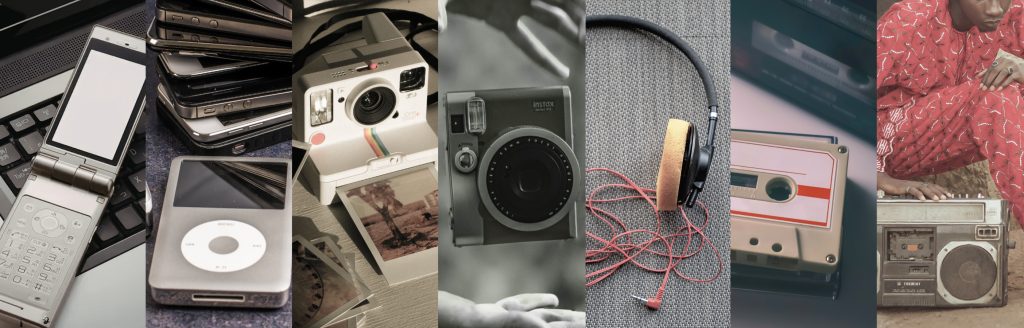
Flip Phones. Flip phones have become a small escape hatch for people who want calls and texts without carrying every app they’ve ever regretted downloading. The Motorola Razr still has that snap-shut satisfaction, and newer basic phones give people a way to be reachable without being fully swallowed by a screen.
iPods. Used iPods are getting attention again because they do one job and one job only. Loading a Nano, Classic, or Touch with your own music library feels more personal than letting an app decide what you should listen to.
Instant Cameras. Polaroid and Fujifilm Instax cameras keep showing up at parties, weddings, dorm rooms, and weekend trips because the photo provides a tangible memory. The colors can be strange, the flash can be harsh, and someone will probably blink, but it’s still more fun than uploading memories to Google Photos.
Point-and-Shoots. Canon PowerShots, Sony Cyber-shots, Nikon Coolpix cameras, and other small digital cameras from the 2000s are back in purses and jacket pockets. They make photos look less polished than iPhone shots, with red-eye, blur, and flash glare that somehow feel closer to how the night actually felt.
Wired Headphones. Apple EarPods and other wired headphones have gone from boring backup gear to an actual style choice. They don’t need charging, they don’t vanish into couch cushions as easily, and they’re much more budget-friendly.
Cassette Players. Cassette players and tape decks are getting attention from people who like music that takes a little effort. Rewinding, flipping sides, and dealing with a worn-out case can be annoying, sure, but the whole process feels more involved than tapping shuffle for the 400th time.
Boomboxes. The modern boombox comeback is more of a compromise than anything else, since plenty of new models look old while offering Bluetooth connection. That mix gives people the chunky 1980s and 1990s look without asking them to fully return to D batteries, warped tapes, and radio static.
Reference: 20 signs the internet is falling back in love with old tech
Million-dollar sale of his company
According to a document from the United States Securities and Exchange Commission (SEC) reported by People magazine, Lame sold Step Distinctive, the company that manages his global brand and business activities, for the not inconsiderable sum of $975 million.
The buyer: a Hong Kong-based holding company
According to that same information, the acquisition of the company would have been carried out by Rich Sparkle, a holding company based in Hong Kong and currently listed on the stock exchange, so the purchase would have been carried out through the issuance of 75 million shares of this business group.
Billion-dollar agreement
Behind this agreement lies everything Khaby Lame represents commercially as a global internet star, a premise from which Rich Sparkle expects to reap significant profits. In fact, according to a press release, they estimate he could generate more than $4 billion in annual sales.
One of the key and most important points of the agreement signed between both parties is the authorization of the Senegalese influencer residing in Italy to have digital clones of himself made; that is, they will be able to use his facial, voice, and behavioral recognition models to develop these duplicates through Artificial Intelligence (AI).
However, the agreement doesn’t mean Lame is leaving the company; quite the opposite, in fact. According to People, the content creator, who previously owned 49% of its shares, will continue to lead the company with a majority stake. He will also retain control over his brand’s creative processes and have a say in its management.
Rich Sparkle’s goal with this innovative strategy is to create commercial content through social media and other e-commerce channels without Lame’s involvement, and to do so live, in multiple languages, and across different parts of the world.
Reference: The TikTok star who will allow his digital cloning in exchange for almost $1 billion