








Cyber trends in 2026 can help business leaders reinvent cyber strategies
Cyber security has been a growing concern that every organization needs to address because even the most sophisticated technology tools can be vulnerable to cyber disasters. The world today is hyperconnected and cyberthreats are evolving faster than enterprise defenses can adapt.
The World Economic Forum in collaboration with Accenture has released the Global Cybersecurity Outlook 2026. The report noted that 87% of global CEOs identified artificial intelligence (AI)-related vulnerabilities as the fastest-growing cyber threat throughout 2025 and 94% view AI as the most significant driver of change in cybersecurity in 2026.
Three key cyber trends that can help business leaders reinvent their cyber strategies in 2026:
First, AI is both an ally and an adversary
AI’s dual nature will be front and center in 2026. As generative or gen AI matures and companies find new ways to use the technology to strengthen their cyberdefenses, threat actors will also leverage the same technology to enhance the scale, speed, sophistication and precision of their attacks.
Cybercriminals are using gen AI to scale social engineering efforts aimed at producing realistic phishing emails, deepfake audio and video files and falsified documentation that can evade conventional detection systems and, in some instances, human scrutiny. Financial theft remains a top motivation for these cybercrimes, with data monetization, extortion and intellectual property theft becoming key goals.
Second, agentic AI will reshape how organizations operate, presenting new opportunities and challenges
Accenture’s 2026 Pulse of Change report shows that 71% of leaders globally are investing in AI and other digital tools. In fact, many employees have already started working with AI agents—having either used or tested it once before (43%) or are already working with the technology on a regular basis (32%). This supports the FutureScape 2026 research of the International Data Corp.
AI agents have now moved from being experimental tools to becoming essential business partners. From analyzing financial data and assessing one’s creditworthiness to managing supply chain workflows from inventory to delivery, agentic AI can enhance overall productivity and operational efficiency.

Third, in addition to AI, quantum and space frontiers are here
AI continues to dominate the cybersecurity environment, but other technologies and threat vectors are slowly gaining traction. Quantum and space are among these segments and the emerging risks that come with their progress should be closely monitored.
Quantum computing is projected to impact cybersecurity more than ever within the next 12 months. It is advancing rapidly and its unprecedented computation power can be used to break encryption algorithms and put encrypted sensitive data at risk. Thus, we will see a massive leap in quantum-safe encryption as companies prepare for the inevitable.
Reference: Cyber trends shaping our world in 2026
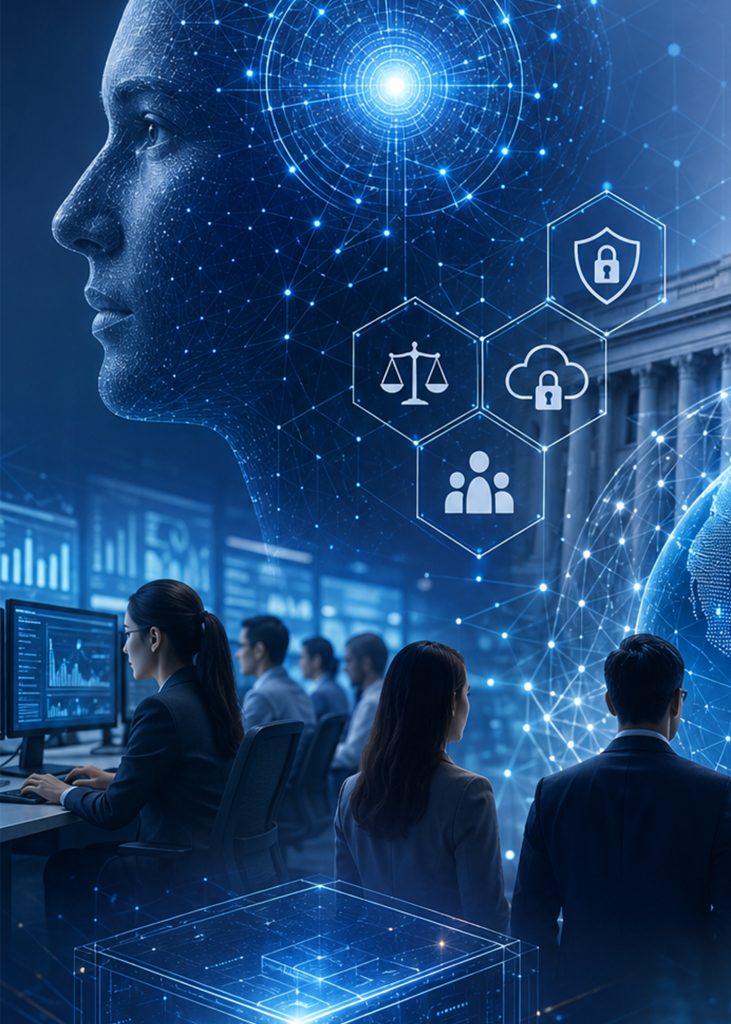
The study surfaces several trends shaping how governments are approaching sovereign AI adoption:
Agentic AI as a workforce multiplier: With more than half of leaders (51%) planning to invest in agentic AI within the next 12-18 months, governments are moving from exploration to implementation — looking to autonomous systems to handle complex administrative and analytical tasks.
A widening skills gap: A majority (66%) of public sector organizations report that technology is evolving faster than their workforce can keep up, creating significant operational pressure and urgency around AI-enabled solutions.
Guardrails as the condition for acceleration: Appetite for agentic AI is high, but conditional. Nearly half of leaders (44%) state they will only accelerate AI adoption if strong safeguards — including data security, privacy, and sovereignty protections — are firmly in place.
A call for partnership: Nearly 61% of leaders agree that public-private partnerships will be critical to accessing the expertise and technology required for secure, successful AI implementation.
The findings point to a clear shift in public sector AI strategy. Governments are no longer debating whether agentic AI has value — they are determining what it takes to deploy it responsibly and at scale. Agentic systems offer a clear path to easing workforce pressure and modernizing operations.
The study found that 58% of government leaders identify strong sovereign data governance, quality, and control as among the most critical platform requirements for sovereign AI, reinforcing that trusted data foundations are not a secondary concern — they are a prerequisite for adoption.
For public sector organizations, deploying AI with confidence means having robust data sovereignty, privacy protections, governance frameworks, and infrastructure choices in place from the outset. When those foundations are secure, the path to sovereign agentic AI at scale becomes viable.
Reference: Government Leaders Look to Agentic AI to Accelerate Modernization | Dell USA