




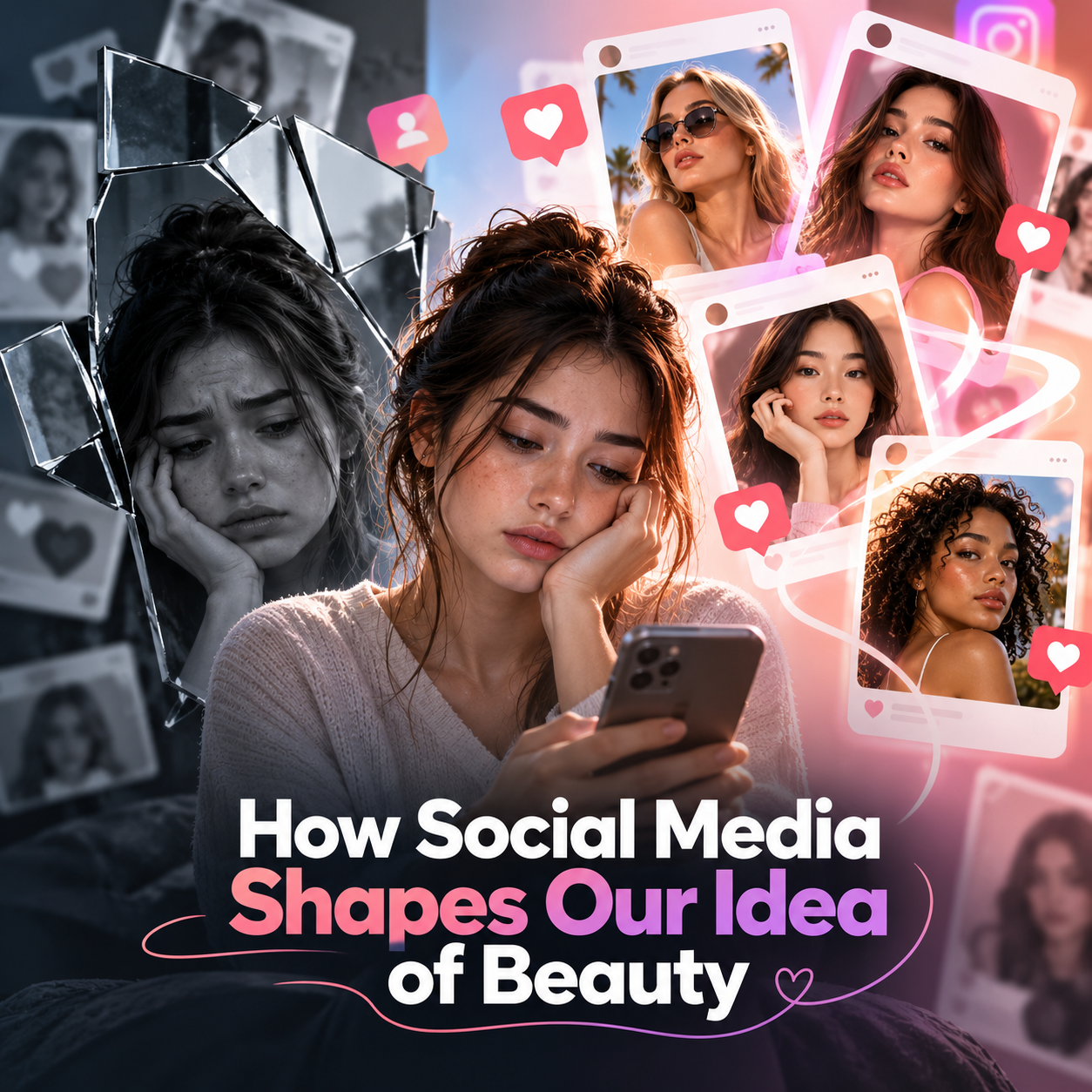





How social media redefines what we perceive as attractive
Living in contemporary times, people came across beauty standards through magazines, movies, television, advertising, and celebrities. But social media has made appearance-based content constant, interactive, and much more personal. Today, being attractive can be based on the profiles of ordinary people, influencers, celebrities, and creators seen on the internet.
In 2022, 43 experiments came up with some conclusions that looking at idealized images on social media caused higher levels of body dissatisfaction. And a meta-analysis of 83 studies concluded that there was a correlation between social comparison on the internet and body image.
In her article for TheZenParent.com, American lifestyle author Sara Springsteen stated that one of the biggest changes is the sheer number of people who can participate in presenting beauty ideals. In the past, a magazine editor, casting director, or advertising agency had considerable influence over which faces and bodies appeared in popular media.
“Social platforms opened the door for practically anyone to build an audience, although popularity and platform algorithms still determine which content receives the most visibility. Filters and editing tools have added another layer to the way attractiveness is presented,” she said.

High-Resolution Scanning: Ricoh scanners capture images in high resolution, producing clear and detailed digital copies suitable for various document types.
Speed and Efficiency: These scanners offer fast scanning speeds to efficiently handle large document volumes, ultimately enhancing workplace productivity.
Optical Character Recognition (OCR): Integrated OCR technology allows for the conversion of scanned documents into editable and searchable text, simplifying document management and retrieval.
Multi-Feed Detection: Built-in sensors prevent misfeeds by detecting when multiple pages are pulled into the scanner at once, ensuring every page is accurately scanned.
Network Connectivity: Ricoh scanners offer options for network connectivity, enabling multiple users to access the scanner from different devices and facilitating convenient sharing and storage of scanned documents.
Automatic Document Feeder (ADF): The ADF feature allows for the scanning of multi-page documents without the need for manual page feeding, saving time and effort.
Double-Sided Scanning: Ricoh scanners are capable of simultaneous two-sided scanning, known as duplex scanning, essential for efficient document processing.
Image Enhancement Tools: Software features clean up and enhance the quality of scanned images, improving legibility by removing imperfections and adjusting alignment.
Security Features: Ricoh scanners are equipped with advanced security measures to protect sensitive information, including options for password protection, data encryption, and secure file transmission.
Compatibility and Integration: These scanners are compatible with various operating systems and seamlessly integrate with document management systems and cloud storage solutions.
Compact Design and Energy Efficiency: Designed to fit modern workspaces, Ricoh scanners operate with energy efficiency to reduce power consumption, supporting sustainable office environments.
Reference: Navigating the Scanning Pathway to Digital Transformation
Springsteen noted: “People can alter skin texture, facial proportions, lighting, eye appearance, and other features with relatively little effort, meaning that the image on your screen doesn’t necessarily represent what the person looks like in everyday life.” She added: “Experimental research reviewed in 2022 included social media images that had been manipulated to remove wrinkles and blemishes.”
The author explained: “Social media hasn’t created one universal definition of attractiveness. In some ways, it has done the opposite by giving people access to an enormous variety of communities, styles, cultures, subcultures, and individual preferences. Someone who doesn’t fit the beauty ideals plugged by mainstream entertainment may find an audience online that appreciates exactly those qualities.”
“You have the ability to find others who may not fit into those typical looks, you can find people with different types of beauty and see them portrayed in media. Research on body-positive content has produced mixed results, but systematic reviews show that some forms of body-positive material may help reduce body dissatisfaction,” she revealed.
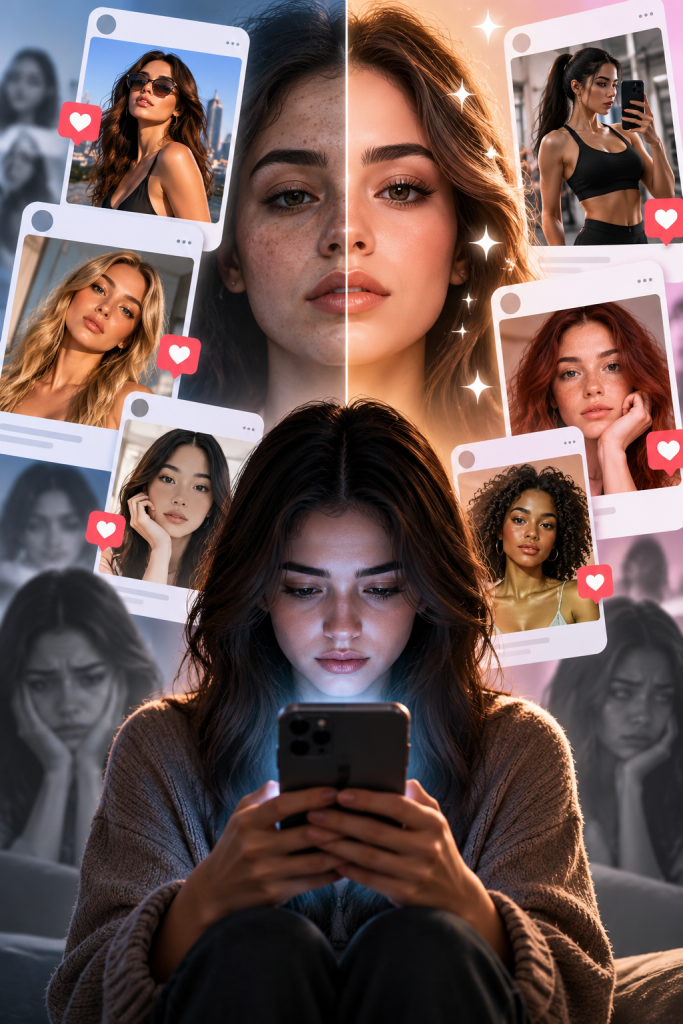
She further noted: “If you only allow your social media to show you certain beauty standards, you can start to think there isn’t any variation out there. Which is why social media can change our views on beauty. Social media has therefore changed attractiveness not with new preferences, but by giving those options a persistent place in everyday life.”
Springsteen concluded: “Social media hasn’t changed humans’ idea of beauty completely. It has changed how often we’re exposed to particular appearances, how easily we compare ourselves with other people, and how quickly trends can spread.”
“The healthiest way to view those images may be to remember that a social media feed is a curated collection of photographs and videos, not a neutral survey of what everyone looks like or what everyone finds attractive,” she added.