


January 17, 2025 Google is going nuclear to fuel energy for its AI data centers In an attempt to cater to its vast AI needs, Google is going nuclear. And why not? According to the US Department of Energy, nuclear energy has by far the highest capacity factor of any other energy source. This basically means nuclear power plants are producing maximum power more than 92% of the time during the year. That’s about nearly 2 times more as natural gas and coal units, and almost 3 times or more reliable than wind and solar plants. The tech giant has signed a deal with California-based nuclear firm Kairos Power to build new nuclear reactors to supply its US data centers with energy. Although the location of these reactors is yet to be revealed, Google said the first will be operational in 2030, with more to follow by 2035. Today, Google has an obsessive focus on artificial intelligence with its Gemini chatbot and Pixel AI phone software. But all that advanced computational power requires millions of computers, known as ‘servers’, housed inside data centers across the world that operate 24/7. In a blog post, Michael Terrell, external, senior director for energy and climate at Google, said the deal will “accelerate the clean energy transition across the US.” However, the companies did not reveal financial details of the agreement or where in the US the plants would be built. “Nuclear solutions offer a clean, round-the-clock power source that can help us reliably meet electricity demands with carbon-free energy every hour of every day,” Terrell added. The Google officer further said: “Advancing these power sources in close partnership with supportive local communities will rapidly drive the decarbonization of electricity grids around the world.” Google’s data centers are designed to cope with the enormous power, storage and cooling requirements of its AI technology, such as its Gemini chatbot and Pixel AI phone software, as well as cloud storage. But AI – which uses a lot of computing power and in turn electricity 24/7 – is especially pushing up the firm’s energy use and is making cutting emissions “challenging,” the company said. Google operates around 20 data centers in North America and more globally, and has acknowledged the need to “procure clean energy to meet our electricity needs.” In 2020, the tech giant set a goal to run on 24/7 carbon-free energy on every grid where it operates by 2030. To do this, the company is turning to Kairos Power, which uses a form of energy called nuclear fission just like other existing nuclear power plants. What is nuclear energy? Nuclear energy comes from the binding energy that is stored in the center of an atom and holds it together. To release the energy, the atom has to be split into smaller atoms — a process called fission. During a reaction the smaller atoms don’t need as much binding energy to hold them together, so the extra energy is released as heat and radiation. In nuclear power stations, the heat caused by fission is used to boil water into steam. The steam is then used to turn a turbine that drives generators to make electricity. Reference: Google will go nuclear to generate energy to power its AI data centers (msn.com)
Huawei launches HarmonyOS Next, cuts ties with Android
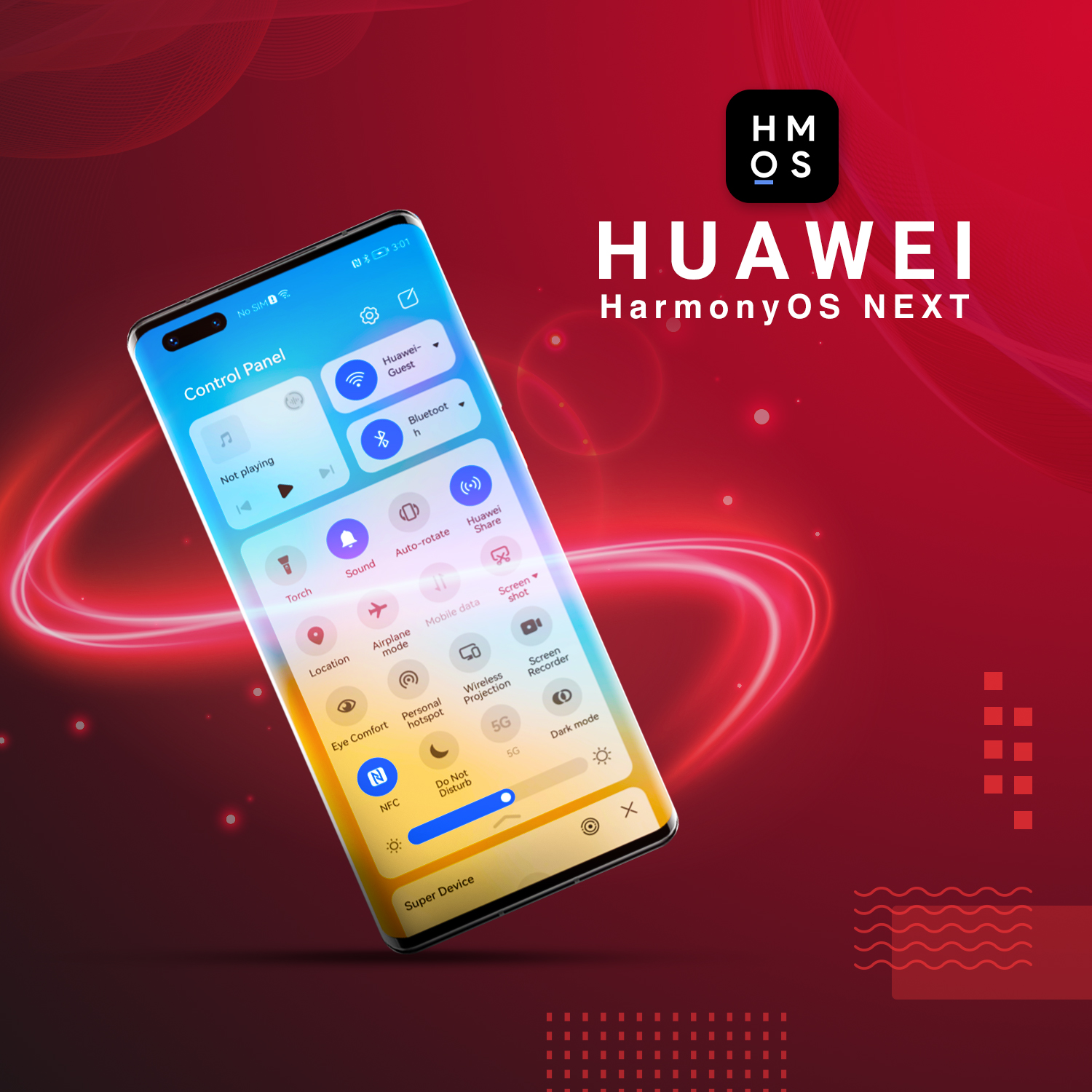
January 15, 2025 Huawei launches HarmonyOS Next, cuts ties with Android With the official launch of HarmonyOS Next, Huawei has ushered in a new page in its history. It aims to transition its devices to an entirely in-house OS and the launch marks Huawei’s first operating system built independently of Android. The company has been building out HarmonyOS as its own platform for phones, tablets, and more since the ban that changed Huawei’s entire business in 2020. HarmonyOS started off as little more than an Android fork, but has evolved in the time since, with its biggest change coming in the form of HarmonyOS NEXT. This latest update was announced in 2023 and, while it still visually looks like the Android-based platform Huawei has been using this whole time, it lacked a key feature. It doesn’t support Android apps. Through late 2023, the rush for developers to create versions of their apps for HarmonyOS NEXT was widely reported, with developers needing to port their work to a new app format to make them compatible with Huawei devices going forward. HarmonyOS Next is set to power the current and future generations of Huawei devices in China for now, though a global release was confirmed previously. It will work across a broad range of devices ranging from smartphones to wearables, smart home devices and car cockpits. HarmonyOS Next uses a self-developed microkernel based on the OpenHarmony open-source core. It supports apps via the Huawei Ark compiler with Huawei Mobile Services (HMS) and promises a seamless unified architecture between HarmonyOS Next devices, the cloud as well as interconnectivity across various device form factors. Richard Yu, Huawei Consumer Business Group Chairman, announced that 15,000 apps and services are now part of the HarmonyOS Next ecosystem with more on the way. The company also disclosed that the previous versions of HarmonyOS are currently running on over 1 billion devices globally. This figure includes smartphones, tablets, smart wearables, smart home and car infotainment systems. The in-house OS comes with a refreshed visual identity with new lockscreen and home screen customization options, redesigned control center, faster animations, and app launch speeds. There are impressive AI features on deck which are powered by system-level AI based on the Pangu large language model. For security, HarmonyOS Next brings a self-developed Star Shield architecture with system-level protection. Huawei also managed to achieve a 30% increase in device fluency and 20% lower power consumption in communication between software modules. Huawei Share 2.0 promises seamless connection and file sharing between devices – Huawei says you can transfer a 1.2GB file between two HarmonyOS Next devices in just 8 seconds. Huawei is seeding a public beta version of HarmonyOS Next to users in China. The supported device list includes the Pura 70 series, Huawei Pocket 2 and MatePad Pro 11 (2024). Reference: Huawei announces HarmonyOS Next – the new version of its Android rival – GSMArena.com news
Capturing life’s best moments with Smartphone photography
January 13, 2025 Capturing life’s best moments with Smartphone photography There’s no better way to capture life’s best moments than through photographs. But the production of those photos only became possible with the invention of the camera. In 1889, photographer and industrialist George Eastman invented film with a base that was flexible, unbreakable, and could be rolled. The 35 mm film most people know today was invented by Kodak in 1913 for the early motion picture industry. In the mid-1920s, the German camera maker Leica used this technology to create the first still camera that used the 35 mm format. Technology has grown by leaps and bounds and along with it is the way people take photos today. Digital photography has revolutionized the industry with the invention of mobile devices particularly the smartphone. Everyone has become a photographer nowadays! However, stunning smartphone photography requires more attention to detail and technique. It’s more than aiming your camera and hitting the shutter button. Read on and learn the 5 basics of smartphone photography: Choose the best smartphone for photography. The best smartphone for photography should have these qualities: a.) Choose a phone with a wide aperture or a low f-stop number to snap photos in low light. b.) Camera lenses with optical zoom are better than digital zoom. Pick a phone with multiple lenses to ensure it can capture close-ups and large scenes effectively. c.) Image stabilization is also a must because it mitigates camera shake. Moreover, it lets you capture images that require a slower shutter speed by letting in more light for the optimal photo. d.) Ensure your new mobile picture-taker has more than 20 megapixels and the above characteristics. Android vs. iPhone cameras. Adobe says Android devices and iPhones have different characteristics found in most of their models. Learn more about these features to match them to your upcoming project, starting with Apple: Powerful Sony sensors for detailed shots; Macro zoom for photo and video close-ups; QuickTake video for fast captures; Manual adjustments like focus and exposure to shoot like a pro; Mirrored selfie abilities to get yourself looking your best; Faster shutter speed to capture objects in motion; Night mode for better shots when it’s dark outside; Live photos to capture movement and sound. Use optimal shooting modes. Know your different modes and match them to your specific picture project.a.) Aperture Mode lets you blur the background to emphasize subjects that are within two meters of your lens. b.) Night Mode, as the name suggests, is great for taking photos in low-light environments. c.) Portrait Mode is like Aperture Mode because it blurs the background. However, it has two different effects, Beauty and Bokeh. d.) Monochrome Mode takes black-and-white images, which are ideal for street, architecture, and fine art photography. e.) Super Macro Mode lets you capture subjects that are extremely close to your smartphone with great detail. 4. Compose your photos before shooting. Use the rule of thirds, a photographic composition technique that breaks an image into three parts horizontally and vertically. a.) Use leading lines, which are parts of the photo that lead to your subject. For example, take a wedding photo with the couple at the center and the red carpet leading to them. b.) Take advantage of symmetry, which usually means an image has two equal parts that are mirror images of each other. c.) Focus on one subject at a time and ensure your subject doesn’t fill the entire frame. Use the rule of thirds to help you focus on a point of interest. d.) Use color blocking by providing a vibrant background for your subject so that it stands out. 5. Get the right accessories. Take your snaps to the next level with these accessories: a.) A smartphone tripod steadies your camera more effectively than your hands. b.) Remote shutter control allows you to take photos while you’re far from your phone. c.) A smartphone gimbal steadies and levels your phone while you’re on the move. d.) A portable lighting setup, such as ring lights or portable LEDs. e.) You might also need a portable battery pack to recharge your phone during long shooting sessions. Reference: Smartphone photography: 5 steps to capture magic with your phone (msn.com)

Turning Off Screen Time to Get kids Do Offline Activities
December 18, 2024 Turning Off Screen Time to Get kids Do Offline Activities The digital age has made access to online activities quick and easy even to children. But this has also made parents worried about the kind of content their kids are exposed to. They need to be protected from improper content/information hence the need to monitor how much time their children spend in front of screens—for leisure or educational purposes. While screen time has its benefits, we also recognize the importance of engaging children in non-screen activities. To manage our children’s screen time, technology transitions must take place. Technology transitions refer to parents and carers’ getting children off screens. But they can prove to be doubly challenging for children and their guardians. Since apart from kids possibly doing it more than once a day, devices and all related apps and activities are highly engaging, having been built with the purpose of entertaining its users both young and old. A study has identified three effective ways parents can help their children transition to off screen activities. In this study, 14 parents were provided with strategies over 12 weeks to support technology transitions. Here are strategies parents in the study found to be most effective: Prepare your kids In the same way that abrupt interruptions or change in routine can frustrate adults, sudden screen-time cutoffs can trigger tantrums in children. So, you can prevent this by setting clear expectations and preparing your children beforehand. Communicate with your child about when their screen time will end, using phrases like “You can watch two episodes of this show,” or “We’ll stop when this game is finished.” Providing a heads-up about the upcoming activity, whether it’s mealtime or outdoor play, helps ease the transition. Remember, clarity and predictability are key to reducing resistance. Engage in real-life activities inspired by screens Leverage your child’s interests in screen content to transition them into non-digital activities seamlessly. For example, if your child enjoys watching Bluey, suggest doing Bluey-themed puzzles or games. Other families in the study transitioned from screens by engaging in similar-themed activities, such as visiting a firehouse after watching a show about firefighters. Additionally, incorporating music from their favorite shows or playing familiar tunes while they’re doing other activities can make the transition smoother and more enjoyable. Empower your kids with choice Allowing your children to make choices empowers them and gives them a sense of control over their screen time. Simple choices, such as deciding the number of episodes to watch or setting a timer for their game, can foster independence and teach responsible screen-time management. Remember, while certain aspects of their lives are non-negotiable, offering choices within reasonable boundaries promotes healthy decision-making skills. Turning off our child’s iPad or TV doesn’t have to be a battle. By trying out these strategies, parents can facilitate smoother transitions, reduce tech tantrums, and encourage a healthier balance between screen time and offline activities. Remember, you are not alone in this journey. Reference: Turning Off Screen Time: Ways Parents Can Get Their Child Do Offline Activities

GCash tech glitch reveals flaws in system’s security measures
December 06, 2024 GCash tech glitch reveals flaws in system’s security measures Technology has grown by leaps and bounds over the last two decades. Today, there is rapid evolution in the digital landscape and our world has surpassed digitization. Most transactions have become online and companies are using digital technologies to improve their services to clients. E-wallets or electronic or digital wallets that allow users to pay and manage their funds online have emerged. A senior official of the Bangko Sentral ng Pilipinas said: “E-wallets undoubtedly had advantages, as they would make transactions easier and faster. But when it comes to a large sum of money, that would be when you would be taking risks.” On Nov 9, 2024, several customers of popular e-wallet GCash ranted on social media over thousands of pesos lost to what appeared to be unauthorized transactions. Among the GCash users who complained was a female celebrity of a TV network. In an Instagram post, she said almost 30 unregistered cellphone numbers claimed her money. Digital advocacy group Digital Pinoys on the same day called on GCash to immediately return the lost funds to its customers. In a statement, GCash said it has completed the necessary wallet adjustments to users who experienced unauthorized transactions following certain process errors. It encouraged users to remain vigilant against scammers, adding that it will continue working with law enforcement agencies to investigate the incident. “GCash remains steadfast in its mission to deliver reliable and secure financial services. We are committed to enhancing our systems and procedures to prevent similar incidents and to continue safeguarding all transactions,” it added. A senator has filed a resolution seeking an investigation into the spate of unauthorized transactions in digital wallets, following the latest incident involving GCash. In her Resolution 1234, she said there is a need to investigate in aid of legislation the “recent incidents of unauthorized or fraudulent deductions and transfers involving financial technology (fintech) services, as well as existing rules and regulations governing the fintech sector.” The National Privacy Commission (NPC) will also step into the system error of GCash to determine whether or not personal data were compromised in the glitch. “Although GCash has stated that there was no compromise of customer credentials or data in the incident, the NPC will still conduct an independent investigation in line with its mandate to administer and implement the Data Privacy Act of 2012 (DPA),” it said. The Bangko Sentral ng Pilipinas (BSP) has joined the probe and said it will look deeper into the system error that hit several users of GCash, operated by G-Xchange Inc. (GXI), who reported unauthorized deductions on their account balances. “BSP has likewise required GXI to submit regular updates on its actions on the matter,” it said, adding that it is closely coordinating with the company to ensure a “prompt resolution” of the issue. On Nov 20, Sen. Sherwin Gatchalian declared that the unauthorized deduction on balances of some GCash users in early November was triggered by an internal glitch and not by hackers. He was speaking on behalf of the Department of Information and Communications Technology (DICT) as budget sponsor of the agency. The matter was tackled during the Senate’s marathon plenary debates early Wednesday on the proposed 2025 funds of the DICT and its attached agencies. Reference: GCash unauthorized deduction: Internal glitch and not by hackers

Intercept Scam attempts with Trend Micro Check Mobile App
February 21, 2025 Intercept Scam attempts with Trend Micro Check Mobile App Nowadays, scam attempts have become a common activity in the online world. With every imaginable business transaction being done online, every unsuspecting customer can be an easy target. In 2022 alone, security threats are relentless. Many Filipinos fall victim to phishing scams, for instance, through short messaging services. As mobile-based cybercrimes continue to rise, doubling down on cybersecurity has become an effort for both private companies and individuals. President Ferdinand “Bongbong” Marcos Jr. signed into law on October 10, 2022 Republic Act No. 11934 or the SIM Card Registration Act. The law aims to provide accountability for those using SIM cards and aid law enforcement in tracking perpetrators of crimes committed through phones. However, scam attempts continue to be constant threats hence the need to be vigilant against perpetrators. In the US, the FBI reported that some $3.4 billion was lost to scams in 2023. Now, the wait is over with this multi-feature anti-scam solution, Trend Micro Check! The Trend Micro Check mobile app got you covered, with features that block scams before they can reach you; that can detect and alert you to scams in real-time before they do harm; and empower you to easily verify if something is a scam before it’s too late. Trend Micro Check puts the power in your hands, giving you peace of mind with the protection you need. This mobile app has the following features: Scam Check — powered by AI, it beyond spotting common red flags to uncover those tricky, less obvious signs of scams. It makes an assessment based on the context, intent and security risks of the content, and provides results in seconds — along with suggestions for next steps to help you stay safe. Scam Check is simple to use — just upload an image, copy and paste content, or take a screenshot and share it with Trend Micro Check to get answers on demand! Deepfake Scan — Video calls can be deceptive. With deepfake technology, scammers can impersonate anyone — with it getting harder and harder to tell if you are talking to a real person. But with Deepfake Scan, you can stay ahead of deepfakes by being alerted in real-time to any AI face-swapping attempts during your video calls! Web Guard — Worried about scam websites? Web Guard is at your service to provide safe, ad-free browsing. With the Web Guard feature enabled, you’ll be safe from risky websites and annoying ads so you can surf the web without worry or hassle. SMS Filter — is your reliable tool to block spam and scam texts 24/7 before they hit your inbox. Cut the noise, reduce the risks! Call Block — shields you from spam calls. It automatically blocks known telemarketers, robocallers, scammers, or spammers, and alerts you to suspicious and unknown numbers so that you know which calls to avoid. Say goodbye to spam and robocalls! Trend Micro is a US-based global cybersecurity leader which delivers central visibility for better, faster detection and response and a powerful range of advanced threat defense techniques optimized for environments, like AWS, Microsoft, and Google. Reference: Is It a Scam? Just Ask Trend Micro Check | Trend Micro News

Microsoft Edge enhances browsing experience with AI features
February 05, 2025 Microsoft Edge enhances browsing experience with AI features AI technology has now become a staple in the digital world, hence, Microsoft Edge has come up with built in AI-powered features that enhance your browsing experience including a side-by-side view making it easier and faster to shop, get in-depth answers, summarize information, or discover new inspiration to build upon, all without leaving your browser or switching tabs. Transform your words into beautiful browser themes With the AI Theme Generator in Microsoft Edge, you can personalize your browser with unique custom themes based on your words. Themes change the look of your browser and the new tab page. Explore dozens of pre-generated themes for inspiration or create your own. Leverage AI with Copilot in sidebar Make the most of your time online with Copilot in Edge. The AI-powered feature that helps you do more than you ever thought possible, built right into your browser. Auto-named tab groups Experience the power of AI with Microsoft Edge’s automatic tab group naming feature. Once a tab group is created, Edge uses AI to automatically name that group for you, streamlining your web browsing experience and saving you valuable time. Read aloud Enhance your multitasking abilities, elevate your reading comprehension by immersing yourself in content without being tied to your screen. Our cutting-edge AI technology offers a diverse selection of natural sounding voices and accents, allowing you to adjust your auditory experience to your desired language and preferred pace. Text Prediction Boost your writing speed with the help of AI-powered text predictions. This AI-powered tool predicts what you’re going to write next, allowing you to complete sentences more efficiently and stay focused on your writing goals. Translate Instantly browse web pages in your preferred language with just a few clicks, thanks to AI translation technology. With over 70 languages to choose from, language barriers are a thing of the past. Editor Editor is built into Microsoft Edge, and it provides AI-powered writing assistance including spelling, grammar, and synonym suggestions across the web so you can write more confidently. Reference: Your AI-Powered Browser | Microsoft Edge

HPE ProLiant DL145 Server offers robust performance, security
January 20, 2025 HPE ProLiant DL145 Server offers robust performance, security HPE ProLiant DL145 Gen11 Server with AMD EPYC™ 8004 Series processors is a compact, affordable, and powerful edge server designed to support critical business applications, virtualization, and AI workloads, making it ideal for diverse industry locations like retail. The Server is an ideal solution for retail businesses looking to enhance their edge computing capabilities. The server offers robust performance, security features, and ease of management, making it a valuable asset for modern retail environments. By leveraging the power of edge computing, retailers can address their top priorities and drive business success at the edge. The HPE ProLiant DL145 Gen11 is built to thrive in edge environments. It operates efficiently in temperatures ranging from -5℃ to 55℃ and features built-in air filtration for dusty spaces and vibration tolerance. Its high performance, robust design, simplified management, and enterprise-grade security make it a game-changer for industries. Get to know its complete features below: Compact and resilient design: The server is designed to fit seamlessly into various edge locations, including store cabinets, racks, or wall mounts—making it highly adaptable to the physical constraints of retail environments. Powerful processing: Equipped with AMD EPYC 8004 Series processors, the server offers a range of energy-efficient CPUs with eight to 64 cores. This provides robust performance for demanding retail applications, ensuring the server can handle high-performance computing tasks efficiently. Advanced GPU acceleration support: HPE ProLiant DL145 Gen11 Server is AI-ready and supports up to three single-wide GPUs. This enables advanced analytics and machine learning capabilities, which can enhance customer experiences and operational efficiency through applications such as vision AI and video analytics. Scalability: The server supports up to 128 virtual machines (VMs) and 480 containers, allowing retailers to scale their IT infrastructure as their business grows, providing flexibility and future-proofing. Ease of management: Features such as zero-touch provisioning and integrated management tools such as HPE GreenLake for Compute Ops Management (COM) and HPE iLO simplify deployment and ongoing management. This makes it easier to manage a distributed compute environment with global visibility from a unified console. Environmental tolerance: The server is designed to withstand shock and temperature variations, and it includes optional dust filters. This makes the HPE ProLiant DL145 Gen11 Server suitable for diverse retail environments, ensuring reliable operation under various conditions. Security: The HPE ProLiant DL145 Gen11 offers multilevel security with AMD Infinity Guard, AMD Secure Processor, and silicon root of trust from HPE. These features ensure the protection of sensitive customer and business data, providing peace of mind for retailers. Reference: HPE ProLiant DL145 Gen11 | HPE

HPE GreenLake turns hybrid cloud challenges into advantages
January 06, 2025 HPE GreenLake turns hybrid cloud challenges into advantages Today, many organizations fear their accidental hybrid cloud environments have become too complex to manage. HPE is redefining how organizations bring a cloud operating model to applications and data by introducing a future-ready platform called HPE GreenLake. HPE GreenLake is a hybrid cloud platform from HPE, designed to help organizations unlock the power of data and AI, where data and models are distributed across hybrid, multigen IT. Its hybrid-by-design approach gives you the freedom to move your data and workloads across locations and deployment models without additional costs or vendor lock-in. Here are the ways HPE GreenLake can solve the following five common hybrid cloud challenges: Making data and AI work in hybrid cloud. As data proliferates and AI workloads expand from edge to cloud, developing an agile and reliable AI-ready hybrid cloud foundation becomes critical. Whatever your data and AI needs, HPE GreenLake helps you succeed: Store, manage, and protect your data for AI; Build a data control plane (data fabric) that provides a complete view of data assets via a single global namespace; Empower teams with standard, supported, open analytics; Scale AI pilots with AI-optimized infrastructure, management and development tools, and a tested partner ecosystem. Extending the capabilities of the cloud. Private clouds have existed for years, having emerged from grid-type computing as a way to turn internal IT teams into a shared service organization. Early private clouds often were more difficult and costlier to build and operate than expected. Today, a shift is occurring in the tech industry as many organizations give fresh attention to the private cloud. They are rethinking their cloud strategy and diversifying their cloud portfolios with a modern private cloud to achieve real cost savings and benefits. Simplifying hybrid cloud operations. HPE GreenLake can help overcome the operational challenges of hybrid cloud. Our AIOps-powered platform delivers a growing number of services and features designed to enable autonomous hybrid operations. The process starts with automated discovery, monitoring, and full-stack observability from infrastructure to cloud. The HPE GreenLake platform applies more than 2,200 separate security controls to protect organizations and their data in real time. Advancing sustainability initiatives. Sustainability is top of mind in virtually every industry. HPE has a unique perspective based on more than three decades of proven leadership in developing energy- and cost-efficient technologies that remain future-proof for years. HPE sees sustainability as a catalyst for modern business, a force for good and game-changing optimization and smarter economics. HPE helps organizations advance sustainability agendas with a holistic approach to carbon footprints across theIT estate, edge to cloud. Securing the hybrid cloud environment. Data sovereignty and security are top of mind for today’s decision-makers. Escalating cybercrime has put organizations under immense pressure to protect their sensitive data. Security and risk management in hybrid cloud are key use cases for HPE GreenLake. HPE believes that, for organizations to maintain a resilient and evolving IT environment for critical data systems, trust must be built in rather than bolted on. HPE embeds security technologies into HPE GreenLake to automatically enable the integrity of your data infrastructure. Reference: HPE GreenLake cloud | HPE

Data Security is Elevated with Dell’s APEX Protection Services
December 16, 2024 Data Security is Elevated with Dell’s APEX Protection Services Organizations are seeking robust, as-a-service options that are easy to deploy and manage, while ensuring top-notch security for their critical data assets. Recently, it was reported that 75% of businesses worry their current data protection strategies can’t keep up with the rising threats from malware and ransomware. The escalating demands for simpler, cloud-based data protection solutions have never been more evident. According to Dell’s data protection report, cyber threats continue to grow and remain at the top of the list for causes of organizational disruption, with 52% of respondents reporting a cyberattack that prevented access to data within the past 12 months. This is the highest percentage in more than five years. The monetary impact on organizations is considerable with costs more than doubling over their last report. Now, you can gain peace of mind knowing that your most critical data assets are secure and protected by entrusting Dell to deploy and manage your cyber recovery infrastructure in Azure. APEX Protection Services for Microsoft Azure is designed to transform your data protection strategy with simplicity, agility and control. APEX Protection Services is designed to tackle pressing data protection challenges head-on, offering a streamlined and comprehensive solution that empowers businesses to effectively safeguard their data against evolving threats. By entrusting Dell to handle cloud infrastructure deployment and ongoing system management, it simplifies data protection and enhances cyber resiliency, allowing your organization to focus on core business operations. With over 8 exabytes of customer data already protected by Dell’s solutions in Azure, we continue to deliver the reliability, scalability, and resiliency that our customers trust. With general availability planned for next year, this service will be a key addition to Dell’s APEX portfolio. Key Benefits of APEX Protection Services Simplicity: APEX Protection Services leverage Dell’s expertise to simplify data protection and cyber resiliency for your organization. This means less hassle and a strong assurance that your data is always safe and secure. APEX Protection Services also optimizes your budget. By utilizing data deduplication on low-cost Azure blob storage, you can reduce storage expenses significantly while also reducing cloud egress costs. Agility: In today’s dynamic data environment, there’s a pressing need for rapid and effective protection for distributed workloads. APEX Protection Services rise to this challenge by offering agile data protection across edge locations, remote offices, and data centers, all while ensuring effortless scalability within Azure. This cohesive approach not only safeguards your data but also enhances your data management processes, empowering your organization to swiftly respond to evolving demands. Control: Our AI-powered threat intelligence boasts an impressive 99.99% accuracy in identifying cyber threats, enabling vigilant and proactive monitoring against potential security breaches. This advanced capability also reduces time spent on recovery by up to 80%1, ensuring rapid data restoration that aligns with your business service levels. This ultimately enhances your operational resilience and efficiency and gives you greater control over data resiliency and recoverability. Reference: APEX Protection Services for Microsoft Azure: Elevate Data Security | Dell USA

HP’s Endpoint Security Controller 2024 safeguards PC Firmware
December 04, 2024 HP’s Endpoint Security Controller 2024 safeguards PC Firmware Progress in cyber defense programs brings benefits to everyone in today’s connected world. Everything from identity theft, to extortion attempts, to the loss of important data like family photos can be consequences of a cybersecurity attack. Security threats are persisting and in fact, attacks against PC firmware are on the rise. Unfortunately, protecting the PC BIOS and other critical firmware is often not seen as a priority. HP addresses this with their Endpoint Security Controller (ESC), a dedicated chip that validates the integrity of the BIOS and other firmware to enhance the security of every HP business-class PC. The ESC validates that the firmware is not infected by malware before the CPU is allowed to boot. If any corruption has been detected, it will restore a clean copy held in the ESC’s isolated flash. HP is the only vendor offering this unique security solution as a standard part built into business-class PCs to safeguard our customers against IT security threats. Unlike conventional PCs, HP’s ESC boasts a physically isolated dedicated security microprocessor that starts running before and independent of the CPU to validate that the BIOS and other critical firmware has not been tampered with. This ensures the integrity and authenticity of the platform’s firmware, providing a robust security architecture unmatched by other business PCs. HP ESC drives 3 business outcomes: Risk Management by securing BIOS, Firmware, and other critical capabilities; IT Operational Efficiency by saving time and money with fewer help desk tickets; User Productivity with secure PCs that keep employees working. Unlike other OEM PC vendors, HP designs our systems with a security-first mindset. With an architecture built around the ESC and secure private flash memory, these PCs offer a set of capabilities unmatched in the industry. The superior PC security architecture prevents corrupted firmware and BIOS from loading and restores from isolated flash memory for a clean and secure boot-up. BIOS administration is cryptographically secured and post-quantum crypto is used to protect the firmware from threats of today and tomorrow. The ESC ensures that the OS reimaging process is secure and trustworthy and it also stores detailed logs of firmware and hardware tampering events on isolated private flash, providing essential audit trails for security investigations. All firmware settings are verified for added security before the CPU restores from a protected backup. Even if the PC is not connected to a network, administrators can remotely locate and lock the PC, mitigating risks of physical theft. HP’s Endpoint Security Controller empowers IT administrators with unparalleled control and confidence over their PC fleet’s security. With its hardware-enforced security features, including always-on protection and NIST compliance, ESC provides a comprehensive solution to combat both the cybersecurity challenges of today and tomorrow starting at the firmware layer. HP’s security architecture sets its business PCs apart from competitors, making them the obvious choice for organizations seeking advanced protection. Reference: GetDocument.aspx

AMD Ryzen™ PRO processors protect data at multiple levels
November 27, 2024 AMD Ryzen™ PRO processors protect data at multiple levels On the hardware level, endpoints—of which PCs make up the vast majority— are a common cybersecurity target used to infiltrate applications and databases, and to navigate laterally throughout networks. However, organizations now are keenly aware that PCs and other endpoints represent a critical attack vector, and have taken important steps to fortify their cybersecurity defenses across their broad landscape of PCs. There are valuable and reliable security tools such as endpoint detection and response, encryption, data protection solutions, and more. But critical technical advancements also are being implemented on the PC itself—especially at the CPU level. Today, the CPU has become a chip-level security operations center where threats are prevented, detected, locked down, and mitigated. AMD being a well-established leader in microprocessors, accelerators, and other PC components has a unique perspective on ways to help improve PC security. One approach AMD has taken is to adopt a layered approach to PC security, where hardware and software are aligned to protect data at multiple levels. AMD has teamed with Microsoft and OEMs to implement layered PC defenses with AMD Ryzen processors, helping to improve security from the endpoint and the edge to the cloud. AMD Ryzen™ processors are integrated with Microsoft Pluton™ security processors to help address security concerns wherever the PCs are utilized, especially for hybrid/remote work use cases. This approach includes communication for user authentication at the chip level, instead of over the communications bus to the operating system, thus shrinking the attack vector. The AMD Ryzen™ PRO processors include such security features as: AMD Secure Processor — This dedicated security processor validates code before it is executed to improve data and application integrity. It helps protect your system from unauthorized software and the AMD Ryzen processor “Zen 4” architecture prioritizes security features to help reduce exposure to today’s sophisticated attacks. AMD Memory Guard — The world’s first processor family with real time, full system memory encryption. This is enabled by default for Windows Secured-Core PCs on all AMD PRO processor platforms. AMD Shadow Stack — helps protect against control-flow attacks by checking the normal program stack against a hardware-stored copy. Microsoft Hardware Enforced Stack Protection in Windows 11® is enabled as one component of a comprehensive set of AMD security features. AMD Platform Secure Boot — is designed to provide protection in response to growing firmware-level remote attacks being seen across the industry. AMD Secure Boot helps continue the chain of trust from the system BIOS to the OS Bootloader. Microsoft Pluton Security Processor — is integrated into the latest AMD CPUs to deliver built-in, next-generation security including Trusted Platform Module 2.0 for scenarios like Windows Hello and BitLocker. Reference: AMD PRO Technologies
Lenovo ThinkBook 16 Gen 7 unlocksthe power of Smarter AI for all
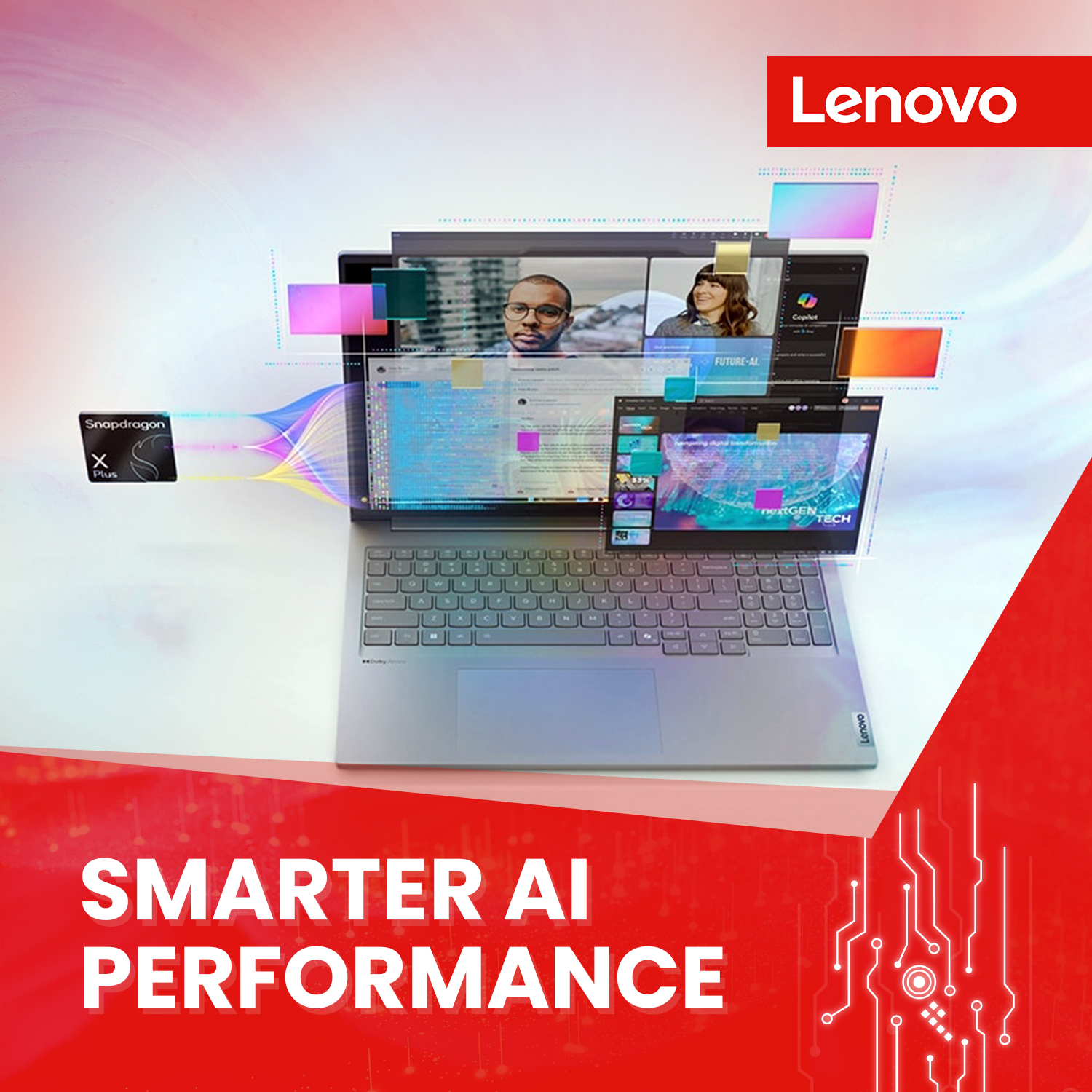
November 08, 2024 Lenovo ThinkBook 16 Gen 7 unlocks the power of Smarter AI for all Lenovo is your Smarter AI partner, committed to providing you with support, services and solutions that make AI more accessible to your customers and your business. Providing AI-capable PCs unlocks new revenue opportunities for your business, like premium pricing, faster refresh cycles and attached AI services. A new era of AI-powered productivity with Copilot+ PCs from Lenovo has arrived. Created by Lenovo and powered by the Snapdragon® X Plus 8-core processor, the ThinkBook® 16 Gen 7 delivers smarter AI for all. The Lenovo ThinkBook 16 Gen 7 is built to help organizations of all sizes experience AI performance and efficiency gains. The constant need to ‘do more with less’ means small businesses stand to gain significant advantages from AI. The ThinkBook 16 Gen 7 makes AI accessible to all in the modern workplace. Introducing your small business customers to this sleek and stylish Copilot+ PC, helps position you as a trusted advisor who can unlock the potential of AI for their business. This Copilot+ PC, which is powered by the Snapdragon® X Plus 8-core processor and includes the Qualcomm® Hexagon™ NPU, delivers AI performance of up to 45 TOPS. Personalize experiences to each user’s preferences, get faster results and make sure that confidential data neither leaves the device nor is ever used for external LLM training. The Snapdragon SoC (System-on-Chip) includes specialized hardware cores for parallel processing. These cores accelerate AI tasks, camera image signal processing, and other workloads. The Snapdragon X Plus 8-core platform also delivers extremely high efficiency per watt so users can work all day without needing to recharge. Elegantly designed for portability at just 16.7mm thick and a starting weight of 1.82kg, the ThinkBook 16 Gen 7 has a 16” display with 91.3% screen-to-body ratio and up to 2.5K resolution for clearer video conferencing. Plus, these devices boast an 84Wh battery for uninterrupted all-day productivity. Lenovo ThinkBook® 16 Gen 7 devices are designed to be both human-centered AND energy-efficient. Their speaker enclosures, battery frames, keycaps and AC adapters are built from 30% (minimum) recycled plastic. Plus, they come packaged in FSC-certified cartons and accessory boxes. So, you can embrace a new era of computing – and exceed your sustainability goals. Faster results: With no need to access the internet, there’s no latency with AI requests. Users get the information they need quickly and can move on to the next task. More personalized experiences: When AI applications are running locally, they’re able to adapt to each user’s individual preferences and work habits, enabling customized interactions and support. Enhanced security and privacy: The entire AI interaction can take place locally, so sensitive or confidential data never leaves the device, and the information accessed by the on-device AI is never used for external LLM training. Reference: ThinkBook 16 Gen 7 | 16 inch Copilot+ PC For Premium Performance | Lenovo Philippines
HP’s Endpoint security in your workplace: 2024 Update
November 11, 2024 HP’s Endpoint security in your workplace: 2024 Update Progress in cyber defense programs brings benefits to everyone in today’s connected world. Everything from identity theft, to extortion attempts, to the loss of important data like family photos can be consequences of a cybersecurity attack. Living in today’s technology driven environment has made everyone to rely on critical infrastructure like power plants, hospitals, and financial service companies. Securing these and other organizations is essential to keeping our society functioning. In a tech update seminar organized by Advance Solutions Inc in September 2023, HP Philippines presented the HP Wolf Security which is defined as a new breed of endpoint security. HP’s portfolio of hardware-enforced security and endpoint-focused security services are designed to help organizations safeguard PCs, printers, and people from circling cyber predators. HP Wolf Security provides comprehensive endpoint protection and resiliency that starts at the hardware level and extends across software and services. Each quarter HP’s security experts highlight notable malware campaigns, trends and techniques identified by HP Wolf Security. By isolating threats that have evaded detection tools and made it to endpoints, HP Wolf Security gives an insight into the latest techniques used by cybercriminals, equipping security teams with the knowledge to combat emerging threats and improve their security postures. Key findings of the Q2 2024 edition (HP Wolf Security Threat Insights Report) include the following: 1) Threat actors have been using generative artificial intelligence (GenAI) to create convincing phishing lures for some time, but there has been limited evidence of attackers using this technology to write malicious code in the wild. In Q2, however, the HP Threat Research team identified a malware campaign spreading AsyncRAT using VBScript and JavaScript that was highly likely to have been written with the help of GenAI. The scripts’ structure, comments and choice of function names and variables were strong clues that the threat actor used GenAI to create the malware. The activity shows how GenAI is accelerating attacks and lowering the bar for cybercriminals to infect endpoints. 2) ChromeLoader is a popular family of web browser malware that enables attackers to take over the victim’s browsing session and redirect searches to attacker-controlled websites. In Q2, ChromeLoader campaigns were larger and more polished, relying on malvertising to direct victims to websites offering productivity tools like PDF converters. These working applications hid malicious code in MSI files, while valid code-signing certificates helped the malware to bypass Windows security policies, increasing the chance of infection. 3) Attackers are always looking for unusual ways to infect endpoints in the hope of avoiding detection. In Q2, the HP Threat Research team identified a campaign notable for spreading malware through Scalable Vector Graphics (SVG). Widely used in graphic design, the SVG format is based on XML and supports lots of features, including scripting. The attackers abused the format’s scripting feature by embedding malicious JavaScript inside images, ultimately leading to multiple information stealers trying to infect the victim’s endpoint. Reference: HP Wolf Security Threat Insights Report: September 2024 | HP Wolf Security

Fashion industry being transformed by augmented reality
November 07, 2024 Fashion industry being transformed by augmented reality In a previous ASI article, it was cited that over the last few decades, as technology evolves, fashion seemingly doesn’t want to be left behind. Therefore, fashion merging with technology is no longer something out of this world. Recently, the merger culminated in wearable technology products that have changed the daily life of anyone who wears them. These electronic devices worn as accessories on the body provide some benefit to the wearer, very often making use of AI tools. Today, the clothing fashion is going the digital route as well. Referred to as digital fashion, it is defined as “clothing that is not physically manufactured, including game skins, avatar clothing, and non-fungible tokens (NFT).” Traditionally, digital fashion has been the reserve of video games and avatars, with players using digital clothing to express their own identity or that of their character. However, with the integration of augmented reality (AR), digital fashion is expanding and is gradually beginning to have applications in the real world. Most people are now familiar with the concept of augmented reality in specific contexts. Lots of gamers, for example, are familiar with interactive experiences that combine real-world and computer-generated content. In the context of fashion, however, augmented reality is only just beginning to take off. However, it has a number of applications that have the potential to disrupt the industry. AR involves the real-time integration of digital information into a user’s environment. To illustrate, let’s take the example of Pokémon GO. When using Pokémon GO in AR mode, a Pokémon will suddenly appear on the screen of the device that you are using to capture reality. Integrating this technology into digital fashion has significant implications, since it allows people to view themselves wearing digital clothing and even take videos and pictures. There are many potential benefits to digital fashion, and since 2018 several major fashion brands have been exploring the trend. The first significant advantage of digital fashion over physical fashion is that it is considerably more sustainable. With digital fashion, there is no need for physical production, which limits the environmental impact of the fashion industry and helps build a more sustainable future. According to one source, by replacing one discarded item of clothing in your wardrobe with digital fashion, you can save 3,300 gallons (about 12,000 L) of water and reduce your carbon footprint. Designers also have more creative freedom with digital fashion, since they are not limited by the availability of materials, production methods, or costs. By affording designers unlimited creative freedom, we enable them to experiment and come up with even more innovative and groundbreaking designs. Virtual clothing can also be more affordable and accessible than physical clothing. This opens the world of fashion up to a much broader audience. Finally, there is the interactivity element and the fact that it’s fun! Digital fashion means engaging, interactive experiences, such as virtual fashion shows and try-on sessions. Luxury fashion brand Gucci, for example, has entered the world of digital fashion by designing their own virtual sneakers. Moschino, too, has begun to experiment with digital fashion by collaborating with none other than The Sims. Amid this emerging trend, virtual fashion is not set to replace traditional, physical fashion, but rather it is meant to serve as a much-needed complement. Reference: How augmented reality is transforming the fashion industry

PH Digital Infrastructure Project to benefit Over 20M Filipinos
October 30, 2024 PH Digital Infrastructure Project to benefit Over 20M Filipinos The Philippines needs a robust broadband connectivity infrastructure to boost growth and attain its goal of becoming an upper middle-income country in the next couple of years, according to World Bank vice president for East Asia and Pacific, Manuela Ferro. She said that bringing greater internet access to the grassroots can bridge the digital divide, empower communities, and unlock the full potential of the digital economy. The World Bank’s Board of Executive Directors has approved 268.22 million euros ($287.24 million) in funding for the Philippines Digital Infrastructure Project. This project will invest in the government’s national fiber optic backbone, middle-mile, and last-mile connectivity infrastructure, while ensuring these facilities are secure against cybersecurity threats and climate risks. With the approval of the funding, more than 20 million Filipinos are going to enjoy better internet connectivity across the country. The “national fiber optic backbone” refers to a network of high-capacity fiber optic cables that interconnect different regions of the country. This network serves as the principal data highway for intra-country communications, carrying large amounts of data at high speeds. This project will complete the remaining parts of the national fiber backbone, connecting the two main international landing stations in Baler (Luzon) and Davao City (Mindanao). Zafer Mustafaoğlu, World Bank country director for the Philippines, Malaysia, and Brunei Darussalam, said: “Improved internet access will help all Filipinos, especially those in remote areas of Mindanao, gain better education, health care, social protection, and government services.” He added: “This project fosters a brighter future for lagging regions by connecting everyone and ensuring that the poorest and most vulnerable Filipinos can benefit from the power of technology.” To ensure resilience of these investments, the project will incorporate climate data, risks, and resilience measures into the design of the infrastructure. These measures include using climate-resilient materials and conduit systems for underground cables; designing overground infrastructure to withstand strong winds and floods; and incorporating innovative engineering solutions to adapt to climate-related risks, among others. A variety of steps will be taken to guarantee the country’s broadband network is safe from cybersecurity threats. For instance, the project will deploy advanced intrusion detection and prevention systems, as well as implement next-generation firewalls. Additional measures include multi-factor authentication for broadband infrastructure access; comprehensive encryption protocols; regular updates to address Wi-Fi vulnerabilities; and provisions against the dual vulnerabilities of natural disasters and cyberthreats. The project promises to benefit Filipinos outside the country’s main urban centers, in particular. At present, the delivery of telecommunications, internet connectivity, and other mobile or data-based services concentrates disproportionately in areas of strong commercial viability. This is due to the historic role of the private sector in shaping the market. As a result, almost half (45.5%) of all barangays (villages) nationwide are presently not served by a private telecommunications service provider. Expanding the reach of broadband connectivity to all regions of the country will help level up this uneven service provision. Reference: Over 20M Filipinos to benefit from improved broadband connectivity
Keeping your everyday tech devices in good working condition
October 28, 2024 Keeping your everyday tech devices in good working condition Modern living has made life easier and faster because technology has made available tools and devices at our disposal. In fact, the benefit of the modern age has enabled parents to use many of these gadgets which help them manage family life and actually serving like guiding stars in the parenting constellation. Well, there is wisdom in the catchphrase: to get out of the chaos of daily life, everyone could use a bit of help. However, as people around the world rely more and more on gadgets and appliances every day, it’s easy to forget that even our most trusted devices need a little TLC to stay in top shape. Our technology works tirelessly to make life easier, but without proper care they can wear out faster than expected. Oftentimes, the simplest maintenance can go a long way in ensuring that your technology works to the best of its ability. Read on and learn: For your smaller electronics (such as a cell phone or laptop): their biggest enemies are dust, dirt, and grime, which can clog vents and ultimately harm electronics. Use microfiber cloths to wipe screens and soft brushes for keyboards and ports, which will prevent your devices from overheating. For printers: Surprisingly, few people actually take the required steps to make sure that their printers are running smoothly for as long as possible. If you have an inkjet printer, it’s important to run a cleaning cycle every so often in order to blast away any dried ink. For television: When it comes to your television, be sure to avoid using any cleaners from your kitchen. Most of them could damage your TV screen, so it’s best to simply use a dry microfiber cloth to remove any dirt or smudges. Clean the HDMI and USB ports at the back of the TV with a small paintbrush as they can also get dusty every week or so. Cell phone batteries: they oftentimes seem as though they’ve decided to take a sharp turn off a cliff. While replacing the battery could put a dent in your finances, sometimes the poor battery life can be attributed to a missing software update. Go ahead and update your phone to eliminate that problem. Surge protectors: Power surges can damage delicate circuitry in electronics. Plug your valuable devices into surge protectors to guard against sudden voltage spikes. This simple measure can prevent costly repairs or replacements, especially during storms or unstable power conditions. Use protective cases: Investing in protective cases for your phone, tablet, or laptop is a small price to pay to prevent major damage from drops or bumps. These cases help absorb impact and safeguard internal components from harm. Overcharging: Leaving your phone or laptop plugged in at 100% for extended periods can actually add stress to the battery. Unplugging your devices when they’re fully charged helps maintain the health of the battery, allowing it to work properly for longer. Cooling pad: If you regularly use your laptop for extended periods, it might be wise to invest in a cooling pad. These pads improve airflow and reduce the risk of overheating, which can severely damage internal components. Surface level: In the same vein, experts advise that users should never leave their laptops on a soft surface (such as a blanket or a couch). Laptops need to vent heat properly, but when rested on soft surfaces this can trap the heat, ultimately causing severe internal damage to the computer. Direct sunlight: Exposing electronics to direct sunlight can cause them to overheat and damage sensitive components. Keep phones, laptops, and other devices out of direct sunlight (especially during summer months) to preserve their longevity and avoid malfunctions. Reference: How to look after everyday technology (msn.com)

Fortinet Unified SASE delivers secure access to apps, web tools
October 23, 2024 Fortinet Unified SASE delivers secure access to apps, web tools In a related previous ASI article, it was tackled that adopting security solutions that integrate and collaborate, sharing threat intelligence and adapting accordingly, is the key to the success of your evolving network. Well, the search is over and the Fortinet Security Fabric is the answer. This system enables automated protection, detection, and response along with consolidated visibility across both Fortinet solutions and a broad ecosystem of over 500 third-party solutions. Part of the Fortinet Security Fabric is the Fortinet Unified SASE, a fast-growing, unified, flexible, and intelligent SASE solution. It delivers secure access to applications and web resources for remote users and secures applications and data on any cloud. Unified SASE is a single-vendor SASE solution that fully integrates Secure SD-WAN with FortiSASE cloud-delivered security service edge (SSE). It delivers networking and security to the network edge and remote workers. It also secures remote and on-prem access and protects networks, applications, data (on any cloud), network edges, and thin edges. Unified SASE also includes other products such as FortiManager, FortiProxy, FortiClient, and universal ZTNA for various secure access use cases. Today, many organizations use a hybrid model, with employees working in remote, branch, and on-premises locations. These employees require access to various cloud services like SaaS, IaaS, private cloud, and internet resources. Securing access to multiple cloud resources and the internet is very complex and difficult. Secure access service edge (SASE) solves this challenge by securely connecting users to applications anywhere with one solution. Fortinet Unified SASE secures the hybrid workforce with robust AI-powered threat protection. Unified SASE offers comprehensive networking and security functionality such as Universal ZTNA, Secure SD-WAN, Firewall-as-a-Service, SWG, and CASB/DLP. It also delivers strong data visibility, control, and integrated advanced analytics and DEM for quick threat response. Simplified interfaces and AI-driven assistance tools reduce operational overhead, while flexible deployment options and a large network of more than 140 global POPs ensure policy enforcement is close to users, meeting compliance and performance needs. This Unified SASE integrates remote cloud access and SD-WAN to provide a single-vendor SASE solution. All SASE components integrate into a common architecture and use a single operating system. This unprecedented level of unification ensures operational efficiency and eliminates the complexity found in fragmented multi-vendor approaches. With over 140 global SASE locations, our solution secures remote access and protects networks, applications, data (on any cloud), network edges, IoT/OT, and thin edges. Moreover, Unified SASE adds capabilities to single-vendor SASE to enforce a zero-trust architecture, provide DEM, and secure the LAN/WLAN. Gain comprehensive control and visibility across all clouds and hybrid clouds with one interface. Ensure secure access to applications regardless of their locations. Plus, FortiGuard AI-Powered Security Services enable faster detection and response. Instant visibility and analytics cover endpoint-to-app performance, PoP, and threats, to enhance digital experience and accelerate troubleshooting and Day 2 operations. Reference: Unified Secure Access Service Edge (SASE) (fortinet.com)
Microsoft rolls out enhanced features for Copilot AI
October 21, 2024 Microsoft rolls out enhanced features for Copilot AI Mustafa Suleyman, Executive Vice President and CEO of Microsoft AI, announced on Oct 1, 2024 that the refreshed Copilot is focused on delivering a more intuitive design with more digestible, speedy and fluent answers. It now adapts to users with a warm tone and a distinct style, providing not only information but encouragement, feedback and advice as you navigate life’s everyday challenges — no matter how big or small. “And we’re adding advanced capabilities like Voice and Vision that make it both more useful and feel more natural. These modalities change how we connect with technology, enabling people to seamlessly reflect with, learn from and work with their Copilot companions,” Suleyman said. The Microsoft chief executive said: “Today, we’re beginning to roll out the updated Copilot, including new and enhanced features”: Copilot Voice: We’re making it easier than ever to connect with your companion using Copilot Voice. This is the most intuitive and natural way to brainstorm on the go, ask a quick question or even just vent at the end of a tough day. Your companion will be personal to you, with four voice options to choose from. Copilot Daily: Copilot Daily helps you kick off your morning with a summary of news and weather, all read in your favorite Copilot Voice, with more options like reminders of what’s coming soon. It’s an antidote for that familiar feeling of information overload. Clean, simple and easy to digest. Copilot Daily will only pull from authorized content sources. We are working with partners such as Reuters, Axel Springer, Hearst Magazines, USA TODAY Network and Financial Times, and plan to add more sources over time. We’ll also add additional personalization and controls in Copilot Daily over time. Copilot in Microsoft Edge: Copilot has been built right into your Microsoft Edge browser, quickly helping answer questions, summarize page content, translate text or rewrite a sentence. Now it’s even easier to access Copilot directly from the Microsoft Edge browser by simply typing @copilot into the address bar. Copilot Labs: Copilot Labs gives people the opportunity to test out our experimental features that are still in development. It’s a chance to give feedback and help shape the experiences we create. We have two features we’re bringing to Labs initially, Copilot Vision and Think Deeper. Copilot Vision: This is a profoundly new way of interacting with a computer. Copilot Vision sees what you see and can talk to you about it in real time. It understands the web page you’re viewing, both text and images, and can answer questions about its content, suggest next steps and help you without disrupting your workflow. Imagine you’re trying to furnish a new apartment, Copilot Vision can help you search for furniture, find the right color palette, think through your options on everything from rugs to throws and even suggest ways of arranging what you’re looking at. You may download the enhanced Copilot on iOS and Android apps. Moreover, you can open it via the Copilot Windows app and the website copilot.microsoft.com. Voice features will launch first in English in select regions. Reference: An AI companion for everyone – The Official Microsoft Blog

Omada Pro designed to meet complex needs of various industries
October 18, 2024 Omada Pro designed to meet complex needs of various industries TP-Link is a US-based global provider of reliable networking devices and smart home products, consistently ranked as the world’s top provider of Wi-Fi devices. The company is committed to delivering innovative products that enhance people’s lives through faster, more reliable connectivity. With a commitment to excellence, TP-Link serves customers in over 170 countries and continues to grow its global footprint. The company has always pursued independent R&D, manufacturing, and marketing, having established four R&D centers worldwide. Omada Pro is TP-Link’s enterprise-grade product line designed to meet the high-capacity, security, and management needs of various industries. Omada Pro delivers the following enterprise-grade product features in the area of Operations: Intelligent Anomaly Detection and Analysis. Supports multi-dimensional anomaly detection and optimization with timely alerts. Multiple Network Abnormality Notifications. Dashboard Alerts | Automatic Email Alerts Automated Radio Frequency Deployment. Channel Selection | Power Adjustment | Bandwidth Allocation | Frequency Band Deployment Audit Log. Meets long-term and large-capacity log storage needs. In the area of Management, Omada Pro presents the following features:Centralized Management. Provides a network with a controller as the core—all controlled from a single interface. Private Pre-Shared Key (PPSK). Creates unique pre-shared keys for individual users on the same SSID.Real-Time Health Status and Full Report of Clients, Devices, WAN, and Wi-Fi. Share network service quality with IT administrators through customized reports. Single Sign On (SSO). Enables third-party account login for seamless access to the Omada Pro Software-Defined Networking (SDN) platform. Zero-Touch Provisioning (ZTP). Allows admins to remotely deploy and configure multi-site networks. In the area of Security, Omada Pro has the following features:Wireless Intrusion Detection/Protection System (WIDS/WIPS). Detects and isolates abnormal access points and client behaviors, providing a secure network environment. Deep Packet Inspection (DPI). The built-in application feature recognition library can identify up to 40+ categories of mainstream software. Intrusion Detection/Protection System (IDS/IPS). Built-in IPS detection engine, supporting the detection and protection of various threats. SD-WAN. SD (Software-Defined) VPN | Intelligent Routing | Central Management The capacity of Omada Pro access points can reach up to 1,000 users, ideal for user-heavy scenarios. Being equipped with smart antennas, signal strength is improved, suppressing interference, and extending coverage. Omada Pro is innovatively designed to meet enterprise needs, featuring enhanced durability, efficient heat dissipation, and more. Reference: Omada Pro SDN Solution | TP-Link