

October 16, 2024 Digital Detox: Relearning offline connection at home In a previous ASI article, it was reported that for most of us, the days before social media and smartphones are a distant memory. Today, it’s hard to imagine what life would be like without these constant interruptions and compulsions. Many large-scale surveys have concluded that the average person spends between three and six hours a day looking at their phones. Social media has many benefits and downsides as well. Research suggests that excessive time spent on social media has a direct impact on our mental and physical health. SPOT.ph writer Mia Rodriguez shared insights about creating tech-free zones at home and listed down practical steps on how to go about it: “Creating a physical space where I went to unplug, literally, and do something (or nothing) offline helped me tune back into a world without Internet (i.e. that so-called “real world”). Arguably the hardest part for me about going tech-free even for a little while was coming to terms with how my mind had nothing to fidget with, there was no endless entertainment pouring in from the screen, no quick content to distract me from my own thoughts; it was me finding comfort in my own mind—and understanding that no, I was not missing out on anything. When I went back on my phone after whatever offline activity, the Internet was still there, moving in as fast a pace as it always does, and I was okay to let those things slip by.” Identify a physical space. The first step is to identify a space, or spaces, in your home that you want to designate as a tech-free zone, i.e. an area where gadgets are not allowed. Depending on your home’s setup and the lifestyles of the people you live with, this space can be your own permanent area, or a shared area that is only tech-free at certain times, or any other type of mix. That means it can range from a designated hobby desk that you intentionally never use your gadgets on, or you put in a rule that nobody can use their phones during meals at the dining table, a reading nook, and whatnot. Remove all gadgets and temptations. Once you’ve chosen your tech-free zone, ensure that you remove all gadgets in the area. This will help especially if self-control isn’t your strong point; best to be preemptive and get rid of any temptation. If this zone is typically where you charge your phone or tablet, then decide on a new charging area away from it. Keep it in your mind that this area should be free of gadgets at all time to be able to keep that mental zoning in your head, too. Transform the area. Now this step is where you have to be truly intentional. Making yourself focus on one task will help to drown out all the noise, or the urge to multi-task—and admittedly, finding that one task that fills your mind will take trial and error. You can try bringing back old hobbies that you had, or find a book to read (we’d say it’s okay if it’s on a device, as long as your WiFi is off and you’ve got amazing self-control), put together puzzles, or invest in something new. Create a ritual. Now that you have a dedicated space to go tech-free, you need to dedicate time as well. You can start as small as a few minutes a day, and grow it to scheduling a whole day offline weekly, or even more, depending on your own relationship with going tech-free. The core thing you need is to be intentional about it. Going offline is a choice in today’s world, so you have to choose it, and consistently so (a mindset that is best to have with any relationship, really). Reference: Creating Tech-Free Zones at Home: A Guide to Digital Detox (msn.com)

E-books are here, but it’s not yet goodbye to physical books
October 14, 2024 E-books are here, but it’s not yet goodbye to physical books In a previous ASI article, it was reported that the arrival of online publication has fearsomely threatened the existence of print magazines. Since the production of the online versions, audiences have come to expect new content daily or even hourly. Casual readers are less willing to wait for a weekly or monthly print magazine to arrive in the post or on a newsstand. The ready availability of free, or significantly cheaper, digital content may deter them from purchasing print subscriptions or individual issues. As a printed material, it seems that books are also heading in the same direction. When Amazon launched the Kindle e-reader in 2007, e-books went really full blast in popularity. Since then they have been around for quite some time now. The days when we could only read in paper format have been practically disappearing. Today, many of us spend our days in front of a screen, so reading e-books kind of makes sense, right? There are indeed many benefits to reading e-books, but maybe it’s not time to say goodbye to our good old friend, the physical book, just yet. Books are real, tangible objects while e-books are essentially a digital file. An ebook (short for electronic book), also spelled as e-book or eBook, is a book publication made available in electronic form, consisting of text, images, or both, readable on the flat-panel display of computers or other electronic devices. There is a physical sensation when holding a book in our hands – how it feels, the weight, turning a page, etc. This can never be recreated through an e-reader and who doesn’t love the smell of a new book? You won’t have it with an e-book. However, e-books don’t rely on paper and consequently all the industry of manufacturing paper and printing. It’s safe to say that e-books are more eco-friendly. But then again if you’ve ever used a tablet, smartphone, or a computer to read a book, you know how it can strain your eyes. E-readers are far superior, but this is not applicable to physical books. Many people like to read in bed. But staring at a screen before calling it a night can interfere with your sleep. Price wise, e-books are, in most cases, cheaper than printed books. You do need a more expensive device to read them, but you probably have it already (e.g. phone). To cut costs, some authors are no longer publishing books in paper format. Some publications are only available on digital format. Another good side of printed books is you can physically visualize your progress while reading. You will get closer to the end at each turn of the page. You can’t have the same experience with e-books. Books might be superior with regard to visual-spatial memory. We tend to remember certain parts of text and be able to find it physically in the book. This is particularly true for e-books with interactive elements. A study found that these were more distracting for children, compromising the learning process. If you like to read during your commute to work, or at other places where it wouldn’t be convenient to carry a physical book, a digital alternative is the way to go. This is where the convenience of an e-book comes. But when it comes to being regarded as historical artifacts, these books carry with them some historical weight that e-books don’t have. You can find them in museums and old libraries where they are neatly kept as treasures. Reference: Are physical books better than e-books? (msn.com)
Fostering a positive social media presence has its own rewards
October 11, 2024 Fostering a positive social media presence has its own rewards In a related ASI article, it was tackled that technology plays a huge part in our everyday lives. Most of us would suddenly switch to panic mode if we accidentally leave our phone at home. Modern technology comes with incredible benefits and improves our quality of life, but it can also leave a negative impact on our mental health and our relationships if we’re not on guard. The internet boom in the last 10 years has paved the way for the overwhelming emergence of social media platforms such as Facebook, Instagram, YouTube, among others. Social media has revolutionized the way information, news and entertainment are delivered to the audience. Facebook alone has more than two billion daily active users, making it a huge part of many people’s lives. But have you ever asked, what is the purpose of social media in your lives? Is it to connect with friends, share hobbies, or network professionally? Knowing your intention helps guide your interactions and ensures a more meaningful online experience. There must be a need for a quest to curate a meaningful digital identity, fostering connections that reflect the best of who we are. In this fast-paced digital world, we all benefit when we explore navigating the online landscape with intention, and by crafting a positive and authentic presence. The following guidelines will somehow serve as navigation points in establishing a rewarding social media presence: Craft a genuine profile bio. Your bio is your digital handshake. Keep it concise but authentic. Share your passions, not just titles. A genuine bio sets the tone for your profile, attracting like-minded connections and fostering meaningful engagements. Curate your content thoughtfully. Before posting, ask yourself: does this add value? Is it positive or constructive? Thoughtful curation builds a reputation for authenticity, attracting an engaged audience genuinely interested in what you share. Embrace positivity in posts. Spread positivity like confetti. Share uplifting stories, celebrate achievements, and inspire others. Positivity not only enhances your online presence, but also contributes to creating a more uplifting digital community. Choose quality over quantity. A few meaningful posts have more impact than a barrage of updates. Quality content reflects a mindful approach to your online presence. Limit screen time for balance. Mindfulness extends to screen time. Set boundaries to avoid constant scrolling. Allocate specific times for social media, fostering a healthier balance between the digital and real worlds. Your well-being is just as important online as offline. Set boundaries on social media use. Establish clear boundaries for personal and professional interactions. Define the line between sharing and oversharing. This ensures that your online presence aligns with your values and maintains a level of privacy that you’re comfortable with. Mindful engagement. Engage meaningfully with your community. Respond thoughtfully, and avoid mindless scrolling. Quality interactions forge deeper connections and contribute positively to your online reputation. Reference: Navigating social media mindfully: Building a positive online presence (msn.com)

New tax law on foreign digital services to level the playing field
October 09, 2024 New tax law on foreign digital services to level the playing field “Fairness, inclusivity, and progress—these are the goals of this law,” President Ferdinand “Bongbong” Marcos Jr. declared as he signed into law on Oct 2, 2024 a measure imposing a 12% value-added tax (VAT) on foreign digital service providers (DSPs). In a speech after its signing in Malacañang, the President said that with both local and foreign DSPs subject to a 12% VAT, they now “compete on equal terms” and will “no longer be playing by different sets of rules.” “If your presence in the Philippine market is as real as your profits, then your tax responsibilities should also be equally tangible … If you are reaping the rewards of a fruitful digital economy here, it is only right that you contribute also to its growth. After all, whether you are a small tech start-up or a global tech giant based halfway around the world, if you are making money here in the Philippines, you are part of our community. And with that comes a shared responsibility,” Mr. Marcos added. The law known as Republic Act No. 12023 amended the 1997 National Internal Revenue Code to include nonresident DSPs in the coverage of VAT, thus removing their undue advantage over their local counterparts that pay the tax. The law defines DSPs as entities whose services are delivered or subscribed over the internet or other electronic networks such as online search engines and marketplaces, cloud services, online media and advertising, and downloadable digital content consumed in the Philippines. These include cloud services or platforms providing digital content such as Netflix, Amazon Prime, Disney Plus and HBO as well as online marketplaces such as Lazada, Shopee, Shein and Amazon. Exempted from the digital VAT are educational services such as online courses and webinars of private institutions and online subscription-based services such as Zoom or Google Classroom to educational institutions recognized by the Department of Education, the Commission on Higher Education and state universities and colleges. Now to the burning question on everyone’s minds: Will this result in a price hike? Although the law doesn’t directly impose a new tax on consumers, the 12% VAT that these companies are now required to pay will likely be passed on to you. BIR Commissioner Romeo Lumagui clarified in a press briefing: “It’s a business decision by the service providers. Nagbabayad naman dapat sila from the very beginning, so they should have incorporated ‘yung VAT into their pricing sa simula pa lang. Puwede naman magkaroon ng price increase but I think it would be minimal. Hindi naman 12% automatic mag-iincrease sila.” Finance Secretary Ralph Recto said: “We are just merely correcting the current system that creates an unfair advantage to foreign digital service providers and weakens the country’s tax base, forgoing much-needed revenues that could have been used to fund crucial public services, infrastructure, and other socio-economic programs.” In addition, the government foresees this law will bring in approximately P105 billion over the next five years. That money, according to the President, will be used for building classrooms, health centers, and other public infrastructure. Plus, 5% of the revenues will go to supporting the local creative industry—think Filipino filmmakers, musicians, and other creatives getting more funding. Reference: VAT on Digital Services: Should You Be Worried About Price Hikes? (msn.com)
CHEd cites AI in adjusting curriculum to suit changes in job markets
October 07, 2024 CHEd cites AI in adjusting curriculum for changes in job markets Advance Solutions Inc. (ASI) has always believed that technology plays a crucial part in the country’s education sector. In a tech update seminar ASI conducted in December 2023, the “future of Education” became the focus. The seminar, in cooperation with Intel Philippines, gathered an audience of IT personnel from various educational institutions. Intel presented its vision for AI in Education that includes an AI-infused curriculum. The Commission on Higher Education (CHEd) is now finetuning its curriculum requirements to meet quickly evolving changes in job markets, according to CHEd Commissioner Ethel Agnes Valenzuela. The Commission cited a 2023 study by the Association of Southeast Asian Nations, showing the top fastest growing jobs in the region were AI and machine learning specialties; data analysts and scientists; sustainability specialists; robotics engineer; business intelligence analysts; big data specialists; information security analysts, among others. “We see that the jobs now are different. We now have AI (artificial intelligence), which is very specialist [and] sustainability specialist. It’s no longer the traditional jobs that we want,” Valenzuela said at a roundtable organized by the Swiss Embassy in Manila in July 2024. The same study showed that the top fastest declining jobs were bank tellers and related clerks; material-recording and stock-keeping clerks; postal service clerks; accounting, bookkeeping and payroll clerks; cashier and ticket clerks; home appliance installers and repairers; data entry clerks; legislators and officials; administrative and executive secretaries; and statistical, financial and insurance clerks. “We are retraining and upskilling our graduates for new kinds of jobs emerging. So robotics, big data, all of these digital transformation specialists. These are the courses today, not in the future, but it’s now,” Valenzuela explained. Technical Education and Skills Development Authority division chief Gemma Lorena Reyes said that they are in constant communication with different industries to determine how they can revamp their curriculum to meet the new trend. “I believe that since in the process of developing our training regulations, standards, and curriculum, we consider that already in cooperation with the industry. We coordinate with the industry in the development of our curriculum and one of these aspects are on AI and robotics,” Reyes explained. Meanwhile, Department of Education Assistant Secretary Dexter Galban said they are striving to meet the digital specialization demands which have “catapulted” in the last few years. “We cannot expect our learners from the get-go would already be experts on the matter. That’s why we want to be able to supplement that with learning opportunities that are actually coming from the industries as well,” Galban said. Mr. Galban added: “Right now we’re really exerting much effort ensuring that our [Grades] 11 and 12, which is basically our terminal aspect of the K-12 program would be severely enhanced, extremely enhanced so that we would be able to update what the industry demands because the time frame for that is much shorter.” Reference: AI, tech jobs easing out traditional work (msn.com)

Microsoft Surface laptops: innovative designs, optimal performance
October 04, 2024 Microsoft Surface laptops: innovative designs, optimal performance Surface Laptop is another step toward Microsoft’s goal to be carbon negative, water positive, and achieve zero waste by 2030. With more recycled materials, thoughtful packaging, and increased built-in efficiency, Surface products are designed with the circular economy in mind. A sight to behold, the HDR display of Surface Laptop delivers richer blacks, crisper whites, and vibrant colors. Microsoft Surface laptops’ innovative designs and features match their optimal performance. If you’re in the market for a new device, you might be deciding between the new Surface Laptop 7ᵗʰ Edition or the previous generation, Surface Laptop 5. Both devices have enticing features and capabilities, but Surface Laptop 7ᵗʰ Edition takes the features to new heights. Explore the differences between Surface Laptop 7th Edition vs. Surface Laptop 5 so you can decide how to upgrade your computing experience. Comparing Surface Laptop 7ᵗʰ Edition and Surface Laptop 5 When comparing these two generations of Surface laptops, Surface Laptop 7ᵗʰ Edition stands out as a formidable upgrade from Surface Laptop 5. The new Surface Laptop 7ᵗʰ Edition is not just faster—it’s smarter. With its more powerful processor options and Copilot+ PCs features, Surface Laptop 7ᵗʰ Edition is the fastest, most intelligent Surface Laptop ever. Learn which areas Surface Laptop 7ᵗʰ Edition takes the lead when compared to Surface Laptop 5. Improved processing and graphicsSurface Laptop 7ᵗʰ Edition has upgraded processing capabilities when compared to Surface Laptop 5’s Intel® Coreᵀᴹ processors. Surface Laptop 7ᵗʰ Edition is an exceptionally powerful, razor-thin laptop with up to 86% faster performance than Surface Laptop 5. Unleash lightning-fast speed and AI accelerated power with all new Snapdragon® X Series processors for the ultimate multitasking. Surface Laptop 7ᵗʰ Edition vs. Surface Laptop 5’s graphics are also different thanks to Surface Laptop 7ᵗʰ Edition’s Qualcomm® Adrenoᵀᴹ graphics processing unit (GPU) versus Surface Laptop 5’s Intel® Iris® Xe GPU. Surface Laptop 7ᵗʰ Edition’s upgraded GPU provides more stunning visuals. AI-powered capabilitiesSurface Laptop 5 doesn’t have a neural processing unit (NPU), but Surface Laptop 7ᵗʰ Edition comes equipped with a turbocharged NPU for unmatched experience with lightning speed and smooth performance. Surface Laptop 7ᵗʰ Edition’s Qualcomm® Hexagonᵀᴹ has a blazing NPU speed that enables AI-powered applications. Run the apps you want at the speed you need. With a turbocharged NPU that for accelerated apps performance and the near-universal compatibility granted by emulation, nothing will get in your way. In addition to its built-in NPU, Surface Laptop 7th Edition also comes with a Copilot key included in its keyboard so you can quickly access Copilot. Surface Laptop 7th Edition has other AI-driven features, like Recall and Live captions. These features can help you save time when you interact with your device, whether you’re searching for something or are participating in a video call. Searching for a document, email, or web page on your PC can be time-consuming. Now you can just describe how you remember something and Recall will find it, instantly. Reference: Surface Laptop 7ᵗʰ Edition vs. Surface Laptop 5 | Microsoft Surface
TP-Link Omada: smarter cloud solution for business networking
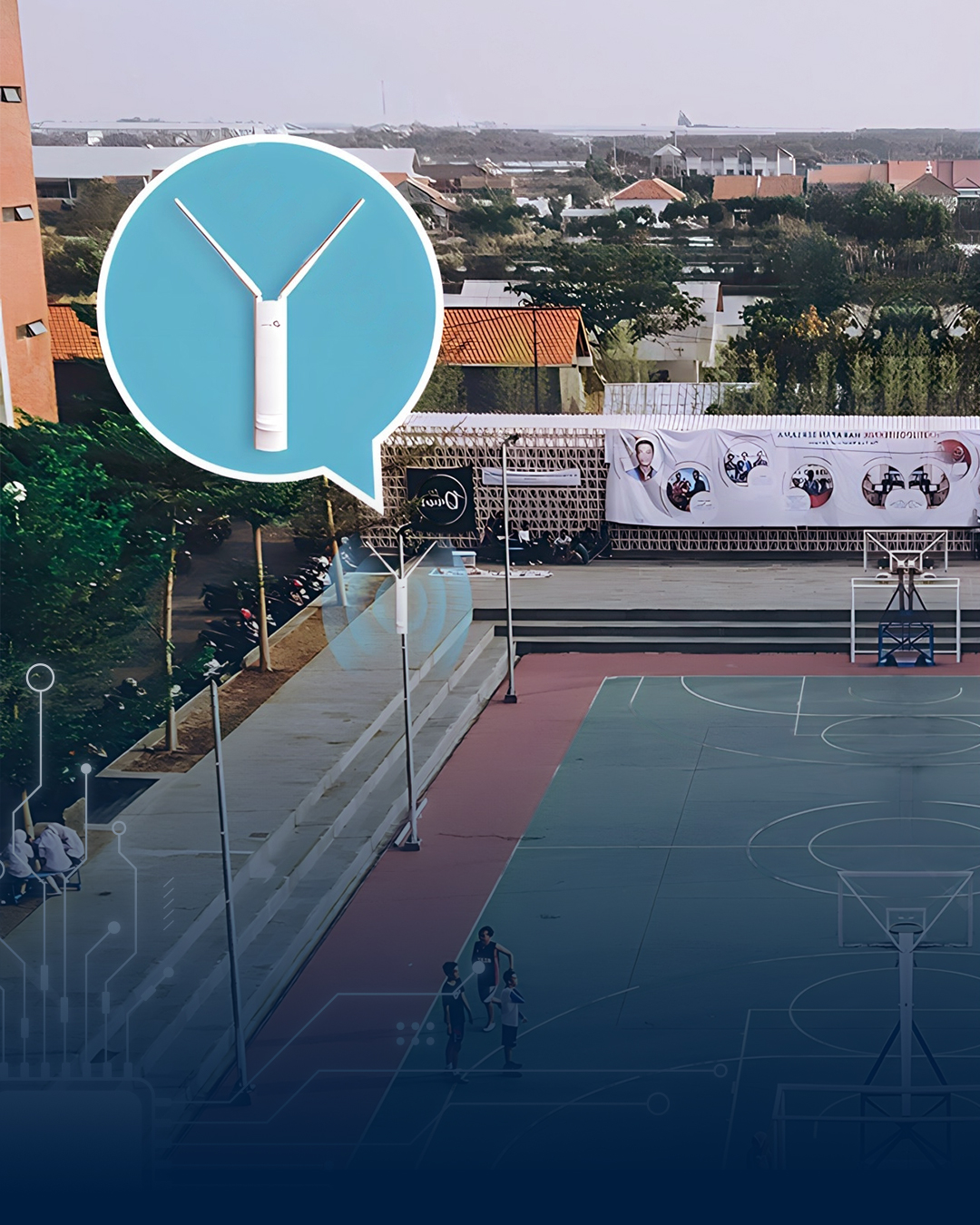
October 01, 2024 TP-Link Omada: smarter cloud solution for business networking TP-Link is a US-based global provider of reliable networking devices and smart home products, consistently ranked as the world’s top provider of Wi-Fi devices. The company is committed to delivering innovative products that enhance people’s lives through faster, more reliable connectivity. With a commitment to excellence, TP-Link serves customers in over 170 countries and continues to grow its global footprint. The company has always pursued independent R&D, manufacturing, and marketing, having established four R&D centers worldwide. It has built a global manufacturing and supply chain network in China, Vietnam, India, and Brazil. TP-Link Omada is a smarter end-to-end cloud solution dedicated to business networking. Omada’s Software-Defined Networking (SDN) platform integrates network devices, including access points, switches, and routers. It provides 100% centralized cloud management and a highly scalable network controlled from a single interface. Seamless wireless and wired connections are provided, ideal for use in hospitality, education, retail, and offices. WiFi is air. It’s not an overstatement; it’s reality. In any household, a strong, stable wireless network is simply an expectation. In fact, the ability to offer convenient connections makes a significant impact on overall customer satisfaction and ratings. Now, TP-Link Omada SDN allows hotels to build the reliable, cost-effective WiFi networks that drive progress and keep guests happy and coming back for another stay. In modern educational institutions, wireless connectivity is as essential as a pen and paper. Reliable, secure, and convenient WiFi allows teachers to access a wider variety of resources that promote more effective learning and development. It also provides students with unlimited access to information to enrich their education. Moreover, teachers and students can access the campus network with high-security VPN to teach and learn at anywhere. Due to its reliable, scalable, and secure network solution, TP-Link has been widely acknowledged by global customers in the Education market. With the growing reliance on smartphones for everyday activities, WiFi has the power to play an important role in the shopping experience. When a brick-and-mortar retailer offers free WiFi, this incentivizes customers to extend their visit, providing the opportunities to explore, discover, and make a purchase. A good wireless network cannot only serve the network office system of the mall, but also bring a more comfortable shopping experience to customers. The TP-Link Omada SDN Solution empowers store owners to create a modern and compelling in-store experience for every customer. In the era of smart mobile devices, WiFi has become a necessity for restaurants and cafes everywhere. Customers want to check out the news and send messages to friends, even while dining or lounging with a latte. When customers share their experiences online, businesses can also benefit from sharing promotional content and enhancing social media profiles. TP-Link Omada SDN solution empowers restaurant owners to create a modern and compelling in-store experience for every customer, while gaining acknowledgment from catering markets around the world. Reference: Omada Cloud Software Defined Networking (SDN) | Cloud Centralized Management | TP-Link

Filipino Photographers are Asked: Is AI use in Photography okay?
September 27, 2024 Filipino Photographers are Asked: Is AI use in Photography okay? In a previous ASI article, it was reported that art competitions have seen controversies surrounding the use of AI. Some winners have been accused of copying their works from computer app outputs. The question arises: is this legal or a form of cheating? After all, the work itself is not produced by human hands. But how can one detect an AI-generated artwork if the artist is really good at realism and could produce output similar to or not better than his AI-generated reference? Is that not a mind-boggling truth? In March 2023, Berlin-based artist Boris Eldagsen won the creative photo category at the Sony World Photography Awards with his entry of a haunting black-and-white image of an older woman embracing a younger woman titled PSEUDOMNESIA: The Electrician. But he later turned down the award after revealing that it was an image generated using DALL-E 2, an AI image generator. “I applied as a cheeky monkey, to find out, if the competitions are prepared for AI images to enter. They are not.,” Boris explained on his website, sparking widespread controversy about whether AI-generated images should be considered art. Renowned Filipino photographer Jun De Leon reshared a 2004 portrait he took of Bianca Gonzalez, emphasizing the artistry of traditional photography before AI and advanced editing software. “Not AI. I will always enjoy the romance with my brain and the joy of realizing my vision physically. Photography is the hardest language to articulate,” he wrote, underscoring the tension between technological advancement and traditional creative processes. Today, the debate on AI in photography continues. Some see it as a powerful tool to enhance their work, while others fear it undermines creativity and threatens job opportunities. One such example was Mango’s AI-generated fashion campaign, which drew significant backlash. As Filipino photographer Lee Morale aptly put it, “Using AI is a double-edged sword.” On one hand, it can enhance what we are doing and improve the quality we want to showcase to our audience. It can also help us expedite our work, as long as it is used ethically. Preview.ph talked to other Filipino photographers to hear their take on the use of AI in photography: Dennis Sulit: “For me, AI is a great help in my editing process as a photographer, but I believe it is not a valuable tool for enhancing my work. I use it solely to speed up my editing process, such as erasing unwanted parts of a photo or omitting some details that were left unnoticed during the photoshoot.” Josh Tolentino: “AI for me has been helpful whenever I get into my retouching workflow. It enhances the photos and saves me time through the series of tools available to get the retouching that I want—AI, specifically Generative AI helps me enhance or remove unwanted elements inside my photo with just a prompt that I wish to initiate.” Karlo Cadang: “AI is very useful for my commercial works. It makes my workflow faster when it comes to cleaning the photos or extending backgrounds. But for more creative and editorial shoots I want my vision to be captured during the actual shoot and opt not to use AI or any kind of post editing as much as possible.” Reference: Is It Okay to Use AI in Photography? We Asked Filipino Photographers to Weigh In (msn.com)

Digital nomadism: A different way to work, but some are quitting
September 23, 2024 Digital nomadism: A different way to work, but some are quitting Lifestyle changes have become inevitable in the digital age and that includes the way we work. The corporate setting is no longer confined within the four corners of the office. The rapid advancement in technology has modified or further modernized the way we do things in our work spaces. In recent years, this dream became a reality for many: You are sitting on a beach in a tropical paradise while fielding calls about an upcoming project while listening to waves crash against the shoreline. During the Covid-19 pandemic, digital nomadism became a trend. But the phenomenon had been growing in popularity long before the world was taught there was a different way to work, one that didn’t involve daily commutes. Digital nomads are defined as people who have chosen to adopt location-independent work that enables them to use technology to travel anywhere and work remotely on their chosen career via the internet from anywhere in the world according to MBO Partners. MBO Partners wrote: “Unlike regular remote workers, who tend to stay in one geographic area.” Further, “digital nomads travel and explore while working,” meaning there is some aspect of play and exploration oriented around the locations digital nomads choose. The lifestyle is more about finding a way to travel and explore the world, the nooks and crannies of the world while also making sure you have the cash in your pocket to live while also not forgetting your career, essentially it’s the best of both work and travel. Most digital nomads are remote workers, self-employed, or freelancers according to the U.S. Chamber of Commerce, which noted that millions of Americans have chosen the life of digital nomadism. But just how many digital nomads are roaming the earth now? Think Remote estimated that there are roughly 35 million digital nomads in the world, 23.2 million of which are American, and that number is up significantly from figures in 2022 that showed the numbers worldwide only sat at 16.9 million workers. In the Philippines, the rise of the Filipino digital nomad is a testament to the adaptability, resilience, and creativity of the Filipino workforce. Embracing a borderless career offers numerous advantages, from personal growth and cultural exploration to professional development and economic contributions. The digital era has opened up numerous remote work opportunities for Filipinos. In the years to come, the Filipino digital nomad community will continue to thrive. Filipino digital nomads can create a fulfilling and successful lifestyle that transcends traditional boundaries. However, while a life of mixing work and travel might seem idyllic, digital nomads face a unique set of problems that might not make the lifestyle attractive to some people. One of the biggest issues facing the digital nomad community is their lack of connection. “An increasing number of workers who’ve tried the nomadic lifestyle report that behind the wanderlust-fueled Instagram posts and rosy travel blogs, the reality of this set-up is not always so glamorous,” wrote Ellen Nguyen of BBC News. The biggest problem for some according to Nguyen’s reporting is the lack of a stable community and long-lasting friendships, which led to feelings of isolation as well as depression. Another big issue while living abroad was food poisoning and infections. Every problem was its own unique challenge, but piled on top of one another they became too much for Lauren Juliff, a five-year veteran of digital nomadism who eventually quit the lifestyle. Lauren Juliff is not alone. Popular online digital nomad personas like Oz Chen, 2foodtrippers, and The Ordinary Adventurer have quit the lifestyle for very similar reasons—each was tired and needed a change of pace. Reference: What is digital nomadism and why are some people quitting the lifestyle? (msn.com)

Podcasts are shaping the future of entertainment…and more
September 20, 2024 Podcasts are shaping the future of entertainment…and more Before, there were only three forms of media where people get their source of news, information, and entertainment. There were radio, television, and printed forms like newspapers, magazines, books, etc. With the development in technology, the internet came about and with it online platforms are created such as Facebook, Instagram, YouTube, WhatsApp, TikTok, X (Twitter), etc.. They are collectively labeled as “social media.” This form of media is now regarded as the “new media” and in the last decade or so, it has revolutionized the way information, news and entertainment are delivered to the audience. Today, podcasts and all kinds of audio are changing the game in storytelling and media. It’s all about that special feeling when someone’s voice hits your ears and how even the quirkiest topics are making waves worldwide. Audio entertainment creates a unique sense of intimacy, with voices directly in the listener’s ears. This closeness fosters a personal connection between the listener and the content. Audio formats have revitalized storytelling. Without visuals, listeners are engaged more deeply, using their imagination to visualize narratives, a throwback to the era of radio dramas but with modern twists. Podcasts have redefined the traditional radio. With on-demand access and a vast array of content, audio entertainment is reshaping how people think about radio. Successful podcasts are increasingly being adapted into books, TV shows, and movies, showing the medium’s influence on broader entertainment. The human voice in podcasts carries nuances and emotions that text or visuals alone cannot convey, adding a powerful dimension to storytelling and discussions. Advanced sound design enhances audio storytelling, creating immersive soundscapes that bring stories to life and engage listeners on a deeper level. Making entertainment portable and convenient, podcasts and other audio formats are consumable on the go, fitting into people’s busy lives better than other forms of media. Online communities around podcasts are thriving. Listeners engage in discussions, fan theories, and meet-ups, fostering a sense of belonging and shared interest. The podcast model has revolutionized advertising, with host-read ads providing a personal touch and often higher engagement rates compared to traditional advertising methods. With content available in multiple languages, widening their reach and influence globally, podcasts transcend language barriers. Audio content focusing on mental health and wellness has seen a surge, offering guidance, support, and a sense of community to those seeking help. Fictional and narrative podcasts are gaining popularity, offering serialized storytelling akin to reading a book or watching a TV series, but purely through audio. Live podcast recordings and tours add a new dimension to the medium, combining the intimacy of audio with the excitement of live performance. The emergence of podcast networks has streamlined the production, distribution, and monetization of podcasts, mirroring the structure of traditional media networks. Many turn to podcasts for personal growth and learning, with topics ranging from self-improvement to professional skills development. The comedy genre thrives in the podcast format, offering a platform for comedians to showcase their talent in a more relaxed, conversational style. Investigative and journalistic content has found a new avenue in podcasts, offering in-depth analysis and storytelling on current events and social issues. Reference: How podcasts are shaping the future of entertainment (msn.com)
Bill Gates finds the meeting summary feature of AI most useful
September 18, 2024 Bill Gates finds the meeting summary feature of AI most useful An ASI article previously reported that in his Dec 2023 blog post about AI, Microsoft cofounder Bill Gates said: “We are just at the beginning of this transition right now. This is an exciting and confusing time, and if you haven’t figured out how to make the best use of AI yet, you are not alone.” He would further say: “Think back to the beginning of the internet. At first, you probably didn’t know many people who were using it, but it became more common over time.” Today, Gates spends a lot of time in meetings as part of his ongoing work in public health and artificial intelligence. And when he is in the room or on the call, you can bet it’s going to get extremely detailed, according to Chris Williams, the former VP of HR at Microsoft, who worked closely with the Microsoft cofounder for eight years. Gates “was always curious, always wanted to understand, always drilling for more detail,” Williams wrote last year for Business Insider. “I’d say the feature I use the most is the meeting summary, which is integrated into [Microsoft] Teams, which I use a lot,” Gates said in an interview with The Verge. “The ability to interact and not just get the summary, but ask questions about the meeting, is pretty fantastic.” For him, each meeting contains a lot of material to digest after the fact — a task he says AI is well suited to assist with. The tool Gates is referring to is Microsoft’s Copilot, powered by the company’s partnership with OpenAI and available as an add-on feature for several Microsoft 365 office apps. Copilot allows users to “find and use info that’s buried in documents or lost in conversations, and get things done in whole new ways using the power of AI,” the company says. Of course, Microsoft’s offering is one of several AI tools that are popping up to help office workers spend less time dealing with meetings. And Gates is not alone in using machine learning to lighten his workload: a survey by Hubspot last year found workers are using AI tools to save up to two hours per day on tasks like scheduling meetings, note-taking, and data entry. In some cases, Copilot users have said the tool enables them to skip meetings altogether in favor of catching up on the AI recap. As one of AI’s most vocal supporters, Gates is clear-eyed about the technology’s limitations. “If it’s a problem that humans are not good at dealing with, then present techniques don’t create some novel approach,” he said in another interview earlier this year. In short, current AI models are just a lot faster at performing well-defined tasks that humans currently do, albeit more slowly, like transcribing and summarizing meeting notes. And while smarter meetings might not be the most exciting use-case imaginable for AI, the potential savings are significant. Gates also previously predicted that AI could transform education in the next five to 10 years by delivering content tailored to a student’s learning style. He suggested AI could engage students by learning what motivates them and what causes them to lose interest in subjects. While he said teachers likely wouldn’t become redundant, they may need to adapt to the new technology. In his most recent post, Gates called the AI education tools being piloted today “mind-blowing.” Reference: Bill Gates reveals what he uses AI for most (msn.com)
Tech gadgets that redefine the modern parenting experience
September 16, 2024 Tech gadgets that redefine the modern parenting experience Parenting is an art mastered with the right tools. In today’s tech-driven world, solutions abound to simplify and amplify their roles. The benefit of the modern age is that they can use so many technological advances and gadgets to help them and these tools can be the guiding stars in the parenting constellation. Sometimes, to get out of the chaos of daily life, everyone could use a bit of help. Since parenting is a remarkable journey filled with highs and hurdles, tech emerges as an ally amidst the frenzy. Imagine a life where the morning rush is a breeze, and you effortlessly manage the daily dance of work and family. The right tech not only eases the load, but transforms parenting into a joyful adventure. Let’s explore the possibilities! From smart crock-pots that cook while you conquer your to-do list, to elegant jewelry doubling as a health tracker, these gadgets redefine the modern parenting experience: WeMo-enabled crock-pot. After a hectic day, cooking becomes a breeze with the WeMo-enabled crock-pot. Adjust time and temperature through the WeMo app, allowing you to focus on family while dinner simmers to perfection. Bluetooth tracking. Ever hunt for keys or a phone? Getting a Bluetooth tracker is the answer. Often smaller than a quarter, they attach to items, helping you locate them via smartphone apps. No more misplaced essentials! Automatic animal feeders. Feeding your human children is hard enough! Now at least you can automate the feeding of your furry children. These automated feeders make life so much easier! Wireless phone chargers. Depending on how old your children are, chords are not something you’ll want to have around too much. Make use of wireless chargers. They’re often faster and provide a better overall experience. Portable battery pack. With how much we rely on our devices, they’re bound to run out of juice throughout the day. No problem! Just plug in and enjoy hours of battery. Digital picture frames. Glass and precious memories—not something that mixes well when we add children to the equation! Having a gallery of pictures hanging on the wall may not be the best option anymore. With digital picture frames, you can upload thousands of photos that will play on repeat! Internet extenders. Ever struggle for Wi-Fi in those far-reaching corners of the home? Maybe in the bathroom for a couple of minutes of chill-out time? Problem solved with these extenders! Video cameras. For those who want to have complete visibility in their homes at all times, a home video camera is the solution. Connect it to an app on your smartphone and you’ll have everything you need to keep an eye on things from afar. Smart locks. These locks are great for security! With the ability to change codes whenever you’d like, keeping people inside or outside your home has never been easier. We don’t want those toddlers opening the front door by accident, now do we? Vacuum sealer. Extend the freshness of your essentials with a vacuum sealer. From spices to meats, this gadget preserves items with simple instructions, ensuring nothing goes to waste. Wireless printers. Cherish memories instantly with a Wi-Fi-enabled photo printer. Print pictures directly from your phone, preserving precious moments effortlessly. Smart plug with Wi-Fi. Command your home with a tap using Wi-Fi-enabled smart plugs. Turn lights on and off, limit energy consumption, and embrace the simplicity of a connected living space. Smart thermostat. Embrace energy-efficient comfort with a smart thermostat. Control your home’s climate through smartphone apps, ensuring a welcoming environment upon your return. Online shopping apps. Online shopping apps are here to make your life easier, so use them. You’ll find everything you need online and won’t have to worry about heading into rush hour traffic with kids to entertain in the car! Reference: Tech gadgets for busy parents (msn.com)
Smartphone apps that make life easier for seniors
September 12, 2024 Smartphone apps that make life easier for seniors Who says that technology is best suited for the young? If the benefits of technology extend to all, then it includes old folks and the young at heart. The app market is dominated by games and social media platforms for younger users. But, older generations must not be left behind in using technology—there are plenty of apps that are user-friendly and provide tools designed to make life easier. Park And Forget. This app is a life-saver to help you remember where you parked your car. A simple button saves your car’s location and if you get lost finding it later, you can just press the “locate car” button. Available for: iPhone. Pillboxie. This app reminds you to take your medication and helps you organize your prescription schedule. Available for: iPhone and iPad. Pandora. If you’re a music lover, you’ll enjoy kicking back and listening to your favorite genre with Pandora’s customizable stations. Available for: iPad, iPhone, Android. Epicurious. This app provides over 30,000 recipes from sites all over the web. It offers bonus features including reviews, tips, photos, and even a voice control function. Available for: iPhone, iPad, and Android. Skype. The app makes it easy to keep in touch with loved ones all over the world. Available for: iPad, iPhone, and Android. Goodreads. Discover and share your favorite books while viewing reviews made by other users. Available for: iPad, iPhone, and Android. The Weather Channel. Enjoy constant weather updates so you’re never caught unprepared. Available for: iPhone. Blood Pressure Monitor. This app will help you track your blood pressure and weight over time, while also affording you the option of sharing the information with your doctor. Available for: iPhone and iPad. Netflix. If you have a Netflix subscription, you can watch your favorite shows and movies on-the-go! Available for: iPhone, iPad, and Android. Find My iPhone. Sometimes our phones get lost or stolen. This app allows you to protect your information remotely while also helping you find your missing device. Available for: iPad, iPod Touch, and iPhone. Mint. This personal finance app is a great tool for keeping track of your spending and saving while also letting you know when you’ve gone over your budget in various categories. Available for: iPhone, iPad, iPod Touch, and Android. Lumosity. Staying mentally active and keeping your mind sharp has never been easier with the Lumosity app. It contains hundreds of games and puzzles designed to benefit memory and information recall. Available for: iPhone. Reference: Helpful smartphone apps for senior citizens (msn.com)

AI is Transforming Healthcare in many different ways
September 09, 2024 AI is Transforming Healthcare in many different ways The prospects for both AI and robotics in healthcare are expansive. AI and robotics are increasingly a part of our healthcare eco-system, just like in our everyday lives. We have underscored eight ways that showcase how this transformation is currently making progress. Keeping Well. One of AI’s biggest potential benefits is to help people stay healthy so they don’t need a doctor, or at least not as often. The use of AI and the Internet of Medical Things (IoMT) in consumerhealth applications is already helping people. Technology applications and apps encourage healthier behavior in individuals and help with the proactive management of a healthy lifestyle. It puts consumers in control of health and well-being. Early Detection. AI is already being used to detect diseases, such as cancer, more accurately and in their early stages. According to the American Cancer Society, a high proportion of mammogramsyield false results, leading to 1 in 2 healthy women being told they have cancer. The use of AI is enabling review and translation of mammograms 30 times faster with 99% accuracy,reducing the need for unnecessary biopsies. Diagnosis. IBM’s Watson for Health is helping healthcare organizations apply cognitive technology to unlock vast amounts of health data and power diagnosis. Watson can review and store far more medical information – every medical journal, symptom, and case study of treatment and response around the world – exponentially faster than any human. Google’s DeepMind Health is working in partnership with clinicians, researchers and patients to solve real-world healthcare problems. Decision Making. Improving care requires the alignment of big health data with appropriate and timely decisions, and predictive analytics can support clinical decision-making and actions as well as prioritize administrative tasks. Using pattern recognition to identify patients at risk of developing a condition – or seeing it deteriorate due to lifestyle, environmental, genomic, or other factors – is another area where AI is beginning to take hold in healthcare. Treatment. Beyond scanning health records to help providers identify chronically ill individuals who may be at risk of an adverse episode, AI can help clinicians take a more comprehensive approach for disease management, better coordinate care plans and help patients to better manage and comply with their long-term treatment programs. Robots have been used in medicine for more than 30 years. They range from simple laboratory robots to highly complex surgical robots that can either aid a human surgeon or execute operations by themselves. End Of Life Care. We are living much longer than previous generations, and as we approach the end of life, we are dying in a different and slower way, from conditions like dementia, heart failure and osteoporosis. It is also a phase of life that is often plagued by loneliness. Robots have the potential to revolutionize end of life care, helping people to remain independent for longer, reducing the need for hospitalization and care homes. Research. The path from research lab to patient is a long and costly one. According to the California Biomedical Research Association, it takes an average of 12 years for a drug to travel from the research lab to the patient. Only five in 5,000 of the drugs that begin preclinical testing ever make it to human testing and just one of these five is ever approved for human usage. Furthermore, on average, it will cost a company US $359 million to develop a new drug from the research lab to the patient. Drug research and discovery is one of the more recent applications for AI in healthcare. By directing the latest advances in AI to streamline the drug discovery and drug repurposing processes, there is the potential to significantly cut both the time to market for new drugs and their costs. Training. AI allows those in training to go through naturalistic simulations in a way that simple computer-driven algorithms cannot. The advent of natural speech and the ability of an AI computer to draw instantly on a large database of scenarios, means the response to questions, decisions or advice from a trainee can challenge in a way that a human cannot. And the training program can learn from previous responses from the trainee, meaning that the challenges can be continually adjusted to meet their learning needs. Reference: 8 Ways AI is Transforming Healthcare – Healthy Options

Fortinet study reveals PH in dire need of cybersecurity experts
September 06, 2024 Fortinet study reveals PH in dire need of cybersecurity experts Fortinet is a driving force in the evolution of cybersecurity and the convergence of networking and security. Their mission is to secure people, devices, and data everywhere, and today they deliver cybersecurity everywhere you need it with the largest integrated portfolio of over 50 enterprise-grade products. The Philippines has been experiencing a rising number of online breaches lately and to counter this, the country has to develop more cybersecurity experts, as companies are starting to feel the pinch of the skills gap in the digital age. Cybersecurity leader Fortinet conducted a study in June 2024 titled “Global Cybersecurity Skills Gap Report.” Based on a report from Fortinet, three in four businesses are worried about the worsening shortage of digital professionals in the country. The study said 94% of organizations in the Philippines suffered an online breach that they partially blame on talent shortage. Globally, Fortinet estimates that more than four million people are needed to fill the skills gap in cybersecurity. Companies polled in the report said this talent demand has to be topped up as soon as possible, or else they might suffer financial or reputational consequences. For instance, the report found that 62% of respondents said that executives have faced jail time or been told to pay fines for data breaches. Half of them also lamented that they lost as much as $1 million in revenue from online attacks. In response, the report said 94% of organizations view cybersecurity as a business priority, and this means more funding will be allocated for protective solutions. Fortinet country manager for the Philippines Alan Reyes said the first order of the day is to find the right talents to be able to fend off data breaches. He said: “More organizations are increasingly linking security breaches to the cybersecurity skills gap, as 94% of organizations in the Philippines recognize this issue, up from 92% in the last report.” Moreover, Reyes said companies are starting to diversify their hiring efforts to address the talent shortage. This means opening cybersecurity roles to candidates whose credentials fall outside the usual required background of being a graduate of information technology (IT). In spite of this, management remains strict in employing cybersecurity personnel. Most want their IT departments run by people who have obtained certifications. Internally, Reyes also recommended that companies invest in the training of their employees to improve their security hygiene and prepare for possible cyber threats. As the cyber workforce shortage persists, some organizations diversify their recruitment pools to include candidates whose credentials fall outside traditional backgrounds—such as a four-year degree in cybersecurity or a related field—to attract new talent and fill open roles. Shifting these hiring requirements can unlock new possibilities, especially if organizations are also willing to pay for certifications and training. The increasing frequency of costly cyberattacks, combined with the potential of severe personal consequences for board members and directors, is resulting in an urgent push to strengthen cyber defenses across enterprises. As a result, organizations are focusing on a three-pronged approach to cybersecurity that combines training, awareness, and technology. Reference: ‘Philippines in dire need of cybersecurity experts’ (msn.com)

Microsoft announces big update to Bing Search features
September 05, 2024 Microsoft announces big update to Bing Search features The digital landscape is continuing to evolve at a radical phase. In recent years, artificial intelligence (AI) has emerged as a dynamic technology trend that is poised to revolutionize the future of humanity. We are witnessing a seamless integration of concepts that were once confined to science fiction into our everyday reality. AI has now blended itself into our daily lives, altering the way we work. In his Dec 2023 blog post about AI, Microsoft cofounder Bill Gates said: “We are just at the beginning of this transition right now. This is an exciting and confusing time, and if you haven’t figured out how to make the best use of AI yet, you are not alone.” He would add: “Think back to the beginning of the internet. At first, you probably didn’t know many people who were using it, but it became more common over time.” Microsoft has announced a big update to Bing Search. The update brings AI to Bing search. Google had also introduced a similar ’Search Generative Experience’ feature in 2023 and had started rolling it out earlier this year. However, the new Bing AI search feature is currently available to a limited number of users. It integrates AI-generated answers directly on the search page. The updated Bing Search page will feature an AI-generated answer at the top. Microsoft claims these answers are produced by large and small language models (LLMs and SLMs) that have reviewed millions of sources. For now, the company is saying the search engine will deliver accurate and comprehensive responses. For instance, a query like “What is a spaghetti western?” will yield an AI-generated explanation detailing the subgenre’s history, origins, and top examples, with links to additional information. Microsoft explains that this new search experience combines traditional Bing results with the advanced capabilities of LLMs and SLMs. These models understand the search query, review information, match content, and generate a bespoke response that effectively fulfils the user’s intent. Below the AI-generated answer, users will find the sources used to create the response, ensuring transparency. Traditional search results remain prominently displayed in a sidebar on the right, catering to users who prefer the conventional search experience. However, it is yet to be seen if the issue of accuracy plagues Bing as it initially happened with Google Search. The Search Giant had to roll back the scale of AI-generated search results after it was hallucinating extensively. Microsoft says it is also aware of concerns about AI’s impact on website traffic and readership. It claims that this new generative search experience maintains website engagement levels similar to traditional search results. The inclusion of clickable links within the AI-generated answers aims to support a healthy web ecosystem. The new Bing Generative Search is being gradually rolled out to gather feedback and refine the experience. Microsoft encourages users to provide feedback using the thumbs up and thumbs down icons on the generative search results or through the Feedback icon at the bottom of the search results page. Reference: After Google, Microsoft unveils AI-powered Bing Search features; see how it works (msn.com)
ChatGPT may stage an eerie takeover in human conversations
September 02, 2024 ChatGPT may stage an eerie takeover in human conversations They say that conversation is an art because after all, it involves communication. When there is communication there is an exchange of thoughts, ideas, and feelings. The exchange should be pleasant because the goal is to result in understanding. When two or more people arrive at an understanding then a beautiful story is created and therefore the so-called “art” is achieved. On the other hand, being a uniquely human experience, conversation may seem like a simple thing, but like an art, it can sometimes be strange and pretty complex. However, the above scenario is the traditional face to face activity. With the coming of the internet, communication and conversation become digital and through online. The face to face concept became, well, a lost art. With the fast-paced advancement in technology, the emergence of AI or artificial intelligence, conversation is being taken yet again to another dimension. By this point, you’ve probably heard about ChatGPT, an AI-powered chatbot programmed to simulate human conversation. No software has ever been able to so convincingly provide human-like and detailed answers to inquiries before. For a while, we’ve asked the hypothetical question about what might happen if a robot could take over our jobs, but now the hypothetical is more real than ever. ChatGPT, or Chat Generative Pre-Trained Transformer, can expertly generate realistic, human-like text about almost anything. English essays, news articles, computer code, and songs are all examples of what this bot can produce, and all from a simple prompt. The bot uses a dialogue format in which users can provide both simple and complex instructions, to which ChatGPT will provide a detailed response. It can also answer follow-up questions, admit when it made a mistake, challenge incorrect premises, and reject inappropriate requests—all of which makes it perfect for customer service. ChatGPT can create written content very convincingly, concerning everyone from journalists to playwrights. Many fear that the bot will take away jobs from writers and creatives. Fortunately, as per a report by The Guardian, the chatbot currently still lacks the nuance, critical-thinking skills, and ethical decision-making ability required for journalism. Plus, its current knowledge base stops at 2021, meaning it has a limited knowledge of world events after that. With the power to simply put in a prompt and get ChatGPT to write convincing college-level essays, many schools are concerned about an uptick in plagiarism. Some schools are already blocking the site from their networks and servers. Surprisingly, a 22-year-old computer science student at Princeton University, Edward Tian, developed an app called GPTZero which can detect when an essay was written by AI. It works by looking at two variables, perplexity and “burstiness,” and assigns each of those variables a score. Griffith Institute for Educational Research director Leonie Rowan told Australia’s ABC News that ChatGPT has various positive dimensions for disadvantaged students who did not have access to tutors. It could be a big help, for example, for students with language backgrounds other than English. This AI chatbot is understandably scary for schools, but it’s also an opportunity for us to imagine new forms of evaluation. “Maybe this is a wake-up call that our assessments do need to be more individualized,” Rowan suggested. Reference: ChatGPT: Unveiling the frightening potential of AI’s takeover in conversations (msn.com)
Microsoft’s Windows 11 update: BitLocker encryption by default
August 30, 2024 Microsoft’s Windows 11 update: BitLocker encryption by default The world of digital technology is constantly evolving and today’s business enterprises need technology solutions to keep pace and get ahead of the game. But even the most sophisticated technology tools can be vulnerable to cyber disasters. And as developments in information technology continue to move forward, cyber security is a growing concern that every company/organization needs to address. In a tech update seminar conducted by Advance Solutions Inc (ASI) in September 2023, Microsoft Philippines through its representative informed the audience about Bitlocker — a Windows disk encryption feature, designed to protect data by providing encryption for entire volumes. BitLocker addresses the threats of data theft or exposure from lost, stolen, or inappropriately decommissioned devices. Furthermore, its Windows 11 Pro has Application safeguards for its new set of security features such as the Smart App Control. Today, Microsoft is making BitLocker device encryption a default feature in its next major update to Windows 11. If you clean install the 24H2 version that’s rolling out in the coming months, device encryption will be enabled by default when you first sign in or set up a device with a Microsoft account or work/school account. Device encryption is designed to improve the security of Windows machines by automatically enabling BitLocker encryption on the Windows install drive and backing up the recovery key to a Microsoft account or Entra ID. In Windows 11 version 24H2, Microsoft is reducing the hardware requirements for automatic device encryption, opening it up to many more devices — including ones running the Home version of Windows 11. Device encryption no longer requires Hardware Security Test Interface (HSTI) or Modern Standby, and encryption will also be enabled even if untrusted direct memory access (DMA) buses / interfaces are detected. The latest Windows 11 version 24H2 update comes preinstalled on Microsoft’s range of Copilot Plus PCs and is expected to be available on existing machines in late September. That means if you clean install Windows 11 later this year or buy a new PC with 24H2 installed, BitLocker device encryption will be enabled by default. If you just upgrade to 24H2, Microsoft won’t enable device encryption automatically. You can avoid automatic device encryption if you’re using a local account on a clean Windows 11 version 24H2 install. When you first set up a new machine and log in with a local account, you’ll be prompted to sign in with a Microsoft account to finish encrypting the device. BitLocker can still be manually enabled using the BitLocker Control Panel on local accounts, though. You can also disable device encryption through a toggle in the privacy and security section of Windows 11’s settings interface. Microsoft set out to improve security in Windows 11 in a meaningful way by requiring modern processors, Secure Boot, and TPM (Trusted Platform Module) chips. These requirements, while controversial, allowed Microsoft to also enable its virtualized Memory Integrity feature by default two years ago to better protect Windows 11 systems from malicious code. Reference: Microsoft is enabling BitLocker device encryption by default on Windows 11 (msn.com)
In the age of artificial intelligence, these skills are necessary
August 23, 2024 In the age of artificial intelligence, these skills are necessary The complexity of artificial intelligence may intimidate many, making it difficult to find skills to compete in the job market. Fortunately, this article lists seven that you can start learning today. Artificial intelligence continues to transform our society and lives. As generative AI threatens to take over millions of jobs, these AI skills are necessary in order to adapt. AI literacy. Philippines-based consulting firm John Clements recommends learning the concepts and terminologies related to artificial intelligence. “The foundation for AI skills is to first learn the concepts and terminology,” it said. You may read free online resources regarding machine learning, neural networks, and other relevant terms. For example, you may read this other Inquirer Tech articlefor the 25 most important AI words you should know. Domain expertise. A LinkedIn article compiled advice from numerous experts to share the AI skills professionals need to adapt to our digital world. It included domain expertise, which Brian Neuhaus, the cybersecurity leader at Neuhaus Ventures, recommended. Domain expertise involves complementing your specialization with AI literacy. For example, a writer may adopt artificial intelligence to improve productivity. Critical thinking. The Nichols College’s Graduate School defines critical thinking as the ability to “analyze, evaluate, and interpret information objectively and rationally.” “It goes beyond merely accepting information at face value; instead, critical thinkers are equipped to delve deeper, question assumptions, and explore various perspectives before arriving at well-informed conclusions,” the college added. Emotional intelligence. Harvard Business School defines emotional intelligence as the “ability to understand and manage your emotions, as well as recognize and influence the emotions of those around you.” VentureBeat says active listening and using a personalized approach to your projects helps you develop this AI skill. Critical thinking lets you gather insights from meetings, understand processes further, and make more informed decisions. Communication skills. Audrey Fernandes, the Director of Communications at New York-based communications firm Edelman, says everyone needs communication skills to adapt to AI. It may help you land a marketing job as more companies need to promote their AI tools to clients. You need communication skills to articulate in layman’s terms how artificial intelligence may benefit a customer. That will also allow you to work with other AI professionals without programming or IT skills. Creative problem-solving. VentureBeat says Ai lacks “creativity, intuition, experience, and intelligence to think out of the box and approach unusual problems.” That is why you should prepare yourself to provide those characteristics. For example, creative problem-solving can help you present a new AI tool. Continuous learning. OpenAI sparked the AI revolution with ChatGPT a year ago by generating convincingly human-made text. Nowadays, the AI program can speak like a human, teach mathematics, sing, create images, and so much more. Also, other tech giants like Google have entered the AI space, ensuring that the technology will improve further. Reference: AI skills you need in the age of artificial intelligence (msn.com)

Keeping Your Kids Safe On Social Media
August 21, 2024 Keeping Your Kids Safe On Social Media In a previous ASI article, it was reported that parents now face a daunting challenge of helping their kids learn how to be responsible digital citizens. Good thing access to AI-powered apps that can help them protect their kids’ online is possible. This article now tackles kids’ safety in using social media because there are many things to worry about the moment they start to be exposed in social media. They need to be protected from scammers and cyberbullies to problematic influencers, to fake news and more. It does not have to be an all-or-nothing approach when allowing our children on social media and the internet. What’s important is that parents continue to supervise and guide children to responsible use of digital media. Here are some good points to start with in making social media safe for kids: Usernames and passwords. Sure, BabyYoda as a password is cute and easy to remember. Still, it won’t be enough to protect your kids from people trying to get into their social media accounts and getting their personal information. The basics of data privacy are secure usernames and strong passwords. Teach them how to make strong passwords that are easy to remember (to them) and that they should NEVER REUSE any of their passwords. Logging out. Aside from secure passwords, remind your kids to always log out after using gadgets that are not their own (yes, even those owned by other family members, just so they can get into the habit). In the same manner, teach them that if someone else leaves their social media accounts still logged in to never use or go through other people’s accounts and gadgets without explicit permission or share photos, videos, and screenshots without consent. Privacy Settings. One of the basics of social media safety for kids is to keep all their profiles private. Facebook profiles can be locked and all their posts and photos can be set up to only be seen by selected audiences. Instagram also has the option to keep profiles private so that accounts will have to be approved before they can follow. Check out your kid’s other social media accounts and keep all of them private. You also have to note that these platforms update their policies all the time, so make sure you’re up to date by regularly checking their privacy settings! Age Restrictions. There’s a reason the most popular social media sites have 13 as their minimum age to sign up. According to Psychology Today, it takes kids at least 12 years to fully develop the cognitive structures that allow them abstract thinking, which is imperative in developing ethical thinking. Not all social networking sites enforce this, some may have lower or higher age limits but 13 is a good age marker to start introducing them to social media (if you’re ready by then). However, you can also enforce an internal age limit for your kids for your peace of mind if you feel like they aren’t ready or equipped enough yet. Parental controls. Parental controls are easy to set up and are essential to keep your child’s online experience positive and safe. Start with setting up safe search and reminding them to keep their webcams covered when they’re not on video call. Monitor their app downloads and be wary of the new ones that don’t have a lot of reviews yet. Never let them use apps that ask for permission to access their contacts and gallery. Review the games they play (and check the messages from other players), and routinely check their profiles, posts, the people and accounts they follow, and online activity in general. Reference: How To Keep Your Kids Safe On Social Media (msn.com)