


June 18, 2024 Protecting Your Phone’s Info against Hacking and Text Leaks Our smartphones are now considered highly valuable possessions because they contain a lot of personal information related to our everyday lives. From private conversations to financial data, our devices hold details that we want to keep private. And it would be like a nightmare if our phones and all their vital info would fall into the wrong hands. Earlier this year, high-profile cases of hacking and text message leaks were experienced by local celebrities. So, it became clear that anyone’s privacy can be compromised. This guide will help you understand the risks and provide practical steps to protect your phone’s vital information. Understanding the Risks of Smartphone Hacking Smartphone hacking can occur in various ways, and understanding these risks is the first step to prevention. On this note, different types of scenarios may compromise your phone. Understanding the Risks of Smartphone Hacking Smartphone hacking can occur in various ways, and understanding these risks is the first step to prevention. On this note, different types of scenarios may compromise your phone. 1.) Physical Access. If someone gains physical access to your phone, they can potentially access all data within it, whether they may be people who just snatched the phone away from you or those who know the access credentials to your phone. 2.) Unsecured Networks. Using public Wi-Fi in establishments can expose your phone to hacking attempts. 3.) Malware and Apps. Downloading apps from unofficial sources can introduce malware that compromises your phone’s security. 4.) Operating System Vulnerabilities. Outdated software may have unpatched security flaws that hackers can exploit without you knowing it right away. Protect your phone from unauthorized access with these strategies: a) Be wary of the signs. Some signs of phone hacking you need to note include unexpected data usage, unusual activity on accounts, and unfamiliar apps installed on your device. b) Use Strong Locks. Always use a passcode, pattern, or biometric lock to secure your phone. Never share this access code with anyone. c) Two-Factor Authentication. Enable 2FA on all accounts that offer it for an extra layer of security. If possible, have a backup phone that will receive the security-related notifications in case you don’t have access to your primary phone at the time. d) Be Cautious with App Permissions. Only grant necessary permissions to apps you trust. As much as possible, these should only be the ones that you download from reputable sources. e) Secure Messaging Apps. Use apps that can help you send end-to-end encryption and self-destructing messages after a set amount of time. f) Avoid Using Public Wi-Fi. This is especially important when you’re doing highly sensitive transactions, such as online banking. Reference: Hacking and Text Leaks: How to Protect Your Phone’s Vital Info (msn.com)

Dell PowerScale brings massive AI performance
June 13, 2024 Dell PowerScale brings massive AI performance Organizations are racing to adopt AI technologies that can transform their operations, enhance decision-making and unlock new possibilities. Dell Technologies recognizes this critical requirement and provides customers with the purpose-built infrastructure they need to meet specific demands of AI. In the realm of generative AI (GenAI), data serves as the fuel, compute functions as the engine and storage acts as the fuel tank that enables the entire process. Therefore, getting your storage strategy right is the essential first step to implementing a viable GenAI solution. Dell PowerScale—the world’s most flexible, efficient and secure scale-out NAS—is no stranger to AI-optimized infrastructure, offering features such as GPUDirect support with NVIDIA (being one of the first storage vendors to do so), low latency storage access with NFSoRDMA and multi-tenant capabilities, simultaneous multi-protocol support, as well as 6x9s availability and resiliency to ensure uninterrupted uptime during model inferencing. Building on that foundation, earlier this year, we launched the next-generation PowerScale all-flash nodes purpose-built for AI—the PowerScale F210 and the PowerScale F710. And today at Dell Technologies World, as part of the Dell AI Factory infrastructure offers, we announced the latest addition to our next-gen lineup, the PowerScale F910. PowerScale F910 – Massive AI Performance with the Ultimate Density PowerScale is the world’s first ethernet-based NVIDIA DGX SuperPOD certified storage vendor, and we’re taking AI-optimized storage to the next level with the introduction of the F910. John Lochausen, Technical Solutions Architect at World Wide Technology (WWT), a Beta user for the F910 says: “PowerScale F910 supercharges an already great platform. As our customers delve into the world of AI, they’re looking for a single platform that can handle whatever they throw at it. The immense performance gains in the F910 handle things from AI to general purpose workloads with ease.” AI-ready performance. Leveraging continuous innovation of the OneFS software and the latest technology (i.e., Intel Xeon CPUs, the latest DRAM, Gen 5 PCIe), the F910 delivers faster time to AI insights with up to 127% improved streaming performance. It accelerates the model checkpointing and training phases of the AI pipeline and keeps GPUs utilized with up to 300 PBs of storage per cluster. PowerScale also recently introduced greater flexibility and option to access data in the cloud with the launch of Dell APEX File Storage for Azure, delivering 6x greater cluster performance compared to Azure NetApp Files. Enhanced storage efficiency. Efficiency matters, both in terms of performance and costs for enterprise customers. The F910 strikes a balance by packing performance and density into a 2U node to minimize data center footprint and manage AI data growth with sustainability top of mind, offering 20% more density per RU compared to the earlier released F710. The F910 further controls storage costs and optimizes storage utilization by delivering up to 2x performance per watt over the previous generation and leveraging the world’s best scale-out NAS data reduction guarantee that PowerScale offers, to effectively enable customers to do more with less. Reference: Dell PowerScale: AI Success Starts With AI-Ready Storage | Dell USA

AI Seoul Summit 2024 commits to global AI Safety Standards
June 10, 2024 AI Seoul Summit 2024 commits to global AI Safety Standards The digital world today is all abuzz with Artificial intelligence or AI. This “phenomenon” is sweeping all across the digital landscape and transforming how people live and work. In fact, market leaders leverage this new wave of AI innovation to gain a competitive advantage. On May 21- 22, 2024, international bodies came together in Seoul to discuss the global advancement of artificial intelligence. The international event dubbed as the AI Seoul Summit was co-hosted by the Republic of Korea and the U.K. and was followed on from the AI Safety Summit, held in Bletchley Park, Buckinghamshire, U.K. last November 2023. Participants included representatives from the governments of 20 countries, the European Commission and the United Nations as well as notable academic institutes and civil groups. It was also attended by a number of AI giants, like OpenAI, Amazon, Microsoft, Meta and Google DeepMind. One of the key aims was to move progress towards the formation of a global set of AI safety standards and regulations. To that end, a number of key steps were taken: 1.) Tech giants committed to publishing safety frameworks for their frontier AI models. 2.) Nations agreed to form an international network of AI Safety Institutes. 3.) Nations agreed to collaborate on risk thresholds for frontier AI models that could assist in building biological and chemical weapons. 4.) The U.K. government offers up to £8.5 million in grants for research into protecting society from AI risks. U.K. Technology Secretary Michelle Donelan said in a closing statement, “The agreements we have reached in Seoul mark the beginning of Phase Two of our AI Safety agenda, in which the world takes concrete steps to become more resilient to the risks of AI and begins a deepening of our understanding of the science that will underpin a shared approach to AI safety in the future.” New voluntary commitments to implement best practices related to frontier AI safety have been agreed to by 16 global AI companies. The so-called “Frontier AI Safety Commitments” promise that: a) Organizations effectively identify, assess and manage risks when developing and deploying their frontier AI models and systems. b) Organizations are accountable for safely developing and deploying their frontier AI models and systems. c) Organizations’ approaches to frontier AI safety are appropriately transparent to external actors, including governments. World leaders of 10 nations and the E.U. have agreed to collaborate on research into AI safety by forming a network of AI Safety Institutes. They each signed the “Seoul Statement of Intent toward International Cooperation on AI Safety Science,” which states they will foster “international cooperation and dialogue on artificial intelligence (AI) in the face of its unprecedented advancements and the impact on our economies and societies.” The nations that signed the statement are: Australia, Canada, European Union, France, Germany, Italy, Japan, Republic of Korea, Republic of Singapore, United Kingdom, and United States of America. A number of nations have agreed to collaborate on the development of risk thresholds for frontier AI systems that could pose severe threats if misused. They will also agree on when model capabilities could pose “severe risks” without appropriate mitigations. Such high-risk systems include those that could help bad actors access biological or chemical weapons and those with the ability to evade human oversight without human permission. An AI could potentially achieve the latter through safeguard circumvention, manipulation or autonomous replication. Secretary Donelan announced the government will be awarding up to £8.5 million of research grants towards the study of mitigating AI risks like deepfakes and cyber attacks. Grantees will be working in the realm of so-called ‘systemic AI safety,’ which looks into understanding and intervening at the societal level in which AI systems operate rather than the systems themselves. Reference: AI Seoul Summit: 4 Key Takeaways on AI Safety Standards and Regulations (techrepublic.com)

HP Unlocks AI Experiences with next-generation AI PCs
June 07, 2024 HP Unlocks AI Experiences with next-generation AI PCs HP being a global technology leader and creator of solutions that enable people to bring their ideas to life is continuing to unlock a new era of AI experiences powering work and creation. The way we live and work is no longer confined to a desk; we are creating at home, from the office, and everywhere in between. At the same time, AI is rapidly changing everything, including consumer and professional expectations for productivity and creativity. More than half of early tech adopters believe AI will save them time, and 72% of business leaders believe AI will help employees focus on more productive work. Additionally, developers are releasing a steady stream of AI-enabled software designed for new experiences and capabilities that can only be unlocked with next-gen AI PCs. HP Inc. unveiled on May 20, 2024 a new class of next-generation AI PCs at Microsoft’s AI Vision Event designed for the AI era to empower people to work and create more meaningfully. HP unveiled the HP OmniBook X AI PC and HP EliteBook Ultra AI PC, HP’s first next-gen AI PCs built from the ground up with the latest ARM architecture to harness the most powerful AI technologies. Both devices are designed and engineered around the Snapdragon® X Elite processor7 and its dedicated Neural Processing Unit (NPU)6, capable of 45 trillion operations per second (TOPS) to run language models and generative AI locally on the device. Coupled with Copilot+ PC and its transformative features like Recall, these PCs supercharge creativity and productivity for a more personalized, powerful computing experience. “In this transformative era of artificial intelligence, how we define an exceptional device is no longer about speeds and feeds – it is measured by our ability to create and enable meaningful breakthrough experiences,” said Alex Cho, President, Personal Systems, HP Inc. The HP OmniBook X and HP EliteBook Ultra are designed for tech-savvy freelancers and on-the-go leaders boast of the following features: 1.) Sleek & Versatile – As the world’s thinnest next-gen AI PCs with 26 hours battery life8, these devices take productivity and creativity to new heights with unprecedented style and mobility. Both PCs feature HP’s new AI Helix Logo, reflecting HP AI engineering that delivers optimized performance and security for AI today. The HP EliteBook Ultra adds an additional layer of durability for commercial customers in a blue finish with a smudge-resistant Physical Vapor Deposition (PVD) coating. 2.) Lightning-Fast Responsiveness – With the HP OmniBook X and HP EliteBook Ultra, experience top performance without sacrificing portability. Open a large Microsoft Excel file almost 2x faster9, stream up to 12 hours of Microsoft Teams calls or binge up to 22 hours of Netflix streaming.10 3.) Responsibly Crafted – As part of the world’s most sustainable PC portfolio11, both devices incorporate 50% recycled aluminum12 in the covers and 100% sustainably sourced materials for packaging13, along with EPEAT® Climate+ Gold Registration and ENERGY STAR® Certification. Representing HP’s commitment to sustainability, the HP EliteBook Ultra’s three-year warranty saves costs and decreases downtime for professionals working in a mix of environments. Reference: HP Unlocks New Era of AI Experiences Powering Work and Creation

Lenovo Research Launches New Products, Solutions at CES 2024
June 04, 2024 Lenovo Research Launches New Products, Solutions at CES 2024 Lenovo has been pioneering IT innovation since 1984 — and today, the tech giant has 18 research and development sites and holds 33,000 patents and patent applications. In January 2024, Lenovo showcased many new products and solutions at the 2024 international Consumer Electronics Show (CES) held in Las Vegas, USA. Many of the products and solutions are equipped with key technology innovations created, or facilitated, by Lenovo Research, a vital core technology provider of Lenovo. These include AI PC technology; glasses-free 3D display engine; vehicle computing; high-gloss stainless magnesium material; multi-mode, dual-system & dual-AI hybrid solutions for multi-modal laptops, and intelligent PC top cover color personalization technology. 1.) AI PC Technologies — Lenovo Research has built many key technologies for Lenovo AI PC. These include personal knowledge-driven foundation model generation & interaction, fine-tuned system control, industry-leading model compression & inference acceleration, and user scenario optimization. All the technologies enable Lenovo AI PC to deeply understand user needs, provide personalized services, and as a result, improve users’ life and work efficiency. 2.) Glasses-Free 3D Display Engine — Lenovo’s glasses-free 3D display engine represents a significant innovation trend in today’s display technology. Centered around cutting-edge glasses-free 3D display technology, the engine can be used to construct a comprehensive 3D system-level display space. The essence of this technology lies in its ability to seamlessly integrate a series of application ecosystems, including its in-house, real-time, high-resolution 2D-to-3D applications and cross-application rendering display applications. This integration allows users to immerse themselves in a realistic 3D environment, while also enabling them to experience the ecological content of the 3D world. 3.) Vehicle Computing — Lenovo Vehicle Computing showcased multi-level autonomous driving domain controllers and solutions. Lenovo autonomous driving domain controller AD1 for L4 is based on NVIDIA Thor X platform. As an ultra-high performance domain controller, its single-chip CPU computing power can reach 630K Specint2K6, AI computing power 1000TOPS@INT8, and can flexibly allocate computing power according to different needs. Lenovo intelligent driving domain controller AM1 for L2++ is based on TI TDA4VH platform, with CPU computing power of 100K DMIPS. It has rich ADAS functions such as Navigate on Autopilot (NOA), lane deviation warning (LDW) and Home Zone Parking (HPP). 4.) High Gloss Stainless Magnesium — Lenovo believes that “good-looking” and high corrosion resistance magnesium alloys have huge user value in consumer electronic products. And they are also of far-reaching strategic significance for the basic equipment manufacturing industry. By leveraging AI materials genome engineering to accelerate project optimization, and through continuous innovation and testing during the whole development process, Lenovo has successfully developed a commercially available high-gloss stainless magnesium alloy material for the first time in the industry. Its corrosion resistance is ten times that of current commercial magnesium alloys in the industry. 5.) Multi-Mode, Dual-System, Dual-AI: Lenovo ThinkBook Plus Gen 5 Hybrid — Lenovo SMB&CPC and Lenovo Research jointly invented ThinkBook Plus Gen 5 Hybrid, which is an innovative multi-mode, dual-system and dual-AI solution. It is the world first Hybrid PC, which seamlessly switches between laptop and tablet modes, and deliver a dual experience of Windows and Android systems. It is also a powerful AI PC enabled by the dual language and vision foundation models, and can meet the diverse needs of users. If you connect the Lenovo ThinkBook Plus Gen 5 Hybrid Station to an external monitor, you can perform multiple tasks with ease. And the Lenovo ThinkBook Plus Gen 5 Hybrid Tab offers you Android tablet functionalities, like notetaking and media streaming. Combined with this flexible system, the Hybrid PC allows you to stream your favorite Android apps for business productivity to Windows, all with high resolution and low latency. 6.) Intelligent PC Top Cover Color Personalization: Lenovo ThinkBook 13x SPE — Lenovo ThinkBook 13x SPE, as the industry’s 1st revolutionary proof of concept of its kind, leads a trend of intelligent color personalization of laptops’ top covers. Its core features include low power consumption, ultra-thin design, and a wide range of color choices. With the support of cutting-edge technologies jointly developed by Lenovo SMB&CPC and Lenovo Research, e.g. miniaturized multimodal solutions and sophisticated color process control algorithms, users can customize up to 1,000 different patterns, freely expressing their personality and creativity. Reference: Lenovo Research Techs Empower New Products, Solutions at CES – Lenovo StoryHub
Asia-Pacific CEOs look to generative AI to drive growth
May 30, 2024 Asia-Pacific CEOs look to generative AI to drive growth Artificial intelligence or AI is all the buzz nowadays and the digital world is beaming but somewhat “chaotic” with how this “phenomenon” in technology is revolutionizing the digital landscape. In fact, AI is transforming how people live and work. Market leaders leverage this new wave of AI innovation to gain a competitive advantage. Conscious of its potential to disrupt their own business models, almost all Asia-Pacific CEOs (98%) are making or planning significant investments in GenAI. To fund these investments, 74% are re-allocating capital from other investment projects or technology budgets and 15% are raising new capital. But investing in an AI-enabled future is easier said than done: more than a quarter (28%) of CEO respondents say concerns around the risks of deploying AI is the biggest challenge to making capital allocation decisions on GenAI initiatives. Two-thirds (68%) also believe a surge in companies claiming to have AI expertise complicates decisions about identifying and implementing credible ecosystem partnerships and acquisition targets. Yew-Poh Mak, EY Asia-Pacific Strategy and Transactions Leader, says: “The potential for GenAI to reinvent the way companies operate cannot be ignored, and Asia-Pacific CEOs are making bold investments in the technology to solidify their competitive advantages and future-proof their organizations. However, CEOs know that companies with genuine GenAI capabilities can become game-changing allies or acquisitions, but the relentless hype around artificial intelligence has clouded their view of the landscape.” Despite challenges, CEOs are investing in the future of the workforce to accelerate GenAI initiatives — a majority (88%) have either completed or are in the process of hiring new talent with relevant GenAI skill sets. Many are also establishing pilots and partnerships with multiple companies. As business leaders continue to grapple with macroeconomic headwinds, regulatory changes, and geopolitical volatility, many still anticipate high levels of growth in the near term and are doubling down on investments in R&D and capex. The EY survey reveals that Asia-Pacific CEOs continue to be on the offense when investing for the future, with a clear majority (84%) planning some kind of transaction in the next 12 months. However, M&A deal intentions have dropped significantly, with only 23% of Asia-Pacific CEOs planning M&A in the next 12 months (compared to 56% in July 2023). The appetite to pursue M&A is far higher in the US (52%), reflecting the strong uptick in dealmaking involving US companies seen in 3Q23. Despite the downcast sentiment toward M&A, just over half of Asia-Pacific CEOs (53%) plan to expand operations in the next 12 months outside of their headquartered location. With a strong preference for expansion within the wider region, Asia-Pacific CEOs have identified China, Australia, Japan, India, and South Korea as their top five destinations when asked where they would look to outside of their headquartered market. Reference: Asia-Pacific emerges as the top destination for expansion as CEOs look to generative AI to drive growth, gain competitive advantage | EY – Global
AI is all the buzz as Microsoft unveils ‘AI-ready’ PCs
May 28, 2024 AI is all the buzz as Microsoft unveils ‘AI-ready’ PCs Artificial intelligence or AI is all the buzz nowadays and the digital world is beaming but somewhat “chaotic” with how this “phenomenon” in technology is revolutionizing the digital landscape. In fact, AI is transforming how people live and work. Market leaders leverage this new wave of AI innovation to gain a competitive advantage. In his Dec 2023 blog post about AI, Microsoft cofounder Bill Gates said: “We are just at the beginning of this transition right now. This is an exciting and confusing time, and if you haven’t figured out how to make the best use of AI yet, you are not alone.” He would add: “Think back to the beginning of the internet. At first, you probably didn’t know many people who were using it, but it became more common over time.” Now, Microsoft unveiled a new category of PC on May 20, 2024 that features generative artificial intelligence tools built directly into Windows, the company’s world leading operating system. The tech giant estimates that more than 50 million “AI PCs” will be sold over the next 12 months, given the appetite for devices powered by ChatGPT-style technology. At a launch event in Redmond, Washington, Microsoft CEO Satya Nadella said: “We are introducing an entirely new class of Windows PCs engineered to unleash the power of on-device AI. We call this new category ‘Copilot Plus’…the fastest, most AI-ready Windows PCs ever built.” Of all the tech giants, Microsoft has pushed the most aggressively to infuse the powers of generative AI into its products, often leaving rival Google to play catch-up. ChatGPT-style AI, which is called Copilot at Microsoft, is available across the company’s products, including Teams, Outlook and its Windows operating system. Microsoft said Copilot Plus PCs, built with powerful AI-ready chips, are 58% faster than the M3 MacBook Air. The tech giant also said that the AI features will take place on the device, so you won’t have to wait for data to get sent to and from remote data-centers or pay for a subscription. AI offerings will include live translation, image generation and a state-of-the-art ability to interact with your computer through chats and simple prompts instead of clicking on files or drop-down menus. Microsoft’s pivot to AI has been celebrated by Wall Street, and the company is now the world’s biggest company by market capitalization, after dethroning Apple. Microsoft is OpenAI’s main investor and has injected some $13 billion in the form of cloud computing credits that fulfill the ChatGPT-maker’s huge needs for computing. In return, Microsoft depends on OpenAI’s models — such as GPT-4 for text or Dall-E for images — to feed AI to its products. Nadella’s announcement on AI comes on the heels of those made by Google and ChatGPT-maker Open AI the previous week. They showcased updates to their chatbots, with even more human-like interactions and new abilities to understand their surroundings via video. Reference: Microsoft unveils ‘AI-ready’ PCs (msn.com)

Google, YouTube step up to fight misinformation in the country
May 27, 2024 Google, YouTube step up to fight misinformation in the country Misinformation refers to incorrect or misleading information. It can exist without specific malicious intent and may include inaccurate, incomplete, or false details. Unlike misinformation, disinformation is deliberately deceptive and propagated with the intention to deceive. Disinformation can cause harm directly or indirectly by undermining trust and obstructing effective communication. Advances in technology and social media have influenced the spread of both misinformation and disinformation, impacting beliefs about communities, politics, medicine, etc. Google and YouTube have announced an intensified effort to combat misinformation, particularly in regions like the Philippines where interest in terms like “fake news” and “misinformation” remains high. According to recent data from Google Trends, the Philippines leads globally in searches related to these topics, underscoring the country’s ongoing interest in addressing these issues. As part of their ongoing commitment to promoting news and media literacy in the Philippines, Google and YouTube have outlined several initiatives aimed at combating misinformation: 1.) YouTube has introduced a content-labeling tool within Creator Studio, requiring creators to disclose the use of altered or synthetic media, including generative AI, fostering transparency and trust between creators and audiences. 2.) Google will publish its #YOUTHink media literacy publication in the Ilocano language to reach more Filipinos across different regions, expanding its coverage beyond Filipino, English, and Cebuano versions. 3.) Users can now prompt the Gemini AI to search for questions or queries, with the option to double-check responses using the built-in Google Search button, promoting critical thinking and exploration of related topics and sources. 4.) Google Search “About This Result” feature is now available in Filipino. This feature provides additional context for search results, helping users understand the source of information and how it’s relevant to their query. 5.) During major breaking news events, a dedicated shelf appears on YouTube’s homepage to provide viewers with immediate access to authoritative news sources. 6.) YouTube displays information panels linked to third-party sources for topics prone to misinformation, such as the moon landing or flat Earth theory, offering users additional context and verification. 7.) YouTube’s policies for content behavior apply to all types of content on the platform, with violations resulting in strikes and potential permanent removal for repeat offenders. 8.) Google conducts capacity-building workshops globally, including in the Philippines, to help media professionals assess information online, having trained over 220,000 journalists across the Asia Pacific. Reference: Google and YouTube ramp efforts to combat misinformation in the country

Microsoft, LinkedIn release the 2024 Work Trend Index Report
May 24, 2024 Microsoft, LinkedIn release the 2024 Work Trend Index Report As AI becomes ubiquitous in the workplace, employees and businesses alike are under extreme pressure. The pace and intensity of work, which accelerated during the pandemic, has not eased, so employees are bringing their own AI to work. Leaders agree AI is a business imperative — and feel the pressure to show immediate ROI — but many lack a plan and vision to go from individual impact to applying AI to drive the bottom line. At the same time, the labor market is set to shift and there’s a new AI economy. While some professionals worry AI will replace their job, the data tells a more nuanced story — of a hidden talent shortage, more employees eyeing a career change, and a massive opportunity for those willing to skill up. Microsoft has partnered with LinkedIn for the first time and jointly released its fourth annual Work Trend Index report on May 8, 2024. The aim is to provide a comprehensive view of how AI is not only reshaping work, but the labor market more broadly. Here are the three key findings: 1. Employees want AI at work — and won’t wait for companies to catch up. Three in four knowledge workers (75%) now use AI at work. Employees, overwhelmed and under duress, say AI saves time, boosts creativity and allows them to focus on their most important work. While 79% of leaders agree AI adoption is critical to remain competitive, 59% worry about quantifying the productivity gains of AI and 60% worry their company lacks a vision and plan to implement it. While leaders feel the pressure to turn individual productivity gains into organizational impact, employees aren’t waiting to reap the benefits: 78% of AI users are bringing their own AI tools to work. The opportunity for every leader is to channel this momentum into ROI. 2. For employees, AI raises the bar and breaks the career ceiling. We also see AI beginning to impact the job market. While AI and job loss are top of mind for some, our data shows more people are eyeing a career change, there are jobs available, and employees with AI skills will get first pick. The majority of leaders (55%) say they’re worried about having enough talent to fill open roles this year, with leaders in cybersecurity, engineering, and creative design feeling the pinch most. And professionals are looking. Forty-six percent across the globe are considering quitting in the year ahead — an all-time high since the Great Reshuffle of 2021 — a separate LinkedIn study found U.S. numbers to be even higher with 85% eyeing career moves. While two-thirds of leaders wouldn’t hire someone without AI skills, only 39% of users have received AI training from their company. So, professionals are skilling up on their own. As of late last year, we’ve seen a 142x increase in LinkedIn members adding AI skills like Copilot and ChatGPT to their profiles and a 160% increase in non-technical professionals using LinkedIn Learning courses to build their AI aptitude. In a world where AI mentions in LinkedIn job posts drive a 17% bump in application growth, it’s a two-way street: Organizations that empower employees with AI tools and training will attract the best talent, and professionals who skill up will have the edge. 3. The rise of the AI power user — and what they reveal about the future. In the research, four types of AI users emerged on a spectrum — from skeptics who rarely use AI to power users who use it extensively. Compared to skeptics, AI power users have reoriented their workdays in fundamental ways, reimagining business processes and saving over 30 minutes per day. Over 90% of power users say AI makes their overwhelming workload more manageable and their work more enjoyable, but they aren’t doing it on their own. Power users work for a different kind of company. They are 61% more likely to have heard from their CEO on the importance of using generative AI at work, 53% more likely to receive encouragement from leadership to consider how AI can transform their function and 35% more likely to receive tailored AI training for their specific role or function. “AI is redefining work and it’s clear we need new playbooks,” said Ryan Roslansky, CEO of LinkedIn. “It’s the leaders who build for agility instead of stability and invest in skill building internally that will give their organizations a competitive advantage and create more efficient, engaged and equitable teams.” Reference: Microsoft and LinkedIn release the 2024 Work Trend Index on the state of AI at work – The Official Microsoft Blog
Art contests have new category: AI-generated artworks
May 23, 2024 Art contests have new category: AI-generated artworks In a previous article for ASI, novelist Stephen Marche said: “Creative artificial intelligence is the latest and, in some ways, most surprising and exhilarating art form in the world. It also isn’t fully formed yet. That tension is causing some confusion.” But he also observed that these images are fascinating but oddly unsatisfying. “Perhaps it’s just that I know they’re inhuman. But the inhumanity does not feel—at least to me, at least not yet—transcendent. It’s amazing that computers made the AI art, but the AI art is not yet amazing in itself,” he explained. AI-generated art has been in existence for a few years now but with recent AI apps, even beginners can create complex, abstract, or photorealistic works by simply typing a few words into a text box. However, when used in competitions, authenticity becomes an issue. Art competitions have seen controversies surrounding the use of AI. Some winners have been accused of copying their works from computer app outputs. The question arises: is this legal or a form of cheating? After all, the work itself is not produced by human hands. There are only clear guidelines on this topic if the organizers classify AI-generated artwork as cheating. However, some questions must be thoroughly observed: How can one detect an AI-generated artwork if the artist is really good at realism and could produce output similar to or not better than his AI-generated reference? Is that not a mind-boggling truth? AI apps have caused concerns among human artists who worry about their future prospects. They question why people would pay for art when they can generate it themselves. Additionally, these tools have sparked intense debates about the ethics of AI-generated art and have faced opposition from individuals who view these apps as a sophisticated form of plagiarism, a hi-tech cheating at that. Many artists believe that the art world is currently witnessing the decline of artistry due to the rise of AI art. While some argue that AI can be beneficial, they contend that generating art through AI does not qualify as true artistry. In fact, AI art is “oddly inhuman” according to novelist Stephen Marche. Some artists say that using AI to create art is similar to using digital image manipulation tools like Photoshop. They also point out that human creativity is still necessary to develop the appropriate prompts to generate an award-winning piece. Experts say AI is here to stay and will be improving by leaps and bounds in the years to come. The best way for organizers of art competitions is to consider creating another category for AI-generated artworks aside from the standard representational, non-representational, and sculpture categories, which would develop vibrant interests for artists and non-artists alike. This could attract the young creative minds of today. Additionally, organizing an art competition that openly supports AI-generated artwork could spark new interests and a new future for the creative fields. Reference: AI-generated artworks — new category for art competitions (msn.com)

Jobs to disappear, jobs that are safe when AI takes over
May 13, 2024 Jobs to disappear, jobs that are safe when AI takes over In a previous article for ASI, it was reported that workers need not fear for their jobs as AI will probably not replace humans in the workplace, at least not yet. In November 2020 the Massachusetts Institute of Technology (MIT) published a study about the emerging trend. The study published by the MIT Task Force on the Work of the Future entitled “Artificial Intelligence And The Future of Work,” looked closely at developments in AI and their relation to the world of work. The study predicts that AI will continue to drive massive innovation leading to creation of more jobs. However, a recent article from Daily Mail Australia reported that retail workers and people employed in the food services industry will be replaced by AI as the technology ramps up its takeover of the workforce, an expert has revealed. The technology is already being used widely across the world in various industries and is designed to replace workers employed to do mundane and repetitive jobs, such as administration work and banking services. In Australia, generative AI could be rolled out across the country by the end of this year, leaving thousands of workers displaced. Generative AI is a type of artificial intelligence technology that is trained to do tasks, that a human can such as speak and write in a certain language. Niusha Shafiabady, an associate professor at the Faculty of Science and Technology at Charles Darwin University who is an expert in machine learning, said these jobs would be the first to go. “Jobs that rely on humans following pre-existing instructions and don’t need many or any analytical thinking skills will be impacted relatively quickly,” Professor Shafiabady told news.com. These are the top three jobs that are likely to be replaced by AI: Office Support; Customer Service and Sales; and Food services. Admin jobs will be replaced very easily by AI with workers such as secretaries and those who perform clerical duties, to be affected by the technology. The retail and sales sector will also be heavily impacted by AI. Service Now and workforce technology expert Pearson, found that nearly a quarter of retail jobs in Australia will be scrapped due to the technology by 2027. Restaurants and fast food chains already use AI technology to take orders from customers and recommend menu items. Figures by McKinsey found 13% of workers employed in the food services industry in 2022, were forced to find a new job because of automation. Meanwhile, jobs that involve manual labour such as mining are more likely to fend off the threat of AI. Bricklayers, painters, and supervisors employed primarily in the construction sector to conduct labour intensive work, are unlikely to be replaced by the machine learning technologies. Professor Shafiabady said designing and then integrating AI technologies, to replace workers employed in these industries will be difficult. “The fact is the cost of hiring for a position such as a construction labourer globally, versus manufacturing and maintaining a robot to do the same thing, means this type of role is unlikely to be displaced soon,” she said. Reference: The top three jobs to disappear when AI takes over (msn.com)
3 big AI trends to watch in 2024
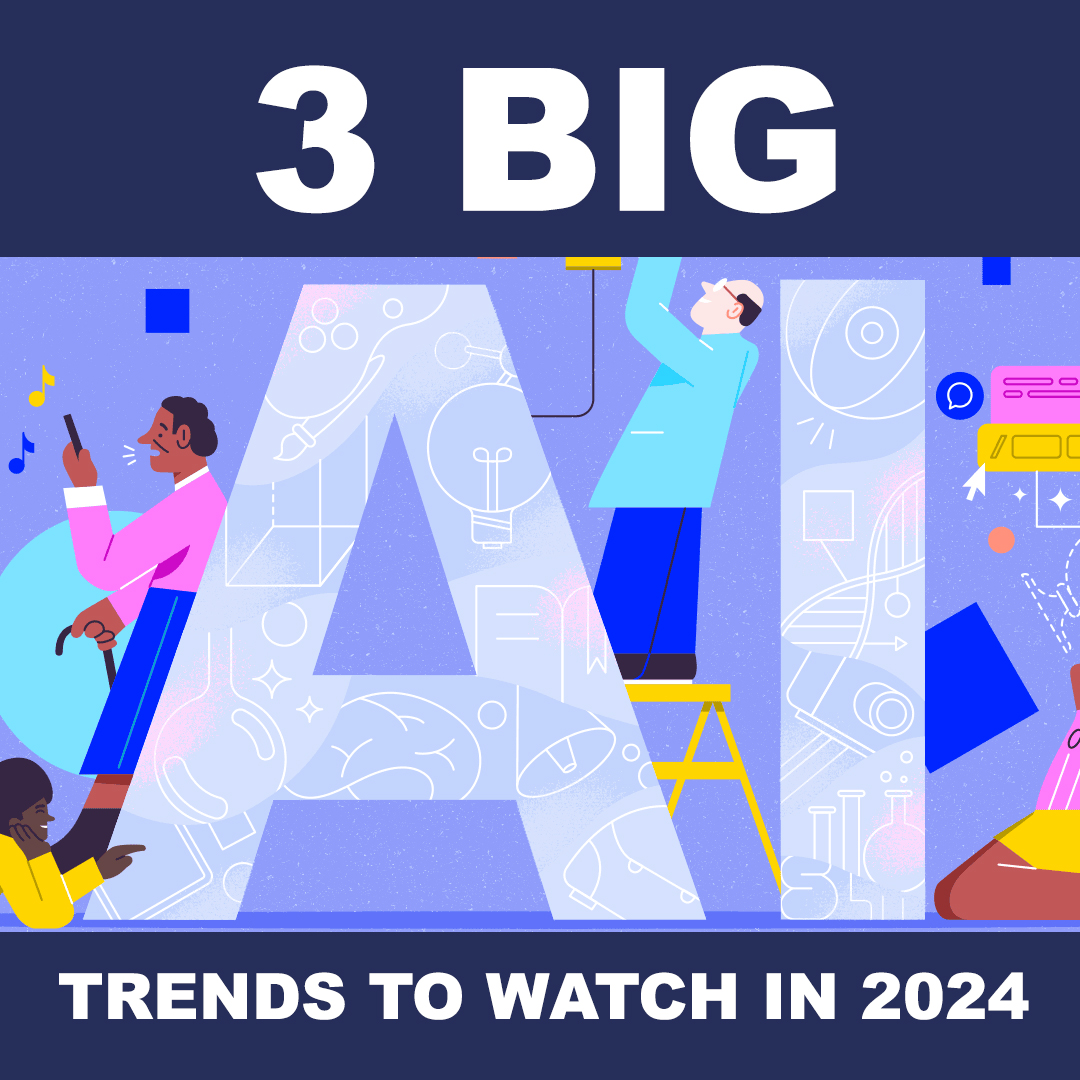
May 13, 2024 3 big AI trends to watch in 2024 In his Dec 2023 blog post about AI, Microsoft cofounder Bill Gates said: “We are just at the beginning of this transition right now. This is an exciting and confusing time, and if you haven’t figured out how to make the best use of AI yet, you are not alone.” “Think back to the beginning of the internet. At first, you probably didn’t know many people who were using it, but it became more common over time. Most people had email addresses, bought things online, and used search engines to answer their questions,” he added. 2023 was a major year for generative AI, as it went from research labs to real life with millions of people using it through popular tools like ChatGPT and Microsoft Copilot. This year, AI is expected to become more accessible, nuanced and integrated in technologies that improve everyday. Here are three important AI trends to keep an eye on in 2024: Small language models SLMs are still quite large with several billion parameters — in contrast to hundreds of billions of parameters in LLMs — but they’re small enough to run on a phone offline. Parameters are variables, or adjustable elements, that determine a model’s behavior. “Small language models can make AI more accessible due to their size and affordability,” says Sebastien Bubeck, who leads the Machine Learning Foundations group at Microsoft Research. “At the same time, we’re discovering new ways to make them as powerful as large language models.” Microsoft researchers have developed and released two SLMs — Phi and Orca— that perform as well as or better than large language models in certain areas, challenging the notion that scale is required for performance. Multimodal AI Most LLMs can process only one data type — text — but multimodal models can understand information from different data types like text, images, audio and video. This capability is making technologies from search tools to creativity apps richer and more accurate and seamless. Multimodal AI is also powering Microsoft Designer, a graphic design app that can generate images based on a description of what you want. And it enables custom neural voices, or natural-sounding voices useful in text readers and tools for people with vocal disabilities. AI in science Experts are anticipating major gains in AI tools designed to speed up scientific discoveries, with much of address climate change, energy crises and diseases. In life sciences, researchers are collaborating on the world’s largest image-based AI model to fight cancer and using advanced AI to find new drugs for infectious diseases and new molecules for breakthrough medicines. The technology is compressing scientific trial and error — work that can take years — into just a few weeks or months. Reference: 3 big AI trends to watch in 2024 (microsoft.com)

Intel Brings ‘AI Everywhere’ at the CES 2024
May 7, 2024 Intel Brings ‘AI Everywhere’ at the CES 2024 Intel highlighted how its technologies, supported by innovative and open software, enable artificial intelligence that consumers and businesses can use to create a responsible, more sustainable and more inclusive future for all. At the annual Consumer Electronics Show (CES), Intel delivers AI everywhere with customer and partner momentum, and announces new mobile and desktop processors and its commitment to the automotive industry. During the annual event, held Jan. 2024 in Las Vegas, Intel executives led discussions with key industry customers and partners, exploring Intel technologies – including the AI PC – and their role in bringing AI to everyone, everywhere. They also announced the full Intel® Core™ 14th Gen mobile and desktop processor lineup, as well as the new Intel® Core™ Series 1 mobile processor family for performant mainstream thin-and-light mobile systems. Strengthening Intel’s commitment to help the automotive industry transform to a software-defined, sustainable and scalable future, Intel leaders introduced the company’s automotive SDV SoC products, an industry first open automotive chiplet platform, and leading standards work with SAE to bring vehicle power management to the industry. An interactive technology lounge showcased live demonstrations of Intel solutions including the AI PC, Intel Automotive software-defined vehicle, Intel Core Ultra and Intel® Arc™ gaming, and Intel® Gaudi®2. The Raptor is back with the Intel Core 14th Gen mobile processor family, code-named Raptor Lake Refresh. We hear from Roger Chandler, Intel vice president and general manager of Enthusiast PC and Workstations in the Client Computing Group, about how the new HX-series combines best-in-class connectivity with incredible single- and multi-thread performance. At the top is the Intel Core i9-14900HX featuring 24 cores and 32 threads with up to 5.8 GHz turbo frequency. Additionally, the HX-series features a leap in creator performance thanks to 50% more E-cores in the Intel Core i7-14700HX processors .In this CES 2024 demonstration, Jack Weast, vice president and general manager of Intel Automotive, introduces a new family of AI-enhanced software-defined vehicle system-on-chips. Event attendees witnessed the vehicle of the future where every feature or function is an application running on a high-performance computing platform. As Intel transforms beyond a PC-centric company to address the needs of the new data-centric world, the tech giant has expanded its product offerings to provide end-to-end solutions, scaling from edge computing to 5G network, cloud, and the emerging fields of AI and autonomous driving. “AI” or artificial intelligence has become a catchall term to describe any advancements in computing, systems and technology in which computer programs can perform tasks or solve problems that require the kind of reason we associate with human intelligence, even learning from past processes. Reference: Intel at CES 2024: Bringing ‘AI Everywhere’

Intel Delivers New Compute Solutions in Mobile Desktop and Edge
May 2, 2024 Intel Delivers New Compute Solutions in Mobile, Desktop and Edge As Intel transforms beyond a PC-centric company to address the needs of the new data-centric world, the tech giant has expanded its product offerings to provide end-to-end solutions, scaling from edge computing to 5G network, cloud, and the emerging fields of AI and autonomous driving. At the annual Consumer Electronics Show (CES) in Jan. 2024, Intel announced its full Intel Core 14th Gen mobile and desktop processor lineup, including powerful new HX-series mobile processors and mainstream 65-watt and 35-watt desktop processors. Additionally, Intel introduced its new Intel Core mobile processor Series 1 family, led by the Intel Core 7 processor 150U, for performant mainstream thin-and-light mobile systems. “Our Intel Core 14th Gen processor family is built to bring top-notch performance and platform features to enthusiast and mainstream PC users alike,” said Roger Chandler, Intel vice president and general manager, Enthusiast PC and Workstations, Client Computing Group. “Enthusiasts on-the-go can now enjoy the best mobile experience available today with our HX-series processors. And mainstream desktop users can now experience the efficient performance and robust platform features available in our latest-gen 65-watt and 35-watt desktop processors,” he added. The launch of these new mobile and desktop processors at CES comes alongside the parade of new Intel Core Ultra-powered systems from Intel’s partners. Whether PC users are looking for powerful enthusiast and mainstream mobile and desktops powered by Intel Core 14th Gen or new AI PCs powered by Intel® Core™ Ultra processors, Intel has the right compute solution. The new Intel Core 14th Gen HX-series mobile processors are built for gamers, creators and professionals who need both higher levels of compute performance and require the mobility that a laptop provides. Led by the Intel Core i9-14900HX, featuring eight Performance-cores (P-cores) and 16 Efficient-cores (E-cores), the new HX-series combines best-in-class connectivity with incredible single- and multi-thread performance. Additionally, the HX-series features a leap in creator performance thanks to 50% more E-cores in the Intel® Core™ i7-14700HX processors. The new processor family includes: 1.) Up to 5.8 GHz turbo frequency delivering up to 17% better gaming performance and up to 51% faster multitasking performance versus competition. 2.) Up to 24 cores (eight P-cores, 16 E-cores) and 32 threads in its i9-14900HX processors. 3.) 50% more E-cores in its i7-14700HX processors, bringing those to 20 cores (eight P-cores, 12 E-cores) and 28 threads. 4.) Support for up to 192 gigabytes (GB) of total DDR5-5600 megatransfers/second (MT/S) memory. 5.) Overclocking capabilities on HX series processors, including Intel® Extreme Utility (XTU) and Intel® Extreme Memory Profile (XMP) support. Reference: CES 2024: Intel Delivers New High-Level Compute Solutions in Mobile,…

The AI Revolution has arrived
April 24, 2024 The AI Revolution has arrived! The AI Revolution is now upon us! With the rapid advancement in technology, this phenomenon is something to be expected. But, the constant evolution in the digital world is — still taking everyone by surprise! We are now facing a new wave of technology, centered around AI but including synthetic biology, quantum computing, and abundant new sources of energy. In many respects it will repeat this pattern. Yet it will also depart from it in crucial ways only now becoming clear. In a Sept. 2023 article for TIME, Mustafa Suleyman, co-founder and CEO of Inflection AI, wrote: “Amidst all the hype, the hope, the fear, I think the fundamentals are getting lost; the unique characteristics of this wave are getting missed in the noise. Understanding them, seeing what, exactly, is changing, is critical to understanding the future.” “AI is the most underappreciated aspect of the technological revolution now underway. This is different from previous waves of technology because of how it unleashes new powers and transforms existing power,” he added. Suleyman said: “While all waves of technology create altered power structures in their wake, none have seen the raw proliferation of power like the one on its way. Previous era’s most powerful technologies were generally reserved to a small capital rich elite or national governments.” Suleyman further noted that if the last great tech wave—computers and the internet—was about broadcasting information, this new wave is all about doing. We are facing a step change in what’s possible for individual people to do, and at a previously unthinkable pace. AI is becoming more powerful and radically cheaper by the month—what was computationally impossible, or would cost tens of millions of dollars a few years ago, is now widespread. “These AIs will organize a retirement party and manage your diary, they will develop and execute business strategies, whilst designing new drugs to fight cancer. They will plan and run hospitals or invasions just as much as they will answer your email,” he revealed. Suleyman further implied: “And it’s coming faster than we can adequately prepare for. This is an age when the most powerful technologies are open-sourced in months, when millions have access to the cutting edge, and that cutting edge is the greatest force amplifier ever seen. This new era will create giant new businesses, empower a long tail of actors—good and bad—supercharge the power of some states, erode that of others.” Bill Gates thinks AI is “revolutionary” Microsoft cofounder Bill Gates published in December 2023 a six-page blog post outlining his predictions for the future impact of the AI technology on healthcare, education, and the workforce. Gates said in his blog post that 2023 marked the first time he’d used AI at work or for “serious reasons.” Compared to previous years, the world has a better sense of what jobs AI will be able to do itself and “which ones it will serve as a copilot for,” Gates said. Numerous studies conducted this year have tried to pinpoint which skills and sectors would be the most impacted by advanced AI. There’s already evidence that using the tech as a copilot at work can help employees get ahead. Several companies have developed internal AI tools to boost employees while others encourage workers to use publically available technology. Gates also laid out several medical questions that scientists around the world were trying to use AI to answer. He said the work was ambitious and in an early stage of development. Gates believed that most of it wouldn’t emerge in the next year and some may not leave the lab at all. He said the work was setting the stage “for a massive technology boom later this decade.” “We are just at the beginning of this transition right now. This is an exciting and confusing time, and if you haven’t figured out how to make the best use of AI yet, you are not alone,” Gates said. “Think back to the beginning of the internet. At first, you probably didn’t know many people who were using it, but it became more common over time. Most people had email addresses, bought things online, and used search engines to answer their questions,” he added. References: How the AI Revolution Will Reshape the World | TIME Bill Gates’s Predictions: AI Will Radically Transform Jobs, Health, Education (businessinsider.com)
AI will probably not replace human workers, at least not yet
April 23, 2024 AI will probably not replace human workers, at least not yet Afraid that robots are probably coming for your jobs? Fear not, at least not yet. The way artificial intelligence is being portrayed in the media, particularly in some of those sci-fi movies, is creating fear that this technology will one day replace humans in the workplace. After all, as technology evolves, many tasks that were once executed by human hands have become automated. There is growing unease that the direction toward creating intelligent computers could signal the beginning of the end of work as we know it. In her 2021 article for Forbes.com, Ashley Stahl said: “But, I don’t think there is any reason to be so fatalistic. A Nov 2020 paper published by the MIT (Massachusetts Institute of Technology) Task Force on the Work of the Future entitled “Artificial Intelligence And The Future of Work,” looked closely at developments in AI and their relation to the world of work. The paper paints a more optimistic picture.” “Rather than promoting the obsolescence of human labor, the paper predicts that AI will continue to drive massive innovation that will fuel many existing industries and could have the potential to create many new sectors for growth, ultimately leading to the creation of more jobs,” she added. Stahl further noted: “While AI has made major strides toward replicating the efficacy of human intelligence in executing certain tasks, there are still major limitations. In particular, AI programs are typically only capable of “specialized” intelligence, meaning they can solve only one problem, and execute only one task at a time. Often, they can be rigid, and unable to respond to any changes in input, or perform any “thinking” outside of their prescribed programming.” “Humans, however, possess “generalized intelligence,” with the kind of problem solving, abstract thinking and critical judgement that will continue to be important in business. Human judgement will be relevant, if not in every task, then certainly throughout every level across all sectors,” she added. Stahl revealed: “There are many other factors that could limit runaway advancement in AI. AI often requires “learning” which can involve massive amounts of data, calling into question the availability of the right kind of data, and highlighting the need for categorization and issues of privacy and security around such data. There is also the limitation of computation and processing power. The cost of electricity alone to power one supercharged language model AI was estimated at $4.6 million.” “Another important limitation of note is that data can itself carry bias, and be reflective of societal inequities or the implicit biases of the designers who create and input the data. If there is bias in the data that is inputted into an AI, this bias is likely to carry over to the results generated by the AI,” she added. Stahl said: “Based on these factors and many others, the MIT CCI paper argues that we are a long way from reaching a point in which AI is comparable to human intelligence, and could theoretically replace human workers entirely.” “Provided there is investment at all levels, from education to the private sector and governmental organizations—anywhere that focuses on training and upskilling workers—AI has the potential to ultimately create more jobs, not less,” she added.

Fortinet delivers AI-Powered Security Services with FortiGuard
April 19, 2024 Fortinet delivers AI-Powered Security Services with FortiGuard Fortinet is a driving force in the evolution of cybersecurity and the convergence of networking and security. Their mission is to secure people, devices, and data everywhere, and today they deliver cybersecurity everywhere you need it with the largest integrated portfolio of over 50 enterprise-grade products. Meanwhile, AI is transforming how people live and work. Market leaders leverage this new wave of AI innovation to gain a competitive advantage. AI is already at work all around us, impacting everything from our search results, to our online dating prospects, to the way we shop. The FortiGuard AI-Powered Security suite of services provides market-leading security capabilities designed to protect application content, web traffic, devices, and users wherever they are. It continuously assesses risks and automatically responds to and counters known and unknown threats anywhere across the distributed network. Its coordinated and consistent real-time services defend against the latest attacks. FortiGuard AI-Powered Security Services is natively integrated into the Fortinet Security Fabric to deliver coordinated detection and enforcement across the entire attack surface. Its technology continuously assesses risks and automatically adjusts the Security Fabric to counter known and unknown threats, including evasive and malicious AI-powered threats in real time, regardless of where they occur. The Fortinet Security Fabric connects Fortinet solutions to achieve true end-to-end security – working together to create a broad, integrated and automated security solution. Weaving through the entire network―from the Internet of Things (IoT) to the cloud―the Fortinet Security Fabric provides superior protection against today’s sophisticated threats. FortiGuard Labs cybersecurity experts are also constantly enhancing our industry-leading combination of static analysis augmented by rapid intelligence based on AI and ML (machine learning) models using large-scale, cloud-driven data sets and working with hundreds of intelligence-sharing partners. The FortiGuard cloud-delivered, AI-driven web filtering service provides comprehensive threat protection to address a wide variety of threats, including ransomware, credential theft, phishing, and other web-borne attacks. It leverages AI-driven behavioral analysis and threat correlation to immediately block unknown malicious URLs with near-zero false negatives. FortiGuard Antivirus delivers automated updates that protect against the latest polymorphing attack components, including ransomware, viruses, spyware, and other content-level threats. It uses industry-leading advanced detection engines to prevent new and evolving threats from gaining a foothold inside your network, endpoint, and clouds and accessing valuable resources. Inline blocking of previously unknown threats with AI-based Inline Malware Prevention Service allows you to hold a potentially malicious file until a final verdict is received. Leveraging advanced AI and ML at cloud speed, FortiOS now offers real-time prevention with queueing optimization and hardware acceleration. Inline blocking for FortiGate is available with both FortiSandbox and FortiGuard AI-Based Inline Malware Prevention Service. Reference: sb-portfolio-brief-fortiguard-ai-powered-security.pdf (fortinet.com)

Asia-Pacific firms need AI-backed workers by 2025: IDC report
April 12, 2024 Asia-Pacific firms need AI-backed workers by 2025: IDC report A recent IDC report found that 60% of enterprises in the Asia-Pacific Japan region will need AI-augmented workforces by 2025 to stay competitive. This move will begin a period of growth, marked by greater human-machine collaboration and AI-led innovation. These organizations still on legacy systems will need to modernize their applications immediately to survive and adapt to the digital world already surpassing them. By 2026, they will progress to integrate data and enterprise applications seamlessly, and evolve to run as autonomous businesses by 2028. According to an IDC report, as AI and GenAI technologies continue to take the center stage in today’s digital economy, they not only augment organizations’ productivity, automate repetitive tasks but also redefine roles, thus compelling a shift in the requirements of workforce skills. The report also stated that artificial intelligence (AI) will create an organizational cultural shift and new technology frames will augment 50% of Asia-Pacific workforce by mid-2025, slowly reshaping the enterprise toward more technology usage, enhancing performance. These advancements resulted in a substantial surge in technology buyers’ investments in AI and GenAI driven enterprise software applications to transform their business operations, said the report. Estelle Quek, Senior Research Manager at IDC Asia/Pacific said: ”At the outset, from 2024 to 2025, Asia’s top 2,000 organizations will focus on changing internal perception and receptivity towards human-machine collaboration.” GenAI/AI will close 15% of enterprise talent shortage gaps by 2025, but the practice and usage of GenAI/AI will create a surplus of talent across all lines of business by 2027, the report mentioned. International Data Corporation (IDC) is the premier global market intelligence, data, and events provider for the information technology, telecom., and consumer technology markets. With more than 1,300 analysts worldwide, IDC offers global, regional, and local expertise on technology and industry opportunities and trends in over 110 countries. IDC’s analysis and insight helps IT professionals, business executives, and the investment community make fact-based technology decisions and achieve their key business objectives. “AI” or artificial intelligence has become a catchall term to describe any advancements in computing, systems and technology in which computer programs can perform tasks or solve problems that require the kind of reason we associate with human intelligence, even learning from past processes. But what is AI? A straightforward definition from Britannica states that artificial intelligence is “the ability of a digital computer or computer-controlled robot to perform tasks commonly associated with intelligent beings.” In reality, AI is already at work all around us, impacting everything from our search results, to our online dating prospects, to the way we shop. Data shows that the use of AI in many sectors of business has grown by 270% over the last four years. AI And GenAI Technologies: AI-driven transformation to augment 50% of Asia-Pacific workforce by 2025, ET CIO (indiatimes.com)

Cyber Security Part 2
April 5, 2024 ASI stages Part 2 of tech update seminar on Cyber Security Advance Solutions Inc (ASI) conducted the 2nd Part of its tech update seminar on Cyber Resiliency and Security on March 12, 2024 at Seda Vertis North in Quezon City. The seminar, entitled “Innovations in Cyber Security 2024” was held in cooperation with HPI, HPE, Microsoft, Intel and Fortinet. The aim was to update ASI’s stakeholders in the government sector on the current technology trends. Progress in cyber defense programs brings benefits to everyone in today’s connected world. Everything from identity theft, to extortion attempts, to the loss of important data like family photos can be consequences of a cybersecurity attack. Living in today’s technology driven environment has made everyone to rely on critical infrastructure like power plants, hospitals, and financial service companies. Securing these and other organizations is essential to keeping our society functioning. During the morning program, the following brand partners of ASI presented a thorough discussion on the subject matter of cyber security: Intel Philippines’ Wendy Gurra, an Enterprise Technical Specialist, in her presentation said: Intel vPro® is built to address these advanced security challenges with integrated, multilayer security features designed for dispersed fleets. “Available exclusively on Intel vPro®-based PCs, Intel® Hardware Shield adds out-of-the-box protections above and below the OS to help reduce the device’s attack surface, including AI-powered threat detection that actively monitors against attacks. Security integrated at the hardware level helps prevent malware injection, protect user log-in credentials, and keep applications and sensitive data secure; below-the-OS features help defend against firmware-based attacks,” she said. “Additionally, PCs built on Intel vPro® Enterprise for Windows can be reached even if the OS is down, allowing your team to access devices that have been compromised regardless of where the device is located,” she added. Furthermore, Ms Gurra said: “The security threat landscape is constantly changing. Additionally, the growth of the hybrid and remote workforce has introduced new complexities and potential attack surface vulnerabilities, making it more difficult for IT to protect PCs outsidean organization’s firewall.” Microsoft Philippines was represented by Mr Hari Tharmakumar who is Director and Head of Channel Partners for ASEAN at Microsoft Asia Pacific. Hari joined Microsoft APAC in April 2020 where previously he was the Head of Channel for Toshiba Australia & New Zealand. Mr. Tharmakumar informed the audience that Windows 11 PCs protect your identity by using advanced security methods for logging into your device. There are over 920 password attacks every second. That’s why Windows 11 innovated solutions that redefine login credentials. Windows 11 validates your credentials using either a device-specific PIN code, fingerprint or facial recognition—protecting you from phishing and other network attacks, including password leaks. Mr. Tharmakumar also talked about “Phishing” — a cybercrime where malicious actors disguisethemselves as legitimate institutions or people you trust in order to steal your passwords and access your data. To combat this, look out for emails from unknown, unusual, or misspelled senders. Hover your cursor over links in emails to check if a different URL is embedded. Avoid using pirated software. Mr. Tharmakumar further discussed the security features of Microsoft’s Windows 11 by identifying the following: 1.) Turnkey security for business Defend against cyberthreats with the latest safeguards for better peace of mind including a reported 2.8X fewer instances of identity theft. 2.) Safeguard business and personal information. Copilot in Windows 2 with commercial data protection shields business and personal information at no additional cost when you sign on with Microsoft Entra ID. 3.) Heightened business protection. Protect your valuable business information with hardware-backed, out-of-the box security including TPM 2.0. 4.) Enhanced phishing protection. Proactively shield employees through Microsoft Defender SmartScreen by warning them when they are entering their Microsoft credentials into a malicious app. 5.) Bolster application security. IT admins can add another layer of security by applying an App Control for Business policy3 to help ensure that only software they trust runs on PCs. During the afternoon program, the following brand partners of ASI presented a thorough discussion on the subject matter of cyber security: For HPE Server, Mr Kevin Villanueva, Solutions Engineer for HPE Compute from VST ECS Phils Inc. presented the HPE ProLiant servers which are engineered with a fundamental security approach to defend against increasingly complex threats. He said that they protect your infrastructure, workloads, and data with their full portfolio of both rack and tower servers. Furthermore, they feature 360 degree security with the following attributes: a) Secure supply chain with approved vendor list and server config lock b) Silicon root of trust with integrated ILO chip and digital fingerprint that ensures uncompromised software c) HPE secure runtime verification that authenticates integrity of system firmware when booted; notifies user of compromised features; allows customers to schedule scans; verifies malware within system d) Automated recovery with single click recovery to known good state e) Safe retirement which provides one-button secure erase For HPE Storage, Mr. Gabriel Derilo, HPE ATP Certified Product Solutions Engineer at VST ECS presented their end-to-end data protection as facilitated by the acquisition of Zerto an industry leader in cloud data management and protection. He elaborated on the security features of Zerto storage by identifying the following: 1) Reduce the cost and impact of a ransomware attack with real-time detection and protection. Achieve ultimate ransomware resilience with Zerto Cyber Resilience Vault, an isolated, offline, zero trust architecture with immutable data copies that enables rapid air-gapped recovery when all else fails. 2) Ensure resilient, always-on apps with Zerto’s continuous data protection (CDP) and journal-based recovery. Take advantage of granular checkpoints every 5-15 seconds to rewind and restore entire sites, complete workloads, large enterprise apps, VMs, folders, and files. 3) Leverage Zerto’s comprehensive, technology-agnostic orchestration for seamless mobility between different hypervisors or to/from public cloud. Ensure flexibility andenjoy easy migrations back to previous environments without being tied to a specific platform or cloud provider. The last but not the least to present was Fortinet and represented by Ms. Marvs Gordo. She is a Product Support Engineer at VST-ECS Philippines with years of experience in
HP Work Index Report
April 3, 2024 AI’s Role in the Workplace: HP Work Index Report AI is transforming how people live and work. Market leaders leverage this new wave of AI innovation to gain a competitive advantage. Over the past few years, not only has how we work on a global scale changed, but also how we think about what work is, and what the future of it should look like. HP’s Work Relationship Index (WRI) launched in September 2023, is a global study that offers a new way for society to monitor, measure and gain insights into how employees in various industries around the world feel, what they want, why they crave more satisfying work experiences and how organizations and their leaders must adapt to meet growing expectations. AI is seen as a key to unlocking a better relationship with work – with business leaders and IT decision makers particularly enthusiastic. To increase knowledge worker buy-in around AI – and to leverage the technology to improve work relationships – organizations need to double-down on how AI can support Fulfillment, one driver of a healthy relationship with work identified by the Work Relationship Index. AI can be a key contributor to a core driver of a healthier relationship with work: Fulfillment. Employees have signaled that they are looking for greater meaning in their work – but only a few are consistently experiencing this today. All employee groups believe AI can play an important role in improving not only their work-life balance but also their relationship with work. To a similar extent, employees recognize the potential AI brings to offload tedious tasks and make the workday easier and more productive. Only 28% of knowledge workers say that their work consistently gives them purpose; that they feel connected to the work they do; and that the work they do is meaningful to them. Business leaders’ critical role is clear: to educate their employees on the possibilities of AI – and take the lead on effectively introducing it. 72% of business leaders are more likely to see AI’s benefits than knowledge workers. Workers in growing economies see AI as a greater source of opportunity and progress than their peers in mature economies. This creates an opportunity for organizations to lean into the benefits that AI can bring to this aspect of inspiring healthier relationships with work. Employees already recognize that AI has the potential to make work more meaningful and enjoyable. While there is appetite for the use of AI, employees harbor concerns about its potential impact on their job security. Younger workers are more likely to see AI as a potential threat to their job security. Nearly half of Gen Z knowledge workers are concerned about their jobs being replaced by AI. The WRI has identified 6 distinct drivers that fuel a healthy relationship: Fulfillment: Purpose, meaning and empowerment at work; Leadership: Empathy and emotional connection from those in charge; People-centricity: Decision-making with people at the heart; Skills: Confidence-building by tapping into the enthusiasm employees have for learning new skills; Tools: The right technology to drive employee engagement; Workspace: Flexibility and trust in where employees work, enabled by seamless transitions.