
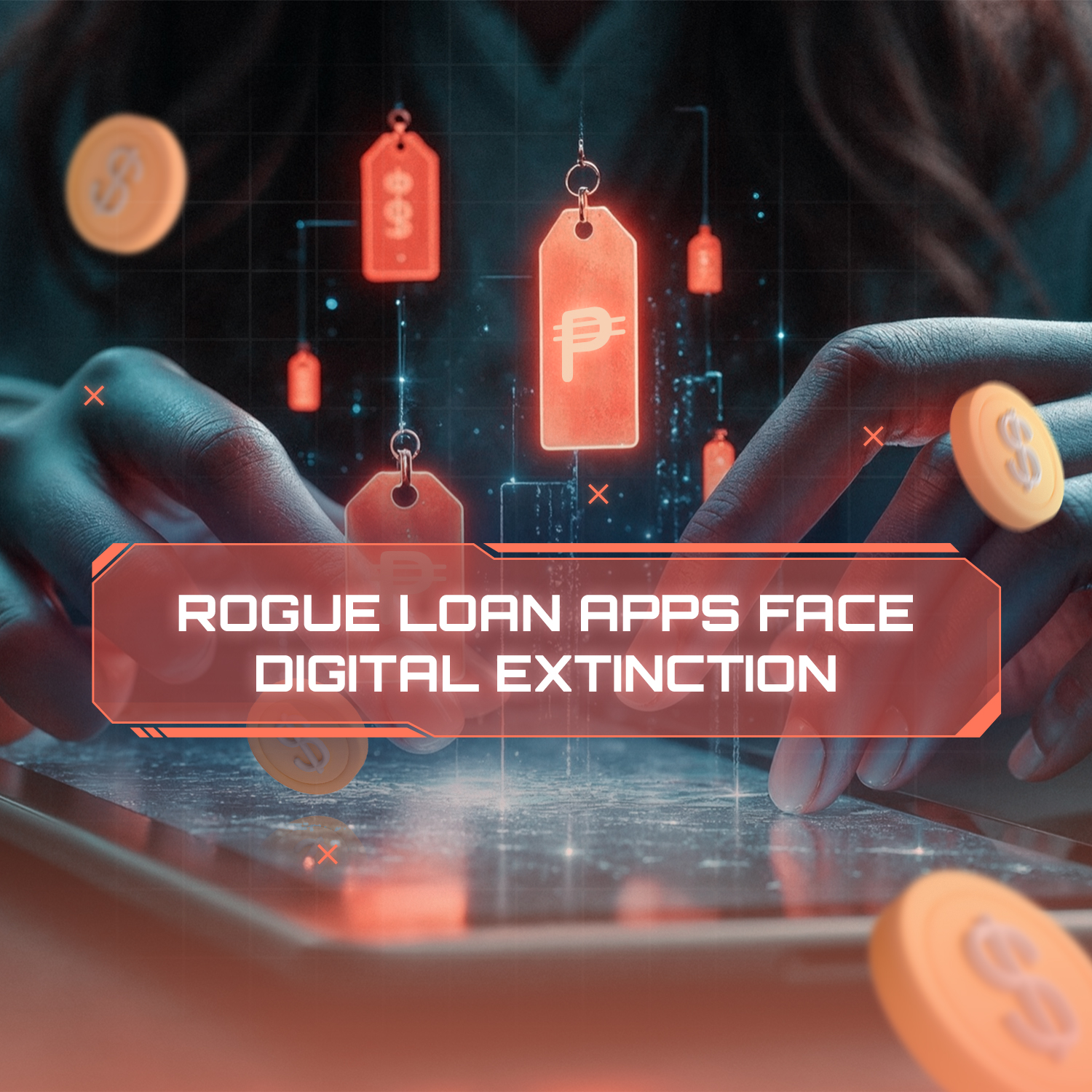
July 04, 2025 PH government gets tough on abusive online lending applications In April 2025, the Supreme Court warned the public against fake issuances and documents circulating online that are supposedly linked to the high court, other courts and judicial offices. The use of fake court orders has also been observed in reported “harassment” tactics by online lending apps, demanding borrowers to settle their debts. According to the Presidential Anti-Organized Crime Commission (PAOCC), an initial crackdown enforced in February, has already resulted in the banning of 27 OLAs (online lending applications) administrators and 89 online scam loan pages. However, a study conducted in May 2025 by digital lender Digido shows, the number of “unique users” of lending apps rose from 47.46 million to 67.84 million, while active users increased from 7.7 million to 11.78 million. On June 16, the government launched a formal campaign to crack down on online lending applications that take advantage of Filipino users, following a sharp rise in complaints over harassment, fake court orders and exploitative lending practices. In a statement, the PAOCC reported receiving more than 13,000 complaints in April and May alone. These lending apps have caused “financial, psychological, and reputational injury to thousands of Filipinos through their threats and harassment,” the commission said. PAOCC Chief Gilberto Cruz said: “These abusive online lending operators have caused serious harm to thousands of Filipinos.” He added: “Under the President’s directive, we are going after these groups to protect our people and ensure they are held accountable.” The campaign’s official launch was attended by officials from the Philippine National Police–Criminal Investigation and Detection Group (PNP-CIDG), the Securities and Exchange Commission (SEC), the National Telecommunications Commission, and the PAOCC itself. About 100 OLA victims were present to give sworn statements and testimonies to the PNP-CIDG. The SEC, meanwhile, reminded the public not to engage with online lenders operating without proper registration or licensing. It warned that doing so could expose borrowers to abusive collection tactics, data privacy breaches, and excessive fees. The SEC said it had already ordered the removal and blocking of several OLAs found to be operating illegally. In a related story, consumer credit service Digido reported that 76.2% of Filipino adults (63.1 million users) adopted fintech services through mobile apps from September 2018 to June 2024, with fintech app downloads totaling 617 million. In the first half of 2024, Digido found that digital lending saw the highest growth with 25.4 million downloads, followed by digital commerce at 13.5 million, and digital wallets at 12.2 million. Reference: Crackdown on abusive online lending apps launched
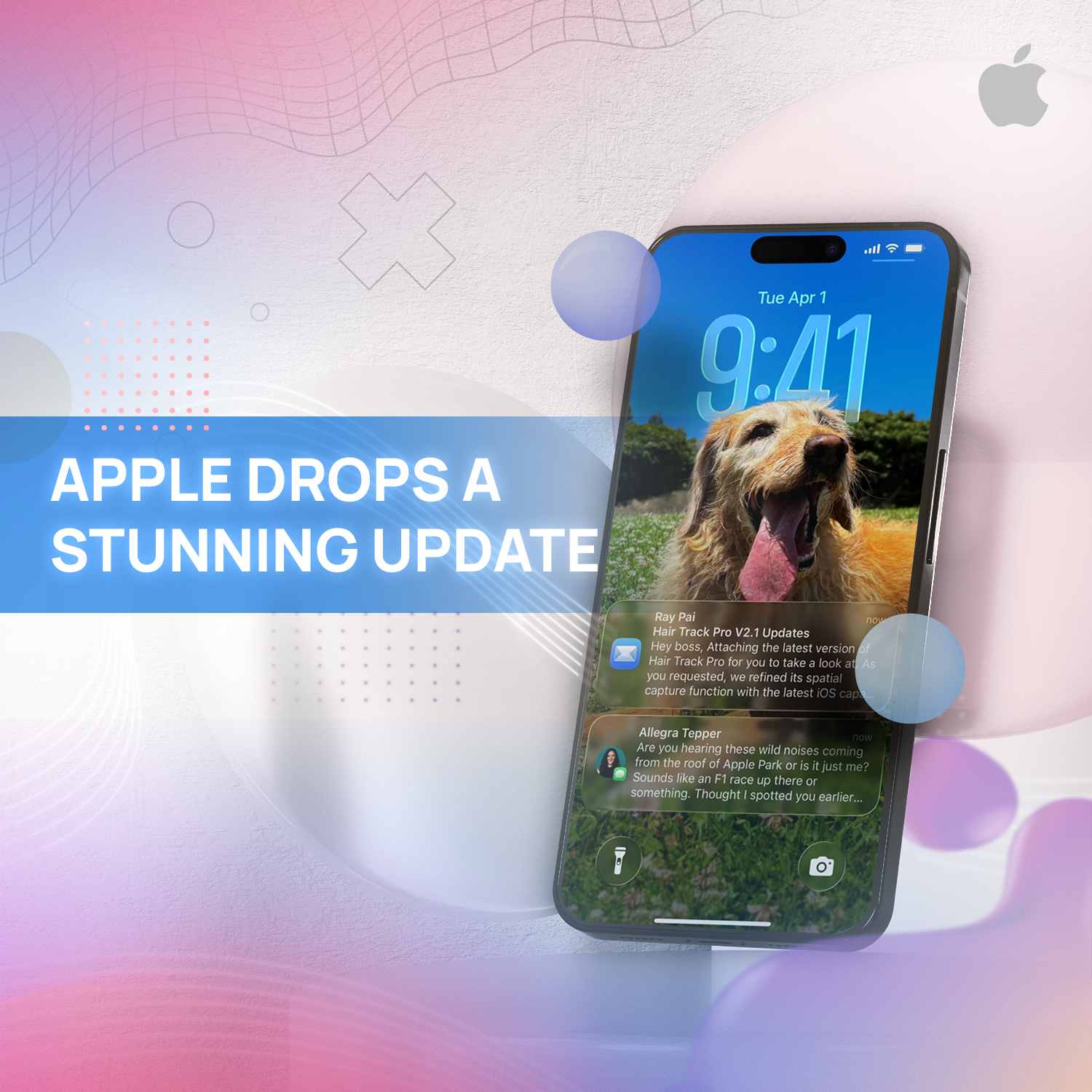
Apple introduces new design interface that enhances user experience
July 02, 2025 Apple introduces new design interface that enhances user experience Apple revolutionized personal technology with the introduction of the Macintosh in 1984. Today, Apple leads the world in innovation with iPhone, iPad, Mac, AirPods, Apple Watch, and Apple Vision Pro. Apple’s six software platforms — iOS, iPadOS, macOS, watchOS, visionOS, and tvOS — provide seamless experiences across all Apple devices and empower people with breakthrough services including the App Store, Apple Music, Apple Pay, iCloud, and Apple TV+. The leading tech giant believes that the best technology is designed with everyone in mind. That’s why their products and services have built-in features to help you create, connect, and do what you love, your way. Apple’s long-standing commitment to accessibility is fundamental to everything they do. The tech leader trains and motivates its employees to innovate in terms of individual work performance and idea contributions for product development, design, and other processes. Apple in mid-June introduced Liquid Glass, a new design interface that enhances the user experience across iOS 26, iPadOS 26, macOS Tahoe 26, watchOS 26, and tvOS 26. Apple describes Liquid Glass as a translucent, dynamic material that reflects and refracts its surroundings, adapting intelligently to light and dark environments. It transforms system elements, including app icons, widgets, and navigation controls, creating a more visually stunning interface. Alan Dye, Apple’s Vice President of Human Interface Design, described Liquid Glass as “our broadest software design update ever,” integrating with Apple’s ecosystem with a familiar feel. Beyond aesthetics, buttons, sliders, and navigation bars dynamically adjust based on user interactions. In iOS 26, tab bars shrink when scrolling to prioritize content, then expand when needed. On macOS Tahoe 26, the Dock and menu bar adopt a transparent look, making the desktop feel more spacious. Apple’s Liquid Glass also improves accessibility, adjusting contrast and color settings based on user preferences. Developers can integrate this design into their apps using updated APIs, ensuring a consistent experience across Apple devices. Breakthroughs in the world of technology are constantly cropping up. Nowadays, one can’t help but get caught unaware of things to come because they turn up fast. Therefore, the best thing to do is to be in constant watch for what is new because just when you thought that technology is at its peak, more is likely to come. Reference: Apple unveils Liquid Glass: A new software design across their platforms

Bill to criminalize spread of fake news, troll farms filed by PH lawmaker
June 30, 2025 Bill to criminalize spread of fake news, troll farms filed by PH lawmaker The path taken by social media from a platform for personal interaction to a significant news source is sort of sensational. Initially, social media sites like Facebook, X (Twitter), and Instagram were designed to connect people with friends and family. However, as these platforms grew, so did their potential to disseminate information quickly and efficiently. Now, challenges and concerns have emerged such as misinformation. Social media is prone to the rapid spread of false information, making it crucial for users to verify the accuracy of what they read. Cagayan de Oro City 2nd District Representative Rufus Rodriguez has filed a bill criminalizing the spread of false information, especially those that threaten public order or national security. Rodriguez recognized that in filing the House Bill No. 11506, the right to freedom of speech, press, and expression is protected as it was enshrined under the Section 4, Article III of the 1987 Constitution. Rodriguez filed the bill in early June 2025. However, Rodriguez noted that the rights are not absolute under a Supreme Court ruling, emphasizing that “[c]ertain categories of speech – such as obscenity, defamation, incitement to violence, false advertising, and speech that poses a clear and present danger to public order or national security – are not entitled to constitutional protection.” The lawmaker underscored that as the bill criminalizes false information that puts public order and national security at risk, it is crafted to “withstand constitutional scrutiny by defining fake news [precisely] requiring proof of both malicious intent and actual or probable public harm.” He also said that existing measures such as the Revised Penal Code and Cybercrime Prevention Act are not enough to address the impact of the dissemination of malicious information, particularly in the digital spaces, throughout the years. Under the bill, the following acts are prohibited: 1. Malicious publication or dissemination, in any platform including print, broadcast, digital, and social media, any false information or disinformation. 2. Dissemination of false information that triggers violence, promotes hate speech, discredits democratic institutions, and causes public panic. 3. Operating troll farms, bot networks that target to spread false information. 4. Using social media platforms to engage in hate, violence, and promotion of hate speech. Any person who will be found guilty of the prohibited acts will face imprisonment of six years to 12 years and a fine of P500,000 to P2 million. Reference: Rufus Rodriguez files bill to criminalize spread of false information
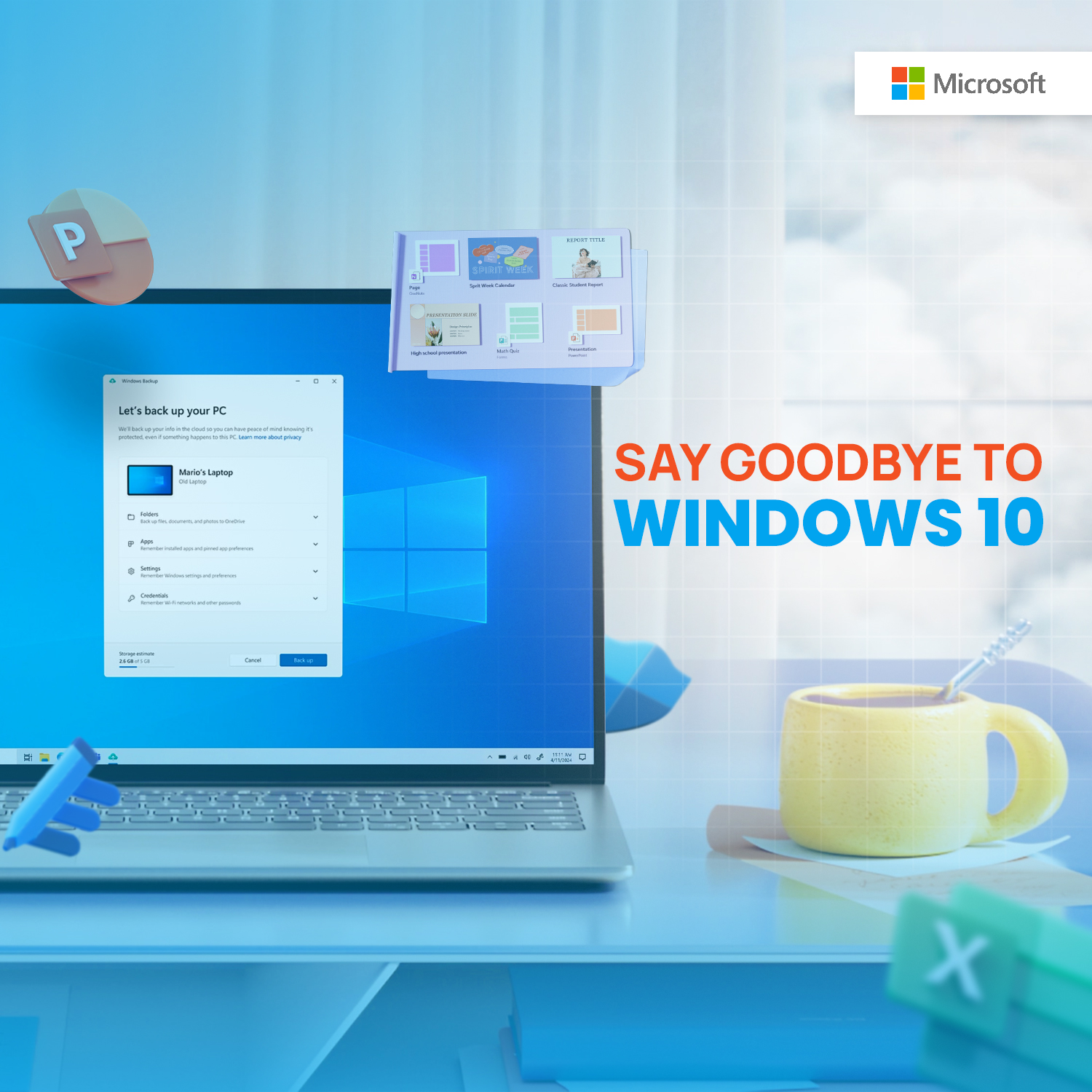
Windows 11 has arrived; support ends for Windows 10 in October 2025
June 27, 2025 Windows 11 has arrived; support ends for Windows 10 in October 2025 Microsoft is making the transition to a new era of computing with the coming of Windows 11. Support ends for Windows 10 on October 14, 2025, but a new journey with Windows 11 awaits. The AI revolution is here and this new technology trend somehow brings certain concerns about security. Your Windows 11 PC brings layers and layers of security measures to help keep your digital life in safe hands. So, it’s time for an upgrade! End of life and end of support are terms that refer to the end of technical support and security updates for Windows 10. After 10 years, this older version of Windows will no longer receive free software updates from Windows Update, technical assistance or security fixes. For consumers, end of support means that Microsoft recommends updating to the latest version of Windows for the latest critical updates and support that can keep you secure online. Your PC will continue to work, but support for Windows 10 is discontinued. After 14 October 2025, your Windows 10 PC will no longer receive security updates and Microsoft will no longer be available to provide Windows 10 technical support. While your Windows 10 PC will continue to function, it will be at greater risk for viruses and malware when Windows 10 reaches end of support. We recommend you transition to a version of Windows that is still supported. If your existing device cannot run Windows 11, a new PC that can run Windows 11 makes for an easy transition and great experience. If your PC meets the minimum requirements to upgrade from Windows 10 to 11, you should see an option in Windows Update to upgrade to Windows 11 for free. If your PC is not able to upgrade to Windows 11 or if you want to replace it, you can move to Windows 11 by purchasing a new PC. For S mode users, the upgrade to Windows 11 from Windows 10 Home edition in S mode and Windows 10 Pro edition in S mode is free. If your PC meets the minimum system specifications, the Windows 10 Home edition in S mode can upgrade to the Windows 11 Home edition in S mode. If your Windows 10 PC is running the Pro edition in S mode, you will need to switch out of S mode to upgrade to Windows 11 Pro. Windows 11 Pro edition is not available in S mode. Windows 11 is the most secure Windows ever built, with comprehensive end-to-end security that covers antivirus, firewall, internet protections, and more. This means more security features, dashboard displays and ongoing updates to help safeguard against future threats—all built-in at no extra cost. To receive updates, internet access is required and service fees may apply. Reference: End of support for Windows 10, Windows 8.1 and Windows 7 | Microsoft Windows

Acer unveils ProCreator Series Monitors with Calman-Verified displays
June 25, 2025 Acer unveils ProCreator Series Monitors with Calman-Verified displays One of the world’s top technology companies, Acer has presence in more than 160 countries. The company continues to evolve by embracing innovation across its product offerings including computers and displays, while branching out to new businesses. Acer is also committed to sustainable growth, exploring new opportunities that align with its environmental and social responsibilities. Acer unveiled in May 2025 its new ProCreator Series monitors, designed to enhance creative workflows with Calman-verified, high-resolution displays. These monitors feature wide color gamut coverage, up to Delta E<1 color accuracy levels, and the Acer Creator Hub software. Select models come with OLED and touchscreen panels, built-in webcams for conferencing. Acer’s new ProCreator Series monitors are tailored for professional creators such as animators, photographers, editors, and designers who demand precise color accuracy and stunning visual clarity for creative projects. All models are Calman-verified, ensuring they meet rigorous standards for reliable color performance and consistency across various workflows. The monitors are equipped with the adaptive Acer Creator Hub software to provide users with greater creative flexibility and convenience. The Color Space function allows them to freely select the color space best suited to their projects, whether it’s sRGB for web design, DCI-P3 for cinematic work, or Adobe RGB for photography. The Color Calibrator features fine-tuned colors with multiple profiles available to adjust color temperature, brightness, and color space. Creators can divide and organize their work canvas to maximize multitasking and productivity. The ProCreator PE320QXT boasts a stunning 6K (6016×3384) resolution, while the ProCreator PE270XT offers an impressive 5K (5120×2880) resolution. Both ProCreator monitors support 99% of the AdobeRGB and DCI-P3 color gamuts, and ensure exceptional color accuracy with Delta E<1. They are VESA DisplayHDR 600 certified, touch-enabled for precise and intuitive controls, and equipped with 8M webcams for real-time collaboration and videoconferencing. They also feature ErgoStand for optimal viewing positions. The ProCreator PE320QK X monitor provides a 4K UHD (3840×2160) QD-OLED panel with true 10-bit color and dual color gamut support for 99% of the sGRB and DCI-P3 color ranges. It features Delta E<1 color accuracy and VESA DisplayHDR™ True Black 400 Certification to ensure great contrast, shadows, and details, plus a 240 Hz refresh rate and low 0.01 ms (PRT) pixel response time for smooth animations. The monitor is also compatible with AMD FreeSync™ Premium Pro and NVIDIA® G-SYNC™ Compatible technology to minimize tearing, stuttering, and artifacts. (For complete Monitor Specifications, check out reference/source article) Reference: Acer Launches ProCreator Series Monitors; Calman-Verified Software

ASI steps up innovation with part 4 of tech series on Cybersecurity
June 23, 2025 ASI steps up innovation with part 4 of tech series on Cybersecurity The world of digital technology is constantly evolving and today’s business enterprises need technology solutions to keep pace and get ahead of the game. But even the most sophisticated technology tools can be vulnerable to cyber disasters. Cyber security is a growing concern that every company/organization needs to address. Advance Solutions Inc (ASI) staged the 4th round of its seminar series on Cyber resiliency and security on June 3, 2025 at Seda Vertis North in Quezon City. The “Innovations in Cyber Security 2025” was held in cooperation with HP Philippines, Microsoft, AMD, Intel and more. This 4th installment saw ASI taking the event another step further for its stakeholders in the government sector. In the morning program, Michael George Lee, AMD Commercial Lead-Philippines, kicked off with the presentations. He started with the statement that AMD powers the daily lives of billions with its integration in Cloud computing. Its presence in sectors such as health care, industrial, automotive, among others, is likewise becoming prominent, not to mention the widespread use in PCs, gaming, and the now emerging AI trend. Michael introduced the AMD Ryzen Pro 8000 series processors for laptops, mobile workstations, and desktops and likewise the AMD Ryzen AI Pro 300 series for CPUs. AMD is enhancing its competitive positioning in commercial notebooks for 2025. The AMD Ryzen processors is also now being utilized in movies, animation, and of course in the gaming arena. The AMD Pro Security features the following: AMD Secure Processor; AMD Memory Guard; AMD Shadow Stack, among others. The Microsoft brand came next with the feature on Windows 11 Pro, as discussed by Joshua Ruinata who is a Product Solutions Engineer at VST-ECS. Joshua said that Windows 11 Pro is securing the future with its AI-enhanced protection. The security is for business anywhere like the enhanced phishing protection. Joshua also reported on the 62% drop in security incidents using Windows 11. Windows 11 is easy to manage, future ready, and delivers redefined productivity with its enhanced search capabilities. There is rising importance of AI in the workplace and Microsoft is fostering responsible AI principles of fairness; reliability and safety; privacy and security; and inclusiveness. However, support ends for Windows 10 on October 14, 2025 and this early, end-users and corporate clients are encouraged to upgrade. But why upgrade now? Well, the following reasons can be a wiser move: vulnerability for out-of-date device; to stay competitive; control in costs/expenses; to simplify deployment. The Intel presentation followed with Wendy Gurra, Enterprise Technical Specialist at Intel Philippines, as speaker. Wendy began by stating that security starts with Intel. She went on to say that new cyber threats are complex, costly and dangerous. However, with security on hand, business opportunities grow. She said that with Intel vPro platform, surface protection for endpoint security is achieved. She also discussed how Intel helps address security pain points amidst cyber threats and attacks: Endpoint Security. Strengthen defenses with AI-powered threat detection, insights, and hardware-based security measures. Network Security. Connect people with the resources they need through encryption-based identity and access control. Data Security. Designed to isolate and protect your sensitive data while in use to enhance confidentiality, integrity, and availability. Physical Security. Help prevent real-world attacks by managing the convergence of AI, physical, and cyber security. The HP Services (Care Pack) came next and was presented by John del Val who is Workforce Solutions Execution Manager. He discussed the following: Hardware Support on your terms — Go beyond standard device warranties with enhanced capabilities and predictive insights to maximize employee and IT productivity. Accidental Damage Protection — provides protection against accidental physical breakage or failure of your covered equipment due to unforeseen and unintentional events. Defective Media Retention — Disposing of a defective hard drive with sensitive or confidential data is not easy. You may be required to keep the drive, which may conflict with hardware warranty agreements that require defective drives to be returned. Travel Support Services – provide device support in 90 plus countries around the globe when employees are traveling on business. Post-Warranty Support — Stretch your tech investment. Keep existing devices running optimally and get more time to plan your next refresh by extending your warranty coverage by an additional year. Kyle Herrera, Presales Consultant, from Trend Micro followed with his presentation. He tackled the Roadmap to Proactive Security topic. He said that AI is shaping our world and changing the game by enabling both cyber defenders and attackers. AI is no longer just for tech giants, cutting-edge intelligence is now for everyone. Kyle introduced the Trend Cybertron, a proactive cybersecurity AI platform integrated with GenAI, machine learning, and computer vision. This platform accelerates paradigm shift with layered security controls and security operations because Trend Micro believes that the future lies in proactive security. Part of this platform is the Trend Vision with features such as cyber risk exposure management; predict attacks using AI; prioritize, comply, quantify security. Trend Cybertron further aims for the following: endpoint solutions; cloud security; network security; email security; identity security; data security. For the afternoon program, Kate Fuentes, Presales Technical Consultant at Poly, started off the presentations. It was a showcase of Poly video solutions: Poly Studio X series; Poly V series; and Poly Studio V series. Poly Studio X series – next generation all-in-one video bars to simplify and enhance your hybrid meetings. Poly V series – microphone, speaker, camera, but no built-in apps for video conferencing. Poly Studio V series – USB video bars that deliver advanced audio and video experience. For the audio experience, Poly has the next-gen audio technologies such as Poly Noise block AI; Poly Acoustic Fence; Poly Studio V; Poly Lens; Poly Voyager legend 50 and 30. The last, but not the least, discussion came from Gary Lim who is Senior Salesperson at HP. He presented the topic on “Enabling the Future of Work with Intelligence at Scale.” He stated that devices alone will

Microsoft Edge Immersive Reader helps improve reading comprehension
June 16, 2025 Microsoft Edge Immersive Reader helps improve reading comprehension Microsoft Support offers an array of learning tools for everyone: Reading Progress is a tool that helps students practice their reading fluency. Students read a passage out loud while recording video and audio, then turn in their recordings to you. Reading Coach identifies the five words that were most challenging for each individual learner and gives them a supported opportunity to practice the words again. Immersive Reader is a free tool that uses proven techniques to improve reading for people regardless of their age or ability. Step away from the screen as you listen to content while performing other tasks or improve your reading comprehension by hearing content at your own pace, in your desired language. Available in a variety of natural-sounding voices and accents. Immersive Reader in Microsoft Edge simplifies web page layouts, removes clutter, and helps you customize your reading experience in Windows 10 and Windows 11. There are also many amazing learning and accessibility tools within Microsoft Edge Immersive Reader that can help improve reading comprehension and enhance learning. Immersive Reader was originally designed to meet the needs of readers with dyslexia and dysgraphia. However, anyone who wants to make reading on their device easier can benefit from this tool! Entering Reader Mode in Immersive Reader will simplify the page you’re on by hiding distracting pop-ups and buttons, leaving you with just the important parts: textual and visual content. Once you enter Reader Mode, start using tools like Read Aloud, Text preferences, Grammar tools and Reading preferences. To enter Reader Mode, use Microsoft Edge to visit a website you want to read. Select Enter Immersive Reader in the address bar or use the keyboard shortcut F9. To exit Immersive reader, select Exit Immersive Reader in the address bar or use the keyboard shortcut F9. Read Aloud is a simple but powerful tool that reads the text of a web page audibly. To begin, select Read Aloud from the Immersive Reader toolbar. A ribbon toolbar appears at the top of the page after you start Read Aloud. The toolbar includes buttons to play audio, skip to the next or previous paragraph, and adjust Voice options. Voice options allow you to change the reader’s voice and slow down or speed up their reading pace. To stop listening, select the Pause button or the X to close Read aloud. Choose from a wide variety of text and color options such as Text size, Text spacing, and Page themes to enhance your experience in Immersive Reader. Find these settings in Text preferences from the Immersive Reader toolbar. Reference: Use Immersive Reader in Microsoft Edge – Microsoft Support

Lenovo’s transparent laptop: world’s first, futuristic, mind-blowing!
June 13, 2025 Lenovo’s transparent laptop: world’s first, futuristic, mind-blowing! For more than 40 years, Lenovo has challenged the norm and inspired the future. The tech giant’s formidable workforce are doing what they need to do to lead the way with smarter technology. Lenovo’s dedicated teams, innovative technology, and global reach and capabilities help the world transform more efficiently, more reliably and safely. As a Fortune Global 500 technology company, Lenovo innovates businesses through smarter solutions that leverage hardware, software, and services. Many science fiction movies and stories feature see-through device screens. The futuristic gadget may reveal its interface with transparent glass or project it on floating projections. However, how practical might such a device be in real life? Fortunately, a Chinese-American tech firm recently unveiled a concept for this fantastical device. At the Mobile World Congress in Barcelona in March 2025, Lenovo unveiled its concept for the world’s first transparent laptop. It calls the device the “ThinkBook Transparent Display Laptop,” a 17.3-inch notebook with a see-through screen. Would you be willing to use such a device daily? Let’s explore its features and find out! The transparent display laptop projected its interface on a glass screen. Unlike other laptops, it will let you see everything behind your display. It may seem like a cool sci-fi gadget at first. After all, you don’t often see a laptop with a see-through display! Even better, the keyboard is see-through, too! The Lenovo concept’s keyboard is a projection on an attached flat surface. It detects fingers touching the keys, letting you type with the projected buttons. The Verge also showed a separate transparent keyboard that turns off when you bring a stylus close or step away from it. This sensitive feature might be for digital artists. Tom Butler, Lenovo’s executive director of ThinkPad portfolio and product, told The Verge the transparent laptop might help digital creators. He said: “I am not a good artist, but I can bring something behind and I can trace it.” Also, he pitched the idea of an architect using the concept computer to sketch a building on location without taking their eyes off the environment. Lenovo hasn’t confirmed it will release transparent laptops to the market. However, Butler has “very high confidence” that this concept may become a feature for future laptops. Innovation is the name of the game in this era of digital technology. Our world today is constantly evolving and business enterprises need technology solutions to keep pace and get ahead of the game. Reference: Lenovo unveils first-ever transparent laptop

Data Centers can Rapidly Evolve with Dell’s newest PowerEdge Servers
June 11, 2025 Data Centers can Rapidly Evolve with Dell’s newest PowerEdge Servers In four decades as an IT company, Dell Technologies has transformed from a scrappy PC start-up to the world’s most essential technology infrastructure company for the data era. Their customers continue to be our greatest inspiration as they work together to create and harness technology for a better world. Today, Dell Technologies serves as a global team united under a single purpose: to drive human progress through the power of technology. Data centers today are faced with the emerging demands of AI, requiring scalable, efficient and high-performance solutions to handle both mainstream and accelerated workload demands. In this landscape, Dell PowerEdge rack servers stand out as a leading choice for IT professionals and data center managers looking to transform their infrastructure. Dell PowerEdge rack servers are designed with versatility built-in to meet the growing complexity of data center operations while optimizing energy consumption and costs. These servers redefine the possibilities of modern businesses with the power of world-class, scalable computing. As an example of performance gains possible from these PowerEdge rack servers, in testing the PowerEdge R570 server, the server delivered record-breaking performance/watt, 56% higher performance/watt/core vs. the similar rack server from Supermicro, and 102% more compute performance vs. PowerEdge rack servers launched four years ago. Dell PowerEdge rack servers are equipped with either AMD 5TH Generation EPYC™ or Intel® Xeon® 6 processors and deliver exceptional performance while also prioritizing energy efficiency. This not only benefits businesses looking to reduce their footprint, it also supports sustainability goals by reducing energy consumption. With features like 82% faster power capping, dynamic power supply options, and Smart power and cooling technologies, these servers are designed to optimize energy usage and reduce costs. Dell PowerEdge XE9680 AI-optimized server is now shipping with Intel® Gaudi® 3 AI accelerators. PowerEdge XE9680 is a cutting-edge server designed to handle demanding AI workloads, including generative AI, machine learning, and deep learning. Features of the PowerEdge XE9680 with Intel® Gaudi® 3 AI accelerators include strong training and inferencing performance, ease of scalability, and industry-standard Ethernet-based networking. This AI compute solution provides enterprises with a cost-effective, high-performance solution for modern AI challenges. Upgrading to Dell’s award-winning PowerEdge rack servers is more than just a hardware decision – it’s about accessing a complete ecosystem designed for modern data centers. Reference: Rapidly Evolve your Data Center with the Latest PowerEdge Servers | Dell

HP Proactive Insights optimize employee device experience
June 09, 2025 HP Proactive Insights optimize employee device experience HP has a long history of radical innovation and technological advances that create meaningful change and has always led the way. To meet the needs of a modern workplace with innovative document management and printing solutions, HP comes to the fore. Optimize the employee device experience with the power of HP analytics. Foresee hardware and application issues and measure user sentiment so IT can manage proactively. Take your PC experience a step further with premium HP services and advanced analytics across networks, business applications, devices, and employee sentiment. From increasing uptime to getting the right technology to the right people, HP services enable IT to optimize the digital employee experience across the enterprise. HP Proactive Insights is powered by the HP TechPulse2 analytics platform that uses advanced AI to provide actionable device information and business insights. Deep learning processes help you predict and resolve problems before they happen, so you won’t be caught off-guard, and employees can work uninterrupted. Proactive Hardware Insights. Proactively monitor device hard drives, CPU usage, thermal levels, and battery health, enabling you to predict potential impacts by analyzing your data against a 20+ million device data lake. Proactive Application Insights. Diagnose performance issues, software errors, blue-screen-of-death crashes, and system usage, while updating drivers and patches to ensure you have safe security profiles. Proactive Employee Insights. Improve device performance and get peace of mind with streamlined feedback capabilities, knowing the best of HP insights are at work to optimize employee experiences. What’s included with HP Proactive Insights: Monitor device insights and analytics — Proactively fix a user’s computer or smartphone based on AI-powered device health insights; Remediate hardware issues with automated BIOS updates, powered by AI; Detect and track battery, hard disk, and OS issues. Improve employee experience — Launch campaigns to measure and track employee satisfaction with their devices; Easy access to diagnostic tools, enabling end-users to troubleshoot and resolve common issues; Recommendations for remediation can be fed through your ITSM via API integration. Reference: HP Proactive Insights – IT Analytics for Managing Devices | HP® Philippines

Social media trends making waves in 2025 Part 3
June 04, 2025 Social media trends making waves in 2025 Part 3 We’re almost halfway through in the year 2025, but there’s no stopping developments in the world of technology from happening. AI has been all the buzz since last year and it’s been revolutionizing the digital landscape. From personalization of content to new mediums and old throwbacks, here is the 3rd and last part of the article which presents more of the savvy trends sweeping over the world of social media in 2025. Linked Influencer culture grows. LinkedIn influencers aim to be thought leaders and voices of authority in their industries. When they share valuable information, it helps build credibility. Lead generation through social media. Brands will leverage social media platforms for targeted ads, campaigns, and much more. Things like polls and quizzes help audiences engage with the brand and they’ll start to receive more content that better aligns with their tastes. Accelerated content distribution. The fact that you can instantly share on social media platforms amplifies brand visibility. Small campaigns can go viral within a very short amount of time. Uniqueness is key. Distinct, innovative storytelling and having a unique, fresh perspective can help you stand out in a crowded sea. It’s important to show how you’re different and why that matters. Social media for new website traffic. Startups and new websites will first use social media to spark early visibility and build an audience before an official website is built. Selective platform usage. Brands will streamline their content to high-ROI platforms such as LinkedIn, Instagram, and emerging favorites such as Threads. Memes retain popularity. Memes are still a fan favorite for 2025. They are easy-to-share and engaging content that people seem to love. Social audio gains ground. Platforms like Clubhouse and Facebook Audio Rooms will cater to the demand for audio-based interactions. Video captions become essential. Improving accessibility and engagement are elementary 2025 and beyond. In order to reach diverse audiences, it’s important to offer options such as captions for videos or posts with audio. Entertainment drives ROI. Fun, light-hearted content like GIFs and memes helps audiences become more engaged and actually helps enhance brand appeal. Entertaining content increases the likelihood of sharing. Inclusivity is non-negotiable. Brands must embrace social issues and diversity to maintain their credibility. Inclusive practices help brands connect with people from all over the world. Sustainability takes center stage. When a brand shares its eco-friendly practices on social media it can boost brand image and align better with customer values. AI-powered personalization in real-time. In 2025, brands will increasingly use AI to deliver incredibly personalized, real-time content and product recommendations to audiences. Reference: Social media trends shaping online engagement in 2025

Outsmart hackers with sharp and clever Security weapons!
June 02, 2025 Outsmart hackers with sharp and clever Security weapons! In today’s age of information and digital technology, it is crucial to protect your privacy from anyone you don’t consent to sharing your information with, especially when cyberattacks have become common. Viruses might not seem as common as before, but they still exist. Malicious software on your computer can cause plenty of headaches, so it’s worthwhile to set up antivirus software. Be mindful of the apps you install. There are new apps constantly entering the market, but unfortunately many could be sharing your personal information and location without your knowledge. Don’t install apps unless they’re from trusted sources. Be careful with phishing scams. Not all attacks on our security come through malware or hackers invisibly breaking into your accounts. Sometimes it happens when you’re tricked into handing over your passwords or personal information in scam emails, messages, or links. Remove unnecessary location tracking. Your phone automatically tracks your location, which can simply be changed by going to your phone settings. The same goes for some apps that you download, so make sure to turn that off unless absolutely necessary. Clear your cache. Saved cookies, searches, and web history could point to your home address, family information, and other personal data. Make sure you clear your cache. Check and configure app privacy settings. Most apps offer privacy settings for users, enabling you to determine how much and what types of information is shared. Always choose the least amount of data sharing possible. Delete some apps from your phone and use a browser. Apps can learn a lot about you due to all the different types of data they can access via your phone, so use a browser instead to avoid this. Disable automatic uploading. You can prevent your devices from sharing your personal photos and other information with the cloud by disabling automatic backup settings on your device and on individual apps. Secure your wireless network. This prevents unauthorized individuals within proximity hijacking your wireless network. You don’t want to unknowingly share your private information with other people who are using your network without permission. Don’t store passwords with your laptop or mobile device. Storing your passwords with your laptop or mobile device is like leaving your keys in your car. Avoid any unnecessary risk and just don’t do it. Turn off ad personalization. When possible, turn off ad personalization. This is because this feature often gives companies permission to do invasive tracking. Enable Touch ID. If you have an Apple device, you can take advantage of an added security measure known as Touch ID, a technologically advanced fingerprint security tactic. Reference: How to protect your digital privacy (msn.com)

Seagate hard drives, SSD: Most Powerful fleet in the Datasphere
May 30, 2025 Seagate hard drives, SSD: Most Powerful fleet in the Datasphere Seagate Technology is the leading innovator of mass-capacity data storage solutions. They create breakthrough technology so you can confidently store your data and easily unlock its value. Founded over 45 years ago, Seagate has shipped over four billion terabytes of data capacity and offers a full portfolio of storage devices, systems, and services from edge to cloud. Enterprise fleet of SSD delivers flash-based storage for instant access to data while the Exos hard drives provide enterprise capacity and performance. These innovative storage fleet enables Seagate customers to remain competitive and relevant by meeting the ever-changing dynamics of IT. Enterprise Hard Drives: Exos E drives (Air Drive) are designed to work and perform consistently in enterprise-class workloads. Exos X drives (Helium Drive) are designed to work in highly scalable environments and help to enable some of the fastest data transfers possible. They are high-reliability solutions for private cloud, public cloud and traditional IT. The X Series cater to cloud data center with high-capacity storage and reliability for serious workloads. The E Series target the cloud data center mission critical storage archive having the most versatile enterprise drives in the datasphere. Seagate presents the Exos product line specifications: Exos X24, X20, X18 Up to 24TB: offers the highest rack space efficiency—up to 25.4PB of data in a single 42U rack. Highly reliable performance with enhanced caching, tuned for large data transfers and low latency making it the logical choice for cloud data center and massive scale-out data center applications. Exos 7E10 Up to 10TB: Exos 7E10 provides cost-effective, reliable access to unstructured data. Delivering trusted performance, reliability, security and low TCO. Exos 10E2400 Up to 2400GB: The highest-capacity hard drive for missioncritical applications, this 10K-RPM hard drive optimizes real estate while keeping pace with growth. Best Fit Applications: Exos E: High-density data storage environments • Machine Learning and data modeling applications • Centralized surveillance and archival use • Government and high security domains • Mission-critical environments Exos X: Perfect for the most demanding applications. • Hyperscale and traditional Data Center Reference: Seagate Enterprise_Product Presentation.pdf

QNAP’s Network Attached Storage brings cutting-edge tech solutions
May 28, 2025 QNAP’s Network Attached Storage brings cutting-edge tech solutions Innovations in the world of technology are constantly emerging. One can’t help but get caught unaware of things to come because they happen fast. The best thing to do is to be always on the lookout for what is new because just when you thought that technology is at its peak, there is more to come. The name of QNAP originates from “Quality Network Appliance Provider”. The company is committed to developing software applications, dedicated to optimizing hardware design, and has established their own production lines to offer comprehensive and cutting-edge technological solutions. QNAP was established in 2004 with 12 subsidiaries/5 offices in 28 countries around the world to serve their customers. Network-Attached Storage (NAS) is a data storage device that accommodates digital files, such as photos, videos, music, and documents. As its name stands NAS allows you to access files via Wi-Fi or a wired networks based on your use cases. In general, NAS users place multiple hard disks into a NAS to build a RAID (Redundant Array of Independent Disks). RAID is a technology that combines multiple disks into one large storage space, which is called a volume. Using public cloud services to store files is convenient at first, but many concerns can arise over hidden costs, storage/bandwidth limits, service availability, data ownership, and security. With a NAS, you can build a secure private cloud that’s fully under your control, easily expand storage, and not be worried about losing access to your files in the event of your cloud provider discontinuing service or suffering a security breach. Find out what NAS can do: Search photos by people, things, and places. AI is a must-have feature in the modern NAS world. The QNAP NAS AI engine organizes photos based on people, animals, things, or location. You can always enjoy photos and videos across devices. Store all of your files. NAS accommodates backup data from your phones, PC/Macs, external drives, and cloud. Extensive file types can be backed up, including photos, videos, music, Microsoft Office files, Adobe files, WordPress, and more. Find files faster. Most people and organizations have over ten years’ worth of files, making it hard to find one or two files that you really need. Our AI search engine enables you to find files using tags, like “Italy, Architecture, Brown color.” Access from PC/Mac without impacting local spaces. NAS folders can be seamlessly accessed from Windows File Explorer or Mac Finder the same as you would access any folder on your device! Reference: What is NAS? | QNAP

Technology has been reshaping the way we learn, but exactly how
May 26, 2025 Technology has been reshaping the way we learn, but exactly how Since ancient times, technology has become a constant companion of humans from the moment they learned how to use tools in order to survive. Learning has dramatically evolved since then, but our educational experience will only continue to shift and change in the coming years—now, how exactly has technology reshaped the way we learn? During the pandemic, we navigated our way like it was wading through the unknown. It forced us to adapt to our ever-changing world in ways we didn’t immediately realize were possible. 1. Online Courses & Learning Platforms. With online learning platforms like Coursera, Udemy, Domestika, and others, it’s easier than ever to master a new skill with just a click of a button. And since you can complete these courses at your own pace, students can enroll in as few or as many as they’d like according to their schedule and day-to-day life. 2. Video Lectures. With video and short reel platforms like YouTube and TikTok, it’s also easier now than ever for students to learn by watching clips. This is especially great news for visual learners who grasp and retain information better when given diagrams and illustrations over reading traditional textbooks. 3. Virtual Classrooms. But what if you’re in a completely different country? Can you still learn in real-time? The answer is yes; with the rapid rise of technology, virtual classrooms using platforms like Zoom and Google Chat mean students never have to worry about missing a lecture because they’re on another continent or time zone. 4. AI Tools. And technology has progressed even further in recent years with AI tools dominating almost every aspect of our lives, with the emergence of ChatGPT, Grammarly, Gemini, and much more. These chatbots and assistants can provide instant feedback, edit documents, compile research and notes, and even explain complex concepts. 5. Mobile Learning. Don’t have a laptop? No problem. Mobile learning (mLearning) allows you to access content using your smartphone alone. This makes it all the more convenient to learn from anywhere, at any time, instead of having to lug around your tablet or laptop. 6. Learning Management Systems. Plus, learning management systems and Q&A forums, like Blackboard and Piazza, run by instructors and teaching assistants mean students can stay connected to their classmates and lecturers. Have a question related to your assignment? Pop onto the platform to ask it, and you’ll receive an answer from your teachers even outside of class or office hours. 7. Augmented Reality & Virtual Reality. With the advancement of technology, there are even more ways immerse yourself in a learning environment—literally. Augmented reality (AR) and virtual reality (VR) in education allows students to have much more interactive lessons, which may help them better understand and retain difficult concepts. Reference: 20 Ways Technology Is Changing How We Learn

Europe takes steps to ‘rescue’ its minors from screen addiction!
May 23, 2025 Europe takes steps to ‘rescue’ its minors from screen addiction! For most of us, the days before social media and smartphones are a distant memory. Today, it’s hard to imagine what life would be like without these constant interruptions and compulsions. Many large-scale surveys have concluded that the average person spends between three and six hours a day looking at their phones. Europe is now faced with a growing concern among minors and school-aged children: screen addiction! Since 2024 all digital platforms in Europe must comply with the Digital Services Act, a set of EU-wide rules, aiming at creating a safer online environment to protect minors and adults. In France, smartphones have been banned in schools since 2018, but the rule is largely ignored. However, some schools are taking stricter measures. The Marcel Pagnol public school, southwest of Lyon, is one of 200 French middle schools that have been testing the so-called “digital break” since the beginning of the school year. The school’s headmaster explains that confiscating smartphones has proven to be the most effective way to enforce the ban. The idea was to curb this addiction as early as possible during school hours. The headmaster said they we’re still dealing with incidents in the fifth, fourth, and third grade. They were trying to sort out whether a photo was taken or not, often in very complicated circumstances involving students who are completely addicted to these devices. A Spanish language teacher said digital breaks also reduce incidents of cyberbullying, a growing problem that affects one in six students in Europe, according to a recent WHO study. “This year, we made the annual prom dance phone-free, and it was like magic,” explains Spanish Teacher Sophie Atallah. Parents all over Europe are also taking action against screen addiction. In Lyon, mother of two Marie-Alix wrote a book on the topic and the Facebook group she set up five years ago now has over 20,000 members. Screen addiction among young people is seen as an excessive and compulsive use of smartphones, tablets, computers, TVs and gaming consoles. Teenagers globally are spending an average of 7 hours and 22 minutes per day in front of screens. Excessive screen exposure for children younger than 3 years old may negatively impact their brain development. And recent research shows screen addiction for those aged 9 to 11 could increase the risk of developing suicidal behavior. In a related ASI article, Children’s Commissioner for England Dame Rachel de Souza has warned that children are increasingly turning to online chatbots instead of their parents for answers to life’s biggest questions. She said that the “apathy” of many parents is causing a “crisis in childhood” that is leading to many children feeling “disconnected.” Reference: Screen addiction in Europe: How do we protect minors?

DOST aims to position PH as AI leader with National AI Strategy
May 21, 2025 DOST aims to position PH as AI leader with National AI Strategy The accelerating adoption of artificial intelligence (AI) is causing a transformational shift in every industry and consumer space, changing the way we work, learn, and share ideas. However, 76% of enterprises report that their data capabilities cannot keep up with their business demands. Since AI became all the buzz last year, the digital world has been beaming yet somewhat “agitated” with how this phenomenon in technology is revolutionizing the digital landscape. Speaking at the 2025 National Innovation Day celebration on April 30, 2025, Department of Science and Technology (DOST) Secretary Renato Solidum Jr. emphasized the need for a unified approach to AI development that serves real societal needs. Hence, DOST is taking bold steps to position the Philippines as a leader in Artificial Intelligence (AI) through a newly proposed National AI Strategy (NAIS Ph), unveiled during the mentioned event. Secretary Solidum Jr. said: “It is now time to take the next bold step. To ensure that our efforts are strategic, inclusive, and future-ready, we are proposing a National AI Strategy for the Philippines or NAIS Ph.” The strategy outlines a unified vision where AI will power inclusive innovation, strengthen governance, uplift communities, and drive globally competitive industries. Running from 2024 to 2028, the strategy focuses on five core strategies: infrastructure, workforce, innovation, ethics and policy, and deployment. Key sectors expected to benefit include healthcare, agriculture, education, disaster response, creative industries, smart cities, and national security. Agencies like DICT, DepEd, CHED, TESDA, DTI, DOLE, and PSA are collaborating with the private sector to form a cohesive national AI ecosystem. DOST’s Collaborative AI Ecosystem is anchored on four pillars: 1. AI Factory – focusing on workers development, infrastructure, governance, policy, and ethics. 2. AI Refinery – connecting research hubs, industry, and academe to real-world innovations. 3. AI Hub (i-Hub) – linking regional industries to tailored AI solutions. 4. Upskilling Platforms – using tools like Coursera and SPARTA for fast-track AI learning. Sec. Solidum also encouraged educational institutions to expand AI micro-credentials and continuing education. “To improve course completion rates, we will encourage trainees to have a clear AI deployment plan before enrollment and work closely with organizations to ensure that newly acquired skills are directly applied in the workplace,” he added. To support AI-driven research, the Philippines plans a 26-fold increase in high-performance computing (HPC) capacity by 2028. A National HPC Center and new regional sites will enable researchers nationwide to access cutting-edge computing power. Reference: DOST Unveils National AI Strategy to Empower Filipinos and Boost Innovation

HP Wolf Security: Six Cybersecurity Trends Defining 2025
May 19, 2025 HP Wolf Security: Six Cybersecurity Trends Defining 2025 Cybersecurity is the practice of protecting systems, networks, and programs from digital attacks. These cyberattacks are usually aimed at accessing, changing, or destroying sensitive information; extorting money from users via ransomware; or interrupting normal business processes. The HP Wolf Security Threat Research team noted many developments in the cyber threat landscape last year, with leaps in AI capabilities, steady progress in quantum computing, and a raft of threats targeting hardware and firmware, to name a few. Over the next year and beyond, organizations that fail to address threats and build resilience against them could find themselves falling victim to a security breach. Here are six cybersecurity trends organizations need to know in 2025: 1. As AI transforms the way we work, the need for strong AI application privacy and security protections will become critical AI will unleash new levels of productivity and creativity for organizations across the globe. AI PCs are enabling users to harness the power of running AI applications locally on their devices, without the privacy concerns of sending data off-device. Growing dependency on AI in end-user devices will drive demand for security assurances to protect AI applications themselves, including their functionality and outputs. In addition, AI applications will learn and build up unique “digital footprints” of users’ activities and how they interact with their devices. As employees work more closely with AI day-to-day, this will generate new types of sensitive data that will need to be kept away from bad actors. 2. Cybercriminals will take advantage of AI to make attacks more efficient and effective Employees and organizations aren’t the only ones who stand to benefit from AI. Increasingly, cybercriminals will take advantage of AI’s strengths to create, automate and assist. Whether that’s helping to write attack scripts, uncover vulnerabilities, analyze stolen data, or using copilots to help develop malware, AI will boost threat actors’ productivity and the effectiveness of their attacks. AI will lower the barrier to entry for cybercrime, enabling more novices to carry out attacks without coding know-how. We may see phishing click-through rates rise, with AI helping attackers craft convincing multilingual, targeted lures. 3. Rapid weakness detection by threat actors using AI will require new security capabilities at the endpoint We are entering into a ‘hyper threat’ landscape defined by the acceleration of AI as a more widely adopted complement to existing malware development tools and techniques by threat actors. As cybercriminals learn and adopt a broader quiver of AI techniques beyond GenAI for phishing and cybercrime campaign development, they will begin to turbocharge how they detect and exploit weaknesses at the network edge. Companies and governments should begin to demand that endpoint devices like printers come with continuous and active system monitoring for 100% of the life of the device. 4. Organizations will demand more transparency and security assurances from technology providers when procuring devices This year, organizations will demand more transparency and security assurances from technology providers. This will include auditing the strength of vendors’ security governance, with customers willing to pay a premium for products with strong security assurances. Customers will also look for ways to validate the security of their purchased technology and leverage tools to verify and manage device hardware and firmware security. To ensure device security requirements are fully captured and met, organizations will need to reimagine device procurement processes. This means implementing a collaborative approach between procurement, IT and security teams when scoping device requirements, validating vendor responses, and auditing suppliers. 5. Companies will embrace a more personalized approach to work while ensuring security and productivity go hand-in-hand The way we work will continue to evolve as employees demand personalized work experiences, from tailored workspaces and access to preferred technologies, to flexible working environments. Advances in AI will play a vital role in powering the future of work, unlocking new intelligent functionality that will help employees to thrive in the workplace. The future of work must be secure and resilient. Cybersecurity teams will need to manage security risks without disrupting employee workflows. But this will also mean enabling employees to work securely from anywhere and placing capabilities into the hands of IT teams to monitor and protect devices from cyberattacks quickly and at scale. 6. The rapid growth of IoT devices will present new security challenges, enhancing focus on zero trust architecture The proliferation of IoT devices across enterprise networks – including connected printers – creates a growing attack surface that must be managed. Many connected devices lack robust security features, making them easy targets for attackers who can remotely connect and spread malware across a target’s systems. To respond to the growing threat of insecure IoT devices, organizations must ensure hardware-enforced security and robust security features are built into every device. This will help prevent devices from falling victim to conventional and zero-day attacks. This protection must extend to the hardware and firmware level, relying on self-healing features and in-memory breach detection. Reference: Six Cybersecurity Trends That Will Define 2025 from HP Wolf Security | HP® Official Site

Instagram tests AI device to identify and watch over underage users
May 16, 2025 Instagram tests AI device to identify and watch over underage users In a previous ASI article, it was reported that one of the basics of social media safety for kids is to keep all their profiles private. Facebook profiles can be locked and all their posts and photos can be set up to only be seen by selected audiences. Instagram also has the option to keep profiles private so that accounts will have to be approved before they can follow. Check out your kid’s other social media accounts and keep all of them private. You also have to note that these platforms update their policies all the time, so make sure you’re up to date by regularly checking their privacy settings! In April 2025, popular online platform Instagram launched a device aimed at monitoring teens with their online activities. It was testing the use of AI to flag underage users who lie about their age, as part of new measures to better protect teens online, parent company Meta said. The platform will now “proactively” look for teen accounts it suspects belong to underage users, even if those users entered a false birthdate when signing up. The app has used AI to estimate users’ ages in the past, but the new approach represents a more aggressive strategy. Meta says it trains its AI to detect signals – like account activity, profile details and content interactions – to flag users who may have misrepresented their age. If Instagram determines that a user has lied about their real age, the account will be reclassified into the teen category. This comes with stricter privacy and safety settings. Teen accounts are private by default. Messaging is limited to people the user already follows or is connected with. Content deemed “sensitive” — such as violent videos or posts promoting cosmetic procedures — will be restricted, Meta said. Teen users will receive time-limit notifications after 60 minutes of use. A “sleep mode” will be enabled that turns off notifications and sends auto-replies to direct messages from 10pm to 7am. Instagram will also begin sending notifications to parents, encouraging conversations with their teens about the importance of providing accurate age information online, according to Meta. The update comes as tech companies face increased scrutiny over the impact of social media on young users’ mental health. Several US states are also advancing legislation to require age verification on social platforms, though many of these efforts have faced legal challenges. Meta and other tech firms have argued that app stores, not individual platforms, should bear responsibility for verifying users’ ages. Reference: Instagram tests AI to catch underage users as part of teen safety push, Meta says

Cybercriminals could be getting favor from quantum computing and AI
May 14, 2025 Cybercriminals could be getting favor from quantum computing and AI In today’s connected world, everyone benefits from advanced cyberdefense programs. At an individual level, a cybersecurity attack can result in everything from identity theft, to extortion attempts, to the loss of important data like family photos. Everyone relies on critical infrastructure like power plants, hospitals, and financial service companies. Securing these and other organizations is essential to keeping our society functioning. Quantum computing is a groundbreaking technology that uses the principles of quantum mechanics to process information in a way that traditional computers cannot. Instead of using bits, which represent either a 0 or a 1, quantum computers use quantum bits or “qubits.” These qubits can exist in multiple states at once, thanks to a phenomenon known as “superposition,” allowing quantum computers to solve certain complex problems much faster than conventional computers. In the 1990s, computer scientists Peter Shor and Lov Grover made significant breakthroughs in quantum algorithms, setting the stage for practical quantum computing. As quantum computing promises to solve complex problems using qubits, cybersecurity professionals are worried it could outpace current encryption methods. Combining AI and quantum computing creates new vulnerabilities for organizations to address. AI has already facilitated complex cyberattacks, like AI-driven phishing schemes and deepfakes. With quantum computing, these threats will only grow more sophisticated as attackers find new ways to exploit systems’ weaknesses. The 2024 Microsoft Data Security Index revealed that AI-related security incidents nearly doubled in 2024. In a notable 2024 incident, an employee, deceived by deepfake technology, reportedly transferred US$25 million to fraudsters posing as his company’s CFO. Experts say traditional cybersecurity methods can’t keep up with evolving threats, meaning static security configurations are no longer effective, a problem compounded by quantum computing’s processing speed. Security teams should focus on building resilience by adopting practices that anticipate future threats. This includes continuously updating encryption protocols, investing in new security technologies, and ensuring that staff are trained to handle evolving threats. To prepare for escalating cybersecurity threats, organizations should adopt proactive measures, says Chaim Mazal, Gigamon’s Chief Security Officer and a Forbes Council Member. According to Mazal, a key approach to protecting networks in this new era is implementing a zero-trust framework, which assumes that no user, device, or system can be inherently trusted and manages network access in real time, minimizing the chance of unauthorized access. Stronger public-private collaboration is needed to address sophisticated threats, especially those posed by quantum computing and AI. While the Cybersecurity and Infrastructure Security Agency (CISA) advocates for modern tactics, industry-wide cooperation is crucial to enhance resilience. The shift to a more adaptive cybersecurity model is about more than just technology—it’s a change in mindset. Reference: Specialists warn new technology is making cybercriminals’ lives easier