


May 09, 2025 Skip the lines and meet Ella – your first-ever AI Robot barista in PH! A robot is any machine capable of carrying out a complex series of actions automatically, especially one that is programmable by a computer. It can be a simple arm (used in surgery), a spy drone, or even the automated guided vehicles that are used to transport materials around in a factory. Everything falls under the category termed “robotics”. Also, a robot doesn’t necessarily have to be in a humanoid form. A humanoid robot is a robot resembling the human body in shape. The design may be for functional purposes, such as interacting with human tools and environments, for experimental purposes, such as the study of bipedal locomotion, or for other purposes. In general, humanoid robots have a torso, a head, two arms, and two legs, though some humanoid robots may replicate only part of the body. Now, you can skip the lines with the country’s first-ever artificial intelligence (AI) robot barista that can make coffee in just two minutes. The robot barista which originated in Singapore can be found at a coffee shop in Bonifacio Global City in Taguig. It is part of the Internet of Things (IOT), which does not need human intervention to make coffee drinks; one can order them using an app. “It was conceptualized back in 2017 by our inventor Keith Tan. He had a problem with the shortage of manpower, which resulted in inconsistency in the quality of the drinks. Ella aims to solve those problems by automating everything and cutting out yung shortage of labor talaga,” said Gabriel del Rosario, business development head of Ella the Robot Barista PH. The robot barista can make 200 cups per hour of up to 20 expresso-based drinks such as lattes, cappuccinos and their special drink, the pandan tea latte. Since it is AI-powered, the robot barista can also recommend a beverage. “It’s a whole bunch of machines put together. It’s a state-of-the-art coffee machine, a state-of-the-art ice machine, an onboard computer, and of course the star of the show, the robot arm itself,” Del Rosario said. To get a drink, an app must be downloaded. And from the app, the customer can choose their preferred beverage, then click “buy now” and “pay.” Once you confirm your location, the payment will be successful, and the robot barista will create your drink. Early beginnings In 350 B.C., the Greek mathematician Archytas built a mechanical bird termed ‘The Pigeon’, which was propelled with the help of steam. In the 14th century, Leonardo Da Vinci designed a mechanical man that looked like an armored knight. The mechanisms inside the armored knight were designed to make the knight move as though there were a real person inside. With the arrival of programmable computers in the 1940s, the first real robots began to take shape. The earliest robots as we know them today were created by George Devol in the 1950s. Fast forward to 1985, the first robot, called Puma350, was used in the medical field for surgery. Its purpose was to orient a needle for a brain biopsy under computerized tomography guidance. 1997 was perhaps one of the most important years for robotics. It was the year of the Mars Pathfinder mission. In 2015, Nadine, the most human-like robot ever made, was created by the Nanyang Technological University. It currently operates as a university receptionist. Reference: First-ever AI Robot barista in PH can make coffee in 2 minutes

You’re in perfect company with Copilot in Microsoft Edge
May 07, 2025 You’re in perfect company with Copilot in Microsoft Edge And why not, because you’ll be totally amazed of what Copilot can do for you! This AI tool can help you in editing documents; learning a new language; staying organized; building presentations; planning a trip; creating an image; managing tasks; writing emails; outlining ideas; preparing for an interview; brainstorming ideas; making decisions; summarizing an article; creating resumes; creating a recipe. In a previous ASI article, Microsoft cofounder Bill Gates expressed his good impressions for the capabilities of Copilot AI. “I’d say the feature I use the most is the meeting summary, which is integrated into [Microsoft] Teams, which I use a lot,” Gates said in an interview with The Verge. “The ability to interact and not just get the summary, but ask questions about the meeting, is pretty fantastic.” For him, each meeting contains a lot of material to digest after the fact — a task he says AI is well suited to assist with. Copilot has been built right into your Microsoft Edge browser, quickly helping answer questions, summarize page content, translate text or rewrite a sentence. Now it’s even easier to access Copilot directly from the Microsoft Edge browser by simply typing @copilot into the address bar. With Microsoft Edge, Copilot is built right into your browser, ready to help. Whether you’re reading an article, watching a video, or exploring a website, you can ask Copilot anything and get quick, relevant answers without ever leaving the page. Simply click Copilot key to get started. Get help with anything, anytime. From straight forward questions to intricate plans. Do it all with Microsoft Copilot in Edge. Plan a meal with a chocolate dessert that goes well with wine; Create an image of a dog running through a grassy field during sunset; Write a story with mythical creatures that teaches a lesson about bravery; Teach me about quantum physics and explain it like I’m 5 years old. Introducing Copilot Vision — a new way to browse. With Copilot Vision, Copilot can see your screen and instantly scan, analyze, and offer suggestions based on your screen. Get started effortlessly with prompt cards. Use prompt cards as a little spark of inspiration tailored just for you. The more you use Copilot, the more helpful it will be. Explore some of Copilot’s most popular asks. Reference: Microsoft Copilot in Edge | Microsoft Edge

YouTube reaches milestone: 100M subscribers, 2.5 billion viewers in 2024
May 02, 2025 YouTube reaches milestone: 100M subscribers, 2.5 billion viewers in 2024 Popular video platform YouTube has hosted everything from concert clips and podcasts to political ads, tutorials and much more in the last 20 years. It says that it now sees an average of some 20 million videos uploaded daily. YouTube has become the world’s largest digital video service in terms of time spent by viewers and ad revenue, according to eMarketer analyst Ross Benes. Since the first clip debuted two decades ago, YouTube on Wednesday (April 23, 2025) celebrated more than 20 billion videos that have been uploaded to the platform. Over the next 20 years, the site expanded beyond what was imagined possible back in 2005. It was reportedly during a dinner party that PayPal colleagues Steve Chen, Chad Hurley, and Jawed Karim conceived YouTube in 2005. The domain YouTube.com launched on Valentine’s Day that year. The platform reached more than 2.5 billion viewers globally last year, and hit 100 million subscribers to its music and premium tier, according to market tracker Statista. YouTube is projected to surpass all US cable television services in paid subscribers within two years, according to Benes. Users worldwide watch more than a billion hours of YouTube content daily on television sets alone, Google reported. YouTube said it will upgrade its TV viewing experience this summer with improved features and “quality tweaks,” though it did not provide further details. Analyst Ross Benes said: “If you go back 20 years, it would have seemed laughable that this website with kids making parody videos would become a threat to Disney, ABC, and CBS.” He added: “That’s what they were able to accomplish.” Analysts consider Google’s 2006 purchase of YouTube for $1.65 billion in stock a pivotal moment, combining Google’s search and advertising expertise with a video-sharing platform that had passionate users. Google used its advertising know-how to build a successful model, sharing revenue with creators who attracted significant audiences. Meanwhile, YouTube adheres to a set of community guidelines. Videos that infringe on the platform’s rules and regulations were immediately taken down before they reached wide viewership. In a 2024 transparency report, 9.1 million videos, 4.8 million channels, and 1.3 billion comments were removed globally for various violations. Of these, about 80,000 were removed for violating misinformation policies. In Feb. 2025, it was reported that more than 181,000 videos related to the Philippines were removed in the 3rd quarter of 2024 alone after being flagged for misinformation or hate speech, a local official of tech giant Google said. Reference: YouTube says more than 20 billion videos uploaded in 20 years

SIM Card Act turns out ineffective; face-to-face verification proposed
April 30, 2025 SIM Card Act turns out ineffective; face-to-face verification proposed Guided by the lessons of the past three years since the landmark law was passed, an extensive review of the 3-year-old SIM Registration Act is in order to see how it can be tweaked, strengthened or more easily implemented. This way, it will be able to fulfill its promise to keep the country a step ahead of fraudsters and minimize the damage to the public. On October 10, 2022 President Ferdinand “Bongbong” Marcos Jr. signed into law Republic Act No. 11934 or the SIM Card Registration Act. The law aims to provide accountability for those using SIM cards and aid law enforcement in tracking perpetrators of crimes committed through phones. However, scam attempts continue and many Filipinos still fall victim to phishing scams, for instance, through short messaging services hence the need to be vigilant against perpetrators. Wily fraudsters continue victimizing unsuspecting Filipinos who were lulled into the false sense of security. Some, for example, were still able to register SIM cards under false names using fake IDs. Others, on the other hand, chose to sell their registered their SIM cards to criminal elements for a handsome fee. These are clear violations of the SIM Registration Act that should therefore not go unpunished. Under this law, those found selling registered SIMs face up to six years in jail and as much as P300,000 in fines. The National Telecommunications Commission has called for face-to-face verification of identification cards before individuals can register the SIM cards on their mobile phone. The NTC noted that the current registration process that requires only a photo and submission of some personal information and a copy of a government-issued ID card may be too lax and therefore vulnerable to fraud. Unscrupulous individuals exploit the system to sell their identities to others, it said. However, telecommunications companies—which are key to the strict implementation of the SIM Registration Act—opposed the idea as they claimed requiring face-to-face verification will just add a layer of bureaucracy that will further delay registration and make it harder for Filipinos in remote and rural areas to comply with the law. It will also cost more, they said. The Global Anti-Scam Alliance pointed out in an October 2024 report that Filipinos lost as much as $8.1 billion or nearly P640 billion over the past 12 months due to the scams that were mainly launched via text messages that Filipinos receive regularly as they conduct more of their personal and business transactions online. The government and the private sector cannot just play catch-up with scammers. They need to do better in implementing the laws and plugging loopholes in the system to combat cybercrimes. Reference: Plugging loopholes in SIM card law

Lenovo ThinkBook ‘Flip’ AI laptop features a foldable screen
April 25, 2025 Lenovo ThinkBook ‘Flip’ AI laptop features a foldable screen Lenovo has been pioneering IT innovation since 1984 — and today, the tech giant has 18 research and development sites and holds 33,000 patents and patent applications. Last year (January 2024), Lenovo showcased many new products and solutions at the 2024 international Consumer Electronics Show (CES) held in Las Vegas, USA. At the Mobile World Congress in Barcelona in March 2025, Lenovo introduced its mega-2-in-1 ThinkBook Flip AI and some nifty snap-on Magic Bay second-screen prototypes. The Chinese firm’s latest laptop is perhaps its most bizarre creation yet. The ThinkBook ‘Flip’ AI PC might look like a normal laptop, if it weren’t for the massively extended screen twice the size of the base. Almost comic in size, the screen measures 18.1 inches vertically — more than a bowling pin or the width of an extra-large pizza. But the screen also folds backwards across the middle, letting the user share the display with the person across from them. Lenovo says this quirky design feature and in-built AI assistant makes the device perfect for workplace meetings, enhancing “business collaboration.” And if the user wants to watch Netflix or just doesn’t need the keyboard, they can fold down the screen flat, covering up the keyboard. “The ThinkBook codename Flip AI PC Concept exemplifies our vision for the future,” said Eric Yu at Lenovo Intelligent Devices Group. He added: “AI-powered devices [will] drive efficiency, personalization, and collaboration like never before.” Lenovo says the eye-catching laptop is a concept device, meaning it’s unlikely to make it to market anytime soon. When the ThinkBook ‘Flip’ AI PC screen is at its fullest extent (18.1 inches) users can have one big display or instead opt for split screen for two smaller displays. When they fold it back to share the screen for someone opposite, the display flips around so that the other person isn’t looking at it upside down. Alternatively, users can fold the top half of the display right back and leave it blank — making the user experience more like a conventional laptop. Despite only being a concept for now, Lenovo is tapping into a consumer preference for extra-tall screens. More and more workers prefer vertical displays for rolling newsfeeds, long email chains and TikTok-style mobile videos which are portrait rather than landscape. At MWC two years ago, it showed off a similar laptop with an extendable screen, which gradually gets taller and taller at the flick of a switch. The ThinkBook Plus Gen 6 Rollable AI PC’s 12.7 inch screen takes just 10 seconds to become a 15.3 inch display. Reference: Lenovo laptop features a foldable screen that stretches out 18-INCHES

Children in England choosing ChatGPT over Parents for life advice
April 23, 2025 Children in England choosing ChatGPT over Parents for life advice Technology plays a huge part in our everyday lives. Most of us would suddenly switch to panic mode if we accidentally leave our phone at home. Modern technology comes with incredible benefits and improves our quality of life, but it can also leave a negative impact on our mental health and our relationships if we’re not on guard. With the coming of the internet, communication and conversation become digital and through online. The face to face concept became, well, a lost art. With the fast-paced advancement in technology, the emergence of AI or artificial intelligence, conversation is being taken yet again to another dimension. By this point, you’ve probably heard about ChatGPT, an AI-powered chatbot programmed to simulate human conversation. No software has ever been able to so convincingly provide human-like and detailed answers to inquiries before. At the inaugural “Festival Of Childhood” on April 3, 2025 in England, Dame Rachel de Souza who is Children’s Commissioner for England has warned that children are increasingly turning to online chatbots instead of their parents for answers to life’s biggest questions. She said that the “apathy” of many parents is causing a “crisis in childhood” that is leading to many children feeling “disconnected.” The Children’s Commissioner said: “Artificial intelligence such as Chat GPT could end up filling knowledge gaps for children unless parents can show they will respond quicker than online chatbots.” Her comments come amid a national conversation about how the internet and social media are affecting children, which has been prompted by the hit Netflix drama Adolescence. Dame Rachel warned that childhood must not be conflated with adulthood ‘because to do so abdicates us of our responsibility to making sure every child has all the things they should always have, and no child experiences the things they never should’. She said: “If we want children to experience the vivid technicolor of life, the joy of childhood, the innocence of youth, we have to prove that we will respond more quickly to them than Chat GPT.” She further said: “Some of these foundations of childhood are cracking. A different version of childhood is playing out — one that we are struggling to be honest about. A crisis developing in childhood.” Dame Rachel added: “There is a risk of inaction, of apathy — and the antidote to this is listening. Connecting. That is why we must listen to children, to engage them on the decisions about their lives.” The Children’s Commissioner has also carried out a new survey using her statutory powers to obtain responses from around 19,000 schools and colleges, representing almost 90% of schools in England. Reference: Children are turning to ChatGPT over their PARENTS for life advice
Hollywood’s biggest films in 2024 foray into AI technology
April 21, 2025 Hollywood’s biggest films in 2024 foray into AI technology In the medium of cinema, animated CGI or computer-generated imagery has provided stunning visuals that enhance the viewing experience of moviegoers. Well, those in SocMed are still images minus the movement but they are fast-becoming intriguing attractions the way CGIs have captured the viewers’ imagination. Hollywood is no stranger to technology. Some of the most iconic moments in cinema have only been made possible thanks to greenscreens and computer-generated imagery, or CGI. But that’s different from AI, which doesn’t require manual human inputs to create images or operate like CGI does. The ability of AI to supplant so many parts of the creative process was central to the 2023 actors’ and writers’ strikes — schisms that divided the entertainment industry. “AI” has become a two-letter dirty word in Hollywood in recent years, provoking pushback from creative types who believe that movie magic should be the product of primarily human — not digital — brains. That extends across everything from scriptwriting to voice dubbing. The results of the March 2 Oscars ceremony could also further the industry’s embrace — or distrust — of artificial intelligence. Several big-ticket movies which won in the Oscars this year were created in part with AI, sometimes provoking fierce criticism online. Even their historic efforts to put parameters around AI’s use, however, haven’t been enough to halt its march. So long as investors, financiers, and production companies see money-making potential, Hollywood probably isn’t going to say farewell to AI. According to multiple reports, AI enhanced Karla Sofía Gascón’s voice in “Emilia Pérez.” An advanced form of machine learning is said to have helped give the Fremen their glowy, hypnotic blue eyes in “Dune: Part Two.” AI was also involved in the post-production of “A Complete Unknown.” In January, Dávid Jancsó, the editor of “The Brutalist” — which follows a Hungarian-Jewish architect and Holocaust survivor — said that AI helped perfect the lead actors’ accents in the film. “I am a native Hungarian speaker, and I know that it is one of the most difficult languages to learn to pronounce,” Jancsó told RedShark News, a publisher focused on film and television. His admission prompted scrutiny and online chatter, forcing the director to later clarify that AI was “used in Hungarian language dialogue editing only” and that the filmmakers strived to “preserve the authenticity” of the actors’ performances. These instances have generated enough noise that even the Academy of Motion Picture Arts and Sciences — the group behind the awards ceremony — is reportedly considering adding a requirement for filmmakers to disclose the use of such tools to its Oscars submission guidelines. Reference: Oscars win for films like ‘The Brutalist’ could accelerate AI’s march on Hollywood

AI enables brain implant to convert thoughts into speech
April 16, 2025 AI enables brain implant to convert thoughts into speech Human augmentation is opening doors to a future where becoming superhuman is within reach. Since ancient times, people have strived to replicate lost human abilities. Common examples include glasses to restore vision, prostheses to enable walking or using arms, and hearing aids to enhance hearing. These early forms of human augmentation laid the groundwork for the advanced technologies we use today. The latest achievement using an implant linking brains and computers raised hopes that these devices could allow people who have lost the ability to communicate to regain their voice. A brain implant using artificial intelligence (AI) was able to turn a paralyzed woman’s thoughts into speech almost simultaneously, United States researchers said on March 31, 2025. However, the technology is still at the experimental stage. The experiment was performed on Ann, a 47-year-old former high school math teacher who has not been able to speak since suffering a stroke 18 years ago. The California-based team of researchers had previously used a brain-computer interface (BCI) to decode the thoughts of Ann and translate them into speech. But there was an eight-second delay between her thoughts and the speech being read aloud by a computer. This meant a flowing conversation was still out of reach for Ann. But the team’s new model, revealed in the journal Nature Neuroscience, turned Ann’s thoughts into a version of her old speaking voice in 80-millisecond increments. In an interview with Agence France-Presse (AFP), senior study author Gopala Anumanchipalli of the University of California, Berkeley, said: “Our new streaming approach converts her brain signals to her customized voice in real time, within a second of her intent to speak.” He added: “Ann’s eventual goal is to become a university counselor.” For the research, Ann was shown sentences on a screen — such as “You love me then” — which she would say to herself in her mind. Then her thoughts would be converted into her voice, which the researchers built up from recordings of her speaking before she was injured. Ann was “very excited to hear her voice, and reported a sense of embodiment,” Anumanchipalli said. The BCI intercepts brain signals “after we’ve decided what to say, after we’ve decided what words to use and how to move our vocal tract muscles,” study co-author Cheol Jun Cho explained in a statement. The model uses an AI method called deep learning that was trained on Ann previously attempting to silently speak thousands of sentences. Reference: Brain implant turns thoughts into speech in near real-time

PH Lawmaker pushes for regulation of social media content creators
April 14, 2025 PH Lawmaker pushes for regulation of social media content creators Bataan Rep. Geraldine Roman said at a press briefing in March 2025 that she was eyeing the creation of a Digital Council of the Philippines composed of stakeholders such as content creators, digital advertisers, public relations firms; the Department of Information and Communications Technology, National Bureau of Investigation; and representatives of social media platforms Facebook (Meta), Instagram, TikTok, YouTube and X (formerly Twitter). She said the inclusion of government agencies would toughen the council whose primary task is to regulate and fact-check online posts. She has also proposed the registration of social media influencers and vloggers. “And then this group will come up with their own Code of Ethics and standards that have to be followed. [The council] would also receive complaints from victims of fake news and they will fact-check [content],” Roman said. Meanwhile, the new head of the Presidential Communications Office (PCO) expressed support for the creation of a regulatory body to rein in online content creators or “vloggers” who spread fake news. In an interview, PCO chief Jay Ruiz said the government, as an alternative to the regulation of vloggers, may need to step up efforts to educate netizens about their responsibility to disseminate only the truth. “We are studying the possibility [of regulating social media content], and we hope it would somehow push through, especially in the case of those who are responsible for spreading false contents,” he added. “I believe it’s about time that we resort to regulation—or if not regulation, at least to notify the vloggers, the social media users about their responsibilities to the public,” Ruiz said. He noted there were no government agencies monitoring social media contents and their creators. In early February, a total of 40 social media personalities and representatives from various online platforms were invited to the House of Representatives tri committee’s first hearing. The panels on public order and safety; public information; and information and communications technology started looking into the spread of fake news and disinformation nationwide. The House inquiry was a chance to “refine ethical frameworks in the digital space” while maintaining safeguards against harmful content. Social media influencer and former Presidential Communications Office secretary Trixie Cruz Angeles on March 21, 2025 called the third hearing of the House of Representatives’ “Tricomm” committee as “interesting” after several of her peers were admonished by lawmakers over alleged misinformation spread on social media. However, Angeles also said that any regulation of social media may “run afoul” of the constitutional provision of free speech. Reference: Regulation of socmed content creators pushed

Filipinos continue to incorporate the internet into daily routines
April 11, 2025 Filipinos continue to incorporate the internet into daily routines People between the ages of 16 and 64 spend an average of 8 hours and 52 minutes daily accessing the internet across all devices. 5 hours and 20 minutes are spent on the internet using mobile phones, while 3 hours and 32 minutes of the typical day are dedicated to using it on computers and tablets. It is worth noting that 60.1% of the total daily online time is spent on mobile devices, highlighting smartphones’ key role in Filipino digital habits. In light of the nation’s strong cultural focus on family and community, 79.6% of Filipinos use the Internet to remain in contact with friends and family. At 79.3%, nearly as many use the internet to find information, emphasizing the significance of the web as an invaluable source of knowledge. Furthermore, 71.5% said they explore how to do things online, demonstrating a proactive attitude to self-education and practical application of internet resources. Accessibility trends on the internet provide valuable insights on enhancing and tailoring online content to engage Filipinos. With a rise of 1.5% year-on-year, 98.8% of users still access online material using mobile phones, making them the primary method for Filipinos to use the internet. Despite a 4.6% decrease from the previous year, 61.8% of Filipinos use laptops and desktop computers to access the internet, with mobile choices following closely behind. Meanwhile, the percentage of Filipinos using tablets for this reason has dropped to 24.4%, a year-on-year fall of 13.2%, even though these devices are multipurpose tools for both productivity and enjoyment. In the same way, the percentage of connected televisions—devices that bring the internet to bigger displays ideal for video streaming and browsing—has fallen to 32.6%, a decline of 3.6% from the prior year. 1.8 million more Filipinos are now online in 2024, bringing the overall number of internet users in the Philippines to 86.98 million, up 2.1% from the previous year. Despite this rise, internet usage time is down, falling 3.8%, or an average of 21 minutes, suggesting that people have gotten increasingly selective with online browsing amidst social media content saturation. An increase of 0.6% over the previous year brings the Philippines’ internet penetration rate to 73.6%; this number indexed at 111.2 over the worldwide average, indicating an ongoing rise in digital accessibility, integrating more Filipinos within the global online community. The nation’s use trends reveal an affection for social interaction and ecommerce. Online communication is essential in people’s everyday lives, as 99.2% of Filipino internet users aged 16 to 64 are active on social networks, while 98.2% utilize chat and message services. 91.7% of Filipinos use search engines or web portals to navigate vast online information and data. Lastly, 84.1% of internet traffic goes toward online shopping, auctions, or classifieds, demonstrating the prosperous e-commerce scene and the Filipinos’ fondness for online markets. Sites like Lazada, Shopee, and Carousell have been important companions to Filipinos’ daily purchases and ecommerce habits for luxuries and essentials. When it comes down to it, Filipinos are very about keeping connected, getting their news, and enjoying all the perks of online shopping. Reference: Social Media Statistics in the Philippines [Updated 2024] (meltwater.com)

Microsoft creates new chip powered by a new state of matter
April 07, 2025 Microsoft creates new chip powered by a new state of matter Innovations in the world of technology are constantly emerging. One can’t help but get caught unaware of things to come because they happen fast. The best thing to do is to be always on the lookout for what is new because just when you thought that technology is at its peak, there is more to come. After all, acquiring knowledge about the progress in technology is a continuing process. Microsoft announced on Feb 21, 2025 a breakthrough that could lead to the most powerful quantum computers of all time. They created a new chip, called “Majorana 1,” which is powered by a new state of matter called a topological state. This phase of matter is not characterized by the traditional physical properties that define a solid, liquid or gas. Instead, it’s defined by its topological properties — how the material’s wavefunctions behave and connect across space. This topological state is created by the chip’s topoconductor, a first-of-its-kind material that produces fundamental units of information that serve as the building blocks for quantum computers. To achieve this topological state, the researchers had to build the chip using an entirely new combination of materials: indium arsenide and aluminum. Microsoft says Majorana 1 will pave the way for quantum computers that can solve “meaningful, industrial-scale problems in years, not decades.” Such issues would include everything from how to combat pollution to developing life-saving medications. Quantum computers powered by Majorana 1 would be significantly more powerful than today’s most sophisticated supercomputers, Microsoft claimed. While regular computers process information as ones and zeros, quantum computers process information through the properties of atomic particles, which are measured in qubits. Quantum computers could easily solve problems that would take today’s most powerful supercomputers thousands of years to address. But researchers have yet to bring the full potential of quantum computing to fruition. Although quantum computers do currently exist, they’re not very powerful because they operate on a very small scale, and scaling them up has proved challenging. The Majorana 1 could fix that because this chip produces qubits that are more reliable and scalable than those produced by existing quantum computer chips, Microsoft claims. “Topoconductors and the new type of chip they enable offer a path to developing quantum systems that can scale to a million qubits and are capable of tackling the most complex industrial and societal problems,” Microsoft said. The chip itself fits in the palm of your hand, but could one day process and contain an unprecedented amount of information. “Whatever you’re doing in the quantum space needs to have a path to a million qubits,” said Microsoft technical fellow Chetan Nayak. He added: “If it doesn’t, you’re going to hit a wall before you get to the scale at which you can solve the really important problems that motivate us. We have actually worked out a path to a million.” Reference: Microsoft makes quantum breakthrough by creating new state of matter

DICT urged to intensify efforts against text scams
April 04, 2025 DICT urged to intensify efforts against text scams On October 10, 2022 President Ferdinand “Bongbong” Marcos Jr. signed into law Republic Act No. 11934 or the SIM Card Registration Act. The law aims to provide accountability for those using SIM cards and aid law enforcement in tracking perpetrators of crimes committed through phones. However, scam attempts continue and many Filipinos still fall victim to phishing scams, for instance, through short messaging services hence the need to be vigilant against perpetrators. Progress in cyber defense programs brings benefits to everyone in today’s connected world. Everything from identity theft, to extortion attempts, to the loss of important data like family photos can be consequences of a cybersecurity attack. Living in today’s technology driven environment has made everyone to rely on critical infrastructure like power plants, hospitals, and financial service companies. Securing these and other organizations is essential to keeping our society functioning. Senatorial aspirant and former Interior Secretary Benhur Abalos called on the Department of Information and Communications Technology (DICT) to intensify efforts against new text scams. In a statement, Abalos emphasized the need for the government to stay vigilant as scammers find innovative ways to execute online text scams. ‘’I call on the Department of Information and Technology to look into this,” he said. Abalos added: “We have already started resolving cases of scams, but scammers continue to come up with new techniques to commit crimes.” The DICT recently reported an increase in scam messages imitating legitimate advisories from popular e-wallet services. According to the DICT, scammers use this tactic to deceive recipients and steal their personal and financial information. The Cybercrime Investigation and Coordinating Center (CICC) also issued a warning on Wednesday about phishing scams disguised as e-wallet providers. CICC Executive Director Alexander Ramos urged the public to verify messages and avoid clicking on suspicious links to protect themselves from fraud. Ramos said: “We are appealing to the public to be more vigilant and never click links sent through text messages. We should always be suspicious when we receive such links through text messages.” In light of recent incidents, Abalos advised the public to remain cautious and avoid interacting with unfamiliar text messages. “Be vigilant and do not easily believe suspicious information you receive or read from text messages,” he said in Filipino. DICT spokesperson Assistant Secretary Aboy Paraiso underscored the importance of “cyber hygiene.” He said that two-factor or multi-factor authentication is the best way to protect yourself from any online scam. “Kasi hindi lang passwords ang kailangan. [May] OTP, yung biometrics natin i-input natin para po makagain access tayo sa financial records,” he said. (It won’t just need your password. There’s OTP, our biometrics, that we have to input so we can gain access to our financial records.) Reference: DICT urged to strengthen measures vs new text scams

Popular Internet Terms You Need to Know Part 2
April 02, 2025 Popular Internet Terms You Need to Know Part 2 The internet being a vast, confusing place is no longer something to wonder about. But it’s helpful to learn some of the technical terms to avoid confusion about acronyms like DOCSIS, the difference between “Wi-Fi” and “internet,” and so on. We still got you covered with Part 2 of a simple list of some of the most common home internet terms. Gateway: This is a modem and router combined into one device — your “gateway” to the internet, if you will. Many providers, including AT&T, Optimum and Xfinity, offer gateway devices in place of separate modems and routers. Verizon and other 5G home internet providers also use all-in-one gateway equipment. Geosynchronous orbit or geostationary orbit satellite internet: Satellite internet ISPs Hughesnet and Viasat use satellites positioned in high orbits to provide internet to their (mostly rural) clients. This type of satellite sits in the same spot above Earth. Hughesnet’s latest geostationary Jupiter 3 satellite, for example, hangs out 22,300 miles above the planet and covers much of North and South America. Viasat’s satellite fleet is also in a high Earth orbit and would appear to someone on the ground to stay in the same place. These satellites can each cover a large area with internet access. IP address: An internet protocol address is like a numerical fingerprint for internet devices and networks. Everything from your laptop to your router has an IP address for identification, so internet communications go to the right place. Your internet router has a unique public IP address, but you will also have private IP addresses assigned to devices like computers or televisions on your home network. ISP: This is shorthand for “internet service provider.” That’s the company you pay to get access to the internet. Different ISPs use different technologies to hook you up, so you might have a fiber, cable, DSL or fixed wireless ISP. Big names in the ISP world include Xfinity, Spectrum, Verizon, AT&T, Optimum, Cox and Frontier. LAN: This stands for local area network. When devices in the home, at school or in a work office are connected to the same network, that’s a LAN. A WLAN is also a local area network but wireless. Wi-Fi is a type of WLAN connection. Low Earth orbit satellite internet: We already discussed Hughesnet and Viasat and their geosynchronous satellites. Starlink does things a little differently with its low Earth orbit (sometimes called “LEO”) satellite constellation. Instead of using a few satellites that sit in one place in a high orbit (over 22,000 miles up), LEO employs thousands of small satellites that are on the move in relation to the planet’s surface. They orbit at a distance of about 342 miles above Earth. You can sometimes spot a Starlink satellite “train” trucking across the night sky under the right conditions. MAC address: This stands for media access control address. Each NIC (see below) has an identifier. This identifier is the MAC address. Mbps: Megabits per second (or Gbps for gigabits per second) is a measurement for data transfer over a network. Essentially, it’s your internet speed. For example, you might sign up for fiber internet that offers 1,000Mbps (1Gbps) downloads. You might get 10,000Mbps (10Gbps) speeds with fast fiber. Slow-poke DSL? You might max out at 100Mbps. Actual home internet speeds can vary, but it will help you compare plans. Mesh Wi-Fi: A mesh Wi-Fi system features a router and additional nodes that boost the signal from the router throughout your home. The benefit of a mesh system is that you can walk throughout your home with a wireless device, like your laptop or the new iPhone 16, and your device will automatically connect to the best signal output, whether that be your router or a node. Modem: The word “modem” is short for modulator-demodulator. It’s a piece of hardware that converts the data from your ISP into data your devices can use on your home network and vice versa. It acts like a translator that keeps your internet flowing. Modems are typically used for cable and DSL internet connections. If you sign up for 5G home internet from the likes of Verizon or T-Mobile, you will get a gateway device that combines the capabilities of a modem and a router. MU-MIMO: This acronym equates to multi-user, multi-input, multi-output. The majority of recent Wi-Fi routers have MU-MIMO capabilities, which divide the Wi-Fi signal into multiple streams. This accommodates multiple devices at once and potentially delivers extra bandwidth to those who need it. NIC: A network interface controller is a component in your computer or wireless device that enables it to communicate with a network. ONT: An optical network terminal isn’t the same as a modem but plays a similar role. It translates signals so your devices can use the internet. ONTs are used with fiber networks. You’ll still want a router to manage where the data goes. Reference: Top Internet Terms You Need to Know: From ACP to ZigBee

ASI, VST ECS spearhead tech event focused on Servers, networking
March 28, 2025 ASI, VST ECS spearhead tech event focused on Servers, networking Advance Solutions Inc (ASI) staged on March 13 its first info tech event for 2025 in a gathering of IT experts at the Luxent Hotel in Quezon City. The event was in partnership with VST ECS Phils and in cooperation with ASI brand partners including Lenovo, APC, Extreme Networks, and AMD. Entitled “Building the Future,” the seminar tackled tech trends on intelligent IT or AI, resilient power of servers, and seamless networking. Participants were ASI and VST’s stakeholders both from the government and the private sector. In the morning program, Lenovo’s John Michael Tabuada, Presales Engineer, started off the discussion with the theme “Smarter AI for All.” He began with the notion that current popular AI solutions include ChatGPT, Copilot, Meta AI, among others are on a roll and Lenovo is bringing AI to data of organizations existing today. AI revolution is radically changing the IT landscape transforming how people live and work. AI stimulates creativity, improves productivity, and reinvents innovation. In fact, a new wave of AI innovation drives competitive advantage for businesses across many vertical markets. JM went on to talk about the 5 AI transformations or imperatives to get into the race: Competitiveness; data insights; location matters; LLMs and beyond; responsible AI. He also presented Lenovo servers which are ideal for remote purposes or when personnel are far from your data center. These AI-powered servers deliver optimized solutions geared toward data management; machine learning and data analytics; deep learning training. Lenovo has 165 plus AI innovator solutions across industries including finance, healthcare, manufacturing, and retail. Nutanix came next in the presentation delivered by Mark Sanchez, Senior Systems Engineer. His theme was “Navigating the Future: AI & Kubernetes Innovation with Nutanix.” He introduced Nutanix as a company delivering a multi-cloud native platform that facilitates AI operation. He started his discussion with the Nutanix Kubernetes Platform (NKP) that simplifies platform engineering by reducing operational complexity and establishing consistency across any environment. Built to solve the toughest kubernetes management challenges, NKP also delivers flexible deployment in the public cloud, on-premises or at the edge with or without Nutanix Cloud Infrastructure. Mark further noted that with a unified, efficient and simple-to-use platform that works across clouds, datacenters and edge, Nutanix breaks down the barriers that keep you from achieving your cloud goals. And with Nutanix enterprise AI, your path to AI is accelerated by enabling you to overcome common challenges such as infrastructure complexity, security, compliance, and lack of AI expertise. Nutanix effortlessly extends AI to wherever you want to go―on-premises, the cloud and the edge―while reducing complexity, strengthening security and lowering your TCO (total cost of ownership). For the afternoon session, Sophia Beatrice Salandanan, who is Product Application Engineer at APC Schneider began with the presentations. Her theme was “Innovative Solutions for Modern Infrastructure: All-in-One Solutions for Data Centers.” She started her discussion with the idea that the “edge of the future” is all about new digital and electric world as well as sustainable and renewable solutions. Since everyone is digitizing, mega tech trends require modern solutions such as hyper converge edge solutions. Data centers are now essential for organizations but there are challenges in meeting client demands: Latency – due to lack of data centers in the Philippines Bandwith – that needs to generate large amount of data Security – to avoid risk and breach of data Autonomy – for centralized solutions Local service – need for simple and integrated solutions She further mentioned the need for micro data center applications for sectors such as healthcare (hospitals); branches of military sites; warehouse and manufacturing; media and entertainment. Next in line was Extreme Networks represented by Marlon Bardinas, Systems Engineer, with his theme “AI-Driven Networking for Advanced Automation.” He started with what he called “Big 4” inflection points: Internet –> Mobile à Cloud à (Gen) AI. He talked about the succeeding development in technology that began with the introduction of the Internet until AI came and networking becomes AI-driven which also elevated the systems of automation. Marlon mentioned that the emergence of Cloud technology enables applications such as Netflix, YouTube, among others. He believes AI reimagines every technology experience in terms of customer level. AI also replaces the knowledge acquisition experience, but more importantly it creates new experience for personalized insights. Marlon then introduced the Extreme Platform One, the all-in-one platform that radically simplifies the way you manage and secure your network to deliver great experiences to your customers. This platform seamlessly combines networking, security, and AI into one powerful experience. Manage alerts, assets, licenses, security, and more from one workspace with one login without having to jump between tools, credentials, and jobs. For the last presentation, but not the least, AMD took the spotlight. AMD Philippines Commercial Lead Michael George Lee delivered his talk with the theme “High Performance and Adaptive Computing – Creating solutions to the world’s most important challenges.” He declared that in terms of digital innovation, AMD powers the daily lives of billions. For instance, the US exploration project with NASA on planet Mars is using AMD technology. AMD is at the forefront of transforming the world through non-stop innovation for creators, researchers, innovators and explorers. Michael introduced the 5th Generation AMD EPYC processors now the world’s best CPU for enterprise AI. He said that many data centers are already running at or near capacity in terms of available space or power or both. AMD EPYC processor-based servers offer leadership performance and efficiency to enable material workload consolidation, allowing more space and energy to support new AI workloads in your existing data centers. The whole day event was capped with a Q&A portion, where participants interacted with the speakers. The games and prizes in the raffle draws added more fun to the occasion. Most importantly, the event became a source of knowledge from emerging trends in the field of information technology.

Dell AI Factory offers optimized infrastructure portfolio to businesses
March 26, 2025 Dell AI Factory offers optimized infrastructure portfolio to businesses With all the buzz AI has been generating since last year, the digital landscape is currently being shaped by this tech revolution with unprecedented developments taking place in the blink of an eye. AI has now seamlessly blended itself into our daily lives, fundamentally altering the way we work, communicate, and interact with the world around us. In a tech update seminar conducted by Advance Solutions Inc (ASI) on the concept of AI in June 2024, a fresh innovation called “Dell AI Factory” was introduced. AI offers a tremendous opportunity. However, implementing AI creates new security challenges and can be expensive. So how do you get on the path to success? What’s needed is a new IT approach purpose built to meet the demands of AI. Welcome to the AI factory. Just as factories produce goods from raw materials, AI factories use data to create actionable intelligence, fresh content, and automation. The AI Factory is Dell’s approach to helping organizations deliver AI quickly, efficiently, and repeatedly. The Dell AI Factory, a new type of data center which aims to help customers make the most of their data, the raw material that powers the AI factory, to achieve their desired outcomes. Dell brings to the table the industry’s only end-to-end AI-optimized infrastructure portfolio, an open ecosystem of deep partnerships with other leading AI companies, and insight and know-how of comprehensive suite of AI services – from strategy and planning to implementation and scaling. The Dell AI Factory offers: Comprehensive AI services and validated, optimized solutions make AI easier, augmenting skills gaps and addressing data readiness; Trusted infrastructure, full-stack solutions and services ensure valuable data is protected, managed and accessible; Industry’s broadest AI solutions portfolio addresses “no one-size-fits all” approach. Further, the Dell AI Factory design helps organizations bring AI as close as possible to where their data lives to minimize latency, lower costs, and maintain data security by keeping sensitive information within a controlled environment. AI Factory does this by aligning technology to your business and offering a breadth of infrastructure, partnerships, and services to match your needs. It starts with what you want to produce. Focus on the outcomes you’re looking to drive and determine which use cases to prioritize, such as digital assistants for enhanced experiences, or code generation for developer productivity. Next comes the data. With the Dell AI factory, you can bring AI to your data to optimize performance, control costs, and maintain data sovereignty. For the foundation, it’s critical that you rightsize the infrastructure for your AI models to ensure success and maximize return on investment. A large and dynamic AI ecosystem is also needed to succeed. Dell’s work with industry leading AI partners like Nvidia makes it easier to integrate the right tools, models, and technologies into your factory. Finally, while AI skills are in short supply, the AI factory professional services provide the expertise to help you reach your goals faster. Whether you’re just starting out or looking to scale. Set your business up for success with the Dell AI factory. The one stop shop for all your needs, from AI infrastructure to validated solutions. https://myasiph.com/wp-content/uploads/2025/03/Dell-Ai-Factory.mp4 Reference: Artificial Intelligence Solutions | Dell Philippines

DepEd, Google join hands to equip educators with digital teaching tools
March 24, 2025 DepEd, Google join hands to equip educators with digital teaching tools The Department of Education (DepEd) is joining forces with Google to enhance its operations. They are rolling out one million “Google Workspace for Education Plus” accounts/licenses for educators and staff, aiming to boost efficiency, collaboration, and communication. This initiative ultimately benefits public school students across the nation. DepEd said the licenses would benefit 800,000 teachers and 200,000 non-teaching personnel, which would enable public school teachers to create lesson plans and adjust them based on areas where students are slow. The licenses also allow teachers access to coding tutorials, and school administrators to manage students’ school-issued Chromebooks. Education Secretary Sonny Angara said the technology provided by Google would help DepEd scale up its computerization program. Apart from partnerships with Google, the DepEd chief said the agency would be looking for other private sector collaborators to provide the necessary technologies for 28 million students. “How do you go from maybe doing it with a million people to doing it with 28 million students, 24 million students, the public system and another 3.5 million, the private schools also need our help. That’s the challenge,” he said. Angara added: “So, we’re looking forward to all our collaborations here.” Google for Education tools work together to transform teaching and learning so every student and educator can pursue their personal potential. Google Workspace for Education helps you enhance instructional impact, prepares students for the future, and puts your institution’s safety and security first. The following are key features/tools of Google for Education: Google Workspace for Education enables seamless collaboration with real-time editing, simple file sharing, and communication tools, boosting teamwork among students, educators, and staff. Chromebooks are fast, secure, and easy-to-manage devices that provide students and teachers with quick access to educational tools and resources. Google Classroom makes it easy to streamline assignments, use interactive tools, and foster collaboration, making learning more dynamic and accessible. Gemini’s advanced AI capabilities help personalize learning, automate administrative tasks, and deliver insights to empower educators and enhance student outcomes. References: DepEd partners with Google to equip educators with Google Workspace for Education Plus Google gives DepEd 1 million Workspace for Education licenses
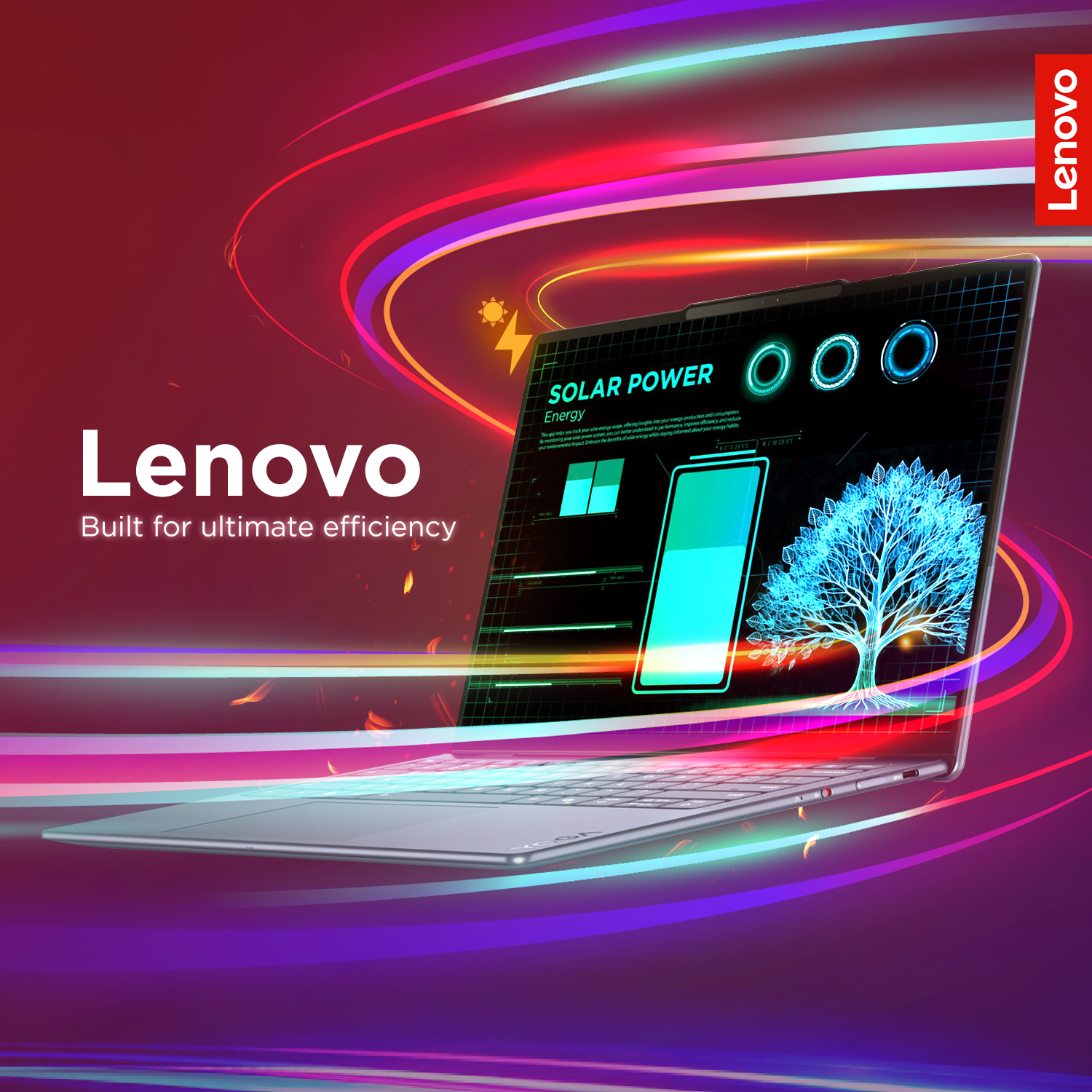
Lenovo’s Yoga Solar PC unveils innovation in Laptop Charging
March 21, 2025 Lenovo’s Yoga Solar PC unveils innovation in Laptop Charging Lenovo has been pioneering IT innovation since 1984 — and today, the tech giant has 18 research and development sites and holds 33,000 patents and patent applications. Last year (January 2024), Lenovo showcased many new products and solutions at the 2024 international Consumer Electronics Show (CES) held in Las Vegas, USA. Many of the products and solutions are equipped with key technology innovations created, or facilitated, by Lenovo Research, a vital core technology provider of Lenovo. These include AI PC technology; glasses-free 3D display engine; vehicle computing; high-gloss stainless magnesium material, among several others. This year (March 2025), at the Mobile World Congress in Barcelona, Lenovo came up with another set of surprises. In addition to the mega-2-in-1 ThinkBook Flip AI and some nifty snap-on Magic Bay second-screen prototypes, the company showed off its Yoga Solar PC Concept. This experimental laptop may be exactly what you expect from the name: a solar-powered PC. A grid of small solar panels that can turn light into battery life populates the screen lid. Nowadays, the market has a few solar-powered laptops, but they’re infamously cumbersome and expensive. Lenovo solves this issue by placing its solar panels on top of its clamshell or the screen part. Tech website ZDNet says they stick behind a sleek, glassy black that “almost passes for a normal laptop.” Moreover, the device itself is notably thin and light, weighing only 2.6 lbs or 1.22 kilos. The Yoga Solar PC absorbs sunlight and even ambient light, meaning it can gain energy from indoor lamps. It can absorb enough light energy to power an hour of video playback. Lenovo says this limited amount will reduce power consumption so that customers won’t have to worry about dwindling battery life. Instead of scrambling to recharge the device, the user may just plug in the solar panels to continue working. Alongside the obvious potential convenience for field workers and laptop users far off the grid, Lenovo developed the Yoga Solar PC Concept with an eye toward sustainability and environmental awareness. Drawing in renewable solar energy rather than relying on electricity is more green on paper, though it can be difficult to implement solar charging in a way that works efficiently and effectively at small scale. This solar-powered laptop does not have a specific release date and price. Yet, such concept designs share a glimpse into the future of technology. Reference: Lenovo unveils solar-powered laptop concept design

At home or in the office, HP printers deliver productive solutions
March 19, 2025 At home or in the office, HP printers deliver productive solutions Whether you need business printing at home or to boost your productivity in the office, HP has the right printer. HP’s printer portfolio helps deliver everything you need to print for your home office or small business. This article listed down the best HP printer for your small to medium-sized business or home office: HP LaserJet Pro color printersBest for small and medium-sized businesses or work teams needing reliable, high-quality color laser printing for daily use. HP LaserJet Pro black & white printersBest for small and medium-sized businesses or work teams needing reliable, high-quality black and white laser printing for daily use. HP LaserJet printersBest for printing high-quality black and white forms and documents in home offices with limited space. HP OfficeJet Pro printersBest for higher volume printing and all-around productivity in your home or home office. HP Smart Tank printersBest for smart, intuitive ink tank printing for busy schedules. Designed for security you can trustThe need for security is of utmost importance. At every step of the design, supply chain, and production process for Original HP office cartridges, security is built-in with tamper-resistant chips and firmware, and tamper-evident packaging. HP print services arm your IT team with another layer of defense:With HP Print Security Advisory Services, their credentialed cyber security experts can assess your vulnerabilities and compliance needs, then build a robust security plan to help secure your printers and data. Trust HP Secure Managed Print Services to provide layered defenses and resiliency, so you can focus on your core business. HP Managed Print Cloud Services can help you build a secure, agile workplace with smart, fast, more connected teams working from anywhere to seize opportunities. Reference: Business Printers and Small Business Printers | HP® Philippines

HP MPS transforms businesses to meet needs of a modern workplace
March 17, 2025 HP MPS transforms businesses to meet needs of a modern workplace HP has a long history of radical innovation and technological advances that create meaningful change and has always led the way. To meet the needs of a modern workplace with innovative document management and printing solutions, HP comes to the fore. With a mix of cloud-based digital workflows and advanced print solutions, your business processes are transformed and productivity is improved. The solutions include their best commercial printers, software, and services. Today, customers need faster innovations and employees want better experiences. We need to rethink how data flows across our organizations so we can transform at the speed of business. With HP Managed Print Services (MPS) you can meet the demands of a modern workplace delivering fluid hybrid work experiences and secure digital workflows to power your people business and sustainability goals. Looking to grow faster? Make it happen with cloud-based capabilities that empower work from anywhere teams. Focus on moving the business forward by automating business processes and responding faster to customer needs. Thinking about reducing risk? Strengthen fiber resilience with zero trust print security so your data and your people are protected against increasing cyber attacks. Get ready to unleash productivity with apps accessible right from your printer. Paper-based workflows become digital saving people time and eliminating error prone processes. Make at home printing as easy as it is in the office for both your remote workers and IT. And if you want to put time back in your day, lean on experienced HP Engineers who can manage your day-to-day print lead and applications with Remote Management Services. The HP Managed Print Services provides solutions for every industry: Financial services and insurance. HP Managed Print Services enable digital-first experiences that support the security and sustainability goals for your financial institution. Customers expect to bank digitally, securely, and with practices that respect the planet. Education. Transform education and make learning accessible to students from anywhere they are—with end-to-end solutions, the right devices, and services built for schools and designed to support academic excellence. Manufacturing. Future-proof your manufacturing value chain, from concept and design to delivery, with hybrid-first operational models that will enable your company to drive innovation, improve process efficiency, and create safer user experiences—no matter where your teams are. Government. Help public servants meet the needs of their communities from wherever they choose to work—with manageable technology and solutions that accelerate digital transformation, maximize IT investments, while keeping your citizens’ data safe. Reference: HP Managed Print Services – Cloud Printing Solutions | HP® Official Site
Mobile World Congress 2025: Energy, mobile tech, AI take center stage
March 14, 2025 Mobile World Congress 2025: Energy, mobile tech, AI take center stage Innovation is the name of the game in this era of digital technology. Our world today is constantly evolving and business enterprises need technology solutions to keep pace and get ahead of the game. On March 3 to 6, the Mobile World Congress was held in Barcelona, Spain with tech leaders coming together to explore the trends and technologies shaping the mobile industry in 2025. Each year, the event is a chance to see what’s next for mobile phones, laptops, and consumer tech, with a particular focus on artificial intelligence (AI) this time around. Here’s a round-up of the interesting highlights at MWC 2025: Deutsche Telekom gives a first look at its AI phone Germany’s Deutsche Telekom announced that it is launching a Perplexity chatbot-powered AI phone. The phone, which will be released sometime this year, will run “Magenta AI,” which will give users access to a pack of AI tools including Perplexity Assistant, Google Cloud AI, ElevenLabs, and Picsart. The company wrote in a press release that the phone will be able to order a taxi, reserve a table, translate in real time, and respond to a user’s questions. A preview of new Google AI features on Android Google tested two new AI features coming to Android phones later this month, the company said. A Gemini Live demo showed a user asking the AI to suggest a color for a vase based on the surrounding room’s decor and style. Another shows a user sharing their screen with Gemini Live to ask their AI assistant for outfit suggestions that would go with a pair of jeans they would like to buy. Phones focus on photography A few mobile phones at MWC had a higher focus on professional-grade photography. The Nubia Focus 2 Ultra, one of the latest designs from China’s ZTE, has what they call an AI Photography System that “lets you take high-quality photos anytime and anywhere,” the company wrote. The phone’s unique rotating dial at the back lets users choose between five focal lengths that will help them take wide-angle, street photos, portraits, and long-focus shots. It also includes AI features like an eraser that lets users edit their shots. Lenovo’s solar-powered laptop While not focused on phones, the Chinese company Lenovo unveiled potential AI-powered laptops at MWC this year. Among the featured is the Yoga Solar PC, a proof of concept laptop with a solar panel built into the cover that could power itself for up to one hour of video streaming when left in direct sunlight for just 20 minutes. The laptop would also keep track of the panel’s current and voltage and automatically adjusts the settings to maximize how the laptop can save energy, regardless of the light intensity in any workspace. Tech needs to ‘pick up the pace’ on decarbonizing AI production Energy and artificial intelligence (AI) leaders say that the tech industry needs to pick up the pace on building innovative new technologies to get artificial data centers away from using fossil fuels. “We have the technologies to solve this, we have the knowledge, the capital is willing to move in, but we have to pick up the pace. So, I think the direction is very clear, but the pace is not,” Anna Borg, CEO of energy company Vattenfall AB, told an audience at the tech conference. Security threats to smartphones also weigh heavy at this year’s meet Cybersecurity also has had top billing in some product announcements at the MWC. Keeping smartphone users safe from phishing, deepfakes and malicious software is top of mind for many manufacturers and network operators. Chinese smartphone maker Honor showed off a new tool ahead of MWC’s opening that it said would allow its smartphones to detect deepfakes — deceptive AI images and video based on the likeness of real people. The GSMA telecom operators’ association, which hosts MWC in Barcelona every year, has developed a tool called “Scam signals.” Built alongside Britain’s banking industry group, UK Finance, “Scam signals” is a service that applications can call on to detect signs of phone-based fraud, when scammers call up customers to push them to authorize transactions on their mobile banking apps. References: MWC 2025: Here is the new AI tech unveiled at Mobile World Congress Mobile World Congress: Tech needs to ‘pick up the pace’ on decarbonizing AI production