









PH, South Korea roll out digital platform for smarter farming methods
Agriculture has long been a bedrock of the Philippine economy, playing a vital role in the country’s development and food security. As an archipelagic nation with diverse climates and topographies, the Philippines boasts a rich agricultural landscape that has sustained its population for centuries. However, the sector faces numerous challenges in the modern era.
The Philippines and South Korea launched in July 2026 a digital platform to speed up farm interventions and track supply chains in real time. According to the Department of Agriculture (DA), the platform is called “Agriculture-Based Central Data Ecosystem (AbCDE)” which will enable the DA to verify beneficiaries, monitor interventions, and track supply chains.
South Korea funded the AbCDE Platform with a $3.5-million or P165-million ODA grant, providing the software backbone for the DA’s data command center and supporting evidence-based policymaking. The DA said the integrated system will improve planning, policy making and program implementation while laying the foundation for stronger food security.
The DA developed the platform through a four-year partnership with South Korea’s Ministry of Agriculture, Food and Rural Affairs and the Korea Agency of Education, Promotion, and Information Service in Food, Agriculture, Forestry and Fisheries (EPIS).
Agriculture Secretary Francisco Tiu Laurel Jr. said: “The digital ecosystem will streamline farmer registration and consolidation nationwide. The process will move faster.” He added: “We should be able to register more, while improving data accuracy and reducing duplicate records. Then, the interventions will be accelerated.”
The Secretary further said the DA can complete RSBSA registration in five minutes, compared with the usual five-day process. The country currently has 10.7 million registered farmers and fisherfolk. “Of course, transparency is there. It is clear here that you cannot cheat the system. If there are mistakes, it’s really a human error,” he added.
Meanwhile, in May 2025, the Department of Agriculture secured a $16 million grant from the Korea International Cooperation Agency (Koica) to advance local aquaculture development and community-based agribusiness.
Agriculture Secretary Laurel Jr. and Koica Country Director Jung Youngsun signed the Records of Discussions (RDs) to bankroll two separate grant assistance projects. The $10 million grant would fund the project aimed at helping local fishermen boost their income by enhancing aquaculture production and strengthening the value chain, which will run for seven years.
The remaining $6 million funding would diversify income sources and strengthen the agricultural activities of marginal farmers in the region through the establishment of an Agribusiness Incubation Center in Zambales and the enhancement of the existing DA Technology Business Incubation facility in Tarlac.
Reference: PH, South Korea launch digital platform for smarter agriculture
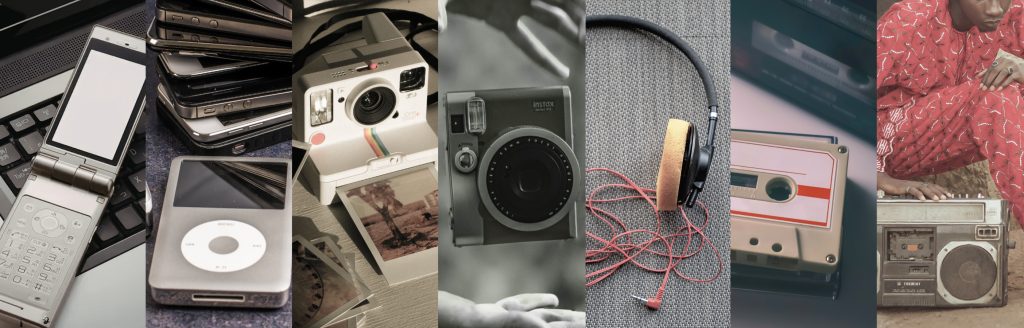
Flip Phones. Flip phones have become a small escape hatch for people who want calls and texts without carrying every app they’ve ever regretted downloading. The Motorola Razr still has that snap-shut satisfaction, and newer basic phones give people a way to be reachable without being fully swallowed by a screen.
iPods. Used iPods are getting attention again because they do one job and one job only. Loading a Nano, Classic, or Touch with your own music library feels more personal than letting an app decide what you should listen to.
Instant Cameras. Polaroid and Fujifilm Instax cameras keep showing up at parties, weddings, dorm rooms, and weekend trips because the photo provides a tangible memory. The colors can be strange, the flash can be harsh, and someone will probably blink, but it’s still more fun than uploading memories to Google Photos.
Point-and-Shoots. Canon PowerShots, Sony Cyber-shots, Nikon Coolpix cameras, and other small digital cameras from the 2000s are back in purses and jacket pockets. They make photos look less polished than iPhone shots, with red-eye, blur, and flash glare that somehow feel closer to how the night actually felt.
Wired Headphones. Apple EarPods and other wired headphones have gone from boring backup gear to an actual style choice. They don’t need charging, they don’t vanish into couch cushions as easily, and they’re much more budget-friendly.
Cassette Players. Cassette players and tape decks are getting attention from people who like music that takes a little effort. Rewinding, flipping sides, and dealing with a worn-out case can be annoying, sure, but the whole process feels more involved than tapping shuffle for the 400th time.
Boomboxes. The modern boombox comeback is more of a compromise than anything else, since plenty of new models look old while offering Bluetooth connection. That mix gives people the chunky 1980s and 1990s look without asking them to fully return to D batteries, warped tapes, and radio static.
Reference: 20 signs the internet is falling back in love with old tech
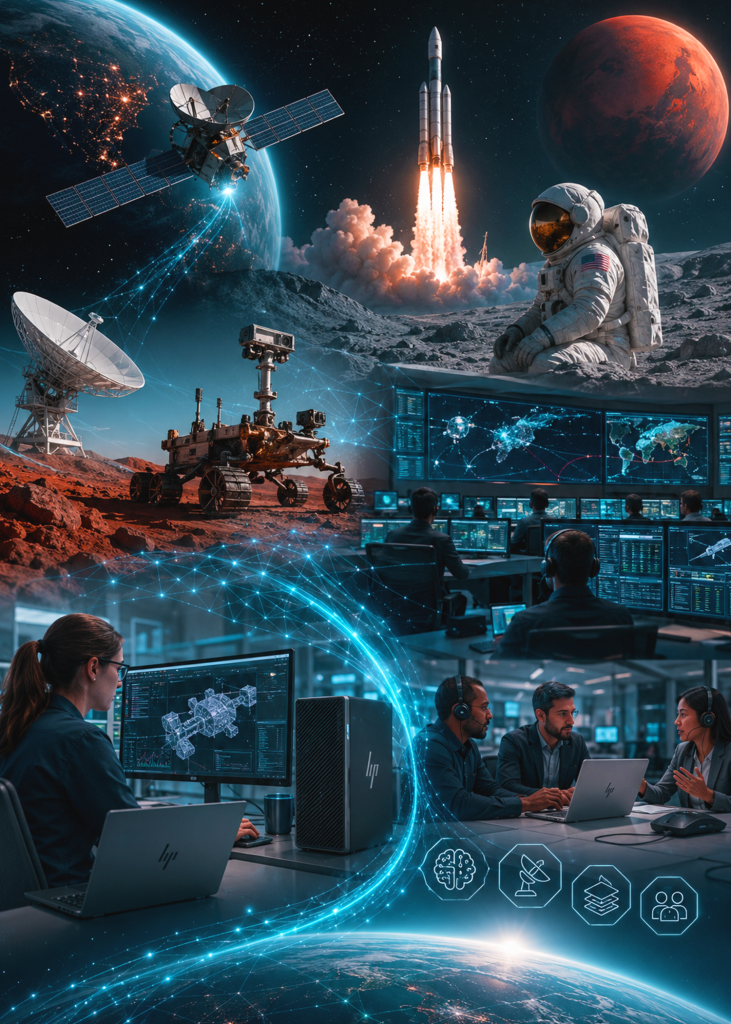
Across NASA, HP workstations, Elitebooks, HP Poly collaboration tools, and Print solutions enable work in space and on Earth. It’s the same ecosystem supporting astronauts processing scientific data in microgravity, mission controllers monitoring spacecraft, and engineers modelling the next frontier of human exploration.
These are trusted tools for the most innovative teams in the world, where failure is not an option. And while the environments may differ for other businesses, the stakes are similar. Extreme environments, tight mission windows, and hundreds of terabytes of data, with shifting priorities depending on the mission.
NASA teams operate on critical missions where technology must perform without interruption. Downtime isn’t an option. Equipment must be trusted and reliable for the most pivotal moments. Many of the HP workstations in Mission Control have run 11-12 years with minimal failures, providing mission grade compute across consoles.
At NASA, AI is leveraged to monitor regions of space and automatically detect whether something significant has just occurred or is about to. AI enables wider parameter exploration for data and scientific models. This opens opportunities for AI to be utilized onboard satellites, rovers, planes, or balloons.
With an average mission duration of six months, they have limited time to conduct experiments, run simulations, and analyze data that can lead to breakthroughs in science, health, and technology. Every experiment, every system check, every line of communication matters.
On the ground, NASA’s Mission Control is just as critical for mission success. Electrical, mechanical, and aerospace engineers oversee missions and simulation, while guidance and navigation teams receive and relay information. When the stakes are this high, the tools can’t afford to fail. In space, just like on Earth, technology is the engine of employee experience.
HP remains committed to delivering growth and fulfillment through technology as humanity enters a new era of space exploration, where returning to the Moon paves the way to Mars. This HP goal enables teams to continue to push the limits of what’s possible in space and human achievement.
Reference: HP and NASA: Empowering MIssion Critical Work on Earth and Beyond | HP® Official Site