









Philippines still a Facebook country: Top digital platforms list for 2026
Facebook influences how Filipinos communicate, share content, and participate in social trends. From viral challenges to advocacy campaigns, the platform amplifies cultural conversations and community engagement. Facebook also powers online buying and selling via Marketplace and Groups, where people browse, compare, and message sellers instantly.
The Philippines is now populated by a total of 117 million citizens as of late 2025. Of this, around 98 million individuals use the internet or at least 83.8% of the total. This shows that about four in five Filipinos are already online. Social media use is also widespread, with 81.9% of the population, or about 95.8 million people being users of the platforms.
Reflecting a population that is firmly part of the digital generation, all these data indicate that internet usage is widespread in the Philippines. The gap between internet users and social media users is relatively small, suggesting that most Filipinos who are online are also active on social platforms, while a portion of the population may still use the internet for non-social media purposes.
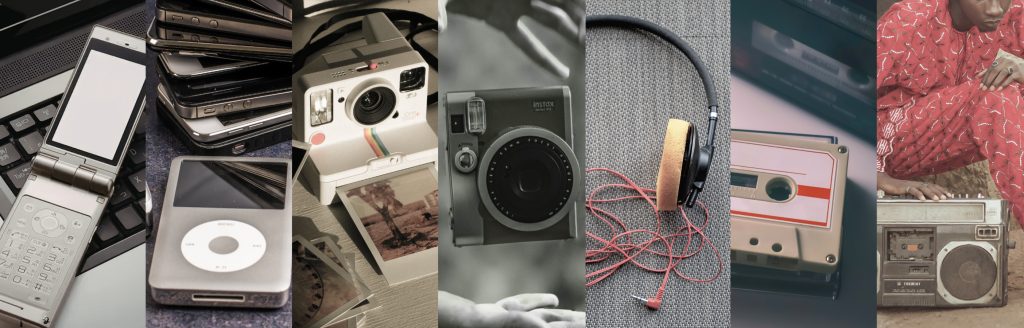
Flip Phones. Flip phones have become a small escape hatch for people who want calls and texts without carrying every app they’ve ever regretted downloading. The Motorola Razr still has that snap-shut satisfaction, and newer basic phones give people a way to be reachable without being fully swallowed by a screen.
iPods. Used iPods are getting attention again because they do one job and one job only. Loading a Nano, Classic, or Touch with your own music library feels more personal than letting an app decide what you should listen to.
Instant Cameras. Polaroid and Fujifilm Instax cameras keep showing up at parties, weddings, dorm rooms, and weekend trips because the photo provides a tangible memory. The colors can be strange, the flash can be harsh, and someone will probably blink, but it’s still more fun than uploading memories to Google Photos.
Point-and-Shoots. Canon PowerShots, Sony Cyber-shots, Nikon Coolpix cameras, and other small digital cameras from the 2000s are back in purses and jacket pockets. They make photos look less polished than iPhone shots, with red-eye, blur, and flash glare that somehow feel closer to how the night actually felt.
Wired Headphones. Apple EarPods and other wired headphones have gone from boring backup gear to an actual style choice. They don’t need charging, they don’t vanish into couch cushions as easily, and they’re much more budget-friendly.
Cassette Players. Cassette players and tape decks are getting attention from people who like music that takes a little effort. Rewinding, flipping sides, and dealing with a worn-out case can be annoying, sure, but the whole process feels more involved than tapping shuffle for the 400th time.
Boomboxes. The modern boombox comeback is more of a compromise than anything else, since plenty of new models look old while offering Bluetooth connection. That mix gives people the chunky 1980s and 1990s look without asking them to fully return to D batteries, warped tapes, and radio static.
Reference: 20 signs the internet is falling back in love with old tech
In the Philippines, one rarely meets someone who does not have a Facebook account. The country is one of the top on the list for Facebook adoption and engagement, thanks to better mobile access, fast connectivity, and increasing digital literacy. Filipinos use the platform for socializing, work, education, and commerce.
This is reflected in DataReportal’s “Digital 2026: The Philippines report,” which shows that Facebook recorded 95.8 million users in the country as of late 2025. Meta’s data showed that Facebook’s reach in the Philippines is equivalent to 81.9% of the total population and 97.7% of the country’s internet users.
Meanwhile, the platform also posted steady growth, with its reach increasing by 10.3% or around 8.95 million users in the year between October 2024 and October 2025. The platform’s Philippine audience is relatively balanced in terms of gender distribution, with 52.0% being female and 47.4% male. The figures spring from data on Meta’s advertising reach, which estimates potential audience size.
Facebook, launched in 2004, has evolved from a simple social networking site into a multifaceted platform that connects billions of users worldwide. It offers an extensive array of features that cater to both personal and business needs.
As one of the most influential social media platforms, Facebook enables users to create personal profiles, business pages, groups, events, and more. For many Filipinos, Facebook doubles as a quick-access news portal. About 71.2% of users watch out for breaking headlines, local updates in community groups, how-to guides, product explainers, and even comparison posts.
Profiles allow individuals to share their personal information, updates, and connect with friends and family. Pages, on the other hand, are designed for businesses, brands, and public figures to establish their presence and engage with followers.
When it comes to business, Facebook gives you a direct line to your audience. You reach more people, optimize ad spend, and build stronger engagement. Emerging features such as Meta AI, Reels, and Marketplace are reshaping how users interact with content and brands.
Reference: Still a Facebook country: Top digital platforms in PH for 2026