









PH digital economy hits P2.74 trillion in 2025, accounts for 9.8% of GDP
The Philippine Statistics Authority (PSA) defines the digital economy as encompassing four main areas: digital-enabling infrastructure, digital content and media, e-commerce, and government digital services. Digital-enabling infrastructure remained the primary driver of GVA, contributing P1.79 trillion to the total.
The Philippine digital economy continues its upward trajectory, reaching a Gross Value Added (GVA) of P2.74 trillion in 2025, accounting for 9.8% of the country’s gross domestic product (GDP), according to the latest preliminary data from the PSA.
Last year’s digital economy GVA grew by 5.4% from P2.59 trillion recorded in 2024 as the country moves forward with digital transformation initiatives across public and private sectors. Within this sector, growth was fueled by ICT services with a 27.1% contribution, ICT manufacturing with 13.6%, and ICT-enabled services with 13.3%.
E-commerce followed as a significant contributor at 32.2%, while digital content and media accounted for 2.2% and government digital services made up the remaining 0.3% of the digital landscape. Beyond monetary value, the digital sector has become a massive source of livelihood for Filipinos.
In 2025, the digital economy employed 10.39 million people, accounting for 21.2% of the country’s total workforce. This was a 1.2% increase from the 10.27 million workers recorded the previous year.
By component, total e-commerce accounted for the largest share of employment at 75.8%, followed by digital-enabling infrastructure at 23.3%, digital content and media at 0.8%, and government digital services at 0.1%.
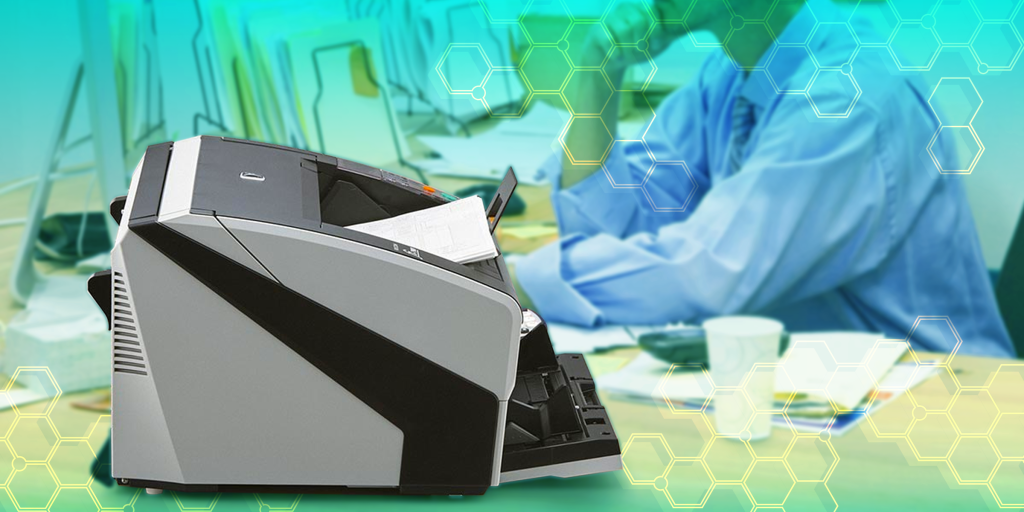
High-Resolution Scanning: Ricoh scanners capture images in high resolution, producing clear and detailed digital copies suitable for various document types.
Speed and Efficiency: These scanners offer fast scanning speeds to efficiently handle large document volumes, ultimately enhancing workplace productivity.
Optical Character Recognition (OCR): Integrated OCR technology allows for the conversion of scanned documents into editable and searchable text, simplifying document management and retrieval.
Multi-Feed Detection: Built-in sensors prevent misfeeds by detecting when multiple pages are pulled into the scanner at once, ensuring every page is accurately scanned.
Network Connectivity: Ricoh scanners offer options for network connectivity, enabling multiple users to access the scanner from different devices and facilitating convenient sharing and storage of scanned documents.
Automatic Document Feeder (ADF): The ADF feature allows for the scanning of multi-page documents without the need for manual page feeding, saving time and effort.
Double-Sided Scanning: Ricoh scanners are capable of simultaneous two-sided scanning, known as duplex scanning, essential for efficient document processing.
Image Enhancement Tools: Software features clean up and enhance the quality of scanned images, improving legibility by removing imperfections and adjusting alignment.
Security Features: Ricoh scanners are equipped with advanced security measures to protect sensitive information, including options for password protection, data encryption, and secure file transmission.
Compatibility and Integration: These scanners are compatible with various operating systems and seamlessly integrate with document management systems and cloud storage solutions.
Compact Design and Energy Efficiency: Designed to fit modern workspaces, Ricoh scanners operate with energy efficiency to reduce power consumption, supporting sustainable office environments.
Reference: Navigating the Scanning Pathway to Digital Transformation
However, the Philippine economy marched into 2026 with a more difficult economic environment than in previous years. After several years of fairly strong post-pandemic expansion, inflationary pressures, global uncertainty, and weaker investment have curbed growth. Although the numbers are still on the uptrend, the pace has fallen off quite a bit compared to expectations and projections.
The Philippine Statistics Authority reported a GDP increase of 2.8% during Q1 of the year. On a quarter-to-quarter basis, the economy saw an increase of just 0.9%. ADB’s outlook on the GDP forecast for this year has also been reduced to 4.4% in its April 2026 report.
The global economic uncertainty is a major cause for concern. Businesses and exporters face uncertainties due to slower international growth and disruptions in the supply chain. Since the country relies on imported fuel and takes part in global trade networks, international disruptions directly impact domestic prices and overall confidence.
References: PH digital economy reaches P2.74T in 2025, contributes 9.8% to GDP
Philippines GDP in 2026, growth trends and economic outlook | Inquirer Business

Obsessed with Disruption
The tech industry was built on the pillar of disrupting traditional industries to make something bigger and bolder. This stereotype is true, as tech culture thrives on the idea of disruption. This can mean challenging the norms of certain industries or reinventing the status quo.
Reference: 20 Tech Industry Stereotypes That Are True