




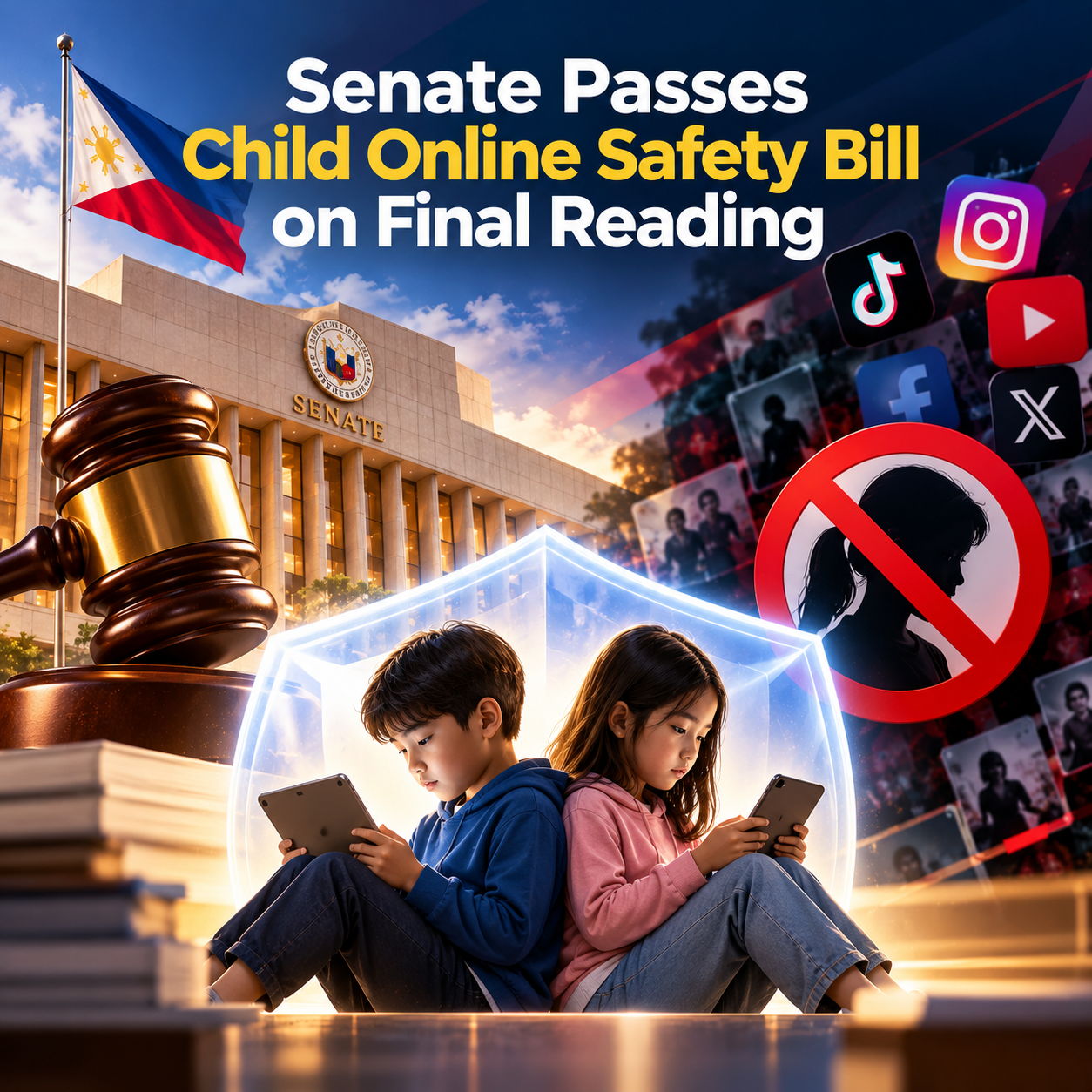



PH Rep files bill seeking to ban social media use for minors under 16
On July 3, 2025, Sen. Panfilo Lacson introduced a bill that seeks to regulate social media usage among minors to protect the mental health and well-being of Filipino youth. The proposed legislation aims to impose strict age restrictions and penalties for violations to address growing concerns about the detrimental effects of excessive social media use.
Citing alarming studies that highlight the correlation between social media use and rising mental health issues, including anxiety, depression, and social isolation, Lacson emphasized the urgency of the situation. One in three children ages 0 to 18 in the Philippines are internet users.
In Dec. 2025, Australia made history by enforcing a legislated social media ban for their citizens who are under 16 years of age. The world’s-first prohibition ruled that popular apps and websites — Facebook, YouTube, Instagram and X among them — face US$33 million fines if they fail to purge Australia-based users younger than 16.
“We fully agree that prudential standards should remain proportionate to the evolving risk profile of rural banks as they transition toward more technology-enabled operations,” the RBAP said.
“However, we hold strong reservations against the manner in which the digitalization of rural banks is proposed to be carried out,” it added.
Among the concerns raised by RBAP is the BSP’s proposal to classify full digital onboarding capability as an indicator of operational complexity, which could trigger higher prudential requirements. The association said the approach might be too broad and should instead consider whether such capability materially changes a bank’s risk profile.
RBAP also questioned the proposed 30-percent threshold on customer accounts located outside a rural bank’s physical areas of operation. It said the rule may be difficult to implement and could create unintended consequences. The association noted uncertainties over how “physical areas of operations” would be defined, warning that strict geographic limitations could reduce access to formal financial services, especially in border areas or regions with mobile populations.
The Bangko Sentral ng Pilipinas, the nation’s central bank, regulates all banks in the country. Philippine banks are classified as universal, commercial, thrift, rural, cooperative, and Islamic banks. Universal banks offer a wide range of services, including investment, commercial and development banking, mutual funds, and housing loans.
Commercial banks—privately owned institutions—are the largest financial group and most popular among customers for their extensive service offerings. Expanded financial inclusion measures have improved Filipinos’ access to a diverse range of financial services beyond traditional banking. Digital banks and e-money platforms are positioned to further strengthen the Philippine banking infrastructure.
An Act to protect minors
The Philippines follows the course as CIBAC Rep. Bro. Eddie Villanueva filed on March 11, House Bill No. 8262 or the “Social Media Protection for Minors Act” that aims to ban minors under 16. According to the bill, the act is meant to regulate access to minors by establishing a minimum age when accessing social media platforms.
The bill also writes that the burden of responsibility should be with the social media platforms rather than the users or their parents. Platforms are set to follow guidelines and obligations under the bill to further implement the ban.
“Protecting minors from unfiltered and harmful social media exposure is a moral and national responsibility,” Villanueva said in a statement. “The unchecked impact of social media on young people–seen in addiction, exposure to sexual and violent content, exploitation and identity confusion–poses long-term dangers not only to individual well-being but also to social cohesion and civic life.
Social media platforms named, but not limited to are Facebook, Instagram, TikTok, X, and YouTube.
Global social media ban for minors
Five countries have already passed bills that ban social media for minors under 16 while three have begun implementation, according to Tech Policy’s Global Social Media Age Restriction Tracker. China has imposed strict regulations for minors under 18 since 2021.

Indonesia was the most recent to pass their bill last March, while Malaysia had passed the Online Safety Act in January 2026. More countries are getting ready to follow suit, especially as lawmakers cite several studies that link social media to anxiety, depression, and low self-esteem.
A 2023 study from Pew Research Center found that some “32% of American teens say social media has had a mostly negative effect on people their age, while 9% say this about social media’s effect on themselves.”
Reference: New bill seeks to ban social media for users under 16