










Samsung rolls out smallest 200-MP image sensor for smartphones at CES 2026
The Consumer Electronics Show (CES) is the most powerful tech event in the world — the proving ground for breakthrough technologies and global innovators. This is where brands get business done, meet new partners and where the industry’s sharpest minds take the stage to unveil their latest releases and boldest breakthroughs.
Samsung has continued to innovate to remain a world leader in memory semiconductors, TVs, and smartphones. The company has continually strived to become No. 1 in the system semiconductor industry while simultaneously driving growth in areas such as AI and 5G.
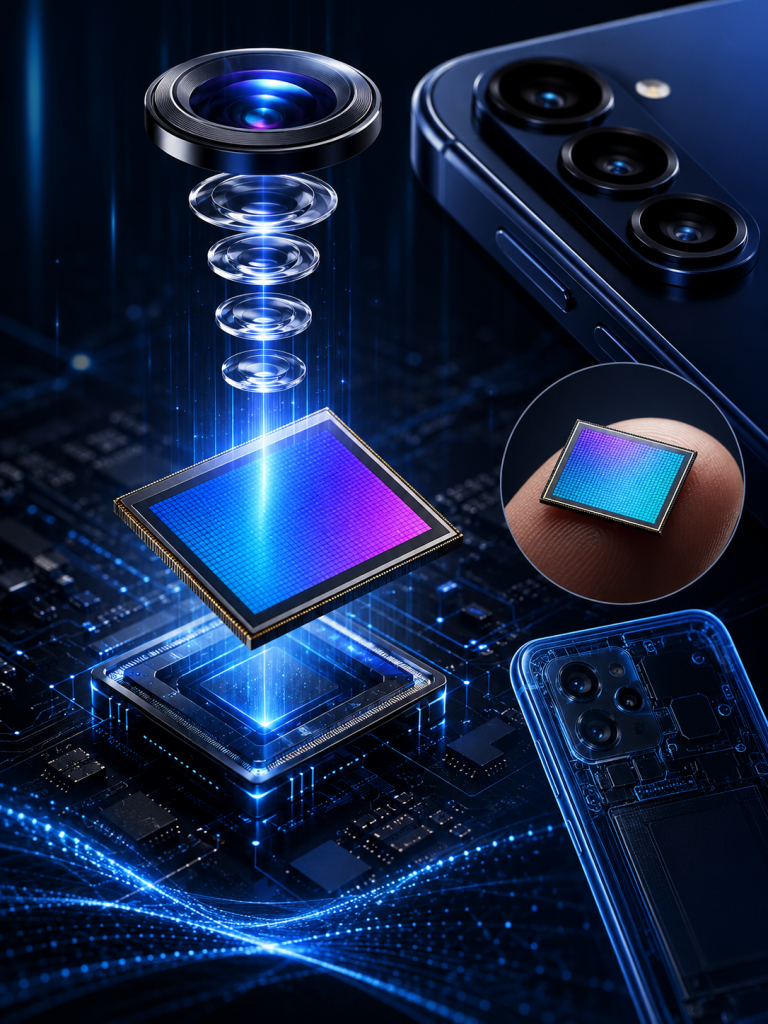
At the CES 2026, Samsung Semiconductor presented a major imaging milestone, unveiling the ISOCELL HP5, the smallest 200-megapixel image sensor ever built for mobile devices. The launch highlights how sensor miniaturization continues to reshape smartphone camera capabilities without forcing larger camera modules.
The ISOCELL HP5 packs 200 million pixels into an extremely compact footprint which is roughly half the size of a penny. Each pixel measures just 0.5 micrometers, making it about one-hundredth the width of a human hair. Samsung designed the sensor to push physical limits while maintaining strong light absorption and signal accuracy.

Flip Phones. Flip phones have become a small escape hatch for people who want calls and texts without carrying every app they’ve ever regretted downloading. The Motorola Razr still has that snap-shut satisfaction, and newer basic phones give people a way to be reachable without being fully swallowed by a screen.
iPods. Used iPods are getting attention again because they do one job and one job only. Loading a Nano, Classic, or Touch with your own music library feels more personal than letting an app decide what you should listen to.
Instant Cameras. Polaroid and Fujifilm Instax cameras keep showing up at parties, weddings, dorm rooms, and weekend trips because the photo provides a tangible memory. The colors can be strange, the flash can be harsh, and someone will probably blink, but it’s still more fun than uploading memories to Google Photos.
Point-and-Shoots. Canon PowerShots, Sony Cyber-shots, Nikon Coolpix cameras, and other small digital cameras from the 2000s are back in purses and jacket pockets. They make photos look less polished than iPhone shots, with red-eye, blur, and flash glare that somehow feel closer to how the night actually felt.
Wired Headphones. Apple EarPods and other wired headphones have gone from boring backup gear to an actual style choice. They don’t need charging, they don’t vanish into couch cushions as easily, and they’re much more budget-friendly.
Cassette Players. Cassette players and tape decks are getting attention from people who like music that takes a little effort. Rewinding, flipping sides, and dealing with a worn-out case can be annoying, sure, but the whole process feels more involved than tapping shuffle for the 400th time.
Boomboxes. The modern boombox comeback is more of a compromise than anything else, since plenty of new models look old while offering Bluetooth connection. That mix gives people the chunky 1980s and 1990s look without asking them to fully return to D batteries, warped tapes, and radio static.
Reference: 20 signs the internet is falling back in love with old tech
Smaller sensor footprint
The 0.5-micrometer pixel size allows the ISOCELL HP5 to fit into a 1/1.56-inch optical format. Smartphone makers typically reserve this format for 50-megapixel sensors. By keeping the same optical size, manufacturers can upgrade to 200 megapixels without redesigning camera modules.
This approach simplifies adoption for premium smartphone brands. It also enables slimmer camera bumps while still delivering higher resolution. Samsung positions the HP5 as a drop-in upgrade rather than a disruptive hardware change.
The sensor supports 8K video recording at 30 frames per second beyond still photography. This capability allows users to capture ultra-high-resolution video while preserving fine detail. Samsung says the sensor targets users who want professional-grade imaging from mobile devices.
Advanced pixel engineering
Shrinking pixels create major sensitivity challenges. Samsung addressed these issues early in development by redesigning the sensor structure. Engineers used a Deep Trench Isolation Center Cut design to improve pixel separation and reduce signal interference.
The company also introduced High Sensitivity DTI, or High-S, to improve light reflection inside each pixel. Titanium dioxide materials and high-refractive-index lenses further enhance light absorption. Together, these changes help maintain Full Well Capacity despite the tiny pixel size. Samsung says these structural improvements allow the HP5 to overcome traditional low-light limitations.
Reference: Samsung unveils smallest 200MP camera sensor for smartphones