









Now it can be told: algorithms on our social feeds are amusing, but addictive
For the longest time, Meta and other platforms have claimed that people’s feeds are decided by the algorithm. You see more of what you want to see. And they don’t have control of the algorithm, it just learns what you want and gives you more. Right now, everyone seems to be on social media, but it’s also weird that so few people actually say they enjoy it or have fun being there.
Social media algorithms are a powerful feature of online life, serving up content to users based on their browsing habits or personal data. Australia could soon give citizens the choice to opt out of them under new legislation that also threatens big tech companies with fines if they fail to protect young users from harmful content.
What is an algorithm?
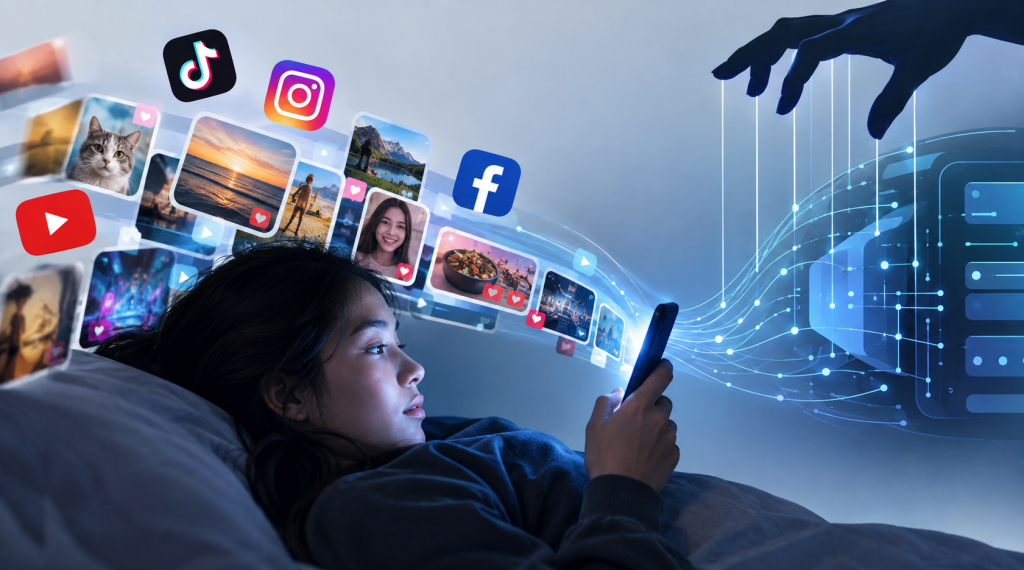
Open TikTok, Facebook, Instagram, YouTube or other platforms and you’ll see a scrolling feed or recommendations bar showing content targeted to your interests. These posts are selected for users based on programming rules called algorithms that predict what you will engage with — whether it’s something you like, or that riles you.
Broadly speaking, the recommendations are based on what the machine knows about you: what you’ve interacted with or posted about online, or information such as your age, job, location and marital status. Social media giants usually keep the coding behind these algorithms — the so-called “secret sauce” that drives traffic to their platforms — closely guarded.
Are they addictive?
It’s a familiar pattern for many — open your phone on a break and before you know it an hour has passed and you’re still scrolling. That’s by design, researchers and activists say.
Mark Williams, honorary professor at Macquarie University, said: “These platforms have engineered addictive features that keep children and adults online longer than they intend, often at the expense of sleep, wellbeing and real-world connection.”
Experts point to strategies companies use to encourage scrolling, like never-ending feeds, intermittent rewards and time-sensitive notifications. “This unpredictability triggers the dopamine system, creating a compulsive cycle of seeking and anticipation,” University of Leicester lecturer Quynh Hoang wrote.
This can create dependence similar to substance addiction, research published in online medical journal Cureus last year found. In a landmark trial in Los Angeles this year, tech giants were accused of creating “addiction machines.” The states argued that they employed behavioral techniques to encourage compulsive use especially among children.
In a historic settlement, Meta has agreed to pay at least $12.1 billion, spread across the states that filed cases, with that amount rising to as much as $17.1 billion if competitors like TikTok and YouTube reach similar settlements of their own. The allegations at the center of the case portray Meta’s business model as keeping young users continuously engaged.
Reference: Amusing or addictive? The algorithms powering our social feeds
During a Sept 8 hearing of the House committee on the welfare of children, Pasig City Rep. Roman Romulo presented the still unnumbered substitute bill to 10 proposals seeking to protect minors from the dangers of unabated social media use. He said, the full ban for children below 13 is meant to restrict them from having any screen time.
“Basically the bill now will be a ban on all social media platforms for those under 13. What we want is for them not to have any screen time,” said Romulo, chair of the House committee on basic education and culture and head of the technical working group that crafted the substitute bill.
The proposed restrictions for those aged 13 to 18 will cover viewing short videos, using messaging applications, and accessing harmful content. “For those 13 to below 18 years of age, we will have a ban on features such as harmful content, which is defined in the law [as] topics revolving around violence, sex, and similar topics,” Romulo said.
Meanwhile, Las Piñas Rep. Mark Anthony Santos has thrown his support behind proposals to restrict social media use for children aged 14 and below amid fears that the internet is being used by drug syndicates to recruit young people and even engage in drug trade through coded communication.

In a statement in August 2026, Santos said he was in favor of the proposal that would ban children from In June 2026, the House of Representatives approved on third and final reading a bill that seeks to strengthen the country’s protections against online child sexual abuse and exploitation, with new safeguards addressing threats posed by artificial intelligence (AI). House Bill No. 9461 or the proposed Child Online Safety and Protection Act of 2026 got 284 votes in the plenary session.
The bill strengthens and expands Republic Act No. 11930, or the Anti-Online Sexual Abuse or Exploitation of Children and Anti-Child Sexual Abuse or Exploitation Materials Act, by broadening enforcement mechanisms and updating legal protections to address emerging threats.
References: House panel OKs social media ban for kids