


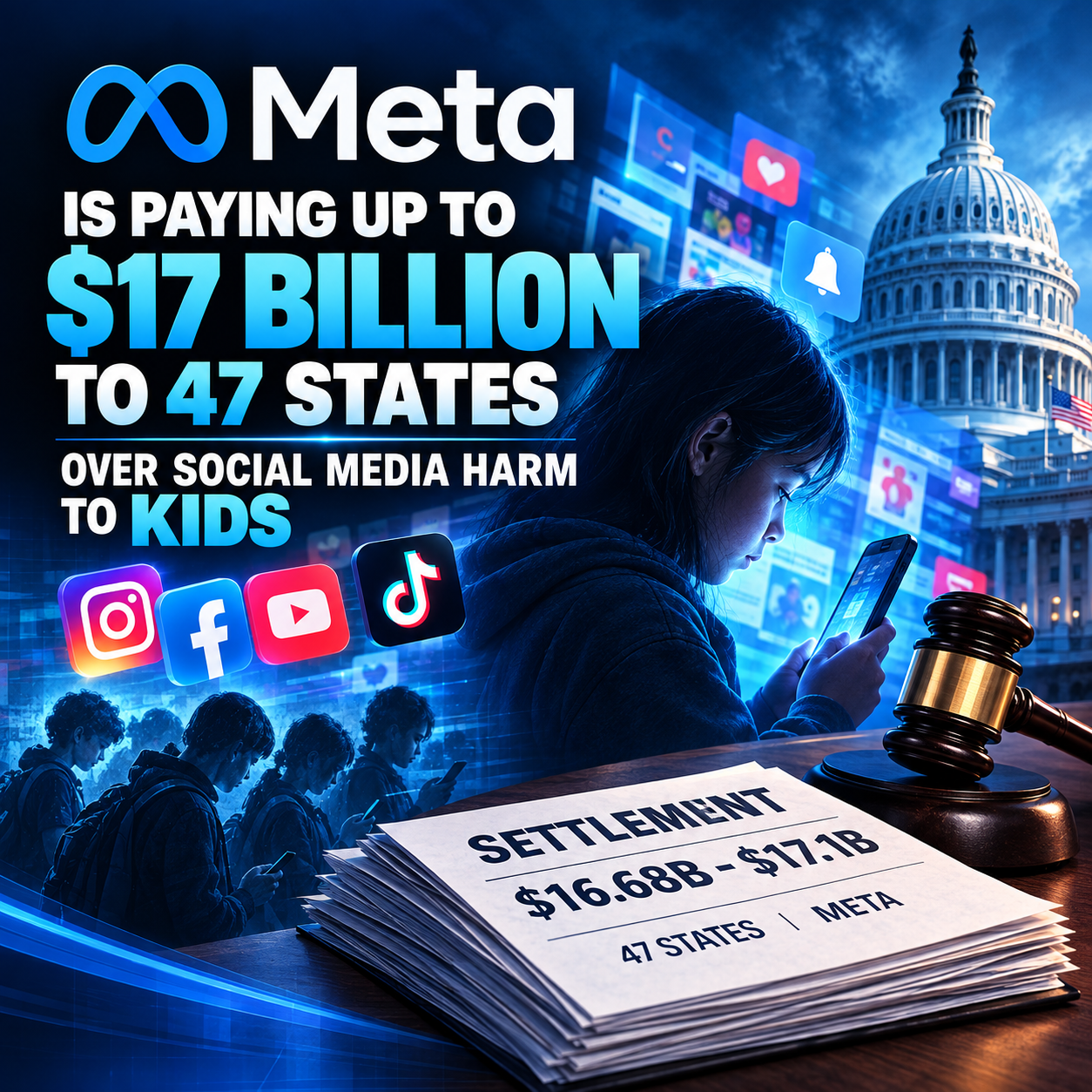





Meta is paying up to $17 billion to 47 states over social media harm to US kids
Social media’s engagement-driven strategy is under intense scrutiny for allegedly engineering compulsive use and severe psychological harm, especially in children. Platforms like Facebook, YouTube and TikTok make huge profits by keeping users hooked via nonstop scrolling, recommendations and constant notifications.
Meta has been blamed for allowing disinformation, scams, deepfakes, online abuse and violent content to spread through Facebook. Apparently, it has failed to respond quickly to harmful material, including the livestream of the fatal school shooting incident in the Philippines. This horrible incident reasonably provoked public anger.
In the US, Meta has agreed to a historic settlement that could ultimately cost the company between $16.68 billion and $17.1 billion, bringing an end to landmark litigation brought by 47 U.S. states over the alleged effects of Facebook and Instagram on children. The settlement was announced on Aug 26, 2026.
The lawsuits accused the technology giant of deliberately building features intended to keep young users engaged for longer periods, failing to adequately disclose potential safety and mental health risks, and improperly collecting information from minors. Despite agreeing to the enormous settlement, Meta has not admitted guilt, liability or legal wrongdoing.

High-Resolution Scanning: Ricoh scanners capture images in high resolution, producing clear and detailed digital copies suitable for various document types.
Speed and Efficiency: These scanners offer fast scanning speeds to efficiently handle large document volumes, ultimately enhancing workplace productivity.
Optical Character Recognition (OCR): Integrated OCR technology allows for the conversion of scanned documents into editable and searchable text, simplifying document management and retrieval.
Multi-Feed Detection: Built-in sensors prevent misfeeds by detecting when multiple pages are pulled into the scanner at once, ensuring every page is accurately scanned.
Network Connectivity: Ricoh scanners offer options for network connectivity, enabling multiple users to access the scanner from different devices and facilitating convenient sharing and storage of scanned documents.
Automatic Document Feeder (ADF): The ADF feature allows for the scanning of multi-page documents without the need for manual page feeding, saving time and effort.
Double-Sided Scanning: Ricoh scanners are capable of simultaneous two-sided scanning, known as duplex scanning, essential for efficient document processing.
Image Enhancement Tools: Software features clean up and enhance the quality of scanned images, improving legibility by removing imperfections and adjusting alignment.
Security Features: Ricoh scanners are equipped with advanced security measures to protect sensitive information, including options for password protection, data encryption, and secure file transmission.
Compatibility and Integration: These scanners are compatible with various operating systems and seamlessly integrate with document management systems and cloud storage solutions.
Compact Design and Energy Efficiency: Designed to fit modern workspaces, Ricoh scanners operate with energy efficiency to reduce power consumption, supporting sustainable office environments.
Reference: Navigating the Scanning Pathway to Digital Transformation
The agreement instead allows the company to continue rejecting the central accusations against it while avoiding the potentially far greater financial exposure it faced if the states had prevailed at trial. Before the settlement, court filings placed Meta’s theoretical maximum exposure at an extraordinary $1.4 trillion.
The agreement abruptly ended a major federal trial in Oakland, California, that had reached roughly its second week before the two sides struck a deal. The proceedings before U.S. District Judge Yvonne Gonzalez Rogers had placed Meta’s treatment of younger Facebook and Instagram users under intense scrutiny, with states arguing that the company employed behavioral techniques to encourage compulsive use.
Prosecutors pointed to elements including infinite scrolling, notifications and visible “like” counts as examples of features they alleged were engineered to repeatedly draw young people back to the platforms. The states also accused Meta of violating the Children’s Online Privacy Protection Act by collecting information involving children under 13 without the required parental permission.
While the settlement is being widely described as worth roughly $17 billion, that figure represents the potential ceiling rather than an immediate guaranteed payment. Meta is initially expected to pay approximately $12 billion under the agreement, with additional amounts potentially pushing the final cost into the $16.68 billion-to-$17.1 billion range.
That escalation depends partly on whether other defendants in the broader litigation — including TikTok, YouTube and Snap — reach their own agreements with the states involving comparable financial penalties and changes to their platforms. Even the maximum Meta payment would remain dramatically below the $1.4 trillion theoretical exposure outlined before trial.
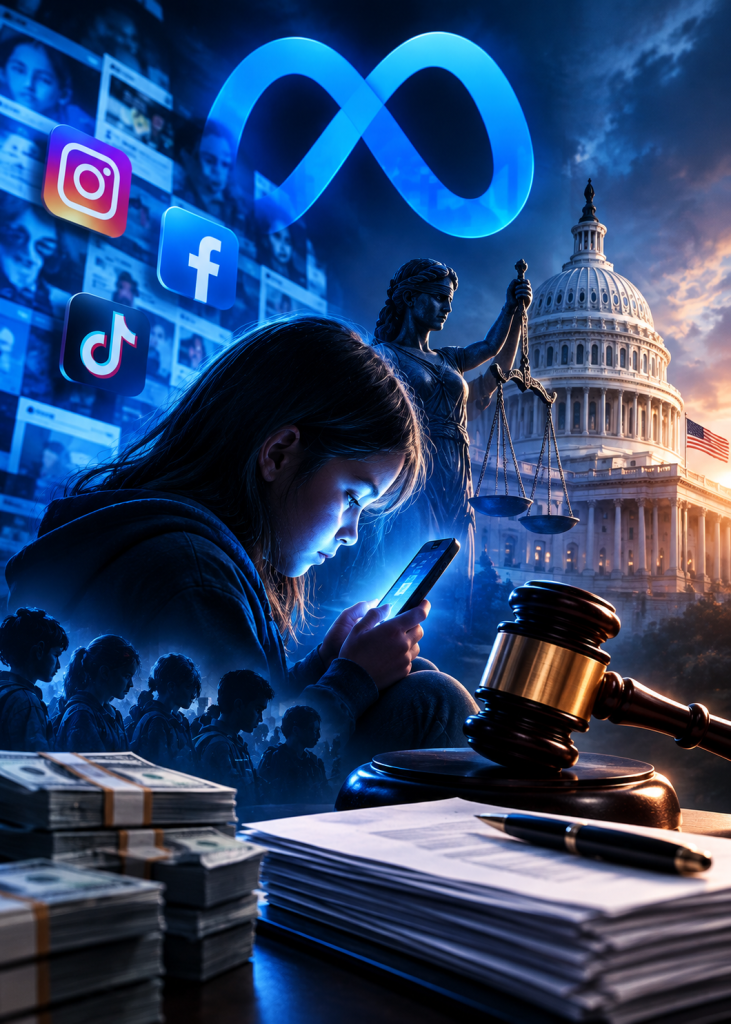
The allegations at the center of the case went beyond concerns about excessive screen time, with the states portraying Meta’s business model as one that profited from keeping vulnerable young users continuously engaged. Attorneys general alleged that Facebook and Instagram used behavioral design techniques to exploit teenage psychology while Meta possessed internal information about potential harms associated with its platforms.
Meta strongly disputed that interpretation, maintaining throughout the proceedings that it did not intentionally create addictive products and challenging the underlying characterization of social media addiction as a recognized psychiatric condition.
Reference: Meta settles $1.4 trillion social media addiction lawsuit for up to $17 billion, denies wrongdoing